Cum deosebim Gradele (treptele) superioare în Biserică
Διαδώστε:
Generally speaking, the ranks in the Church are difficult to distinguish, especially if the members of these ranks do not serve the Divine Liturgy or other services. However, the higher ranks in the Church can be distinguished by certain objects that they carry even outside the ministry.
The Archpriest (protopresbyter) bears a cross on the chest. He is a distinguished priest, a title of honor given to non-monastic priests and is conferred by a bishop with the laying on of hands and prayer.
The archimandrite also wears a cross on his chest, but the archimandrite is a monk and, at least on official occasions, wears epanokamelavkion (the veil of thin material covering the brimless hat called kalimavkion). The title of archimandrite was originally given to the leader of a brotherhood (αρχηγός της μάνδρας = αρχιμανδρίτης = arhigos tis mandras = archimandritis), that is to the Abbot, but today this title is conferred also as a title of honor in some local churches to someone who isn't a leader of a brotherhood. Only the priests from the monks (hieromonks) can be archimandrites.
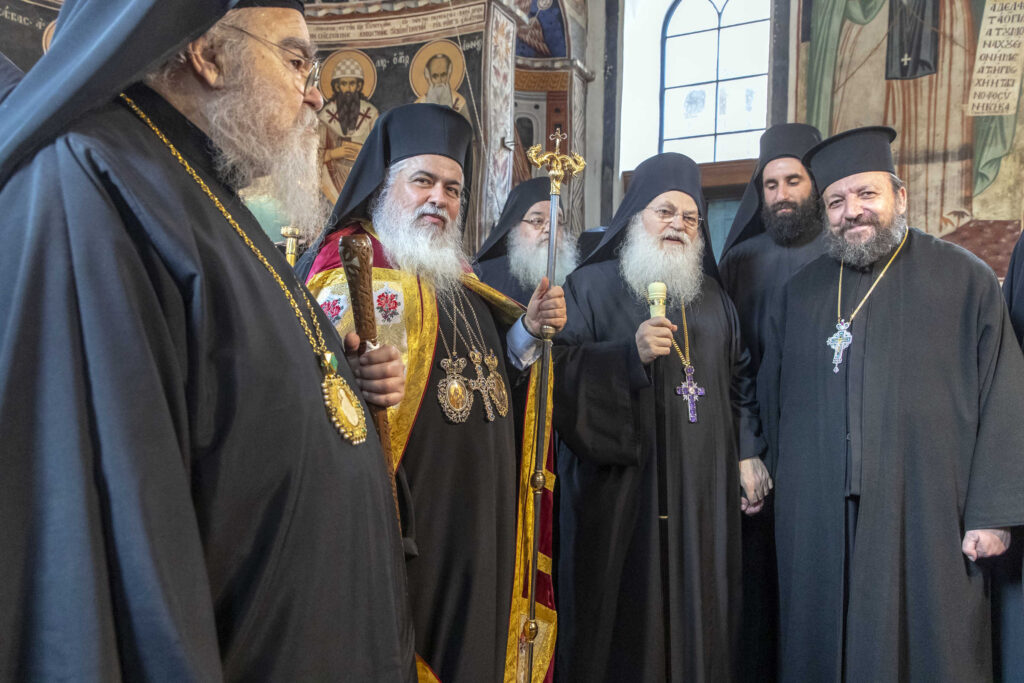
The bishops wear an engolpion which is a round medallion. If they serve or are in official moments we can distinguish them better: The bishop when he serves has only one engolpion. The Metropolitan (the head of several bishops) has two and the head of a church (patriarch, archbishop) or the direct representative of the head of a church has three items: two engolpions and a cross.
In the photo we see from left to right, illustrating what I said above:
Metropolitan Chrysostom of Dodonis
Metropolitan Varnava of Naples, serving as the representative of the Ecumenical Patriarch
Archimandrite Ephraim, the abbot of the Vatopedi monastery, Mount Athos.
An archpriest from Greece
Behind Abbot Ephraim are two monks. They are recognized by the epanokamelavkion or koukoulion (the covering which we mentioned). From the garments we cannot say whether they are mere monks, hierodiacons or hieromonks (priest-monks).
The photo is took in the refectory of the Vatopedi monastery, Mount Athos.
În general gradele (treptele) din Biserică se deosebesc mai greu, mai ales dacă mebrii acestor grade nu slujesc Sfânta Liturghie sau o altă slujbă. Cu toate acestea, gradele superioare în Biserică pot fi distinse după anumite obiecte pe care acestea le poartă chiar și în afara slujbelor.
Protopopul
Protopopul (protoprezviterul) poartă o cruce pe piept. Este un preot distins de către episcopul locului.
Arhimandritul
Arhimandritul de asemenea poartă o cruce pe piept, însă acesta, cel puțin la ocazii oficiale, poartă camilafcă (vălul de material subțire care acoperă potcapul). Titlul de arhimandrit la originea sa se oferea conducătorului unei obști (αρχηγός της μάνδρας = αρχιμανδρίτης = arhigos tis mandras = arhimandritis), adică starețului sau egumenului, însă astăzi acest titlu este conferit în anumite biserici locale și ca titlu de cinste. Numai preoții monahi (ieromonahii) pot să fie arhimandriți.
Arhiereii
Arhiereii poartă un engolpion care este un medalion de formă rotundă. Dacă aceștia slujesc sau se află în momente oficiale îi putem deosebi mai bine: Episcopul când slujește are doar un singur engolpion. Mitropolitul (conducătorul mai multor episcopi) are două, iar conducătorul unei biserici (patriarh, arhiepiscop) sau reprezentantul direct al conducătorului unei biserici are trei obiecte: două engolpioane și o cruce.
În fotografie vedem de la stânga la dreapta, ilustrând cele spuse mai sus:
Mitropolitul Hrisostom de Dodonis.
Mitropolitul Varnava de Stavropole și Neapole, slujind ca reprezentant al Patriarhului Ecumenic.
În spatele Arhimadritului Efrem sunt doi monahi. Se recunosc după camilafcă (acoperământul potcapului de care am amintit). După îmbrăcăminte nu putem spune dacă sunt simpli monahi, ierodiaconi sau ieromonahi (preoți călugări).
Fotografie făcută în trapeza mănăstirii Vatopedului, muntele Athos