
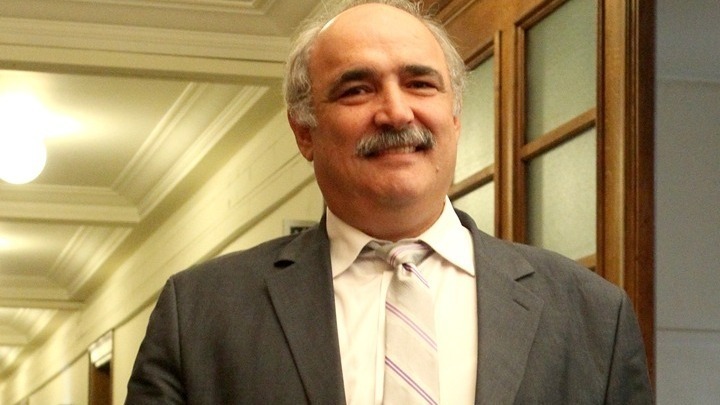
Greece could take on a leading role in modulating matters of international diplomacy among religious countries as well as in conflict zones, said Deputy Foreign Affairs Minister Markos Bolaris, in a Saturday interview to Athens-Macedonian News Agency (ANA).
To that effect, Bolaris has proposed the creation of a new institution within the Greek Foreign Affairs Ministry, which will oversee issues relating to freedom of religion and diplomacy, staffed by experts who are well versed in international relations and political sciences, and come from theological seminaries.
Bolaris said he believes that Greece’s diplomatic advantage is that millions of Greeks and thousands of Greek Orthodox churches are almost everywhere in the world, and added that the “problems observed in the wider Middle East region hold a so-called ‘second reading'”, namely the religious parameters and sentiment that define regional developments and the churches of all the faiths involved in said region. “If one is not aware of this dimension,” said Bolaris, then “one is caught unaware of developments.”
The Greek Orthodox Patriarchate in Alexandria oversees some 45 Metropolitan Priests in the African continent, Bolaris explained, “therefore each one of those priests is considered – and dealt with – as a second ambassador of Greece,” he said. As a matter of fact, Bolaris said, these Christian priests enjoy a deeper reach into society, “with more power than perhaps that of an embassy, because they are in touch with local people and church-goers, working with schools, charities and humanitarian workers.”
“Greece could therefore take advantage of this global presence,” Bolaris underlined.
Bolaris praised the positive undertones of his meeting with the United States ambassador-at-large for international religious freedom, Sam Brownback, when a discussion was held on issues of freedom of religion, “as the US is well-aware that Greece and its Foreign Affairs Ministry is in contact with Jerusalem and its patriarchate there, is in contact with Amman and its Metropolitan clergy there, is in contact with Iraq and Erbil, with Cairo and Beirut,” said Bolaris.
“They know that we have direct knowledge from the people we have in the field of events,” Bolaris added, “we want synergies, we want immediate information from the churches,” he said and highlighted his earlier point that “it is often not the Patriarch who holds the information, but the priest who is at that village where there’s hurt, hunger and destruction.”
This is where the Greek Foreign Ministry’s new institution on freedom of religion comes into play, Bolaris explained, and claimed that local, regional and international information “and knowledge can be supported, then fed to the ministry, substantiated, and used to inform proposals and decisions.”
The Center for Religious Diplomacy and Freedom, as per Bolaris’ proposal, would facilitate the analysis of religious and ecclesiastical data in the Balkans, the Eastern Mediterranean, the Middle East, Africa, as well as initiate proposals for policymaking and strategy adoption.
“In an international arena where religious differences serve as the ground on which political, military and other conflicts are built on (…) this scientific, advisory tool would be particularly important for the country,” the Greek Deputy Foreign Affairs Minister concluded.
– Source: ANA-MPA