
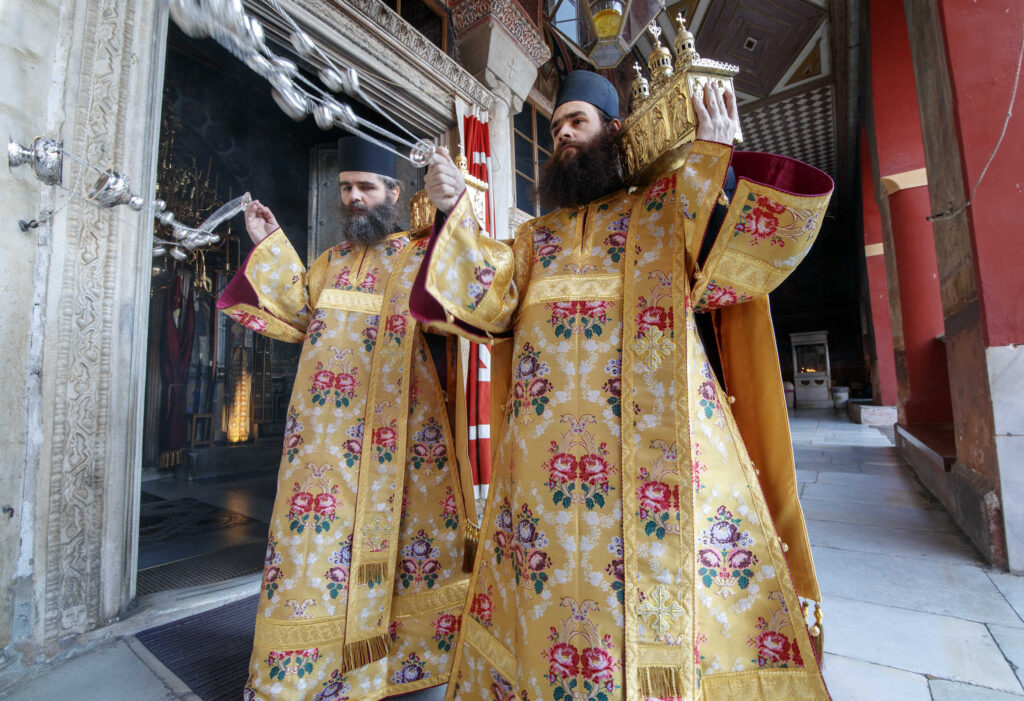
Diaconul este al treilea și cel mai mic grad al ordinelor majore ale clerului din Biserica Ortodoxă, în urma episcopului și a presbiterului. Cuvântul diacon (în greacă διάκονος) înseamnă „servitor”, „ordonanță”, „slujitor” sau chiar „mesager” și inițial se referea mai ales la o persoană care servea la mese.
În general, se presupune că slujba de diacon are originea în selecția a șapte oameni de către apostoli, printre care Sfântul Ștefan, pentru a ajuta la lucrarea caritabilă a bisericii timpurii, așa cum este consemnată în Faptele Apostolilor, Cap. 6.
Diaconița
Titlul diaconesei (διακόνισσα diakónissa) nu se găsește în Biblie. Cu toate acestea, o femeie, Phoebe, este menționată la Romani 16: 1–2 ca diacon (διάκονος diákonos) al bisericii din Cirene. Nimic mai specific nu se spune despre îndatoririle sau autoritatea ei, deși se presupune că a dus scrisoarea lui Pavel către romani.
Veșmintele diaconilor
Veșmintele diaconului sunt stiharul, orarul și mânecuțele.
Toate gradele de clerici poartă stiharul. Stiharul este o tunică cu mâneci lungi, care ajunge până la pământ. Îi amintește purtătorului că harul Duhului Sfânt îl acoperă ca cu o haină de mântuire și bucurie. Pentru diaconi, stiharul are mâneci largi și este confecționat dintr-o țesătură mai grea decât cea a preotului și episcopului, care își poartă stiharul sub alte veșminte.
A doua parte a veșmintelor diaconului este orarul. Orarul este o bandă îngustă de material pe care diaconul îl poartă înfășurat în jurul corpului său și drapat peste umărul stâng. Reprezintă harul Duhului Sfânt care în hirotonia sa unge diaconul ca untdelemnul (uleiul). Este veșmântul principal al diaconului și fără el acesta nu poate sluji. Când diaconul îi conduce pe oameni în rugăciuni sau îi invită la atenție, el ține un capăt al orarului său în mâna dreaptă și îl ridică. Epitrahilul preotului și omoforul episcopului sunt tipuri speciale ale orarului.
Părțile finale ale veșmintelor unui diacon sunt mânecuțele. Mânecuțele sunt manșete care sunt purtate în jurul încheieturilor, legate de un cordon lung. Acestea sunt purtate și de episcop și preot. Acestea servesc scopul practic de a nu fi deranjați de faldurile mânecilor în timpul serviciilor, mai ales când manipulează Sfintele Taine. De asemenea, ele îi reamintesc purtătorului că el nu slujește prin propria forță, ci cu ajutorul lui Dumnezeu.
Diaconii la sărbători
La marile sărbători, diaconii pot avea pe umeri cutii speciale – chivoturile – decorate, de obicei, în formă de Biserică, care în zilele noastre sunt goale, dar în trecut obișnuiau să țină cărbuni aprinși. Deoarece chivotul era destul de cald, diaconii obișnuiau să poarte pe umeri, sub chivot, o pânză groasă pentru a-și proteja hainele. În zilele noastre aceste pânze groase sunt transformate în voaluri decorative simbolizând harul Duhului Sfânt care îi acoperă.
De asemenea, la sărbători, diaconii au heruvimi – decorațiuni metalice de formă rotundă care simbolizează îngerii prezenți la Liturghie. De asemenea, dacă este prezent un episcop, ei țin pentru el dikerul (greacă: δικήριον sau δίκηρον) și trikerul (τρικήριον sau τρίκηρον) care sunt sfeșnice liturgice. Cuvintele înseamnă „lumânare dublă”, respectiv „triplă lumânare”, deoarece dikerul ține două lumânări, reprezentând natura dublă a lui Iisus, iar trikerul ține trei, reprezentând cele trei persoane ale Sfintei Treimi. Suporturile de lumânări au monturile într-un unghi astfel încât lumânările să se încrucișeze între ele.
Diaconii au voie să poarte un fes; aceasta se face ca un semn al suprimării propriilor sale gusturi, voințe și dorințe, precum și ascultarea lui canonică față de Dumnezeu prin episcopul său și normele liturgice și canonice ale Bisericii. Diaconilor li se permite să poarte rasă. În jurisdicțiile care folosesc cămăși ale clericilor, diaconii poartă, în general, o cămașă clerică cu guler.
În timpul serviciilor, diaconul este de obicei îmbrăcat într-un stihar cu orar care atârnă deasupra umărului stâng; cu excepția în apropierea împărtășirii cu Sfintele Taine, când diaconul, din punct de vedere practic, își va aranja stiharul ca un subdiacon.
Drepturi
În plus, pentru a-și îndeplini îndatoririle, diaconul are voie să fie în Proscomidiar, să fie în Altar și să se deplaseze prin Ușile Împărătești.