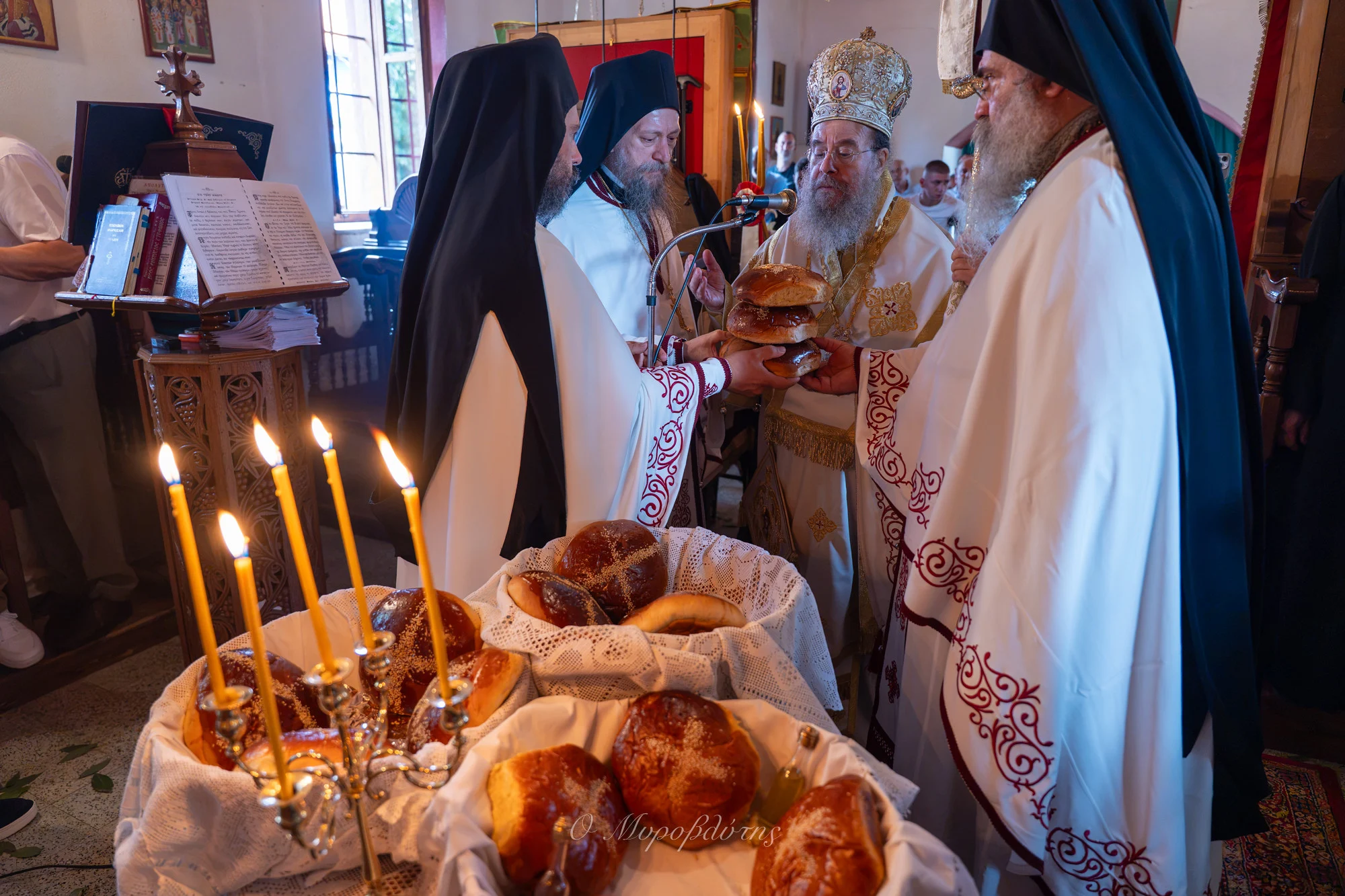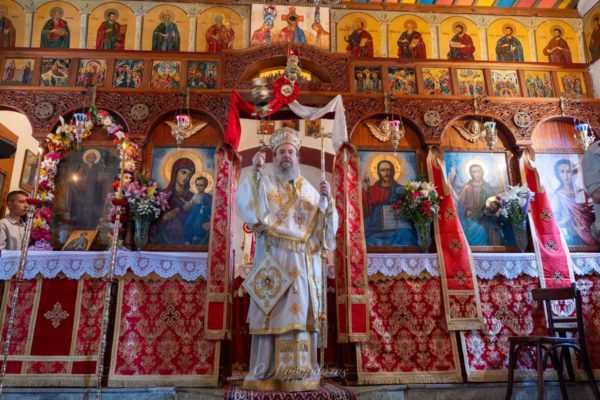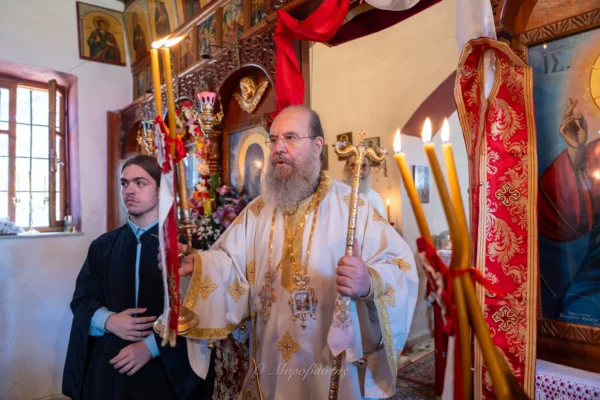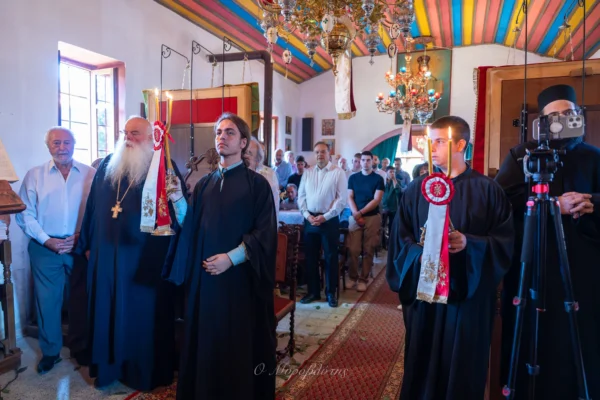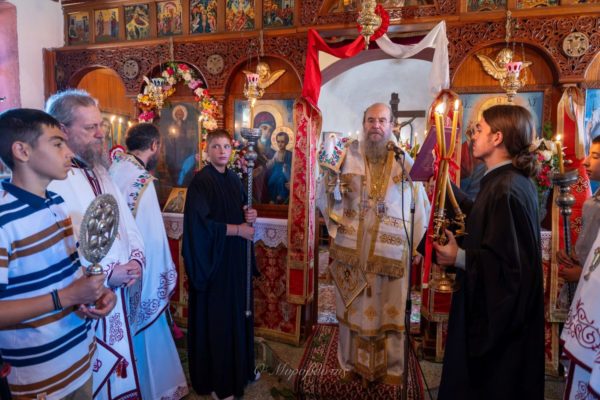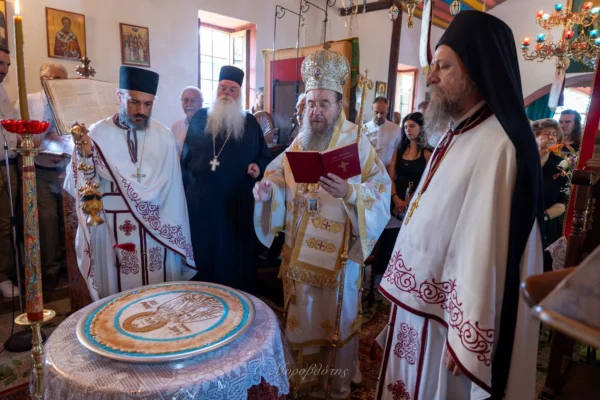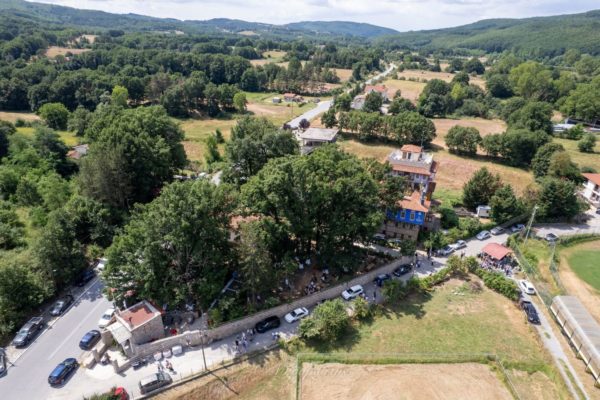
On 5 July, when the Orthodox Church commemorates the memory of our Venerable and God-bearing Father Saint Athanasios the Athonite, the chapel dedicated to the Saint at Palaiochori, Halkidiki, celebrated its patronal feast with great solemnity. The chapel is located within the monastic house “The Joy of Those Who Sorrow,” under the spiritual guidance of the preacher of the Holy Metropolis of Ierissos, Mount Athos and Ardamerion, Archimandrite Ignatios Riganas.
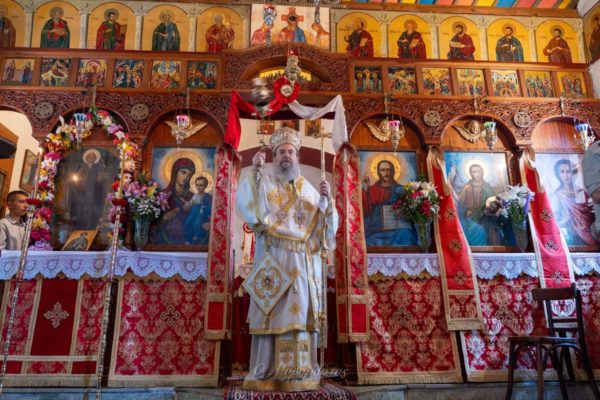
The services of Matins and the festal Hierarchical Divine Liturgy were presided over by His Eminence Metropolitan Theoklitos of Ierissos, Mount Athos and Ardamerion, concelebrating with Archimandrites Christodoulos Stylianos, Spyridon Topsis, and Gabriel Kalaitzis, all spiritual children of Fr Ignatios.
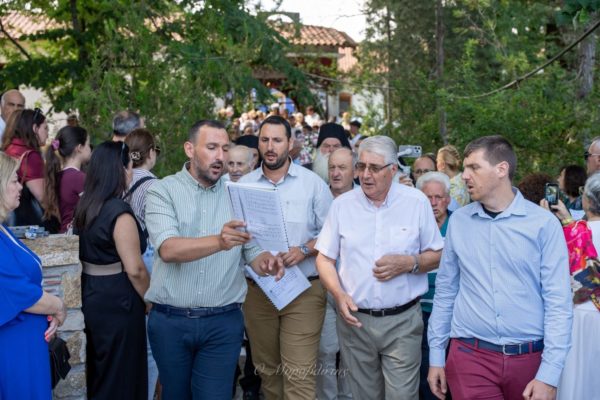
A large number of faithful from Palaiochori and the surrounding communities attended the celebration in honour of the great Athonite ascetic. Among those present were the Mayor of Aristotelis, Mr Stylianos Valianos; former Minister and former Mayor Mr Christos Pachtas; Deputy Mayor Mr Nikolaos Avgerinos; the President of the Community of Palaiochori, Mr Grigorios Katsiarmas; and other local officials.
In his homily, Metropolitan Theoklitos reflected on the life of Saint Athanasios the Athonite, who was born in Trebizond around 930 AD to a devout and prosperous family. He initially embraced the monastic life in Bithynia, at the Monastery of Kyminas under Saint Michael Maleinos, where he formed a close friendship with the Abbot’s nephew, Nikephoros Phokas, who would later become Byzantine Emperor.

The Metropolitan recalled that Saint Athanasios accompanied Nikephoros during the campaign against the Arabs in Crete, and in 961 AD began building the Great Lavra, laying the foundations of what would become the great monastic republic of Mount Athos. Beyond constructing the monastery itself, the Saint played a decisive role in organising and reforming cenobitic monastic life and composed the monastery’s Typikon, establishing a pattern that would shape Orthodox monasticism for centuries.
Saint Athanasios remained at the Great Lavra for forty years, leaving an indelible mark not only upon the monastery itself but upon the entire Athonite tradition and Orthodox monasticism throughout the world.
Concluding his sermon, Metropolitan Theoklitos said:
“Eden—that is, Paradise—is humanity’s true homeland. It was for this that mankind was created, and to this destination God calls every person through holiness. Every saint is the continuation of Christ’s life throughout the ages; each saint is Christ extended through history. The Apostle Peter clearly teaches us that the Christian is called to holiness: ‘As He who called you is holy, so be holy in all your conduct’ (1 Peter 1:15). The Lord commands this because, having become man, He grants to humanity all the divine energies necessary ‘for life and godliness’ (2 Peter 1:3). Thus, every believer who participates in the life of holiness can continually confess with the Apostle Paul: ‘I can do all things through Christ who strengthens me’ (Philippians 4:13). This is why every saint is Christ made manifest anew, living through Christ, in Christ, and for Christ.”
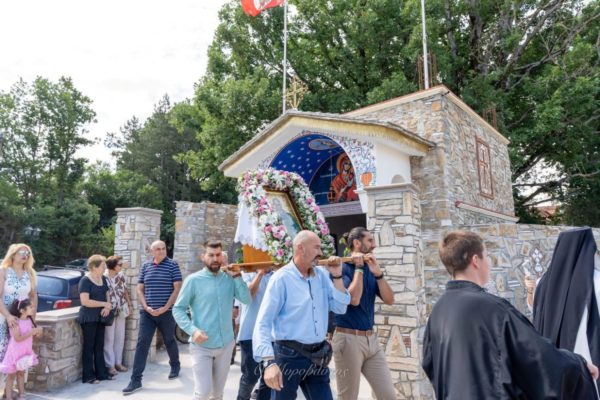
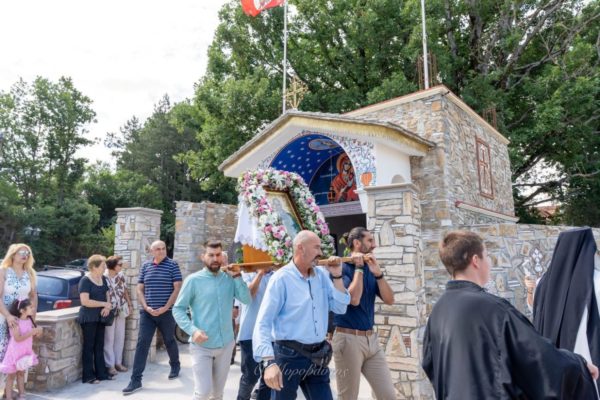
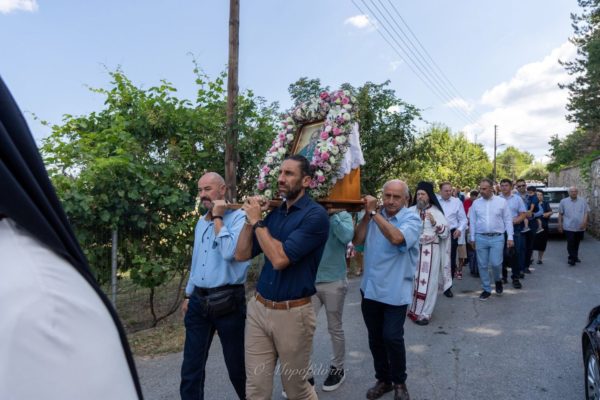
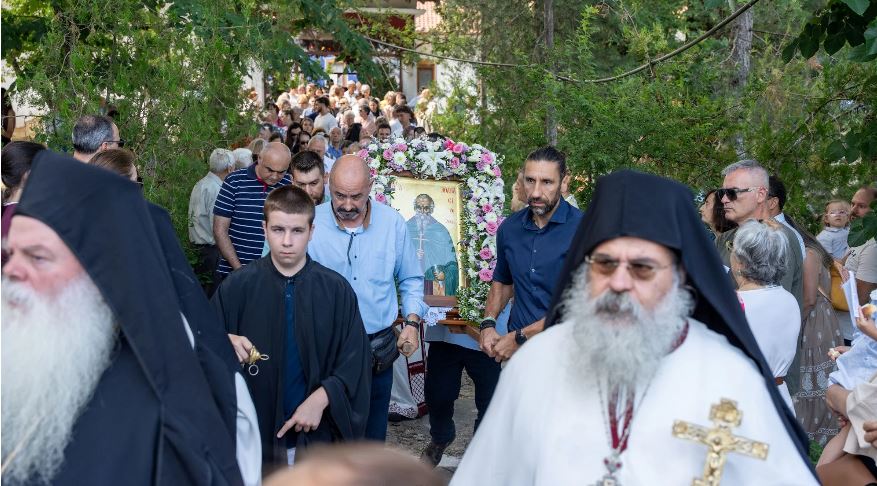
Following the Divine Liturgy, a solemn procession took place with the wonderworking icon of Saint Athanasios and the monastery’s holy relics. The celebrations concluded with the traditional kourbani meal, shared in fellowship by all the faithful.