
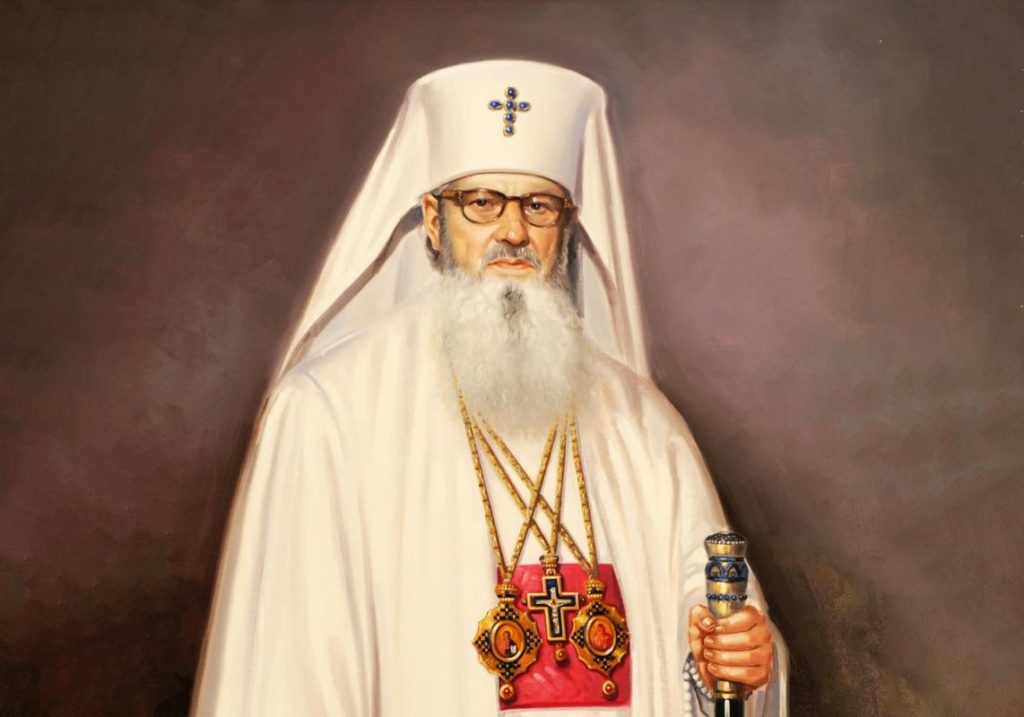
Wednesday marks 115 years since the birth of the late Patriarch Iustin Moisescu, who led the Romanian Orthodox Church as its fourth Patriarch. Born on March 5, 1910, in Cândești, then part of Muscel County (now Argeș County), he lost his father at a young age in the War of Reunification.
Academic Excellence and Theological Legacy
As a seminarian and later a theology student in Bucharest, his outstanding results earned him a scholarship from Patriarch Miron in the 1930s to continue his studies in Greece.
In 1937, at just 27 years old, he earned a doctorate in theology from the University of Athens, writing a thesis in Greek on Evagrius of Pontus, which remains a significant academic reference to this day.
This achievement placed him among the generation that revitalized Romanian theology, alongside Saint Dumitru Stăniloae and the future Archbishop Antim Nica of the Lower Danube.
He held various academic positions, including professor of Latin at Nifon Seminary in Bucharest (1937–1938) and professor of the New Testament at the Orthodox Theological Faculty of the University of Warsaw (1938–1939), where he succeeded the renowned theologian Nicholas Arseniev. In 1942, he was appointed professor at the Faculty of Theology in Cernăuți before transferring to the Faculty of Theology in Bucharest in 1946.
Episcopal Ministry and Leadership
Patriarch Iustin Moisescu entered the clergy in 1956, being ordained a deacon on February 23 by then-Patriarchal Auxiliary Bishop Teoctist (later Patriarch Teoctist) and a celibate priest the following day by Patriarchal Auxiliary Bishop Antim Nica. On February 26, 1956, he was elected Archbishop of Sibiu and Metropolitan of Transylvania, being enthroned on March 18 at the Metropolitan Cathedral in Sibiu.
In January 1957, he was elected Metropolitan of Moldavia and Suceava, where he initiated numerous ecclesiastical and cultural projects, establishing museums and religious heritage collections.
On June 12, 1977, he was elected Archbishop of Bucharest, Metropolitan of Ungro-Wallachia, and Patriarch of the Romanian Orthodox Church, assuming leadership as the Church’s fourth Patriarch. His enthronement took place at the Patriarchal Cathedral in Bucharest on June 19, 1977.
A Legacy of Theological Publishing
During his tenure as Patriarch, Iustin Moisescu emphasized the importance of publishing spiritual literature. Under his leadership, the Church issued a new Synodal Edition of the Bible (1982), a revised New Testament (1979), theological textbooks, doctoral theses, liturgical books, and church periodicals, including bulletins for Romanian Orthodox communities abroad.
He also initiated the Church Fathers and Writers collection, which remains a cornerstone of Orthodox theological publishing under the Romanian Patriarchate, as well as the Christian Art in Romania collection.
A Life Dedicated to Faith and Knowledge
Patriarch Iustin Moisescu reposed in the Lord on July 31, 1986, and was honorably buried in the Patriarchal Cathedral in Bucharest.
One of his pastoral exhortations remains a guiding principle for the faithful:
“Let no evil thoughts take root in our souls. Instead, let our minds always be focused on ‘whatever is true, whatever is noble, whatever is right, whatever is pure, whatever is lovely, whatever is admirable’ (Philippians 4:8). And let us keep our bodies free from impurity, for when one of us is stained by sin, not only do we become unworthy of being a dwelling place for God, but we also harm the purity of our brothers.”
Photo: Lumina Newspaper