20 Οκτωβρίου, 2019

Schitul Românesc Prodromu

Διαδώστε:

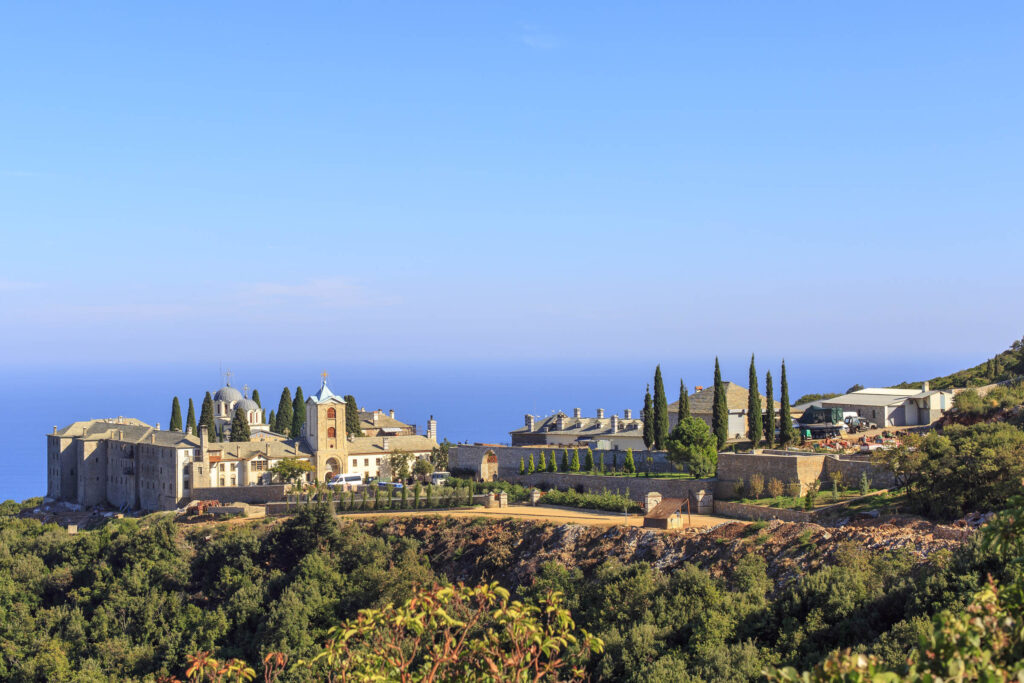
The Romanian Skete Prodromos (Romanian: Schitul românesc Prodromu, Greek: Τιμίου Προδρόμου) is a Romanian cenobitic skete belonging to the Great Lavra Monastery, located in the eastern extremity (called Vigla) of the Eastern Orthodox Monastic State of the Holy Mountain Athos, between the Aegean Sea in the East and the peak of Athos rising 2033 m in the West, nearby the cave of Athanasios the Athonite. Its name, Prodromos, is the Greek for "The Forerunner", a cognomen of St. John the Baptist. Spiritually, through its mother monastery, and like all the Athos peninsula, it is under the jurisdiction of the Ecumenical Patriarchate of Constantinople. The oldest records of Romanians in this place are from around 1750, when a few monks, under the guidance of a hieromonk Macarie, lived there in seclusion near the chapel of St. John the Baptist (which gave its name to the skete). Around 1800, there were three Romanian hermits, confessor Iustin the Vlach and two apprentices, Patapie and Grigore. It is said that once Iustin drove out a swarm of locusts from the Great Lavra by sprinkling them with holy water. As the number of Romanian monks increased around him, Iustin thought of broadening their cell by making it into a skete, and made a request to the Great Lavra, who agreed and gave its blessing. But Iustin died in 1816. His successors asked the Great Lavra for a deed to establish the skete. In 1820, they received a document of 13 articles, stating that a cell would be recognized "to the devout tribe of Moldavians for creating a coenobitic skiti". The operating conditions were that it belongs to the Great Lavra, that it will be a cenobitic skete, will have a "dikaios" (=hegumen), will have its own seal, and will obey to its duties to the Great Lavra (like the other Athonite sketes). The building of the skete’s church began in 1857 and ended 1866 when, on 21 May, on Saints Constantine and Helena feast day, it was sanctified. The service was conducted by hegumen Isaia Vicol from Golia Monastery, in Iaşi. The church was sacred to the Baptism of Jesus. Initially named Moldavian Skete Prodromos, after Wallachia and Moldavia united on January 24, 1859 giving birth to a new state, Romania, it changed its name to Romanian Skete Prodromos. In 1889, the Great Lavra signed a new deed to Prodromos Skete, strengthened by the seal of the Ecumenical Patriarch Dionysius V of Constantinople. It had 16 articles and, stated among other things, that the skete has the cognomen "Romanian"

Schitul Românesc Prodromu (greacă: Η ρουμανική Σκήτη του Τιμίου Προδρόμου) este un schit cenobitic (de obște) românesc aparținând Mănăstirii Marea Lavră, situat în extremitatea estică (numită Vigla) a Statului Monastic Ortodox Sfântul Munte Athos, între Marea Egee în est și vârful Athosului care se ridică la 2033 m în vest, în apropierea peșterii Sfântului Athanasie Athonitul. Numele său, Prodromos, este cuvântul grecesc pentru „Înaintemergătorul”, un cognomen al Sfântului Ioan Botezătorul.
Din punct de vedere eclesiastic, prin mănăstirea sa tutelară și ca toată peninsula Athos, se află sub jurisdicția Patriarhiei Ecumenice din Constantinopol.

Cele mai vechi înregistrări ale românilor din acest loc sunt din jurul anului 1750, când câțiva călugări, sub îndrumarea unui ieromonah Macarie, locuiau acolo în izolare lângă chilia Sf. Ioan Botezătorul (care a dat numele schitului). În jurul anului 1800, erau trei pustnici români, duhovnicul Iustin Vlahul și doi ucenici, Patapie și Grigore. Se spune că odată Iustin a alungat un roi de lăcuste din Marea Lavră stropindu-le cu aghiazmă.

Pe măsură ce numărul călugărilor români a crescut în jurul lui, Iustin s-a gândit să-și lărgească chilia, transformându-o într-un schit și a făcut o cerere Marii Lavre, care a fost de acord și a dat binecuvântarea. Iustin a murit, însă, în 1816. Succesorii săi au cerut Marii Lavrei o hotărâre pentru a întemeia schitul. În 1820, au primit un document de 13 articole, care afirmă că o chilie va fi recunoscută „neamului devotat al moldovenilor pentru crearea unui schit cenobitic”. Condițiile de funcționare erau că aparține Marii Lavre, că va fi un schit cenobitic, va avea un „dikaios” (= egumen), va avea propriul sigiliu și va asculta de îndatoririle sale față de Marea Lavră (ca și alte schituri Athonite).

Clădirea bisericii schitului a început în 1857 și s-a încheiat în 1866 când, la 21 mai, în ziua sărbătorii Sfinților Constantin și Elena, a fost sfințită. Sfințirea a fost făcută de egumenul Isaia Vicol de la Mănăstirea Golia din Iași. Biserica a fost închinată Botezul Domnului.
Denumit inițial Schitul Moldovenesc Prodromu, după ce Țara Românească și Moldova s-au unit la 24 ianuarie 1859 dând naștere unui nou stat, România, și-a schimbat numele în Schitul românesc Prodromu. În 1889, Marea Lavră a semnat o nouă hotărâre către Schitul Prodromu, întărită de pecetea patriarhului ecumenic Dionisie al V-lea din Constantinopol. Avea 16 articole și, se menționa, printre altele, că schitul are supranumele „românesc”.


Διαδώστε: