Sfântul Ioan Scărarul despre somn, rugăciune și cântatul în biserică
Διαδώστε:
Sleep is a particular state of nature, an image of death, inactivity of the senses. Sleep is one, but, like desire, its sources and occasions are many: that is to say, it comes from nature, from food, from demons, or perhaps, sometimes, from extreme and prolonged fasting, through which the flesh is weakened and at last longs for the consolation of sleep.
Just as prolonged drinking is a matter of habit, so too from habit comes too much sleeping.
Therefore we must struggle with the question of sleep, especially in the easy days of obedience, because a long-standing habit is difficult to cure.
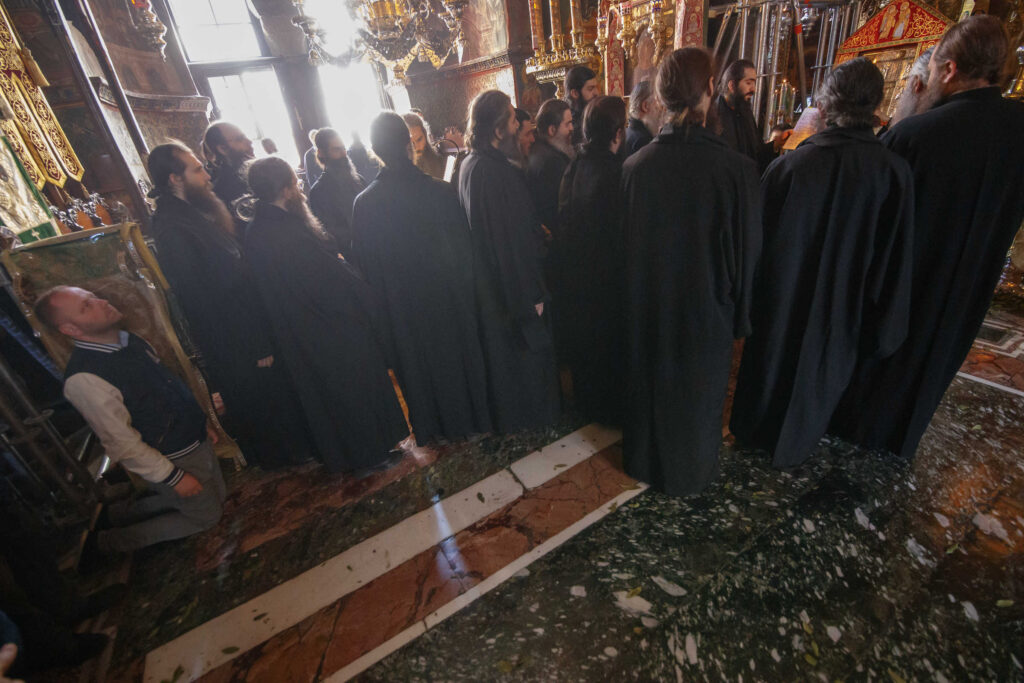
Let us observe and we shall find that the spiritual trumpet (the commencing of the service) serves as an outward signal for the gathering of the brethren, but it is also the unseen signal for the assembly of our foes. Thus so, some of them stand by our bed and when we get up urge us to lie down again: ‘Wait,’ they say, ‘till the preliminary hymns are finished; then you can go to church.’ Others plunge those standing at prayer into sleep. Some produce severe, unusual pains in the stomach. Others egg us on to make conversation in church.
Some entice the mind to shameful thoughts. Others make us lean against the wall as though from fatigue. Sometimes they involve us in fits of yawning. Some of them bring on waves of laughter during prayer, thereby desiring to stir up the anger of God against us. Some force us to hurry the reading or singing—merely from laziness; others suggest that we should sing more slowly for the pleasure of it; and sometimes they sit at our mouths and shut them, so that we can scarcely open them. He who realizes that he is standing before God will be as still as a pillar during prayer and will pray with heartfelt feeling; and none of the aforesaid demons will make sport of him.
Based on Saint John of the Ladder
Somnul este în oarecare fel o stare a firii, un chip al morţii, o oprire a simţurilor. Somnul e unul, dar ca şi pofta, are multe pricini şi feluri. Ε din fire, din mâncări, de la draci, sau poate şi dintr-o postire prelungită şi dusă până la capăt, de care trupul, slăbind, voieşte să se întărească prin somn.
Precum multa băutură vine din obişnuinţă, aşa şi somnul mult. De aceea să luptăm împotriva lui mai ales la începutul lepădării (de lume). Căci cu anevoie se tămăduieşte o obişnuinţă.
Să băgăm de seamă şi vom afla că atunci când sună trâmbiţa duhovnicească (clopotul de rugăciune n.n.), se adună fraţii în chip văzut şi vrăjmaşii în chip nevăzut. De aceea, stând lângă pat, unii din aceştia, după ce ne-am deşteptat, ne îndeamnă să ne întindem iarăşi pe pat, zicând : «Rămâi până ce se vor isprăvi cântările începătoare şi vei merge la biserică după aceea».
Unii apoi, stând noi la rugăciune, ne scufundă în somn; alţii ne împung în stomac mai mult ca deobicei; alţii atrag mintea la gânduri urâte; alţii ne îndeamnă să ne rezemăm de perete, socotindu-ne slăbiţi; ba uneori fac să vină peste noi multe căscături. Unii dintre ei ne stârnesc de multe ori la râs în vremea rugăciunii, ca să mişte supărarea lui Dumnezeu împotriva noastră. Alţii ne silesc să ne grăbim la stihuri din trândăvie. Alţii ne îndeamnă să cântăm mai prelungit din iubirea de plăcere. Ba uneori aşezându-ni-se în gură, o fac pe aceasta să se închidă şi să se deschidă greu.