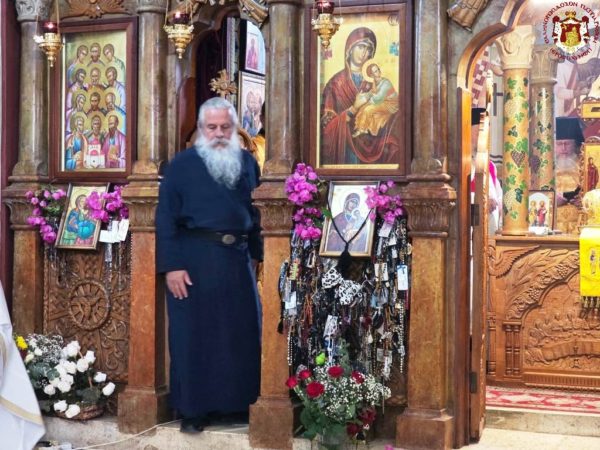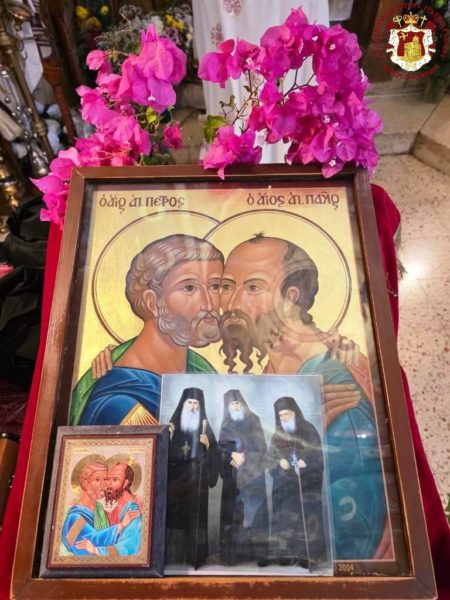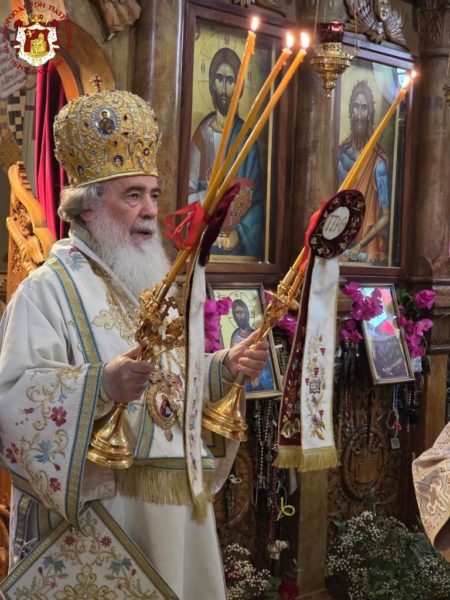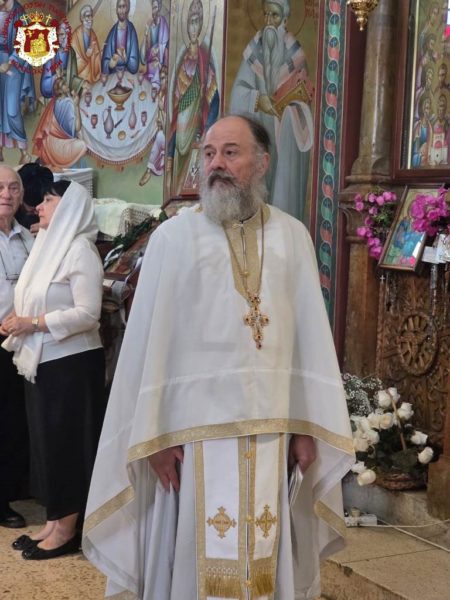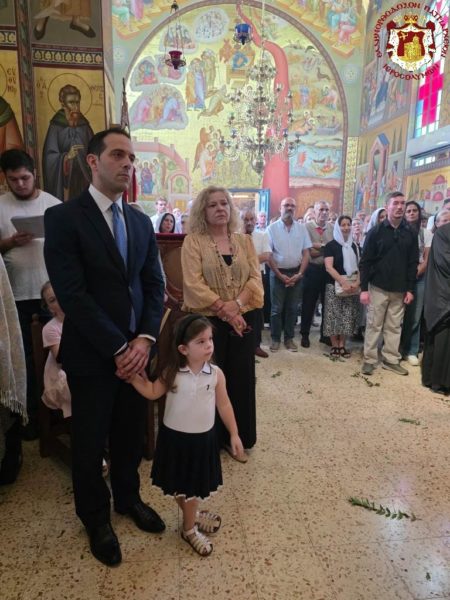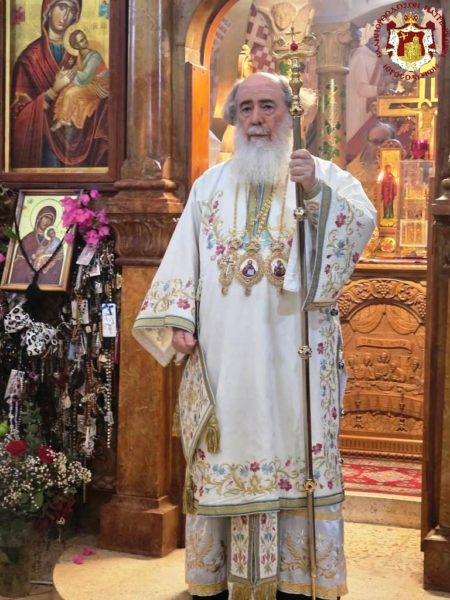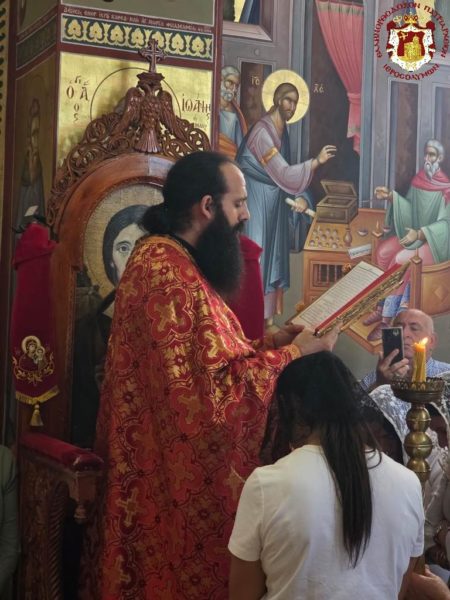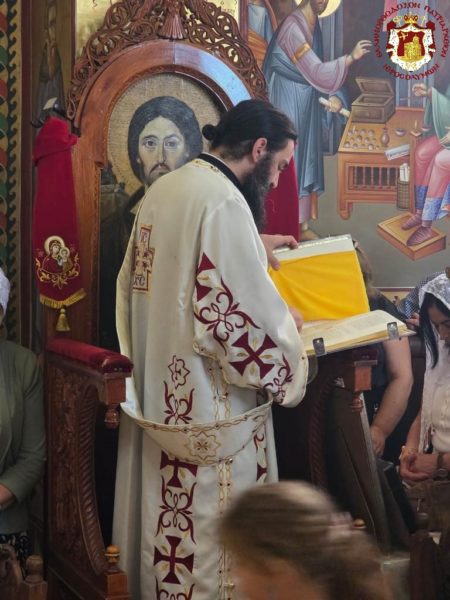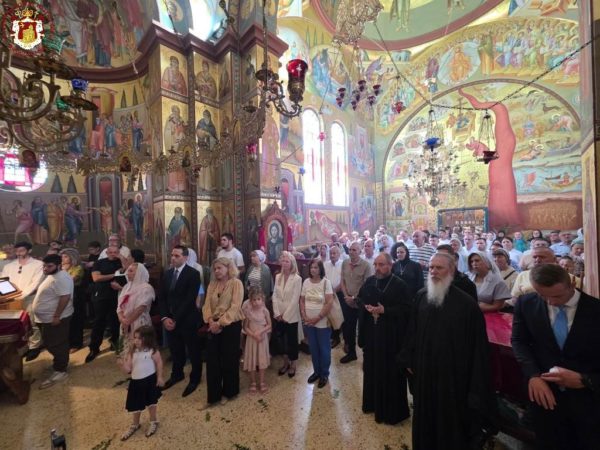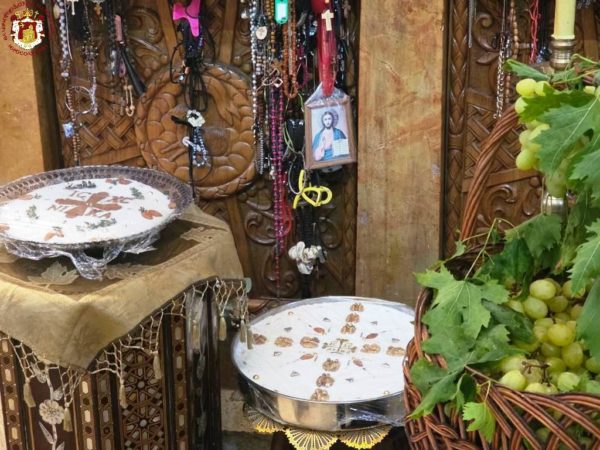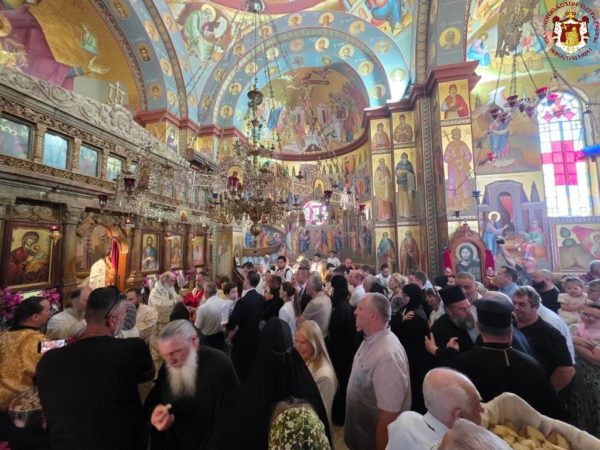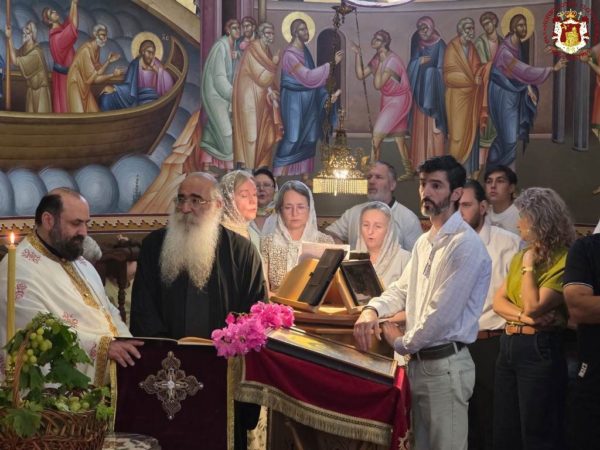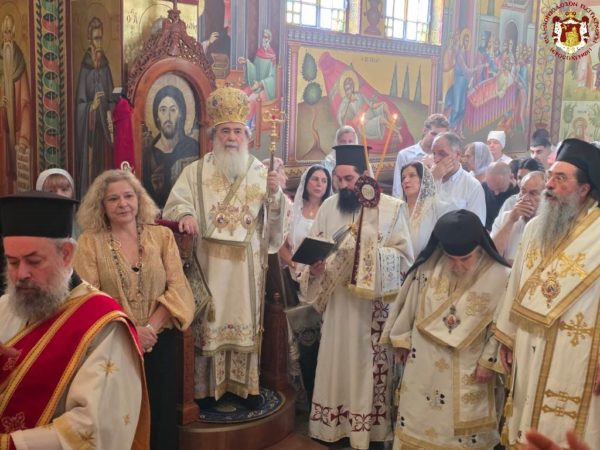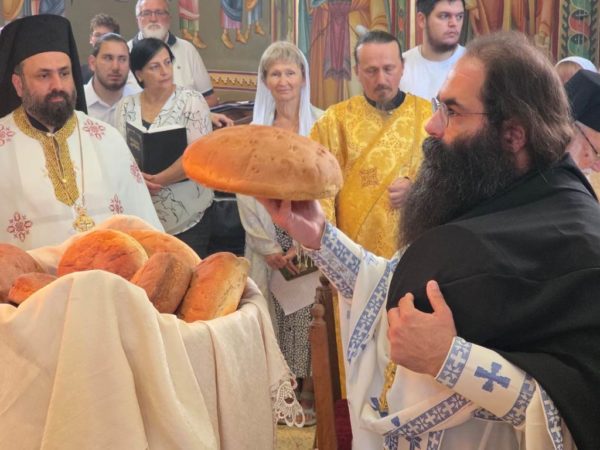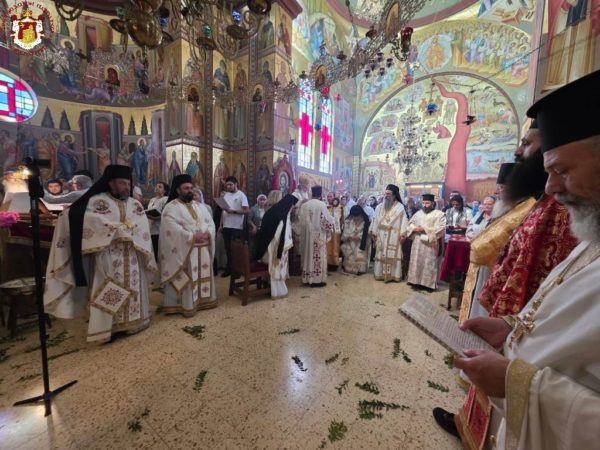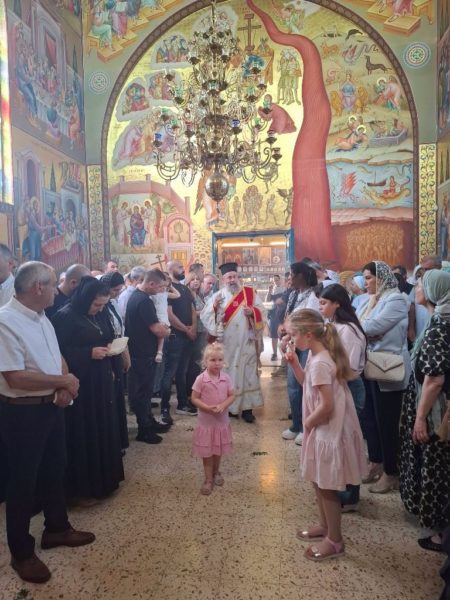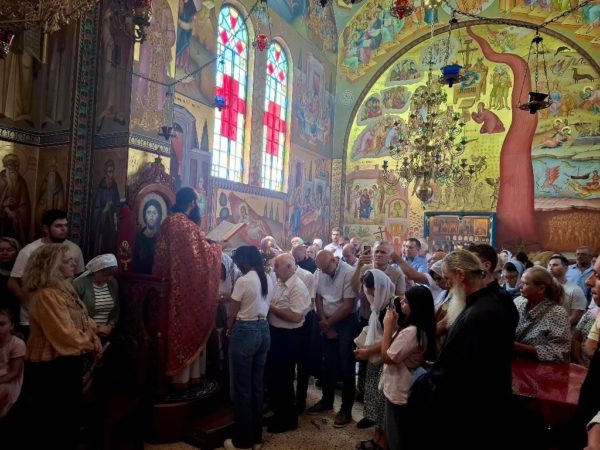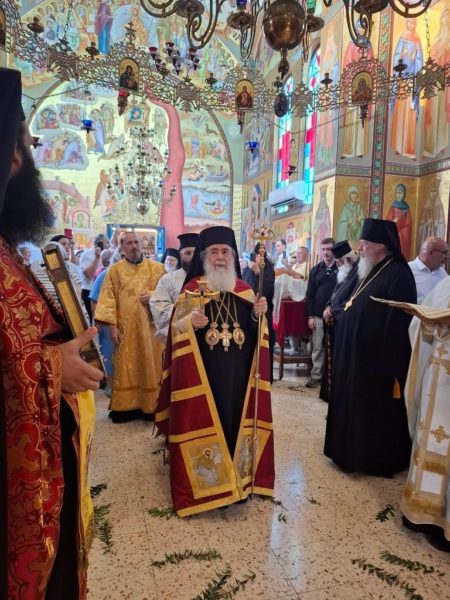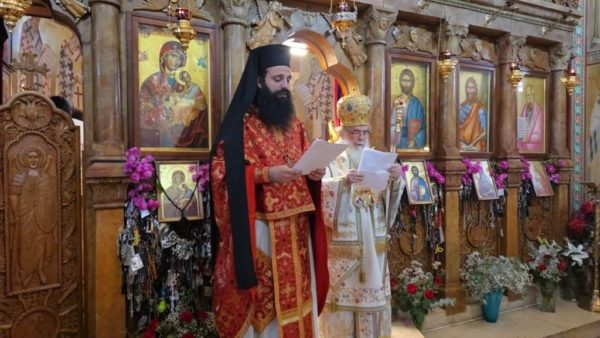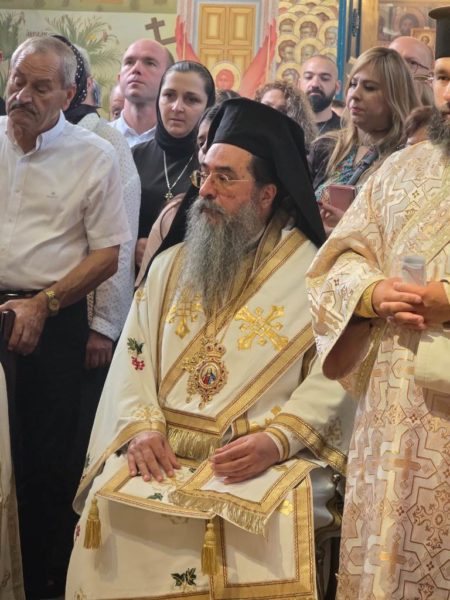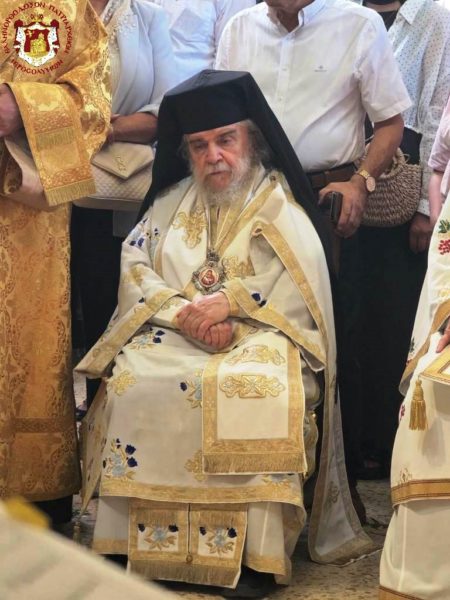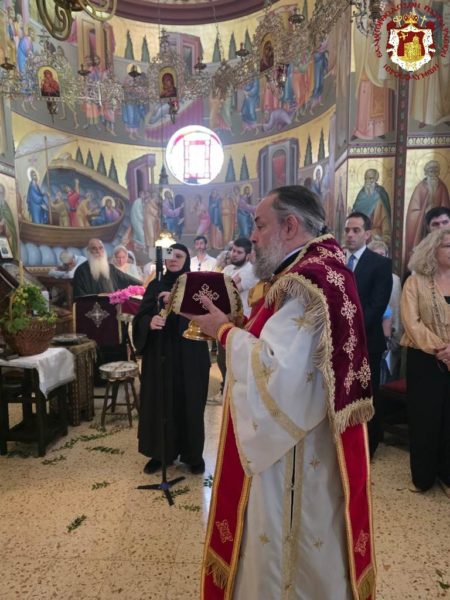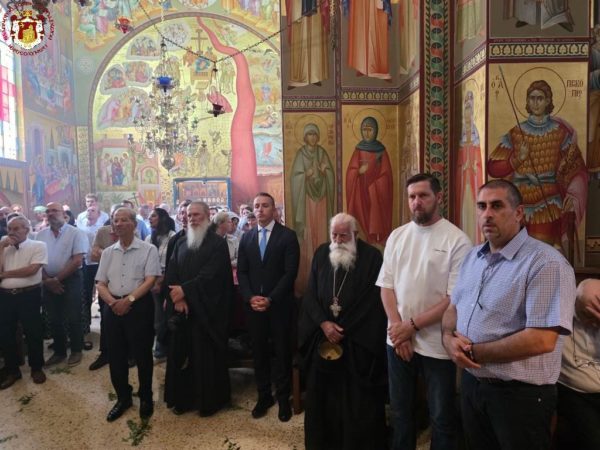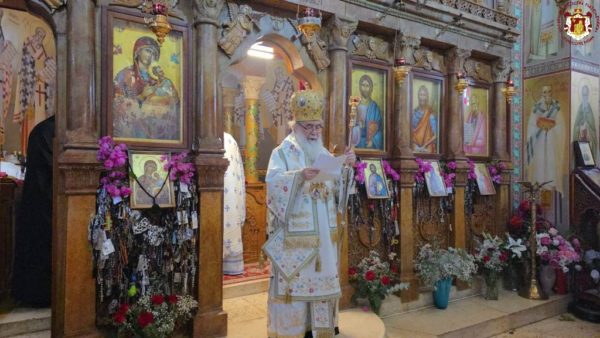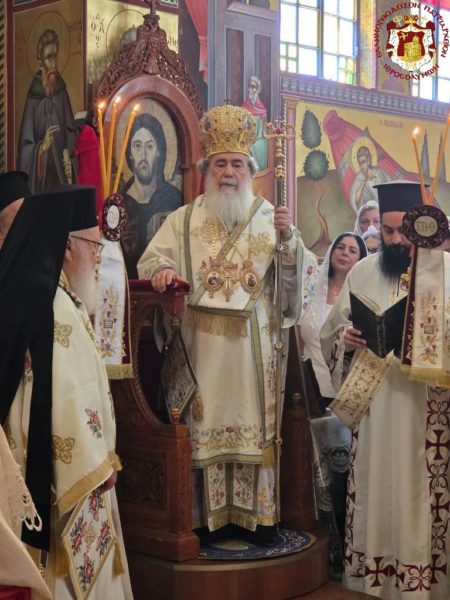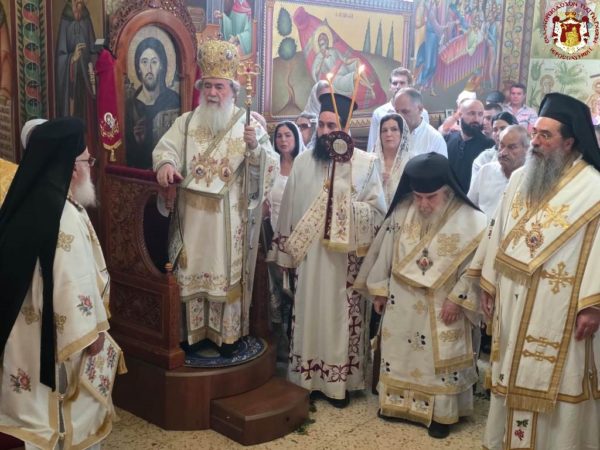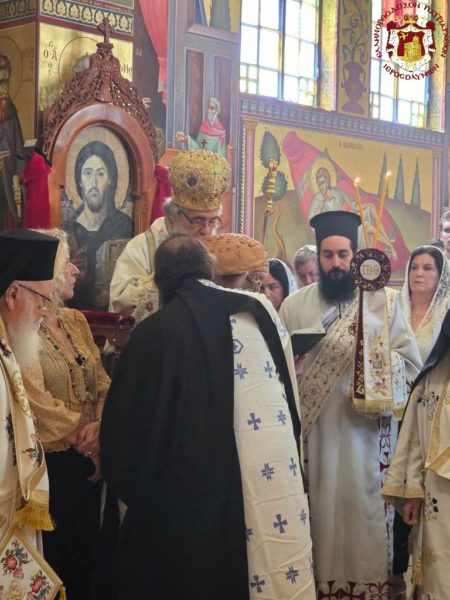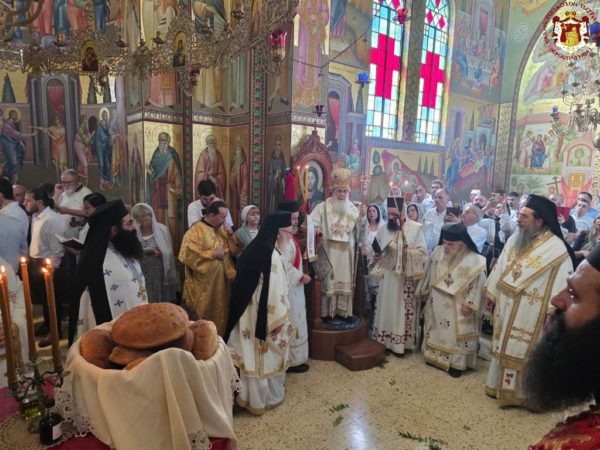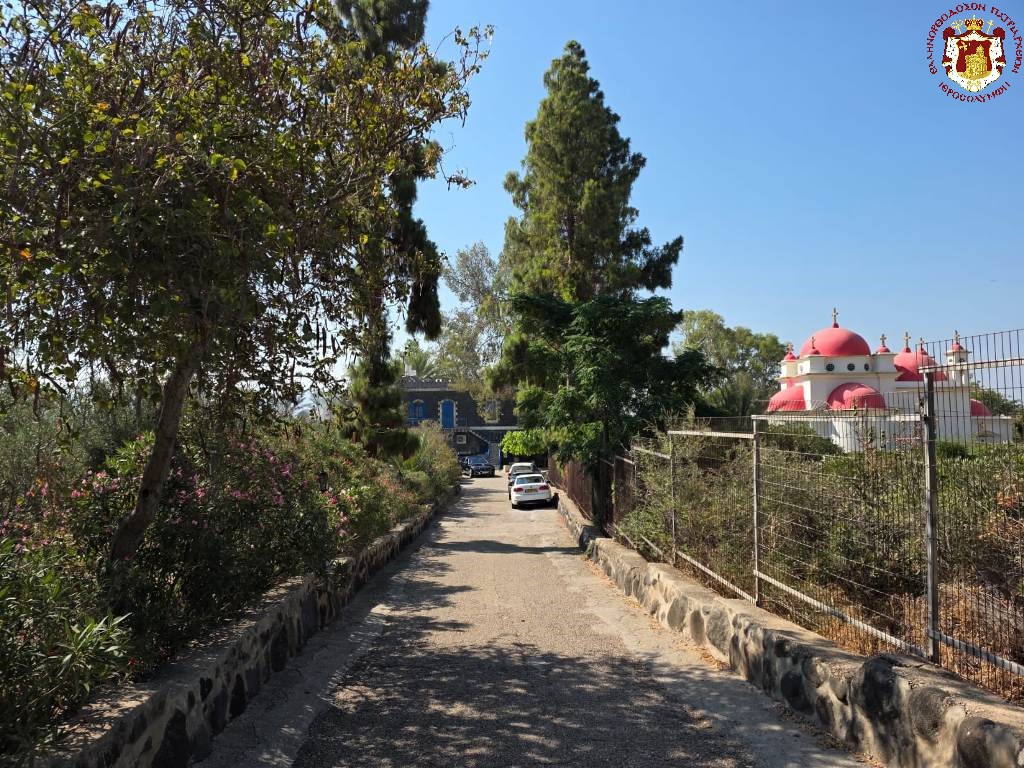
On Sunday, 29 June / 12 July 2026, the Patriarchate celebrated the commemoration of the Holy, Glorious and Chief Apostles Peter and Paul at the Holy Monastery dedicated to their honour, together with the Church bearing their name, which has stood since 1930, during the Patriarchal Office of the late Patriarch Damian, on the north-eastern shore of the Sea of Tiberias.
On this feast, the whole Church, and especially the Church of Jerusalem, commemorates the confession of the Apostle Peter: “You are the Christ, the Son of the living God” (Matthew 16:16), and the ministry of the Apostle Paul, who responded to Christ’s call while journeying to Damascus (Acts 9:1–19), proclaiming Christ to the Gentiles and being deemed worthy to ascend even to the third heaven.
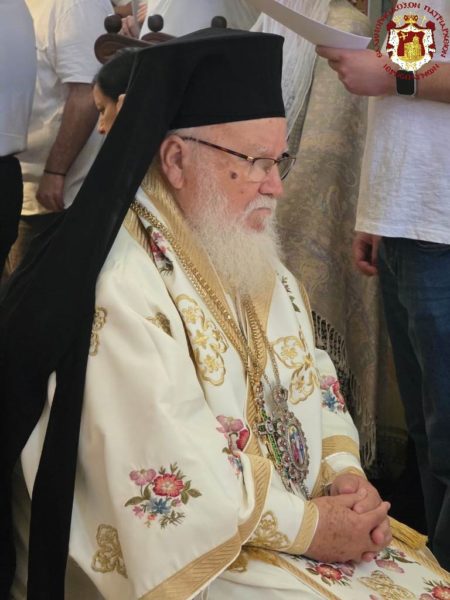
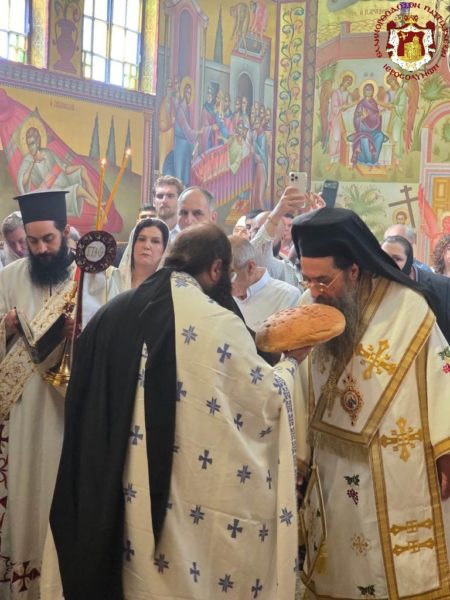
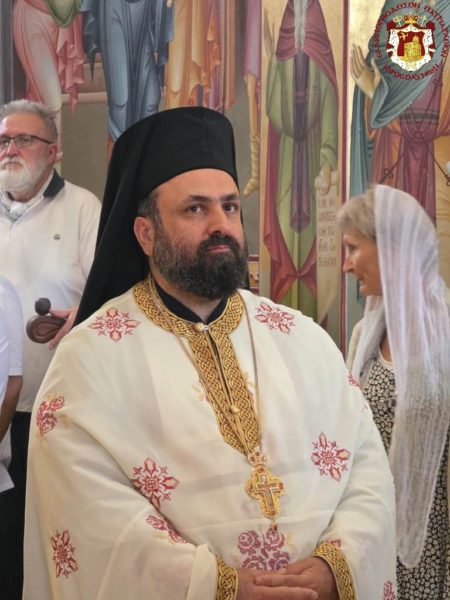
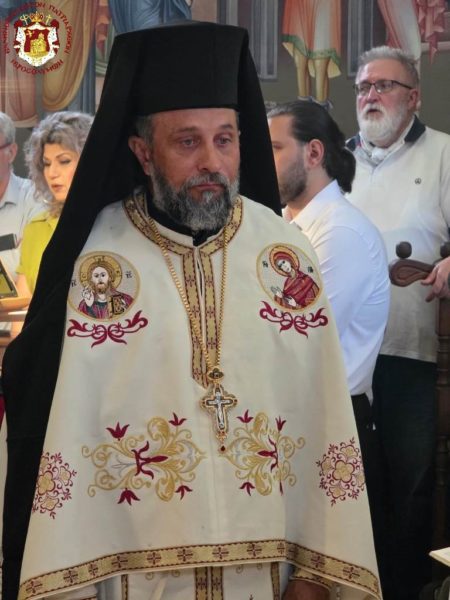
In honour of these two holy Apostles, His Beatitude our Father and Patriarch of Jerusalem, Theophilos III, presided over the celebration of the Divine Liturgy, concelebrating with His Eminence Metropolitan Kyriakos of Nazareth; the Elder Chief Secretary, His Eminence Archbishop Aristarchos of Constantina; the Patriarchal Commissioner of Acre and Ptolemais, His Eminence Metropolitan Makarios; Holy Sepulchre Hieromonks, including the Secretary of the Holy and Sacred Synod, Archimandrite Christodoulos; Archimandrite Artemios, Hegumen of Haifa; the representative of the Russian Orthodox Church Outside Russia (ROCOR), Archimandrite Romanos; priests from the neighbouring regions of Galilee; Archdeacon Mark and Hierodeacon Prodromos. The hymns were chanted in Greek, Arabic, Russian, and Romanian by the choir under the direction of His Eminence Archbishop Aristovoulos of Qatar. Also present were the Ambassador of Greece to Israel, Mrs Maya Solomou, Mr Mavroeides, and the Consul of the Consulate General of Greece, Mrs Anna Mantika, who joined monks, nuns, and numerous faithful from many Orthodox Churches in prayer.
To this devout congregation, His Beatitude delivered the divine sermon in Greek as follows:
“Therefore, beloved, looking forward to these things, be diligent to be found by Him in peace, without spot and blameless; and consider that the longsuffering of our Lord is salvation—as also our beloved brother Paul, according to the wisdom given to him, has written to you, as also in all his epistles…” (2 Peter 3:14–16).
Beloved brethren in Christ,
Pious Christians and pilgrims,
The grace of the Holy Spirit has gathered all of us today in this holy biblical shrine of Capernaum, where the sacred Monastery dedicated to the Holy, Glorious, All-Praised and Chief Apostles Peter and Paul stands, that we may celebrate with thanksgiving their most sacred commemoration.
The holy Apostles Peter and Paul hold a unique place among the twelve disciples and Apostles of the Lord, being honoured with the title of the Chief Apostles. This is because our Lord Jesus Christ Himself blessed them, proclaiming Peter to be the “rock” of the Church: “Jesus answered and said to him, ‘Blessed are you, Simon Bar-Jonah, for flesh and blood has not revealed this to you, but My Father who is in heaven. And I also say to you that you are Peter, and on this rock I will build My Church, and the gates of Hades shall not prevail against it. And I will give you the keys of the kingdom of heaven…’” (Matthew 16:17–19), the Evangelist Matthew writes. Likewise, the Lord declared Paul to be a chosen vessel, saying to Ananias: “Arise and go to the street called Straight, and enquire at the house of Judas for one called Saul of Tarsus…” and then: “Go, for he is a chosen vessel of Mine to bear My name before Gentiles, kings, and the children of Israel” (cf. Acts 9:11–15), as the Evangelist Luke records in the Acts of the Apostles.
As the divine Paul proclaims, the holy Apostles are the foundation of the Church of Jesus Christ, with Christ Himself being the chief cornerstone (cf. Ephesians 2:20). This is so because these Apostles received the Holy Spirit from the risen Lord Jesus after His Resurrection, as the Evangelist John bears witness: “So Jesus said to them again, ‘Peace to you! As the Father has sent Me, I also send you.’ And when He had said this, He breathed on them, and said to them, ‘Receive the Holy Spirit. If you forgive the sins of any, they are forgiven them; if you retain the sins of any, they are retained’” (John 20:21–23).
Interpreting these words of the Lord, Saint Cyril of Alexandria says: “Having invested them with the glorious dignity of the Apostolic office and, as I have just said, having appointed them stewards and ministers of the divine mysteries, Christ immediately sanctified them by imparting His own Spirit through His visible breathing upon them. So, we also are firmly persuaded that the Holy Spirit is not something foreign to the Son, but is consubstantial with Him and proceeds from the Father through Him. Christ thereby demonstrated that the gift of the Holy Spirit necessarily accompanies those whom He Himself appoints to the divine apostolic ministry.”
In simpler terms, after Christ had adorned the Apostles with the lofty dignity of the apostolic office and appointed them as stewards and ministers of the divine mysteries, He immediately sanctified them by giving them His own Spirit through His visible breath. In this way, we are assured that the Holy Spirit is not alien to the Son but is of one essence with Him and proceeds from the Father through the Son. Christ also showed that the gift of the Holy Spirit necessarily accompanies those whom He Himself ordains and appoints to the divine apostolic ministry.
This same Spirit, His own Holy Spirit, our Lord Jesus Christ likewise breathed upon the Chief Apostles Peter and Paul. Therefore, the wise Apostle Paul declares: “Therefore I make known to you that no one speaking by the Spirit of God calls Jesus accursed, and no one can say that Jesus is Lord except by the Holy Spirit. There are diversities of gifts, but the same Spirit. There are differences of ministries, but the same Lord. And there are diversities of activities, but it is the same God who works all in all” (1 Corinthians 12:3–6).
Such were the workings of the Holy Spirit bestowed upon the Chief Apostles. By the power of the Holy Spirit, the divinely-inspired Peter answered the Lord’s question, “Who do men say that I, the Son of Man, am?” (Matthew 16:13), declaring: “You are the Christ, the Son of the living God.” (Matthew 16:16). Likewise, the divine Paul, through the working of the Holy Spirit, revealed that “he was caught up into Paradise and heard inexpressible words, which it is not lawful for a man to utter.” (2 Corinthians 12:4). For this reason, the Church’s hymnographer exclaims: “Rejoice, O lights of those who dwell in darkness, rays of the Sun of Righteousness. Rejoice, Peter and Paul, unshaken foundations of the divine doctrines, friends of Christ, precious vessels…” And elsewhere he cries out: “O Peter, you abandoned what was not enduring and attained what truly is, like a wise merchant, clearly catching the most precious Pearl, Christ Himself.” Likewise of the Apostle Paul he proclaims: “Worthily has Christ bestowed upon you, O Apostle Paul, your citizenship in the heavens; for you did not long for any abiding city on earth, O blessed one, having become His faithful servant and steward of His divine mysteries.”
Indeed, the Chief Apostles Peter and Paul became stewards and ministers of the mysteries of God according to the grace bestowed upon them by Christ the Saviour Himself, in order to proclaim the Gospel also to the nations, that is, to the Gentiles, formerly given over to idolatry, as they themselves bear witness. Let us hear the divine Paul saying: “Nevertheless, brethren, I have written more boldly to you on some points, as reminding you, because of the grace given to me by God, that I might be a minister of Jesus Christ to the Gentiles, ministering the Gospel of God, that the offering of the Gentiles might be acceptable, sanctified by the Holy Spirit” (Romans 15:15–16).
Let us also hear the Evangelist Luke speaking of the Apostle Peter in the Book of the Acts of the Apostles: “While Peter was still speaking these words, the Holy Spirit fell upon all those who heard the word. And those of the circumcision who believed were astonished, as many as came with Peter, because the gift of the Holy Spirit had been poured out on the Gentiles also” (Acts 10:44–45).
Both of the Chief Apostles, being filled with the Holy Spirit and divine grace, proclaimed the Gospel to the nations with all power, preaching and teaching “that the gift of the Holy Spirit had been poured out on the Gentiles also” (Acts 10:45). This is because God shows no partiality. “In truth I perceive that God shows no partiality,” (Acts 10:34), the God-inspired Peter proclaims. Likewise, the wise Paul says: “Glory, honour, and peace to everyone who works what is good, to the Jew first and also to the Greek. For there is no partiality with God” (Romans 2:10–11). The Apostle Paul exerted every effort so that at least some might be saved: “I have become all things to all men, that I might by all means save some. Now this I do for the Gospel’s sake, that I may be partaker of it with you” (cf. 1 Corinthians 9:22–23). Here the divinely inspired Paul speaks of the purpose of the Gospel, and that purpose is none other than the salvation of mankind. As the Blessed Theodoret of Cyrrhus comments: “The purpose of the Gospel is the salvation of the people.” Particularly noteworthy is the divine Paul’s statement that: “God has appointed these in the Church: first apostles…” (1 Corinthians 12:28). According to Saint John Chrysostom, Paul says this because the Apostles had received all the gifts of the Holy Spirit: “For this reason he placed the Apostles first, since they possessed within themselves every gift.” The Apostles, as witnesses of the Risen Christ: “We know that this is indeed the Christ, the Saviour of the world.” (John 4:42), and as those who had become “eyewitnesses of His majesty” (2 Peter 1:16), are the very foundations of the Church, as the Apostle John testifies in the Book of Revelation: “Now the wall of the city had twelve foundations, and on them were the names of the twelve apostles of the Lamb” (Revelation 21:14).
The eminent place occupied by the Chief Apostles Peter and Paul, my beloved brethren, is beautifully expressed by the hymnographer of Christ’s Holy Church, with whom let us also proclaim: “Let us all praise the foremost of the Apostles, Peter and Paul, the divine luminaries of the whole world, the heralds of the faith, the God-inspired trumpets of theology, the proclaimers of the true doctrines, the pillars of the Church, and the overthrowers of error.”
May they be invisibly present in our midst, counting worthy of the immaterial gifts all those who honour their feast today.
Amen. Many blessed and peaceful returns!”
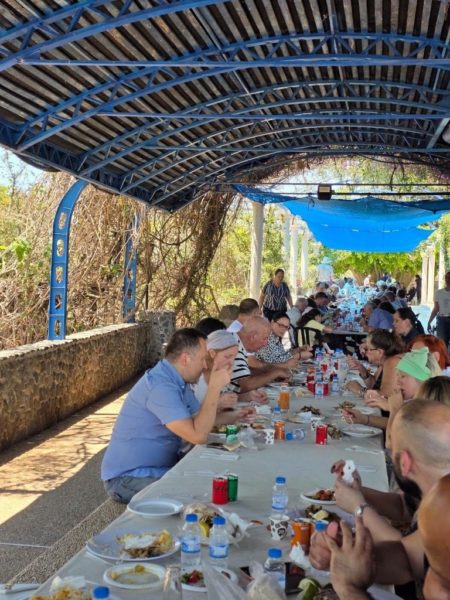
Following the Divine Liturgy, the industrious and zealous Hegumen, the monk Eirenarchos, offered refreshments at the monastery residence to provide relief from the intense heat, followed by a festive meal on the shore of the Sea of Tiberias.
From the Chief Secretariat