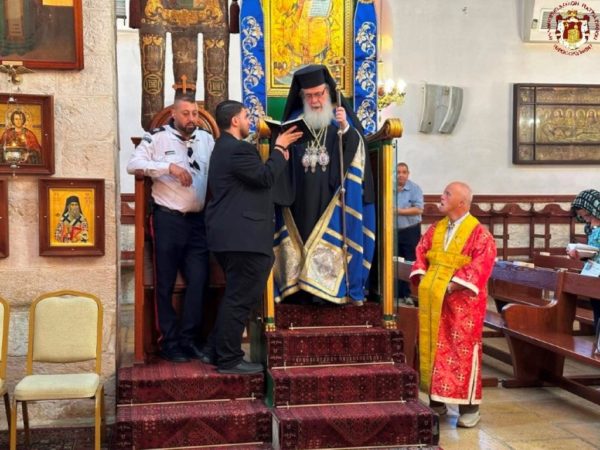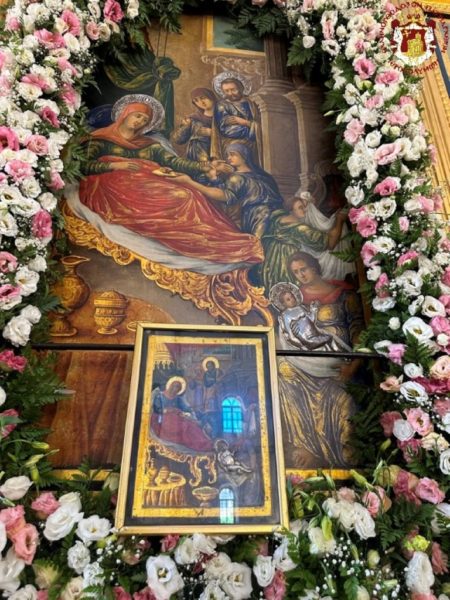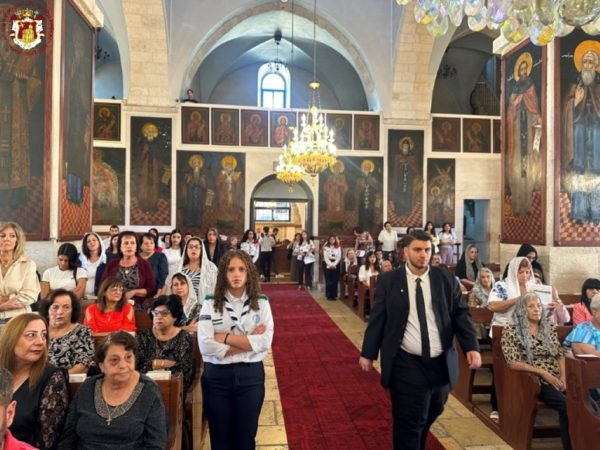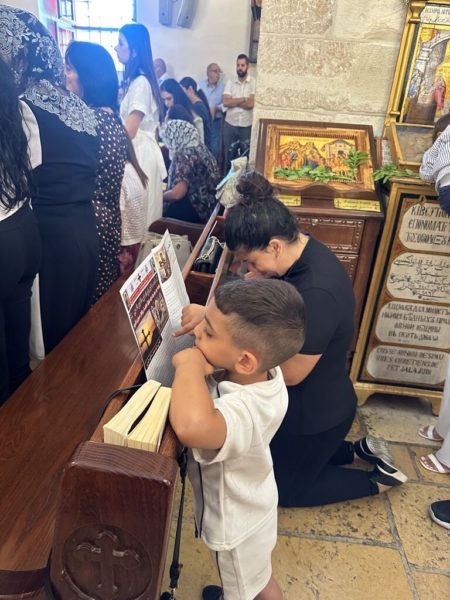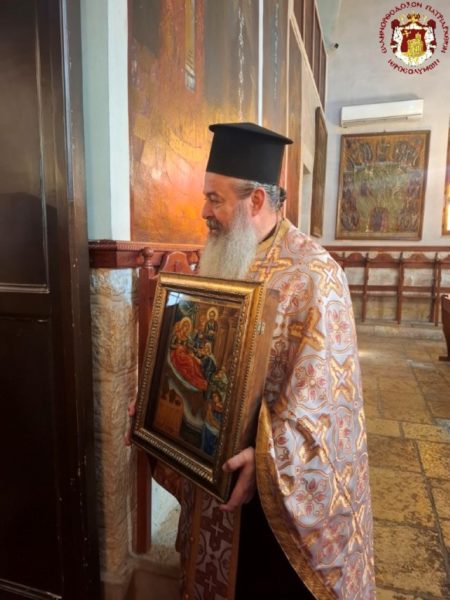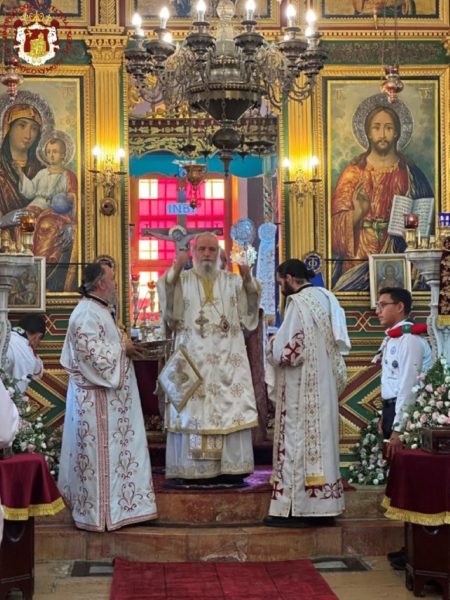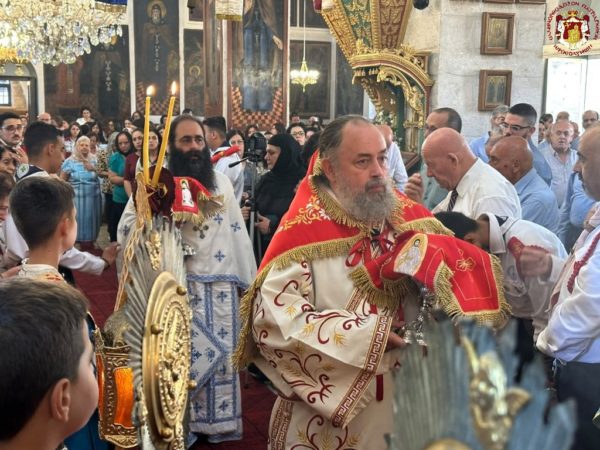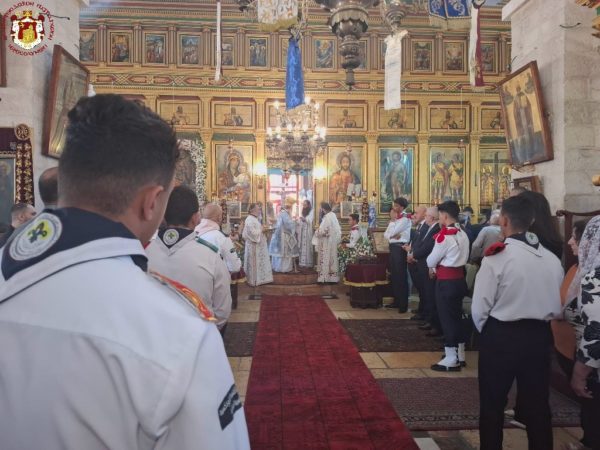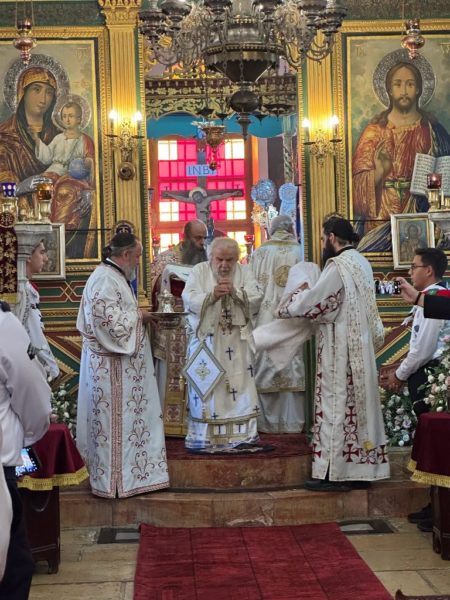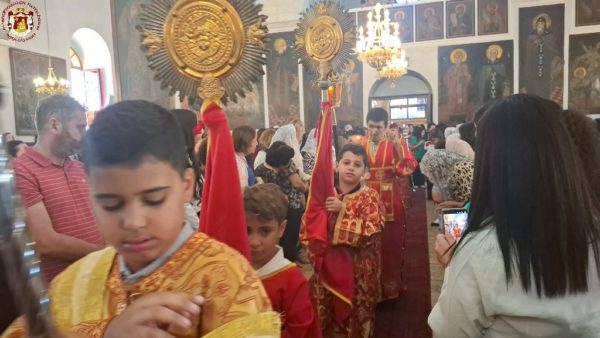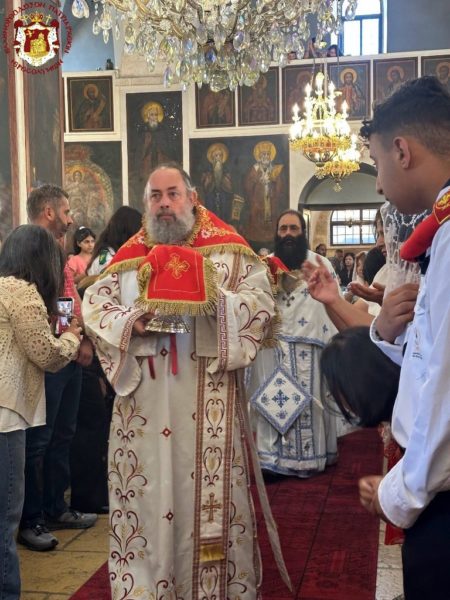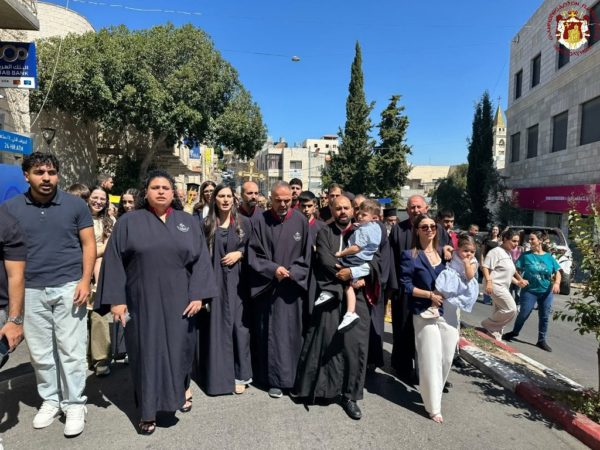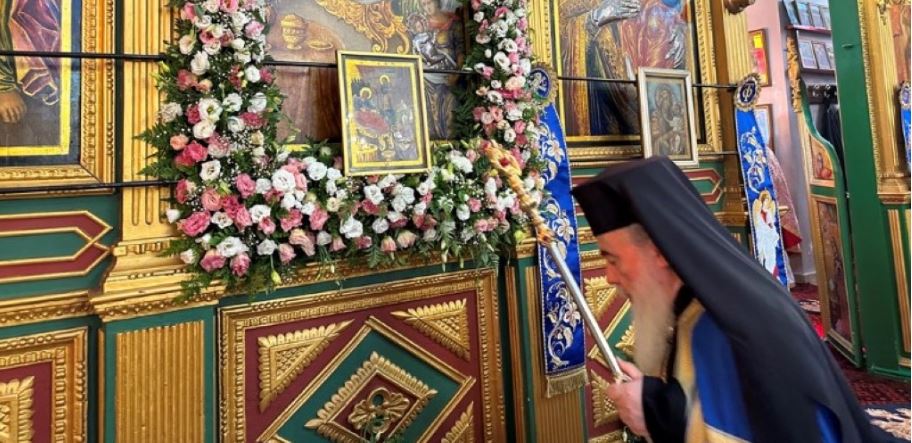
The commemoration of the Nativity of the Theotokos, celebrated according to the Church’s Typikon on 8 September, was moved this year to Sunday, 7/20 September 2026, and celebrated at the Church of the Nativity of the Theotokos in the town of Beit Jala, near Bethlehem.
On this feast, the Church commemorates that the Theotokos was the fruit of her aged and barren parents, the God-bearing ancestors Joachim and Anna.
This birth, as the Church hymns, “announced joy to all the world,” for “from her has dawned the Sun of Righteousness, Christ our God; and having loosed the curse, He has given the blessing; and having abolished death, He has bestowed upon us eternal life.”
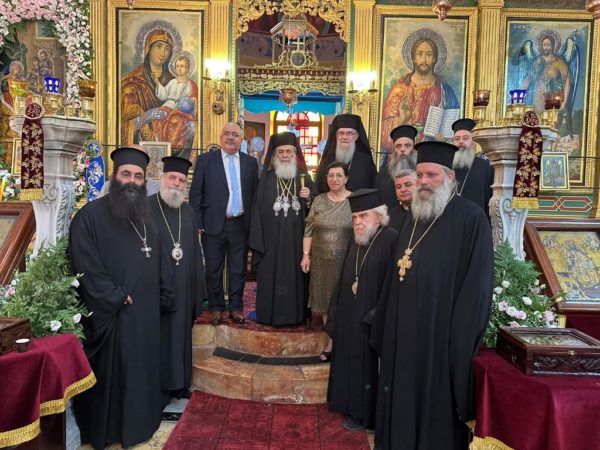
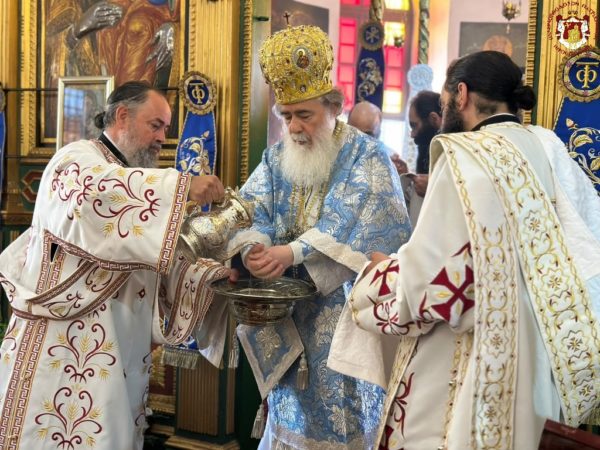
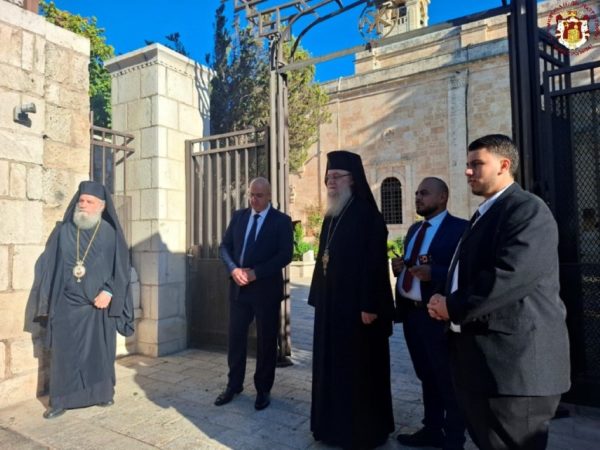
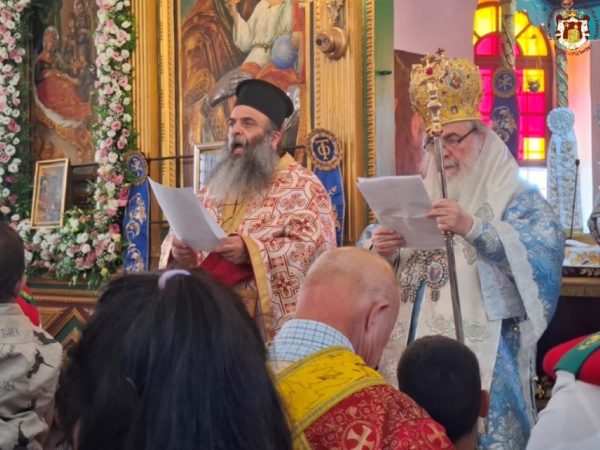
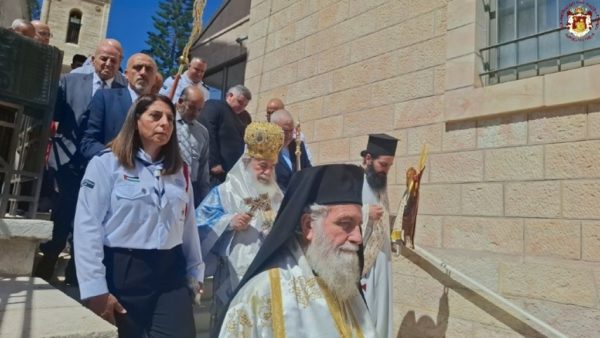
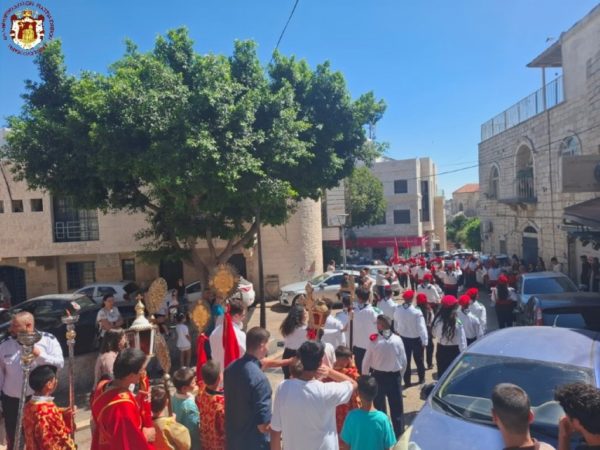
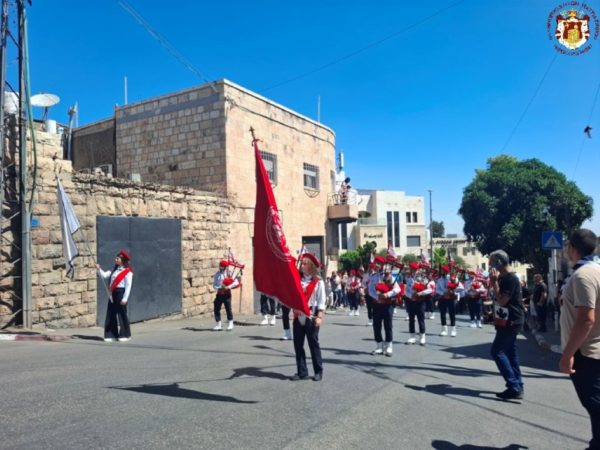
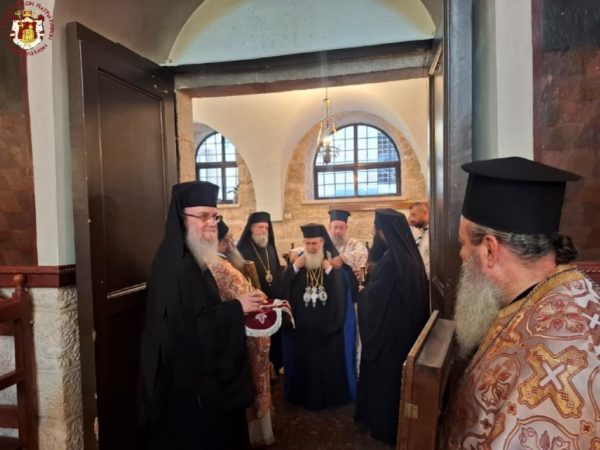
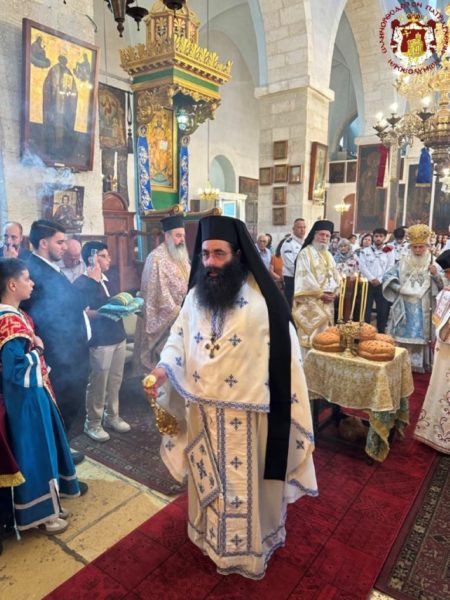
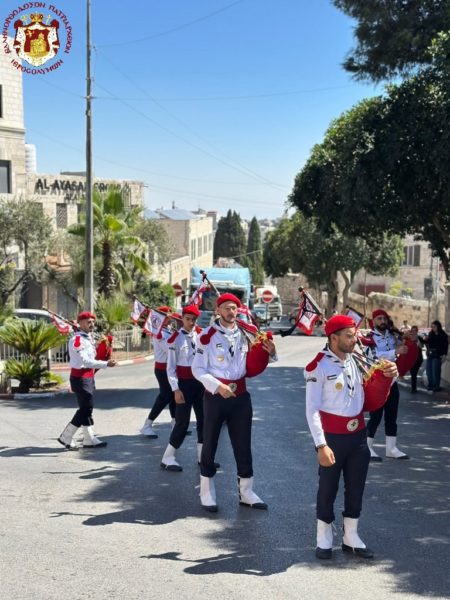
The Divine Liturgy in this Church was presided over by His Beatitude our Father and Patriarch of Jerusalem, Theophilos III, following His warm reception at the Beit Jala Rectory by the Hegumen, Archimandrite Ignatius, and the Parish Priests, Fr Joseph Khondali and Fr Elias, and thereafter His reception at the entrance of the Church by the faithful and the Scout Corps.
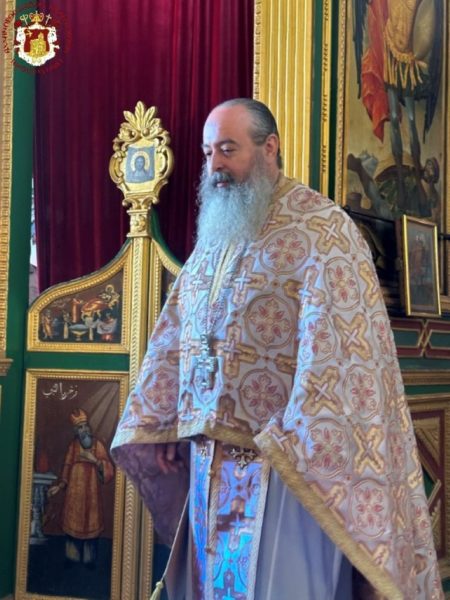
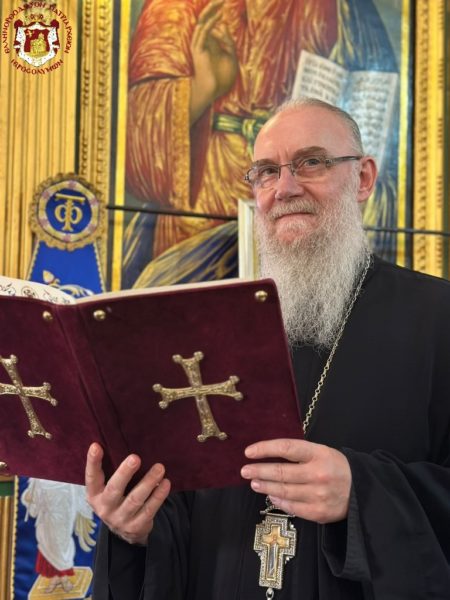
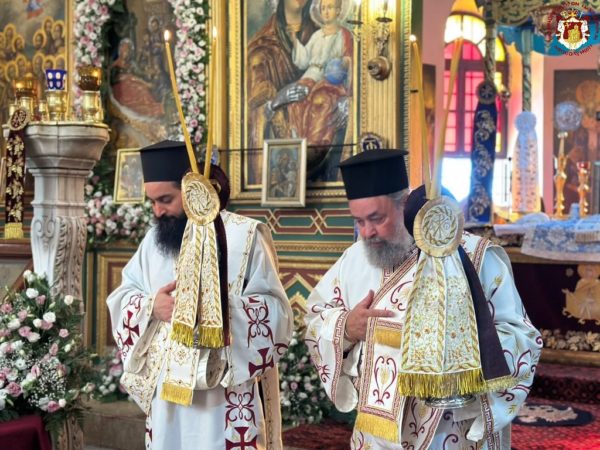
Concelebrating with His Beatitude were His Eminence the Metropolitan of Capitolias, Isychios, and His Eminence the Archbishop of Constantina, Aristarchos; the Secretary of the Holy and Sacred Synod, Archimandrite Christodoulos; the Parish Priests of the Church, Fr Youssef Khondali and Fr Elias; the Archdeacon, Fr Markos; and the Hierodeacon, Fr Prodromos.
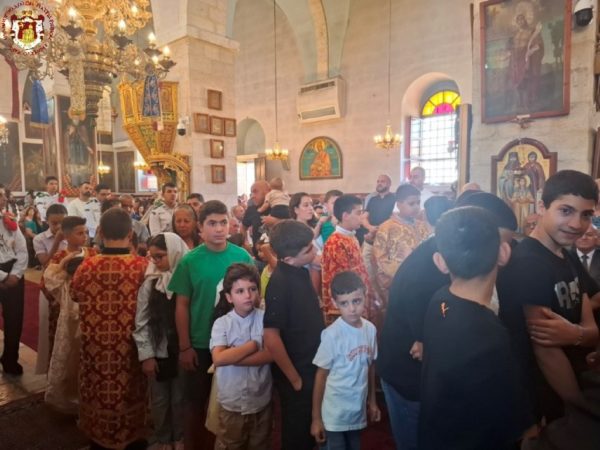
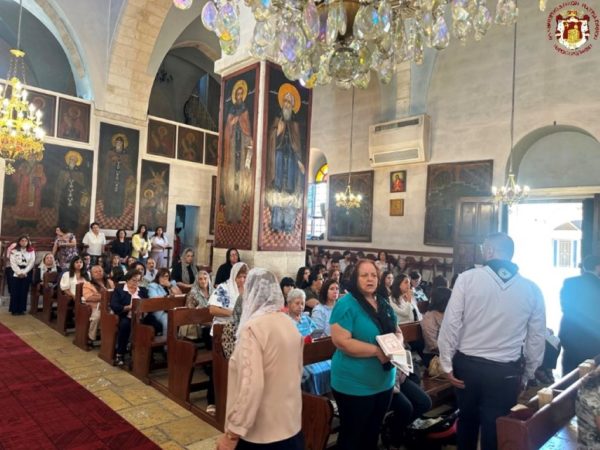
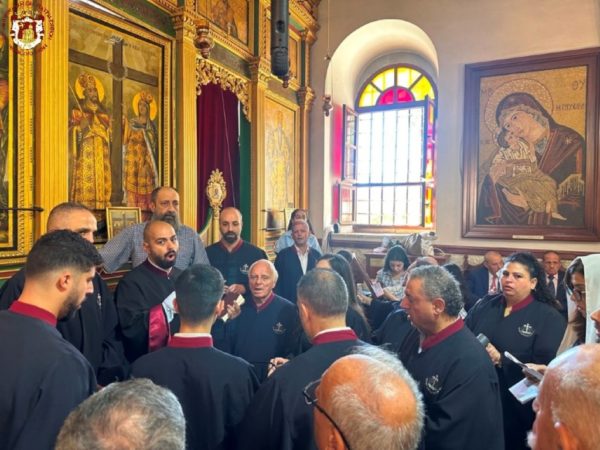
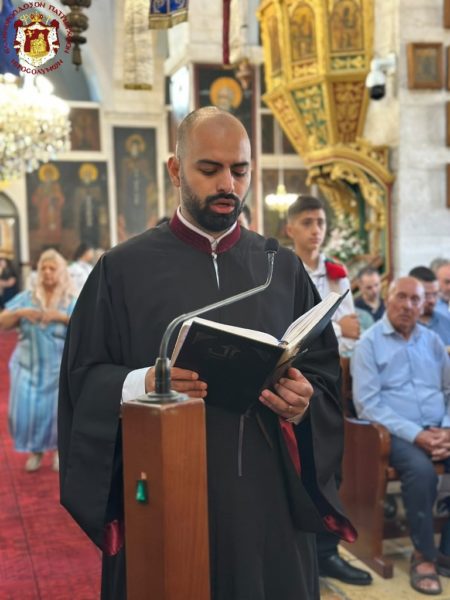
A great multitude of the faithful of the town also participated, in the presence of the Consul of Georgia in Tel Aviv. At the same time, the Church choir rendered the hymns with devotion under the direction of the choir master, Mr George Ghawali.
His Beatitude addressed this congregation with the following sermon:
“Today barren Anna gives birth to the God-child, the one chosen beforehand from all generations to be a dwelling-place for the King of all, and for Christ our God and Creator, in fulfilment of the divine economy; through whom we who are of the earth have been refashioned and renewed from corruption unto life without end,” the hymnographer proclaims, Saint Stephen the Hagiopolitis.
Beloved brethren in Christ,
Devout Christians,
The grace of our Most Blessed Lady Theotokos and Ever-Virgin Mary has gathered us all together today in this most sacred Church, that we may celebrate the prelude to universal joy, namely, her Nativity, the Nativity of the Theotokos, through whom we have been deified and delivered from the death of corruption.
The holy Church of God rejoices and exults, for the Virgin Mary, born of barren Anna, became the chosen vessel of God for the Incarnation and manifestation in the flesh of our Saviour Christ, thereby joining the heavenly with the earthly, as the hymnographer also says: “Today the gates of barrenness are opened, and the divine gate of virginity comes forth. Today grace begins to bear fruit, revealing to the world the Mother of God, through whom earthly things are joined to the heavens, for the salvation of our souls.”
“O clap your hands, all you peoples; shout to God with the voice of rejoicing” (Psalm 46:1), the Psalmist proclaims. Today, the God who rests upon the noetic thrones has prepared for Himself upon earth a holy throne. For from the fruitless root, namely, barren Anna, there has sprung forth for us a life-bearing plant, the Theotokos and His Mother, in fulfilment of the divine economy of the mystery which was hidden from the ages and from generations, but has now been revealed through the holy blood of the Most Holy Theotokos in her Son and Word of God, our Lord Jesus Christ. “Who, being in the form of God, did not consider it robbery to be equal with God, but made Himself of no reputation, taking the form of a servant, and coming in the likeness of men. And being found in appearance as a man, He humbled Himself and became obedient to the point of death, even the death of the cross” (Philippians 2:6–8), according to Saint Paul.
Worthy of particular note in this regard are the words of Saint John of Damascus: “For by the good pleasure of the Father, not through natural union, but through the Holy Spirit and Mary the Virgin, the Word became flesh in a manner transcending nature, without change, and dwelt among us. For the union of God with mankind takes place through the Holy Spirit. ‘Let him who is able to receive it receive it. He who has ears to hear, let him hear’” (Matthew 19:12; Luke 8:8).
This transcendent mystery of the union of God and Father, through the Holy Spirit and Mary the Virgin, constitutes the ontological foundation of the Incarnation of God the Word, that is, of the mystery of the divine economy revealed throughout the sacred history of Holy Scripture, both of the Old and the New Testaments.
Saint John of Damascus, extolling the Nativity of the Virgin Mary, writes concerning her: “For she gave birth to the world an inexhaustible treasure of good things. Through her, the Creator transformed the whole of creation unto that which is greater, through the mediation of humanity [of Christ]. For if man, standing between mind and matter, is the bond of the whole visible and invisible creation, the Creator, the Word of God, having been united to the nature of man, through him has been united to the whole of creation.”
Saint Cyril of Alexandria, defending the title Theotokos given to the Virgin Mary, writes: “The Word of God is said to have undergone a bodily birth, because He truly received from the holy Virgin the body which was united to Him; hence we also say that she is Theotokos … as having given birth to Him according to the flesh, although His birth from the Father is from before the ages” (Migne, P.G. 75, 1370).
This unity of the Creator, the Word of God, with the nature of mankind which He assumed from the Virgin Mary through the Holy Spirit, and through it with the whole of creation, is proclaimed and declared by the Body of Christ, that is, by our holy, God-established Church upon earth, within and through which the mystery of our salvation, ordained before the ages, is accomplished, as David chants: “For God is my King from of old, working salvation in the midst of the earth” (Psalm 73:12).
According to Saint Paul, the salvation which God wrought in the midst of the earth is none other than the mystery of godliness, concerning which he proclaims: “And without controversy great is the mystery of godliness: God was manifested in the flesh, justified in the Spirit, seen by angels, preached among the Gentiles, believed on in the world, received up in glory” (1 Timothy 3:16).
Interpreting this word of Saint Paul, Theodoretos of Cyrus says that the word “manifested” alludes to the former, eternal life of the Word: “Being God and the Son of God, and possessing a nature invisible to all, He became manifest to all by becoming man.” Likewise, Zigavenos says: “He who by nature is invisible was seen in the flesh which He assumed.” Of particular note in this connection are the words of Saint Paul in his Epistle to the Hebrews: “Inasmuch then as the children have partaken of flesh and blood, He Himself likewise shared in the same, that through death He might destroy him who had the power of death, that is, the devil” (Hebrews 2:14).
Commenting on this passage, Saint Athanasius the Great says: “Since it was not possible for Him to die—for He Himself, being immortal, could not die—He took to Himself a body capable of dying, so that, offering it as His own on behalf of all, He might offer it in sacrifice.” Christ assumed from the Virgin Mary a body capable of dying. This body is our human nature itself, which is why Saint Cyril of Alexandria also says: “We are in blood and flesh, and in corruptible and earthly bodies.”
Behold, therefore, why the hymnographer proclaims: “We hymn thy holy Nativity, and we honour thy conception without seed, O divine Bride and Bride of God, O Virgin; and with us the ranks of Angels and the souls of the Saints rejoice.” And again: “This is the day of the Lord; rejoice, O peoples! Behold, the bridal chamber of the Light, and the book of the Word of life, has come forth from the womb. And the gate facing east, having been brought forth, awaits the entrance of the Great Priest, alone and only entering Christ into the inhabited world, for the salvation of our souls.”
The gate facing east, which has been brought forth, is that of which the Prophet Ezekiel speaks, saying: “Then the LORD said to me: This gate shall be shut; it shall not be opened, and no man shall enter by it, because the LORD God of Israel has entered by it; therefore, it shall be shut” (Ezekiel 44:2). According to the God-bearing Fathers of the Church, the shut gate is the Most Blessed Mary, who remained a Virgin both before giving birth and after giving birth. “It is fitting that by these words [the Prophet Ezekiel] should signify to us the virgin womb, through which no one entered or came forth, save the Lord alone,” Theodoretos of Cyrus says.
We, my beloved brethren, who today honour the Nativity of our Most Holy Lady Theotokos, let us say together with the hymnographer: “Through the intercessions of her who was brought forth as the gate facing east,” that is, the Theotokos, “O Christ our God, send down peace upon the world and upon our region, and great mercy upon our souls.” Amen. Many happy returns!”
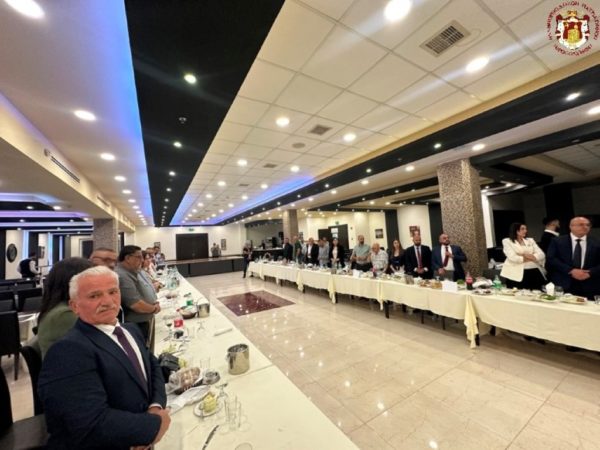
A reception in the reception hall of the Church followed, after which a midday meal was held at a restaurant in the town, attended by the Priests, the members of the Church Council and the parishioners of Beit Jala, as well as the Mayor of Beit Jala, Mr Vladimir Harrouf. His Beatitude addressed those present once again with the following address:
“Today, the God who rests upon the noetic thrones has prepared for Himself a holy throne upon earth; He who established the heavens in wisdom has, in His love for mankind, fashioned for Himself a living heaven. For from a fruitless root, the God of wonders and Hope of the hopeless, has caused a life-bearing plant to spring forth for us, His Mother. O Lord, glory to Thee,” proclaims the hymnographer of the Church.
Most Honourable Mr President and respected members of the Church Council,
Reverend Holy Fathers and brethren,
Devout Christians and pilgrims,
We offer glory and thanksgiving to the Holy Triune God, who has deemed us worthy to celebrate with you, in this Church dedicated to the Nativity of our Most Holy Lady Theotokos, the first-fruits of our salvation, she who was born of the righteous Joachim and Anna. This ever-Virgin and all-hymned Mary, through the superabundance of her goodness, became the living temple of God and is known, in truth and in her uniqueness, as Theotokos and Mother of God.
The Nativity of the Theotokos proclaimed joy and gladness to all the inhabited world, for the Sun of Righteousness, Christ our God, has dawned, He who shone upon “those who sat in darkness and the shadow of death” (Luke 1:79), and bestowed upon the world the light of life and truth. “Behold,” proclaims the hymnographer, “the bridal chamber of the Light and the book of the Word of life has come forth from the womb; and the gate facing east, having been brought forth, awaits the entrance of the Great Priest, alone and only admitting Christ into the inhabited world, for the salvation of our souls.”
The inhabited world rejoices and exults today, and in particular the holy Church of Christ our God, at the birth of Mary, the God-bearing and unwedded Bride, for the light of hope and freedom has shone upon our brethren and fellow human beings who find themselves in darkness and despair.
We say this because we celebrate an event which is not merely a remembrance of a past historical moment, but a revelation: “of the fellowship of the mystery which from the beginning of the ages has been hidden in God who created all things through Jesus Christ” (Ephesians 3:9), according to the divine Paul. And according to Saint John the Theologian: “Lord God Almighty, who is and who was and who is to come, Thou art righteous” (Revelation 11:17; 16:5). And as it is written, “He has dispersed abroad, He has given to the poor; His righteousness endures forever,” as the divine Paul proclaims, invoking the Psalmist (2 Corinthians 9:9; Psalm 111:9).
This righteous One, “who is and who was and who is to come,” Christ our God, who became incarnate from the pure blood of the Immaculate Mary and Theotokos, became our salvation, as the hymnographer expresses it, saying: “Let all creation rejoice, having perceived the joy, that from God-minded Anna, whose name means Grace, and from divine Joachim, beyond all hope, has been born Mary, the Immaculate and Pure Theotokos; whose fruit has become salvation for mankind, Christ God, who ineffably became incarnate from her.”
Therefore, my beloved brethren, we who honour the Nativity of our Most Holy Lady Theotokos are called “to come to the knowledge of the truth” (1 Timothy 2:4), “having put off the old man with his deeds, and having put on the new, who is renewed” (Colossians 3:10), that is, Christ.
Many peaceful and blessed returns!
The Feast of the Nativity of the Theotokos was celebrated, in accordance with the Status Quo, at the Church of the Dormition of the Theotokos, at the Theotokos’ Tomb in Gethsemane, by His Eminence the Archbishop Theophanes of Gerasa.
Following the Divine Liturgy, the Hegumen of the Shrine, His Eminence Metropolitan Joachim of Helenoupolis, hosted a reception at the Rectory for the Episcopal Entourage and the faithful.
From the Chief Secretariat