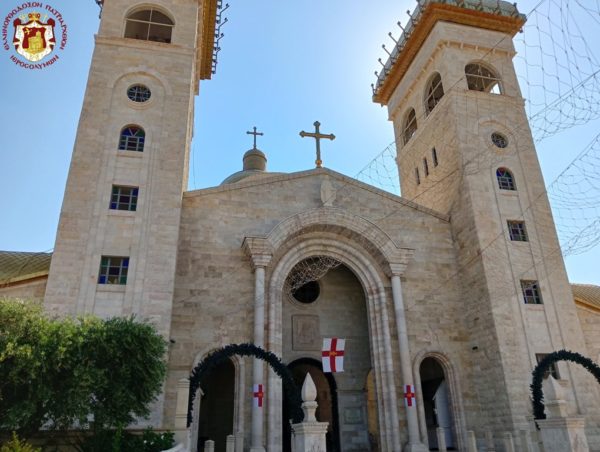
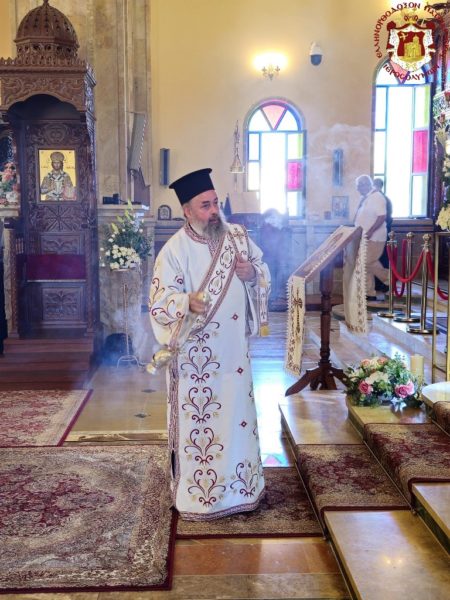
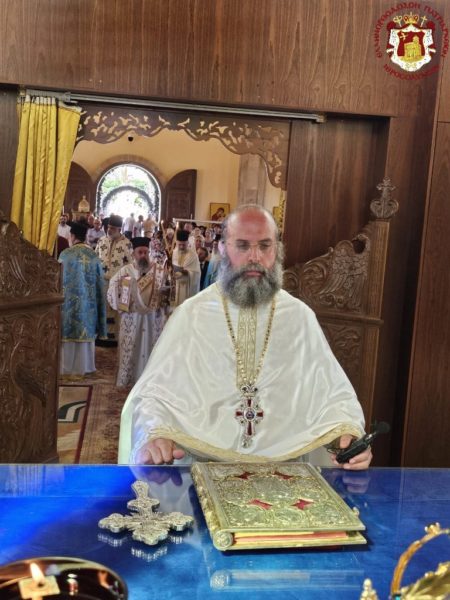
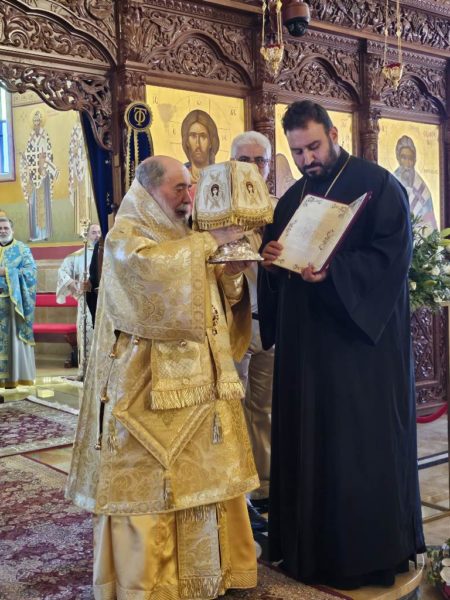
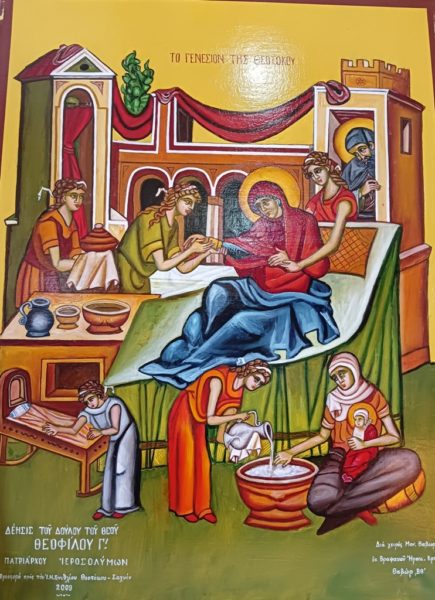
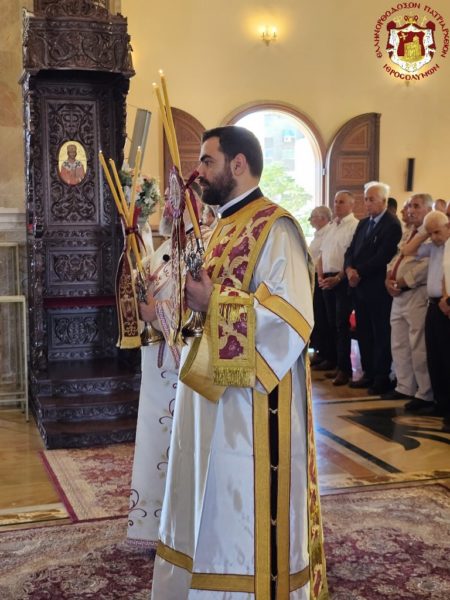
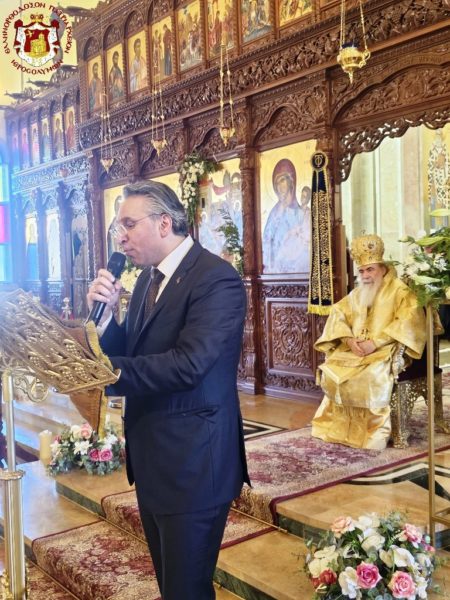
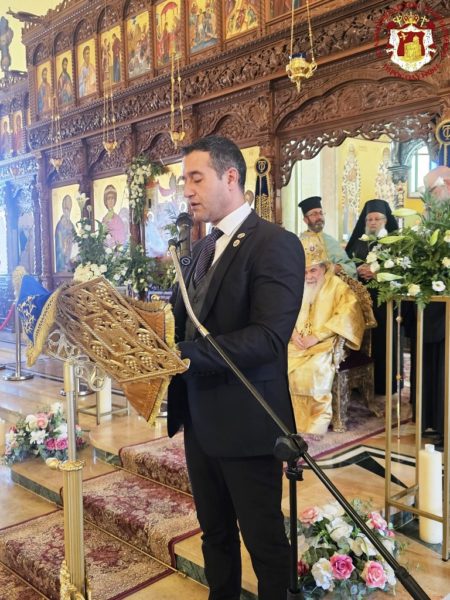
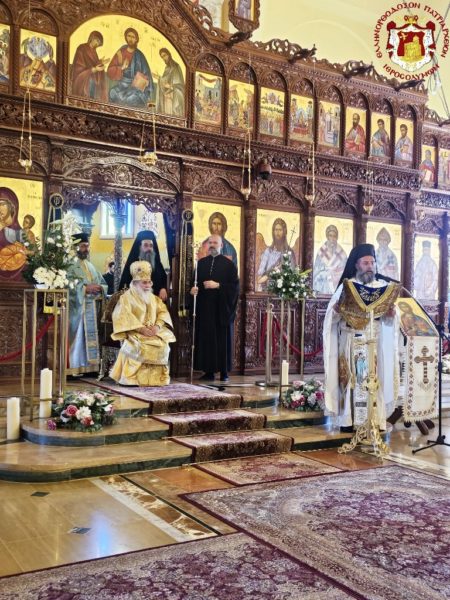
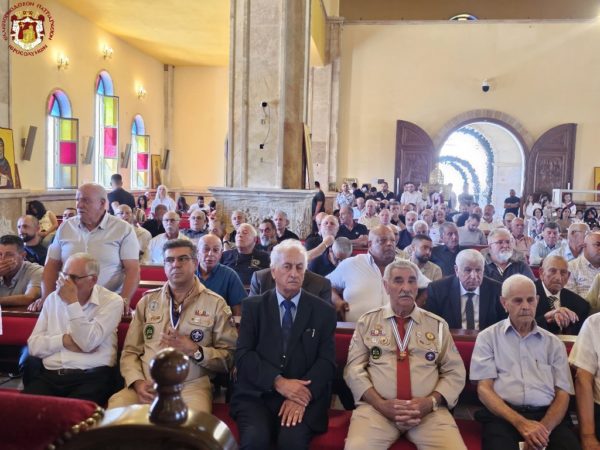
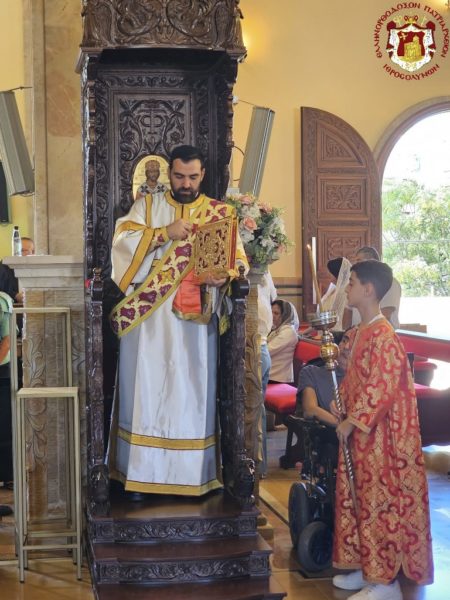
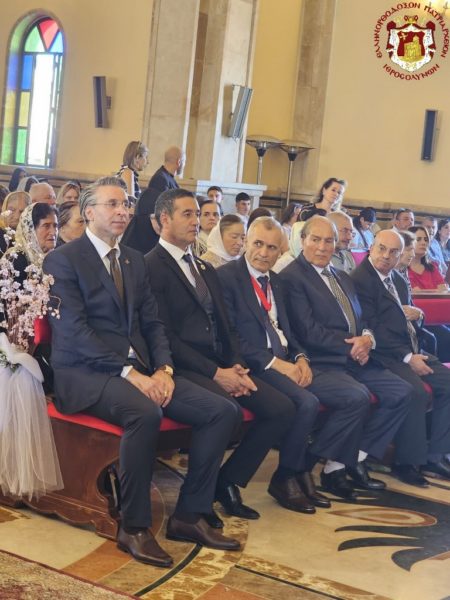
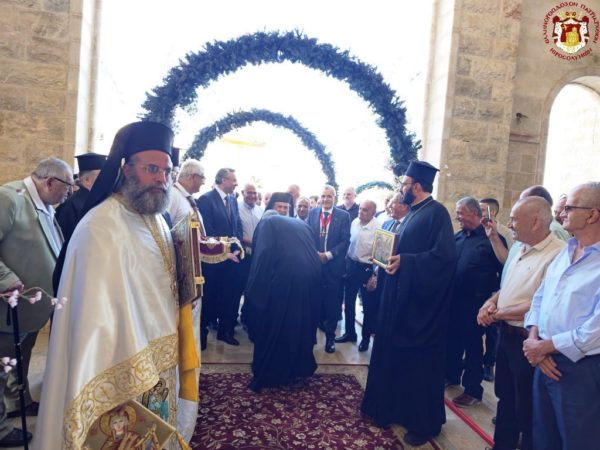
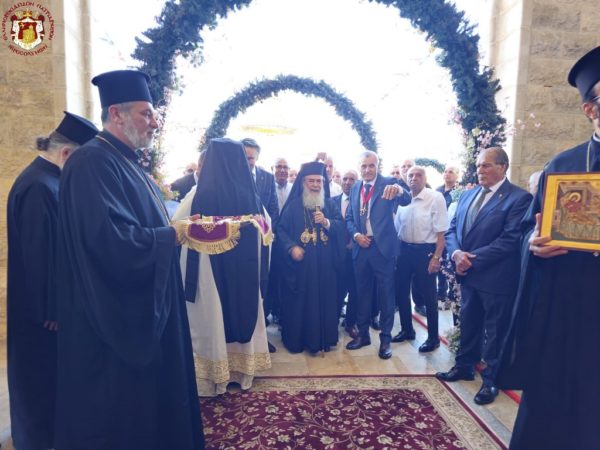
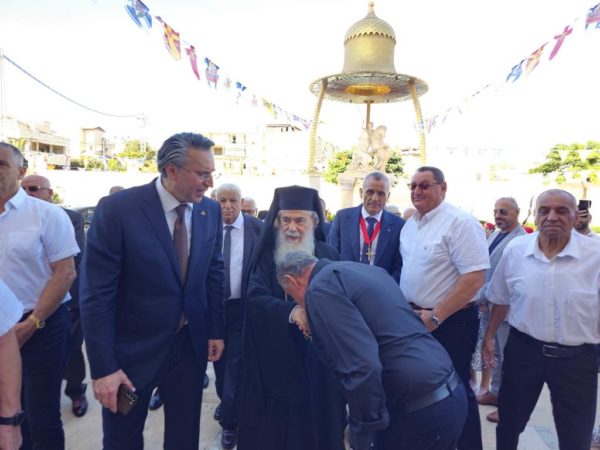
On Saturday, the 7th/20th of September 2025, the Feast of the Nativity of the Theotokos was celebrated, by transference, in the Greek Orthodox Community of the city of Sakhnin in Northern Israel, one of the twelve Communities under the jurisdiction of the Metropolis of Acre–Ptolemais, in the Holy Church of the Nativity of the Theotokos. The Church is a magnificent and most spacious edifice, erected in recent years by the Community through its offerings and the benefactions of other donors, with the notable financial support of the Patriarchate and the devoted and significant labours of Dr Majid Ghandour, who comes from Sakhnin.
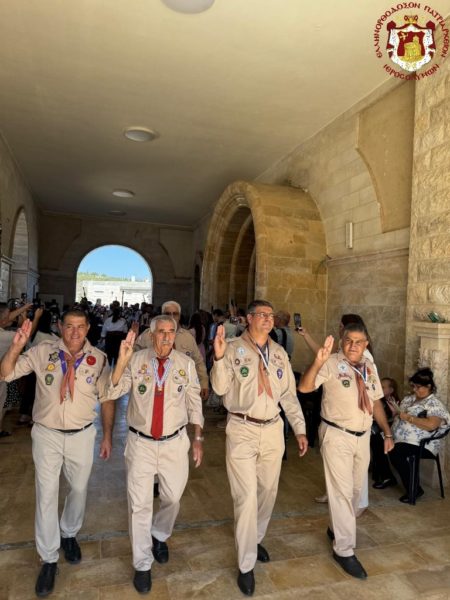
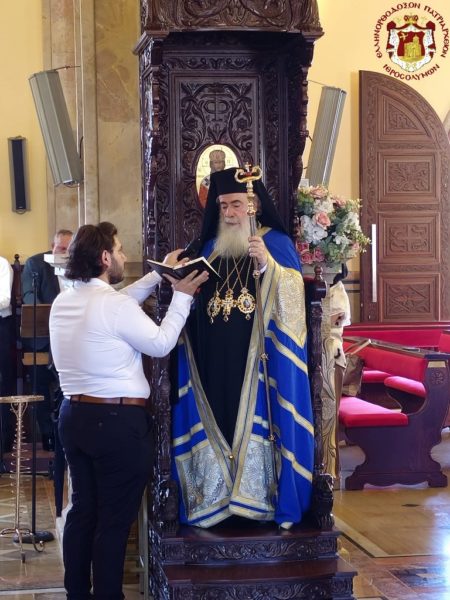
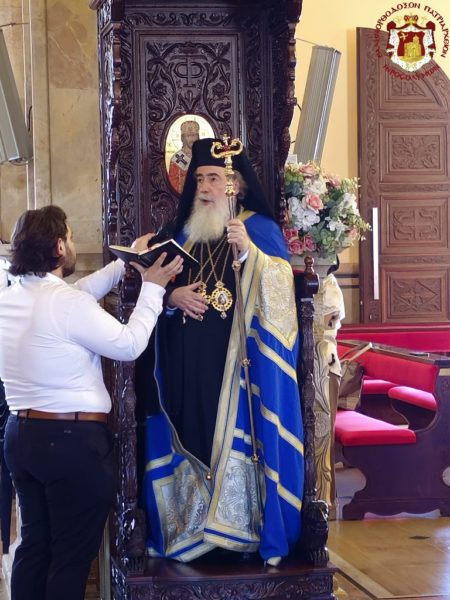
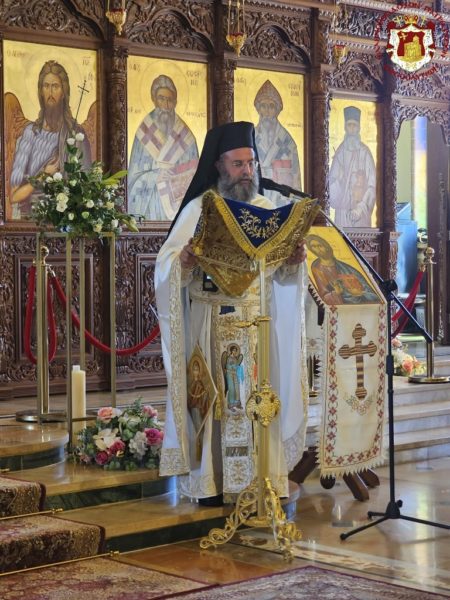
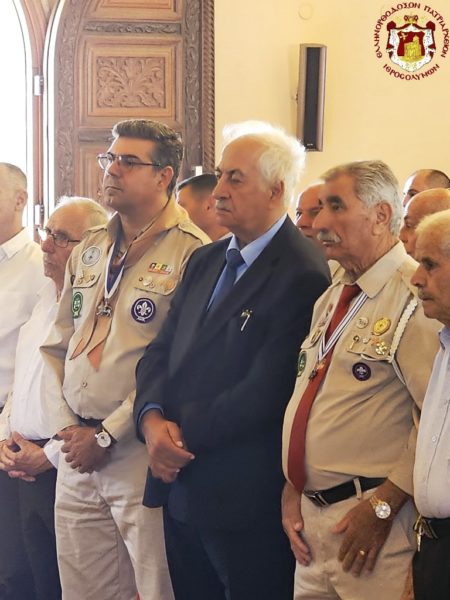
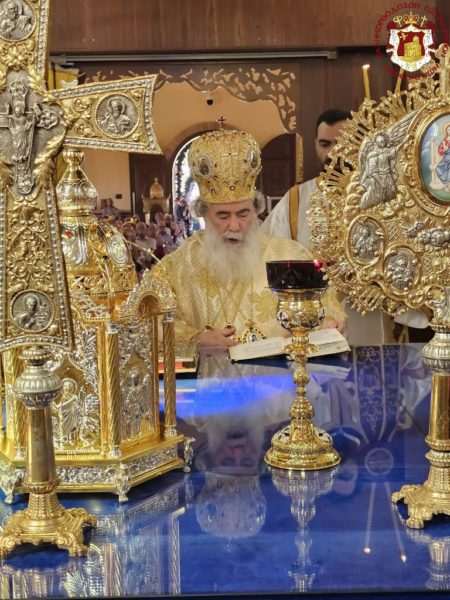
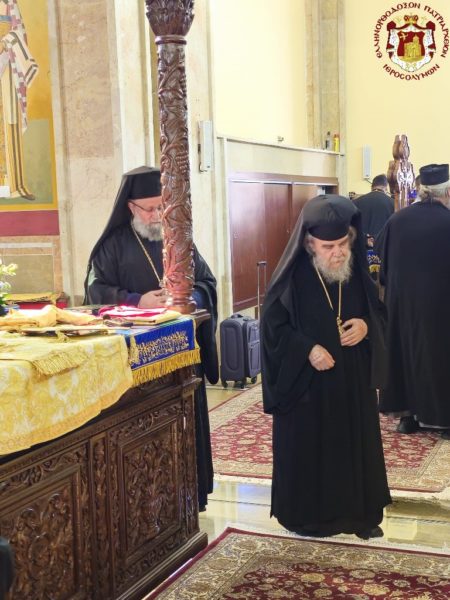
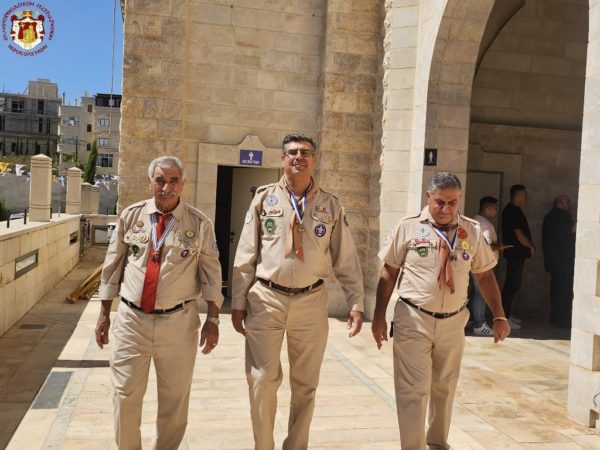
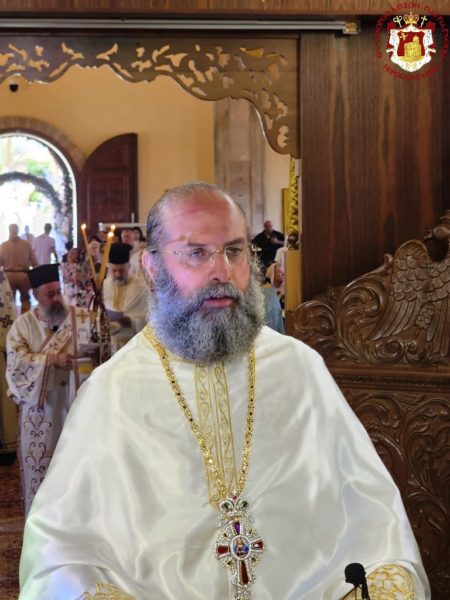
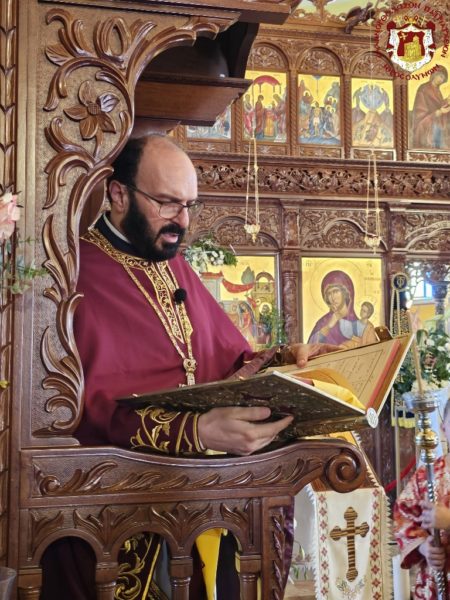
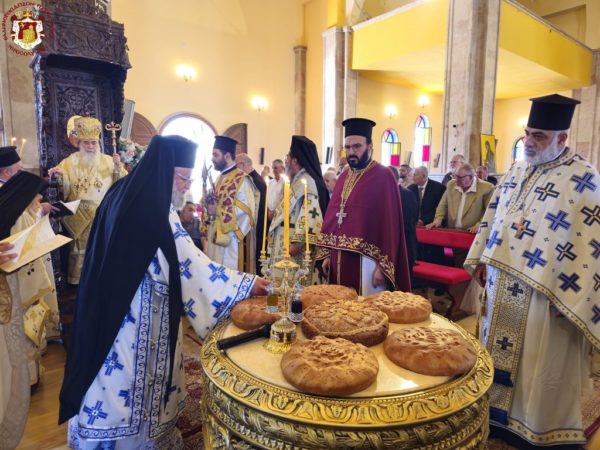
This radiant feast of the Theotokos was celebrated with the Divine Liturgy, at which His Beatitude, our Father and Patriarch of Jerusalem, Theophilos, presided, following a warm reception by the Scouts of the city. Concelebrating with Him were His Eminence Archbishop Aristarchos of Constantina, His Eminence Metropolitan Makarios of Ptolemais, and His Eminence Archbishop Philoumenos of Pella, together with local Priests of the Patriarchate from the region of Northern Galilee and the Rector of the Church, Fr. Andreas. The chanting was rendered antiphonally by the city’s choir, and many of the faithful participated with devout prayer.
Before Holy Communion, His Beatitude delivered the following Sermon:
“Rejoice, thou that art full of grace, the most joyous name and reality of all joy, from whom Christ, the unfailing Joy, was born into the world, the healing of Adam’s grief”.
And more simply: “Rejoice, thou that art full of grace, the happiest name and reality above every joy, from whom Christ was born into the world, the joy unrepeatable, the remedy for Adam’s sorrow,” Saint John of Damascus says in praise.
Beloved brethren in Christ,
Reverent Christians and pilgrims,
The Grace of the Holy Spirit has gathered us all together this day in this magnificent Church of your city Sakhnin, that we might celebrate the joyful event of the Nativity of our Most Holy Lady Theotokos and Ever-Virgin Mary, concerning whom the hymnographer exclaims: ‘In thee the mystery of the Trinity is hymned and glorified, O pure one; for the Father was well-pleased, and the Word dwelt among us, and the Divine Spirit overshadowed thee.’
Indeed, the most joyous name and reality of all joy is the wondrous Nativity of the Theotokos Mary from the bonds of the barrenness of her mother Anna and of her father Joachim; from them the salvation of all mankind has been bestowed, and especially upon the First-created, Adam and Eve, who were set free: Eve from the condemnation, and Adam from the ancient curse.
This, moreover, was foretold by the Prophet Isaiah: ‘There shall be a root of Jesse, and He that shall rise to reign over the nations; in Him shall the nations trust’ (Rom. 15:12; Isa. 11:10); and by David, saying: ‘And He chose the tribe of Judah, the mount Zion which He loved’ (Ps. 77:68). Noteworthy also is the saying of the book of Revelation: ‘Behold, the Lion of the tribe of Judah, the Root of David, hath prevailed’ (Rev. 5:5).
According to the Prophet Isaiah, Jesse shall be as a root, from which the generation of the faithful shall spring forth. Christ, as perfect Man, was born a descendant of the root of David, springing up as a branch. But Christ, as perfect God, is Himself the root, from which David and all his spiritual descendants sprang forth. “For Christ arose, that is, He blossomed,” Zigavenos interprets.
In other words, the birth of the Theotokos Mary proclaims, according to the Apostle Paul, “the mystery which from the beginning of the world hath been hid in God, Who created all things by Jesus Christ” (cf. Eph. 3:9). Therefore, the hymnographer exclaims: “Today God, Who resteth upon the noetic thrones, hath prepared for Himself a holy throne upon the earth; He Who established the heavens in wisdom hath fashioned in His lovingkindness a living heaven. For from a barren root hath sprung forth for us a life-bearing plant, even His Mother…”
The earth upon which God prepared for Himself a holy throne is that very land, that very place, where the Patriarch Jacob slept and dreamed, saying: “And behold a ladder set up on the earth, and the top of it reached to heaven; and behold the angels of God ascending and descending on it. And the Lord stood above it” (Gen. 28:12–13).
According to the eminent God-bearing Fathers of the Church, both the ladder and the earth signify the all-blessed Virgin Theotokos and Mother of God. Therefore, the hymnographer exclaims: “Rejoice, heavenly ladder, whereby God came down.” And Saint John of Damascus calleth upon the Prophets Zechariah and Joel, who foretold the birth of the Theotokos and Ever-Virgin Mary: “Sing and rejoice, O daughter of Zion: for, lo, I come, and I will dwell in the midst of thee, saith the Lord” (Zech. 2:10 [LXX 2:14]); “Fear not, O land; be glad and rejoice: for the Lord will do great things” (Joel 2:21), so do the Prophets Zechariah and Joel respectively proclaim beforehand.
Commenting on these words of the Prophets, Saint Cyril of Alexandria asks: “When, indeed, was it granted unto the earth to be bidden to take courage? And when did the Lord magnify His doing with us? Was it not when the Word, being God, became Man?” [Or more simply: When was it permitted to say, ‘Be of good cheer, O Land of Promise’? And when again did the Lord accomplish His marvellous work to be with us? Only then, when the Word, being God, was made Man].
And when did He “dwell in the midst of the daughter of Zion,” that is, of Jerusalem? When He, having taken upon Him our likeness through the holy Virgin, was born, and appeared upon earth, and conversed with men (cf. Baruch 3:37).
The Virgin Mary, born of barren Anna, is the beginning of the mystery of the Divine Providence, that is, of the salvation of man. For the Virgin Mary became the chosen vessel of God for the Incarnation and becoming Man of the Divine Word, Christ, from her pure blood and through the overshadowing of the Holy Spirit.
According to Saint Gregory Palamas: “She alone,” that is to say, the Virgin Mary, “is the boundary between created and uncreated nature; and no man may come unto God, save through her and through the Mediator born of her; nor is any of the gifts of God bestowed, save through her, either upon angels or upon men.”
[Or, more simply: She alone is the boundary of created and uncreated nature, and none could have come unto God, save through her and through the Mediator that was born of her; and none of the gifts of God could be given either unto angels or unto men, save through her].
This redeeming and supernatural mystery of the Nativity of the Full-of-grace Mary is extolled in hymnody by Saint Germanus, Patriarch of Constantinople, who saith: “The universal joy hath arisen for us from the righteous, from Joachim and Anna, even the all-lauded Virgin, who, by reason of exceeding purity, becometh a living temple of God, and alone in truth is known as Theotokos…”
The Virgin Mary is called and known as Lady Theotokos, that is to say, Mother of God, for in her was accomplished the ineffable mystery of the unspeakable union in Hypostasis of the divine and human natures in Christ.
The holy Church of Christ, dearly beloved brethren, unceasingly magnifies and blesses the most blessed and most glorious Theotokos and Ever-Virgin Mary. For we, having strayed from the way of truth, with our understanding having been darkened, came to know, through the Theotokos, the Sun of Righteousness, that is, the light of knowledge, our God and Saviour Jesus Christ. For unto Him is due all glory, honour, and worship, with the Father and the Holy Spirit, now and ever, and unto the ages of ages.
And we, who honour this day the Nativity of the Theotokos, beseech her, by the intercessions of her Son and her God, on behalf of our souls, and for peace in our region, and for the whole world. Amen. Many happy returns of peace and blessing.”
After the Divine Liturgy, the President of the Community Council of the city and other dignitaries addressed His Beatitude, expressing thanks for the assistance of the Patriarchate in the erection of this beautiful Church.
After these addresses, a procession round about the holy Church followed, and thereafter a supplicatory prayer.
At midday, a festal meal was offered for His Beatitude and His Entourage and many others, by Archimandrite Andreas and the Community Council.
From the Chief Secretariat