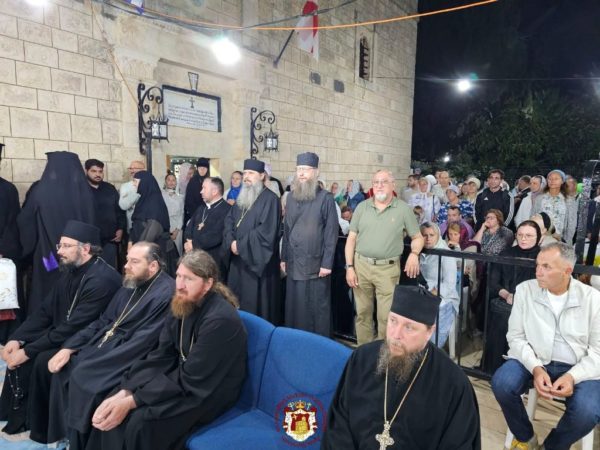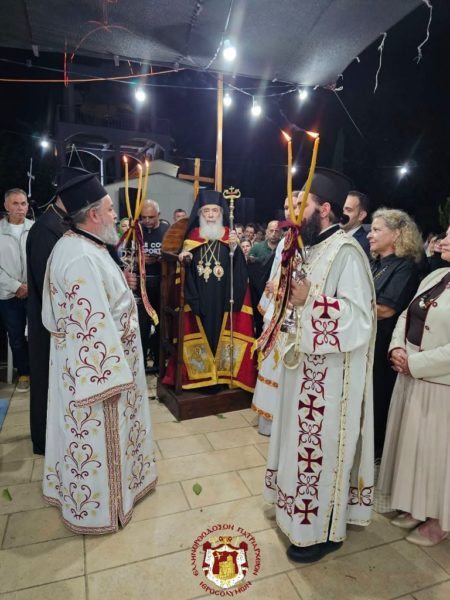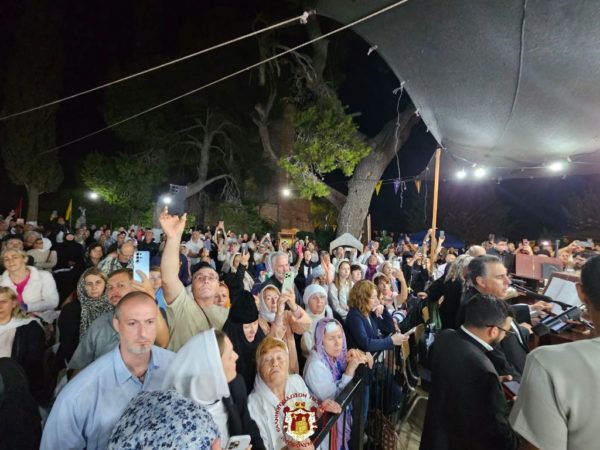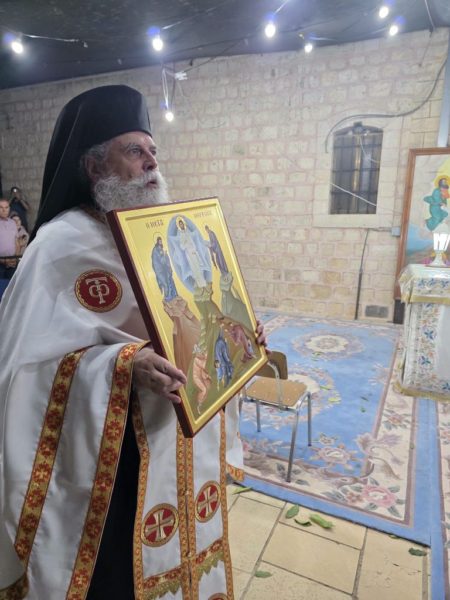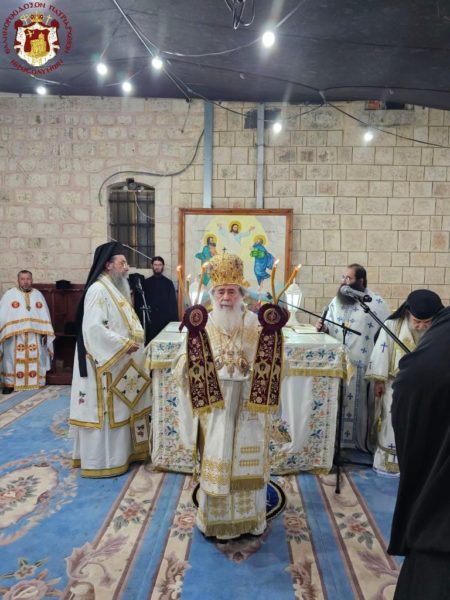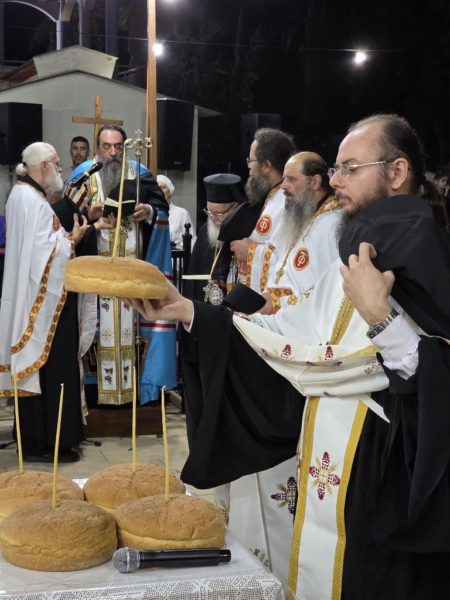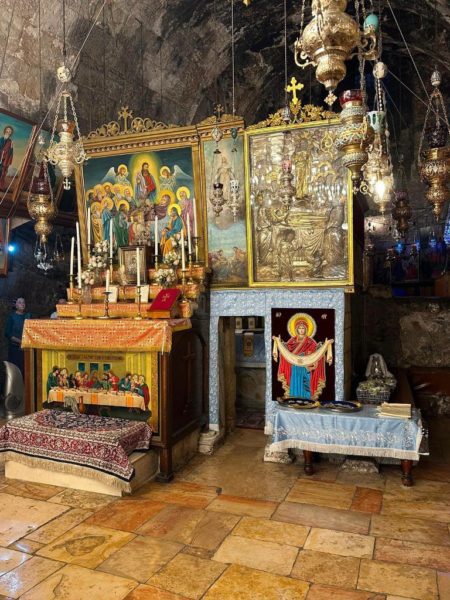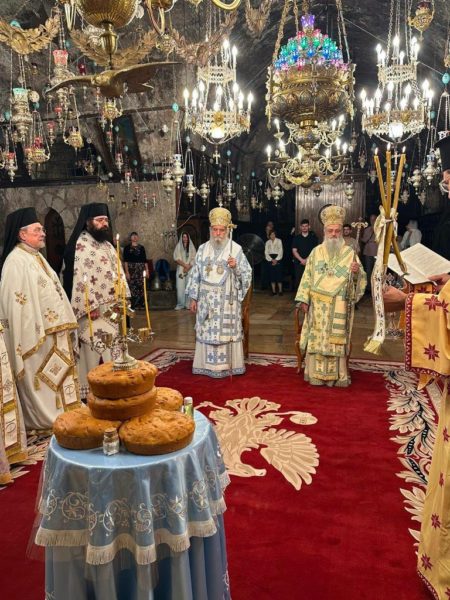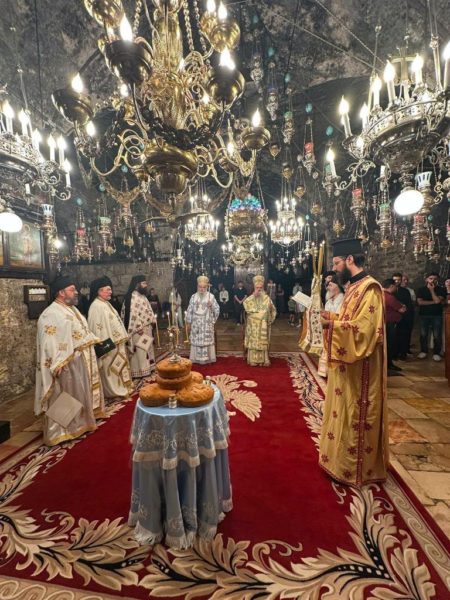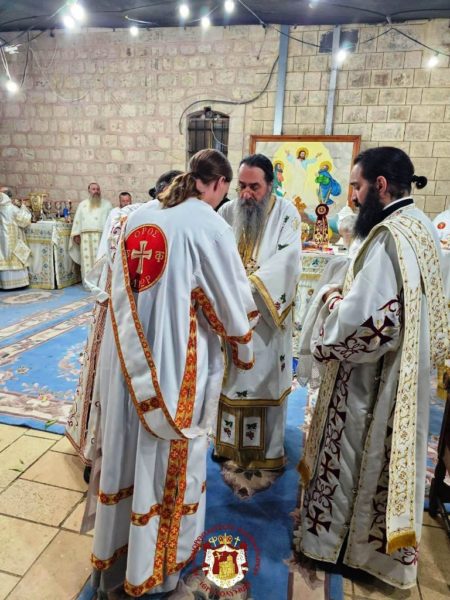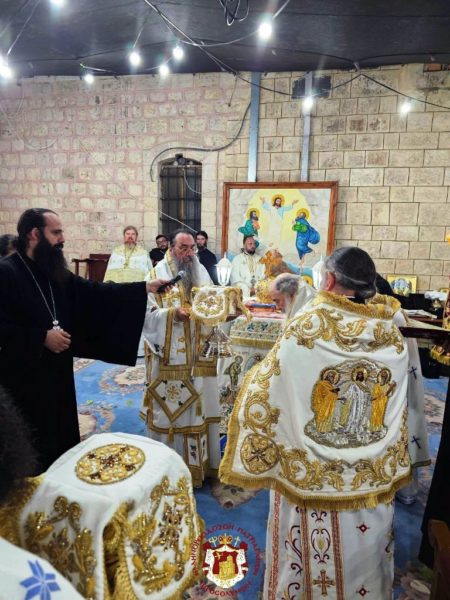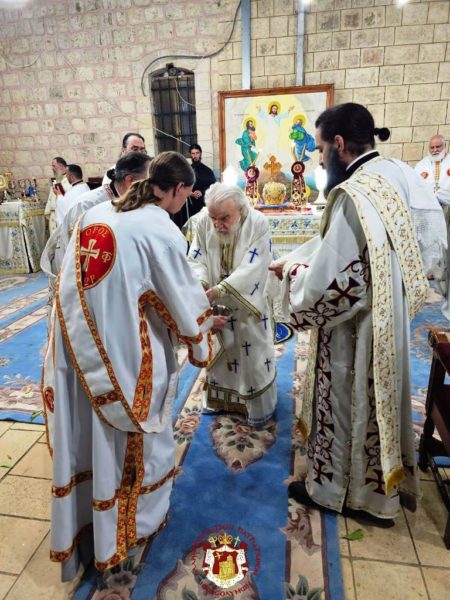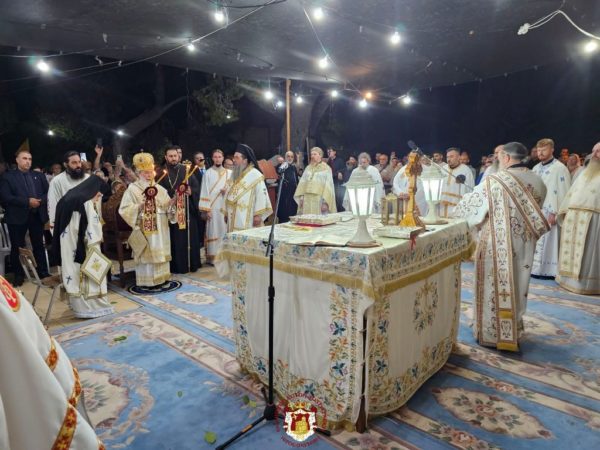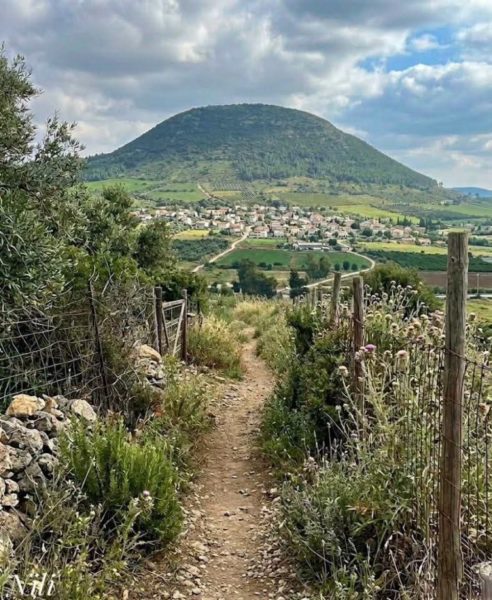
On Wednesday, 6/19 August 2026, the Patriarchate celebrated the Feast of the Divine Transfiguration on Mount Tabor, where this event took place.
On this feast, the whole Church, and particularly the Church of Jerusalem, recalls that shortly before His Passion, according to the Gospel accounts (Matthew 17:1–9; Mark 9:2–9; Luke 9:28–36) and the interpretations of the Fathers, the Lord took three of His disciples, the “chosen” ones, and went up privately onto a high mountain. There, before them, He was transfigured, concealing to a certain degree His human nature and revealing His divine nature, “as much as” the disciples were able to see and comprehend. That is, His face shone brighter than the sun, and His garments became white as light. A luminous cloud overshadowed them, and from the cloud the voice of the Father was heard saying: “This is My beloved Son, in whom I am well pleased. Hear Him!” (Matthew 17:5). Moses and Elijah also appeared with Him, speaking with Him and foretelling His “departure”, that is, His Passion, which was to take place in Jerusalem.
The disciples, filled with awe, fell to the ground. Peter proposed to the Lord that they should construct three tabernacles, one for Moses and one for Elijah (…) and remain there, saying: “Lord, it is good for us to be here; if You wish, let us make here three tabernacles: one for You, one for Moses, and one for Elijah” (Matthew 17:4). The Lord took them with Him, and they descended from the mountain, and He instructed them not to tell anyone about this vision. The Lord revealed this vision to the disciples, wishing to show them the primordial beauty that man possessed before the Fall and that he can regain in Him.
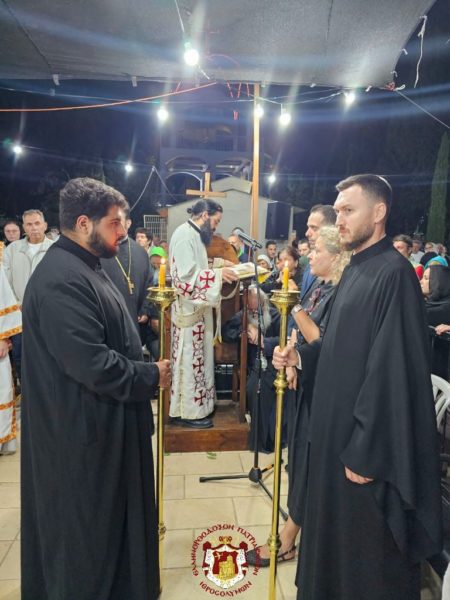
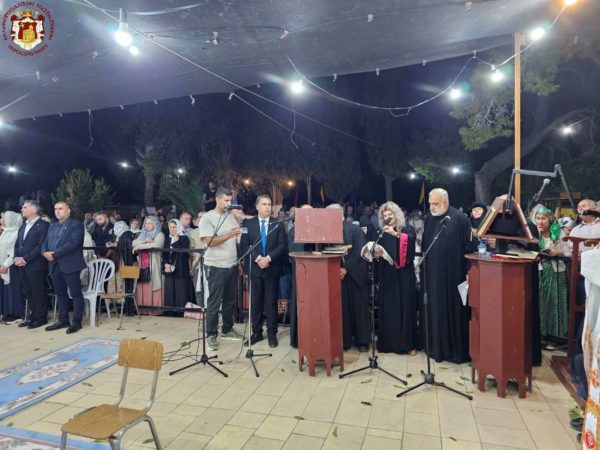
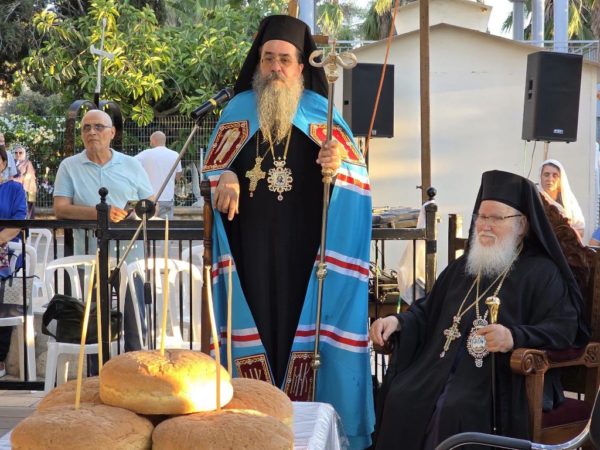
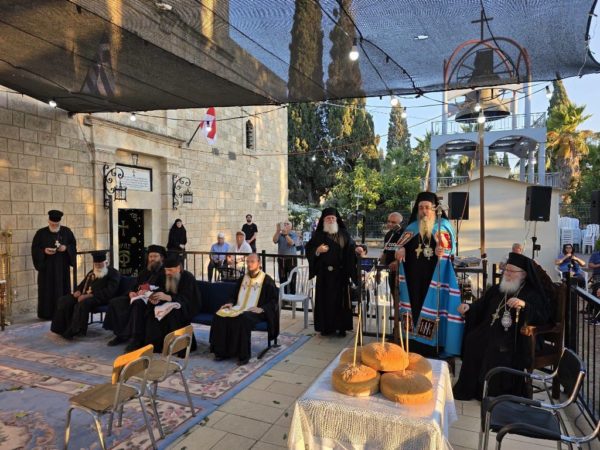
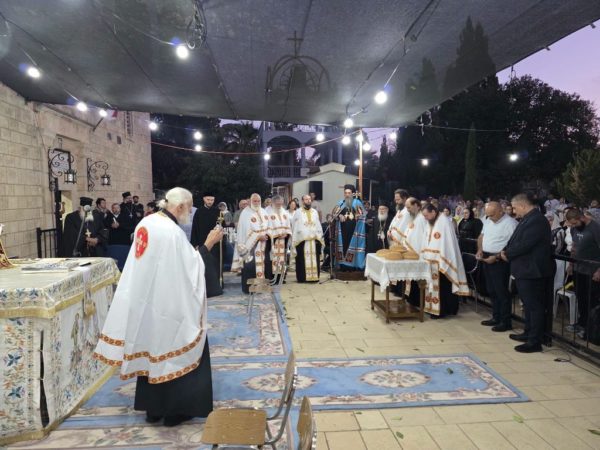
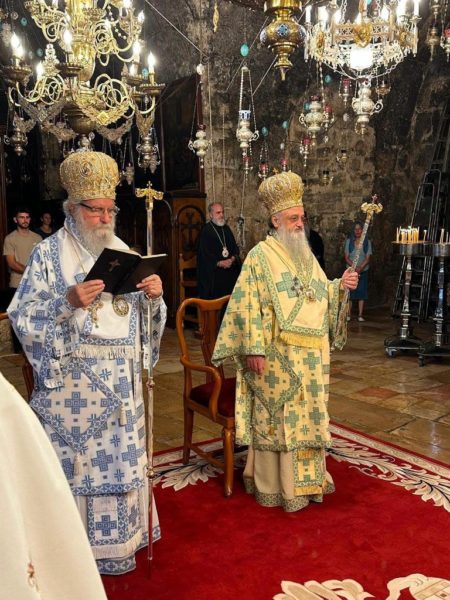
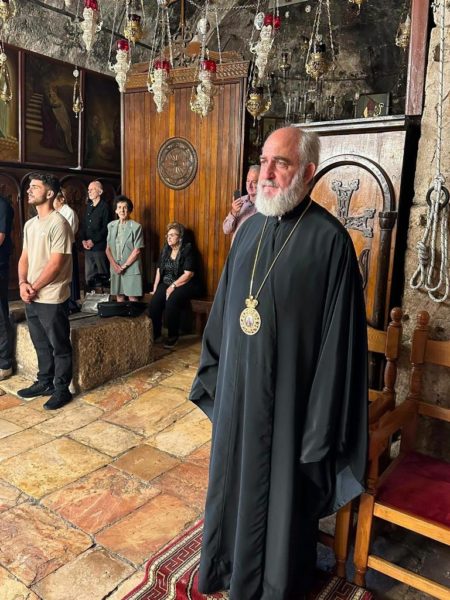
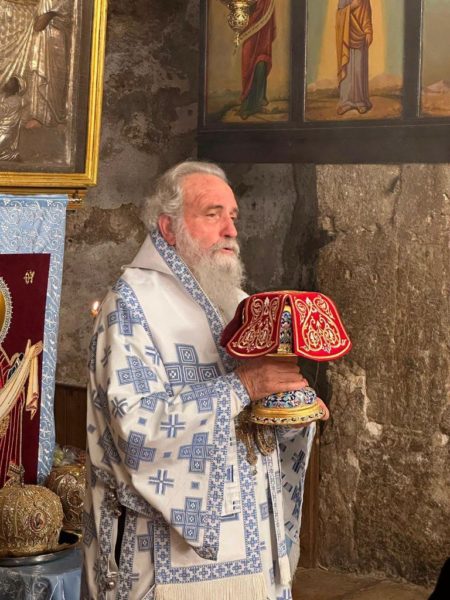
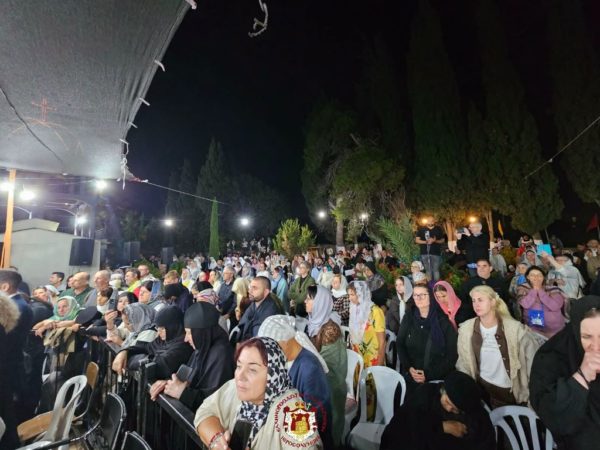
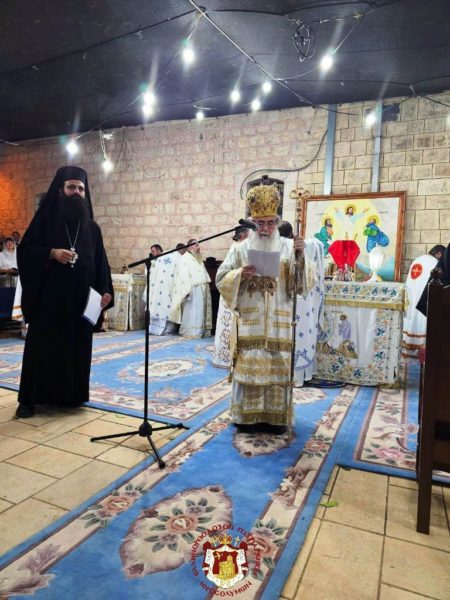
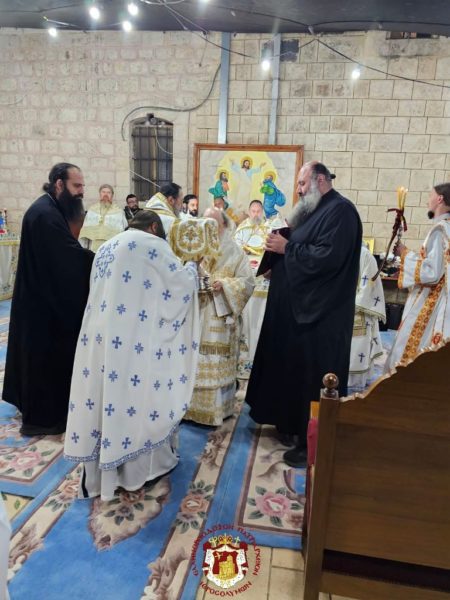
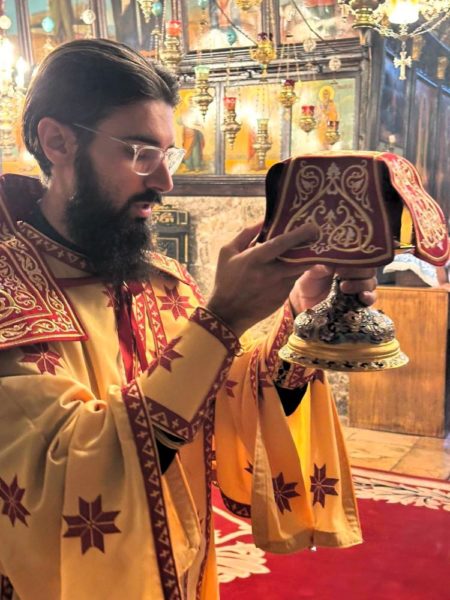
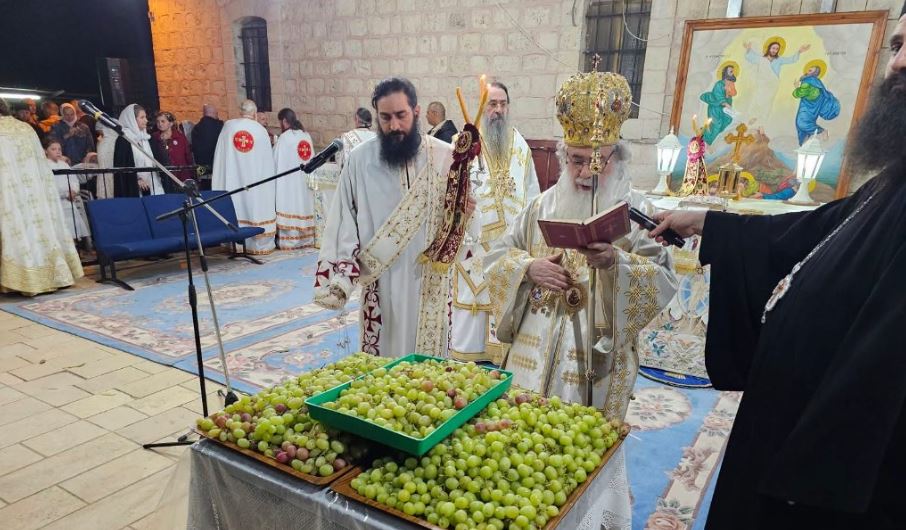
For this reason, Vespers was celebrated the previous evening by His Eminence Metropolitan Makarios of Ptolemais-Acre, followed by the Divine Liturgy on a prepared platform serving as an altar, at which His Beatitude our Father and Patriarch of Jerusalem Theophilos III presided, concelebrating with him once again His Eminence Metropolitan Makarios of Acre-Ptolemais and the Elder Chief Secretary, His Eminence Archbishop Aristarchos of Constantina. Also participating were the Secretary of the Holy and Sacred Synod, Archimandrite Fr Christodoulos, priests from the region of Galilee and visiting priests from other Orthodox countries, as well as the Archdeacon Fr Markos and the Hierodeacon Fr Prodromos. Local faithful, pilgrims and worshippers, whom the Israeli Authorities permitted to ascend the mountain. The Byzantine choir of Acre chanted during the service. Present were the Ambassador of Greece, Ms Maya Solomou, accompanied by members of the Embassy staff, as well as representatives of the Embassies of other Orthodox countries.
His Beatitude delivered the divine word to these faithful, as follows:
“Now after six days Jesus took Peter, James, and John his brother, and led them up on a high mountain by themselves; and He was transfigured before them, and His face shone like the sun, and His clothes became as white as the light” (Matthew 17:1–2).
Beloved brothers and sisters in Christ,
Devout Christians and pilgrims,
The Grace of the Holy Spirit has gathered us all from the ends of the earth upon this lofty Mount Tabor, where Jesus “went up to pray” (Luke 9:28), so that we might celebrate this great event of His Divine Transfiguration, which took place before the Apostles Peter, John and James, as well as in the presence of the Prophets Moses and Elijah.
“And as He prayed, the appearance of His face became different, and His clothing became white and gleaming” (Luke 9:29), writes the Evangelist Luke, referring to the Transfiguration of Christ. He was transfigured while He was praying. That is to say, when Christ humbled Himself, taking refuge in prayer, then He was also glorified, being transfigured. Therefore, Saint Cyril of Alexandria says: “Showing [Jesus] that a lowly [= contemptible] mind could never be fit for contemplation, but that he who has risen above earthly things and has become superior to all things pertaining to the body, and who has withdrawn from the cares of life, having established himself apart in stillness, and has become higher than the domination of the passions.”
According to the God-bearing and eminent Fathers of the Church, the Transfiguration of Jesus Christ on this holy Mount Tabor had two purposes. First, it was intended to prepare His disciples for His impending Passion upon the Cross and His Resurrection on the third day, as Saint Cyril of Jerusalem says: “Moses was in the cleft of the rock” (Exodus 33:22), and Elijah likewise was then in the cleft of the rock (cf. 3 Kingdoms [1 Kings] 19:13). They [Moses and Elijah], being present with Him as He was transfigured on Mount Tabor, told the disciples of the departure which He was about to accomplish in Jerusalem.
Secondly, it was intended to manifest clearly to the Apostles and Prophets who were present with Him His future coming, that is, His Second Coming, as the hymnographer also says:
“That You might manifestly show Your ineffable Second Coming, when the Most High God shall appear standing in the midst of the gods; You shone forth ineffably to the Apostles on Tabor, together with Moses and Elijah. Therefore, O Christ, we all magnify You.”
Commenting on these words of the hymnographer, Saint Nicodemus of Mount Athos invokes Saint Dionysius the Areopagite, who presents the Transfiguration as a type and foretaste of the blessedness that is to come, saying: “Then, when we become incorruptible and immortal and attain the Christ-like [= likeness to Christ] and most blessed end, we shall always be with the Lord, as the divine Paul says (1 Thessalonians 4:17), being fulfilled in the visible Theophany through all-holy contemplations, while the most radiant flashes of light shine around us, as they did upon the Disciples in that most divine Transfiguration” (Chapter One: On the Divine Names).
According to Saint Gregory Palamas, not only the angels but also the saints among humanity partake of the glory revealed to the disciples of Christ on Mount Tabor. The Father and the Son, together with the Holy Spirit, possess this glory and kingdom by nature, whereas the holy angels and human beings acquire them by grace, receiving their illumination from that source. Moses and Elijah, who appeared with Him in this glory, revealed precisely this to us. [Not only the angels, but also the saints among humanity partake of this glory and kingdom; yet the Father and the Son, together with the divine Spirit, possess this glory and kingdom by nature, while the holy angels and human beings enjoy them by grace, receiving their illumination from that source.]
“Behold, a bright cloud overshadowed them; and behold, a voice came out of the cloud saying, ‘This is My beloved Son, in whom I am well pleased. Hear Him!’…” says the Evangelist Matthew (Matthew 17:5). Interpreting these words, Saint Gregory Palamas asks: “…But what is this cloud, and how, being luminous, did it overshadow them? Could this be the inaccessible light in which God dwells, the light which He puts on as a garment? … For he says: ‘He made darkness His secret place; His pavilion round about Him’ (Psalm 17:12 [18:11]), while, as the Apostle says, He is ‘the only One who has immortality, dwelling in unapproachable light’ (1 Timothy 6:16); thus, the same thing is both light and darkness, overshadowing by its surpassing brightness.” [More simply: what is this cloud, and how, being luminous, did it overshadow them? Could it be the inaccessible light in which God dwells, the light which He puts on as a garment? For he says: “He made darkness His covering, like a tent round about Him” (Psalm 17:13 [18:12]). And as the Apostle says, “He is the only One who has immortality, dwelling in unapproachable light” (1 Timothy 6:16); thus, here the same reality is both light and darkness, which, because of its exceeding brightness, overshadows.]
It is noteworthy that Saint John of Damascus points out that the “cloud clearly signified the grace of the Holy Spirit, which overshadowed them, and most manifestly revealed itself on Tabor.” “Covered with the light of the inaccessible glory, the Apostles on Mount Tabor cried aloud: Blessed are You, O God of our Fathers,” sings Saint Cosmas the Melodist in his hymnography.
Through the “light of the inaccessible glory”, Christ revealed and manifested the beauty of the archetypal beauty, though not in its entirety; revealing enough to assure them [the Apostles], yet also withholding, lest, together with the vision, they should lose their lives; but only insofar as they were able to receive it, as they gazed upon it with their bodily eyes, the hymnographer again proclaims.
In other words, my beloved brothers and sisters, Christ revealed to His creature, namely man, not merely as in an image, but as He Himself is according to His essence, having become God and man. “The glory did not come to the body from outside, but from within, from the super-divine divinity of God the Word, ineffably united to it according to hypostasis,” teaches Saint John of Damascus.
We, then, my beloved brothers and sisters, who by divine grace have drawn near and are participating in the divine and sacred mystery of the bloodless Eucharistic Sacrifice here on this Mount Tabor, let us say together with the hymnographer:
“You were transfigured on the mountain, O Christ our God, showing Your glory to Your disciples as far as they could bear it. Shine also upon us sinners Your everlasting light, through the intercessions of the Theotokos. O Giver of light, glory to You.”
The Divine Liturgy was likewise celebrated in the morning in the Holy Church, which had been renovated and beautifully adorned by the late Hegumen, Archimandrite Hilarion, who was its renovator and reorganiser and had served, under the supervision of His Eminence Metropolitan Kyriakos of Nazareth.
At noon, the new Hegumen, Archimandrite Markellos, provided a meal of fish for the Patriarchal and Hierarchical Entourage and the faithful.
The Feast of the Holy Transfiguration was likewise celebrated at the Holy Church of the Transfiguration in Ramallah, where His Eminence Archbishop Philoumenos of Pella presided at the Divine Liturgy, with the hospitality of the Hegumen, Archimandrite Galaktion, and with many of the city’s faithful attending in prayer. It was also celebrated at Gethsemane with a multi-Episcopal Liturgy presided over by His Eminence Metropolitan Isychios of Kapitolias and His Eminence Archbishop Demetrios of Lydda, with the co-celebration of Holy Sepulchre Hieromonks and Priests, as many faithful attended the service.
From the Chief Secretariat