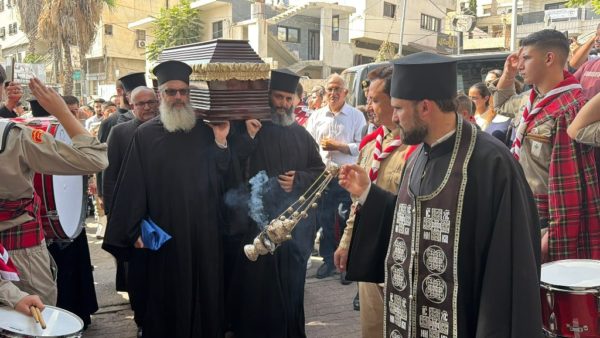
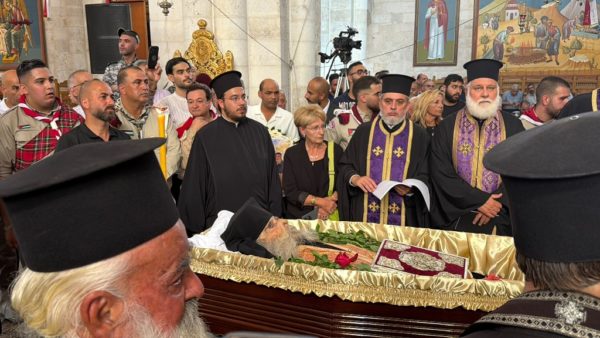
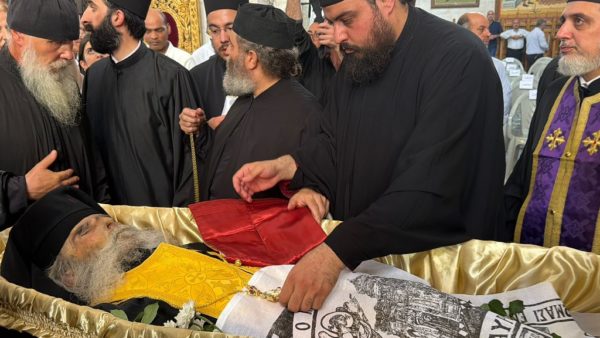
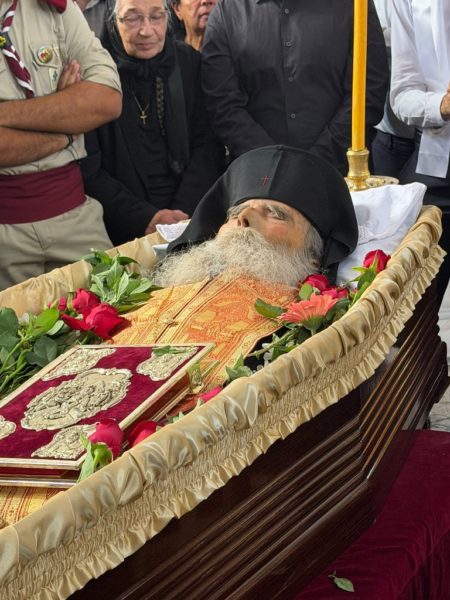
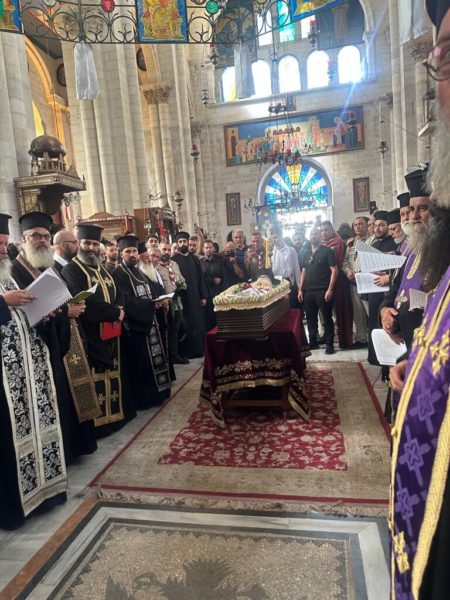
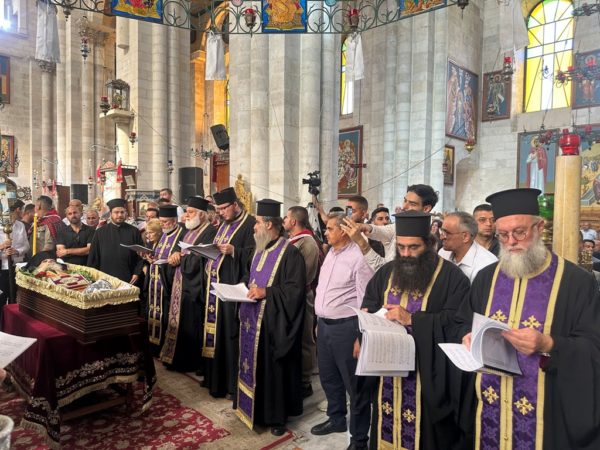
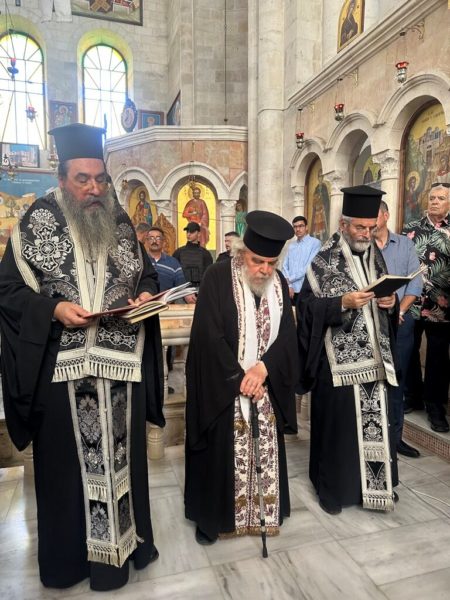
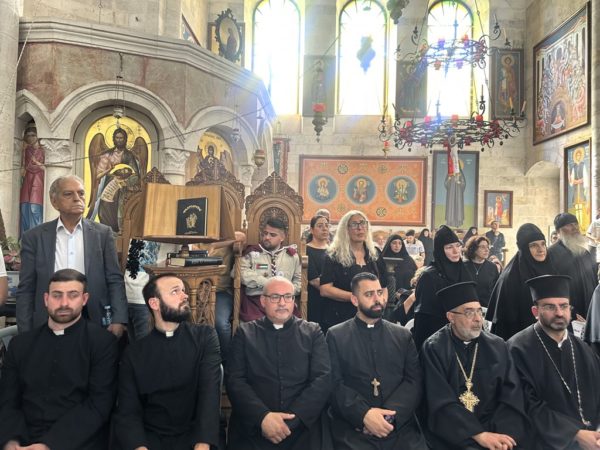
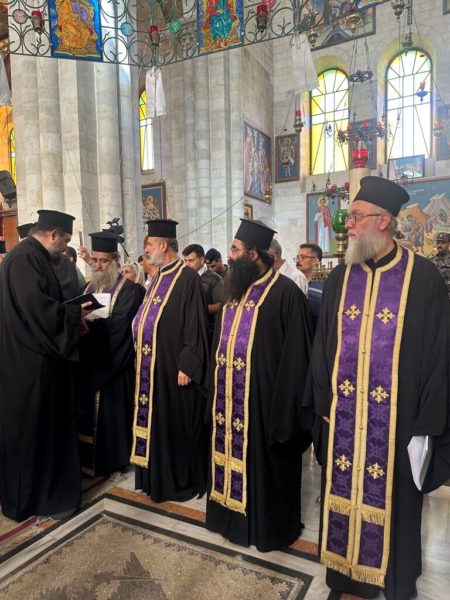
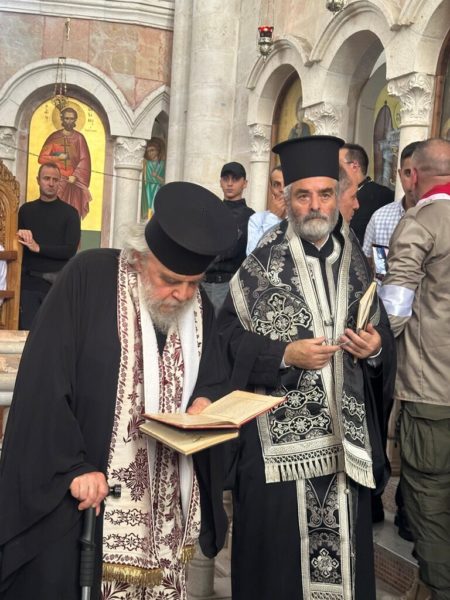
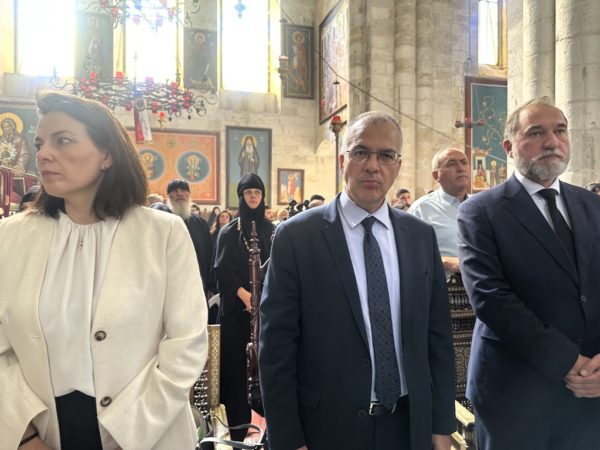
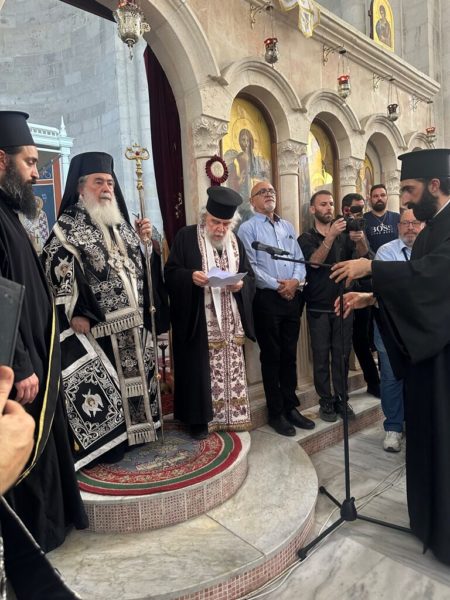
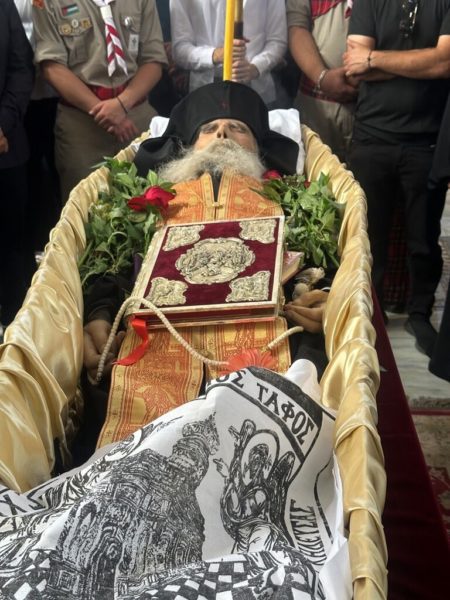
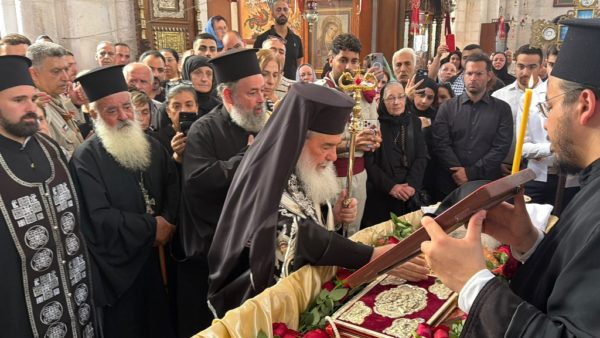
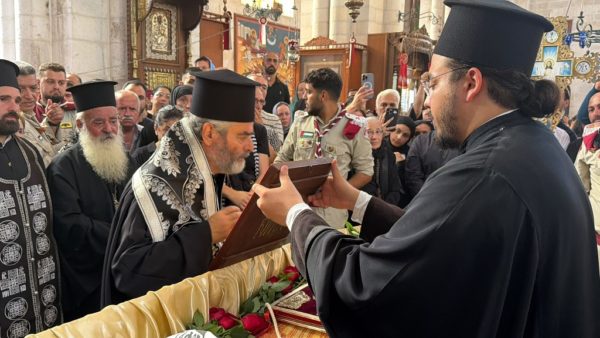
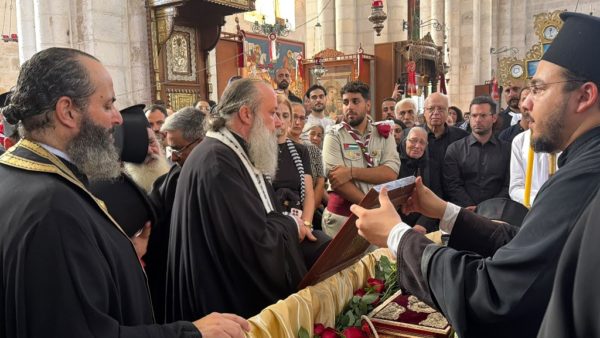
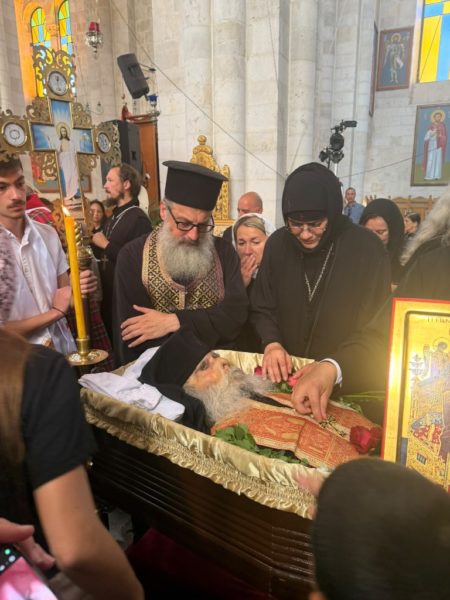
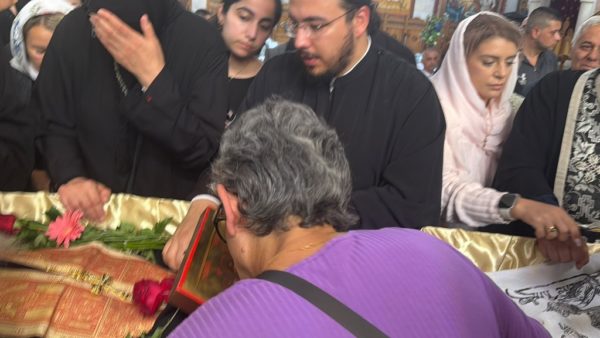
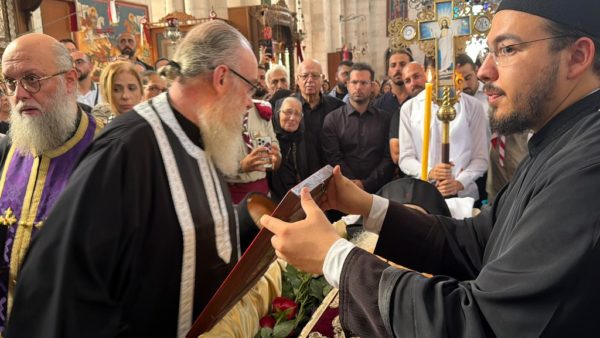
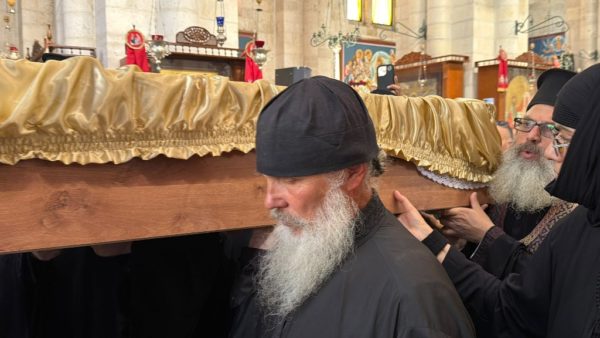
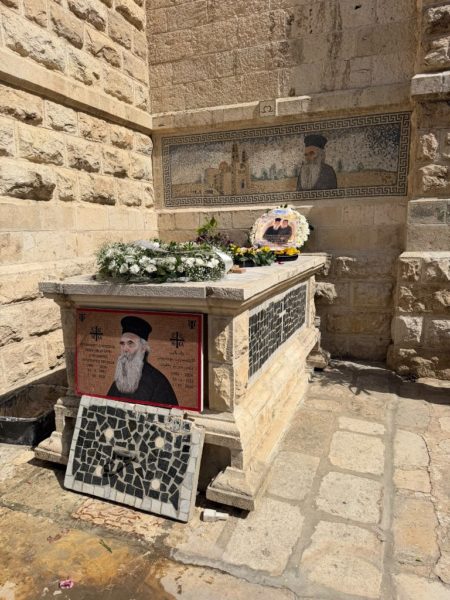
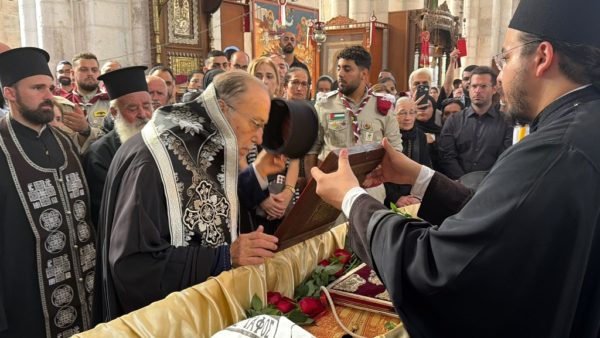
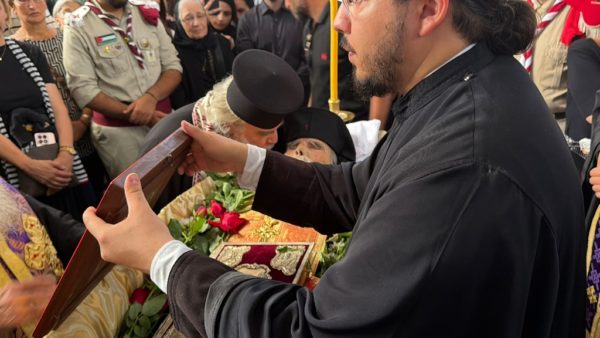
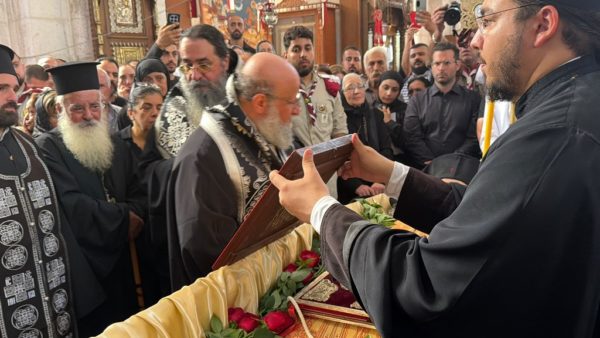
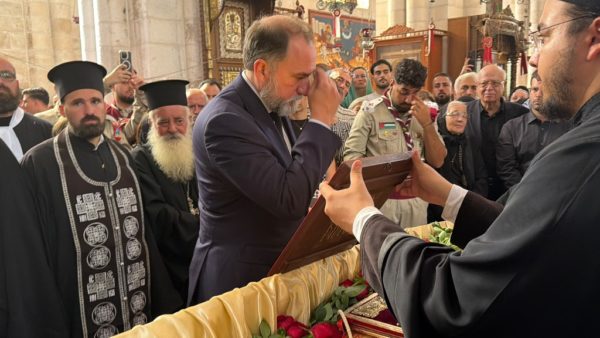
At 11:00 a.m. on Saturday, 27 September / 10 October 2026, the Funeral Service of the late Archimandrite Ioustinos, Hegumen of Jacob’s Well, was held at the place of his abbacy.
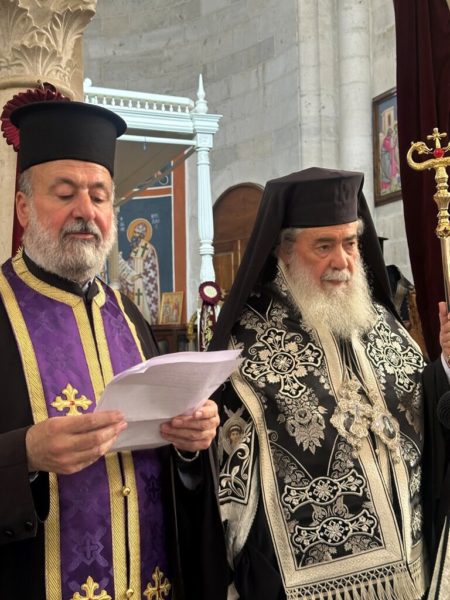
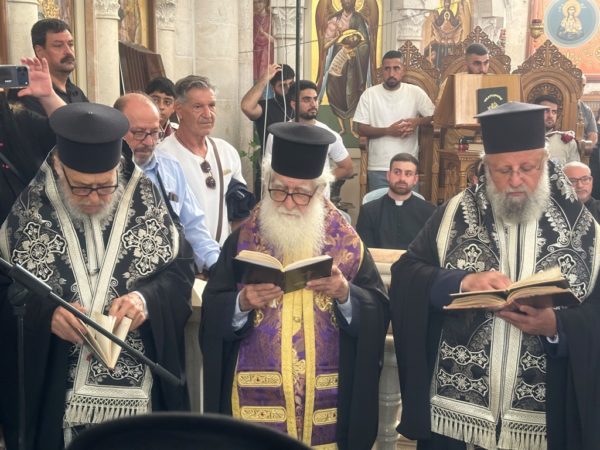
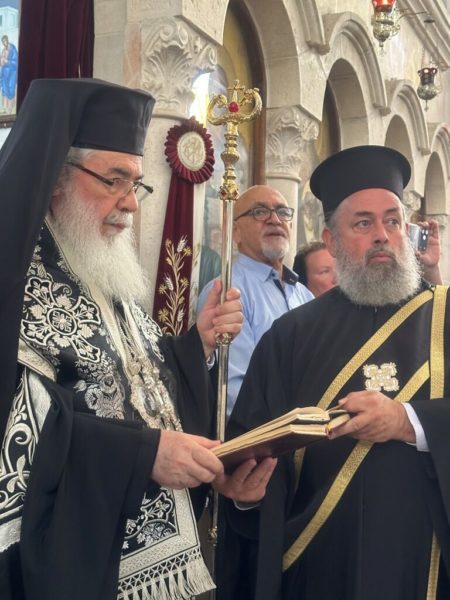
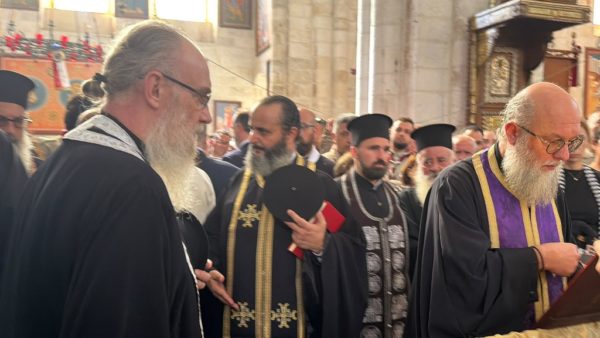
The Funeral Service was presided over by His Beatitude our Father and Patriarch of Jerusalem Theophilos III, along with the Hierarchs of the Patriarchate, numerous Holy Sepulchre Hieromonks and Hierodeacons, and the Priests of the neighbouring areas of Nablus and other regions within the jurisdiction of the Patriarchate, including Acre, Bethlehem, Beit Jala and Jericho.
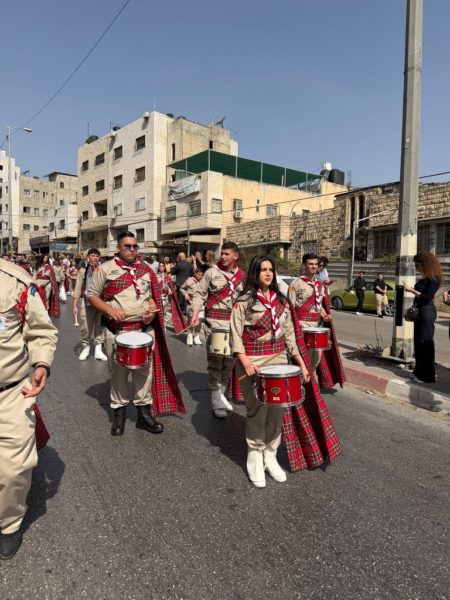
The service was also attended, as a mark of honour, by Mr Georgios Kalantzis, Secretary General for Religious Affairs at the Ministry of Education of Greece, and Mr Dimitrios Angelosopoulos, Consul General of Greece in Jerusalem, together with the Governor of Nablus, the Mayor of Jenin, other prominent figures of the State of Palestine, and the heads of the Police and the Scout Corps.
Monks and nuns joined in prayer, together with numerous pilgrims from Greece, Cyprus and other countries, who had come to pay their respects to the departed and to honour the work he had accomplished.
The eulogy was delivered in Greek by the Elder Chief Secretary, His Eminence Archbishop Aristarchos of Constantina, as follows:
“Your Beatitude, Father and Master,
Your Eminences, the venerable choir of Hierarchs,
Mr Consul General of Greece,
Reverend Fathers,
Devout pilgrims,
Truly, the place where we stand is holy. This is attested in the Holy Scriptures, both the Old and the New Testaments, and particularly by the Evangelist John. It is the place where the Patriarch Jacob dug a well, opening a spring for himself, his children and his flocks (John 4:12).
At this very spring, Jesus “being wearied with his journey, sat thus on the well” (John 4:6). A Samaritan woman came there “to draw water” (John 4:7) and encountered the Lord, Who told her that “God is a Spirit: and they that worship him must worship him in spirit and in truth” (John 4:24), and that He Himself, the One speaking to her, was the Messiah (John 4:26).
From this place, the woman, “leaving her waterpot, went her way into the city” (John 4:28) and “saith to the men, Come, see a man, which told me all things that ever I did: is not this the Christ?” (John 4:29). She believed and truly found the water that “spring[s] up into everlasting life” (John 4:14).
She bore witness, as did her family, comprising her two sons and four sisters. O blessed family!
This well was sanctified by the sitting upon its edge of our Lord and God and Saviour Jesus Christ Himself, and no less by the drops of blood shed by its Holy Sepulchre Father, Hieromartyr Hegumen, Archimandrite Philoumenos, who suffered martyrdom cruelly at the hands of an impious assailant on 16/29 November 1979. He was numbered among the Saints by a Synodal decision during the Patriarchal Office of our Father and Patriarch of Jerusalem, His Beatitude Theophilos, in 2009.
The holiness of this place, the wondrous manifestations of our faith accomplished here, and our faith in Christ, the Messiah, Jesus Christ, the God-Man, Who became incarnate, was crucified and rose from the dead, console and alleviate the profound grief and sorrow that have seized our souls following the departure unto the Lord of our beloved brother, the Hegumen, Archimandrite Ioustinos.
As we celebrate his funeral service today and gather around his mortal remains, we recall his life and monastic conduct.
He was born on the island of Corfu in 1941. He came to the Holy Land in 1961 and sought admission to the Brotherhood of the Holy Sepulchre. He was received into the Brotherhood and tonsured a monk in 1962 by the late Patriarch of Jerusalem, Benedictos. He was subsequently ordained Deacon and Priest, received the rank of Archimandrite, and served in various ministries of the Brotherhood of the Holy Sepulchre, including as Sacristan in Bethlehem and as Hegumen in Beit Jala, Tiberias and the Holy Monastery of the Archangels in Jerusalem. Above all, from 1982 onwards, he served as Hegumen of the shrine of Jacob’s Well.
From that time onwards, he devoted himself to his work with great zeal, labouring with toil and effort and wielding the weapons of righteousness on the right hand and on the left. He expended his strength to bring this biblical shrine to the prominence befitting its history and holiness.
When he assumed the abbacy in 1982, the annual feast of the Monastery, celebrated on the Fourth Sunday of Pascha, was held above the Well, in the unfinished, partially ruined space of a church erected in 1908 by the Metropolitan of Gaza, Sophronios, and covered by a tent.
Within only a few years, however, the late Archimandrite Ioustinos, with the blessing of the Patriarchate, requested permission from the late President of the Palestinian Authority, Yasser Arafat, to complete the construction of this church. In recognition of Archimandrite Ioustinos’ charitable contribution to the Palestinian people of the surrounding area during the periods of the Intifadas, siege and deprivation, President Arafat granted him the necessary permission.
Within a few years, drawing upon his innate architectural and artistic discernment, he guided architects, craftsmen and iconographers, gathered the necessary materials, and completed this central holy church, in which we now stand. It is dedicated to Saint Photini the Samaritan Woman and includes a chapel dedicated to Saint Philoumenos, the holy hieromartyr of the Brotherhood of the Holy Sepulchre, as well as a chapel dedicated to Saint Ioustinos the Philosopher and Martyr, an Apostolic Father of the Church in the second century.
Through its beauty and adornment, this Church has become the jewel and sanctuary of the city of Nablus. It was formally consecrated in an official ceremony by our Father and Patriarch of Jerusalem, His Beatitude Theophilos, in 2008.
In recognition of this work, the Church shall henceforth commemorate Archimandrite Ioustinos at every Divine Liturgy among the “blessed and ever-memorable founders of this church” and offer the prayer: “Sanctify, O Lord, those who love the beauty of Thy house.”
Having duly commemorated this founding and restoration work of the late Archimandrite Ioustinos, we beseech our philanthropic and merciful God that, in His compassionate judgement, He may reckon this labour to his credit, overlook whatever sins he may have committed, whether willingly or unwillingly, and grant him eternal life in the rejoicing light of His thrice-radiant Godhead.
May it be so.
May his memory be eternal!
From the Chief Secretariat