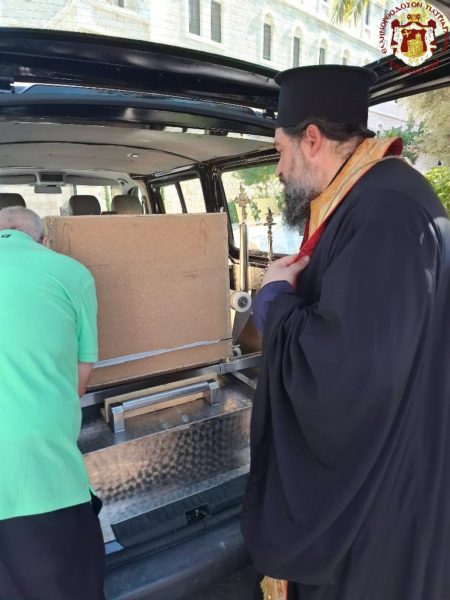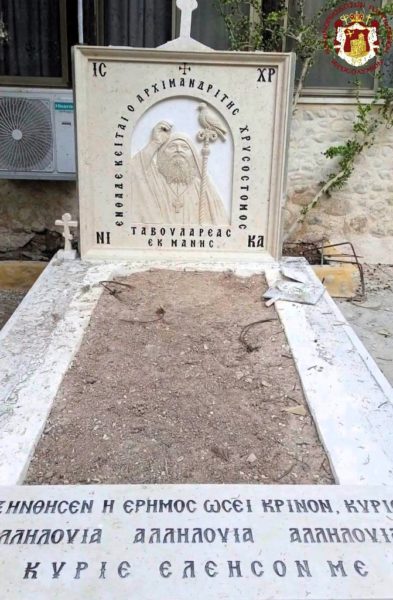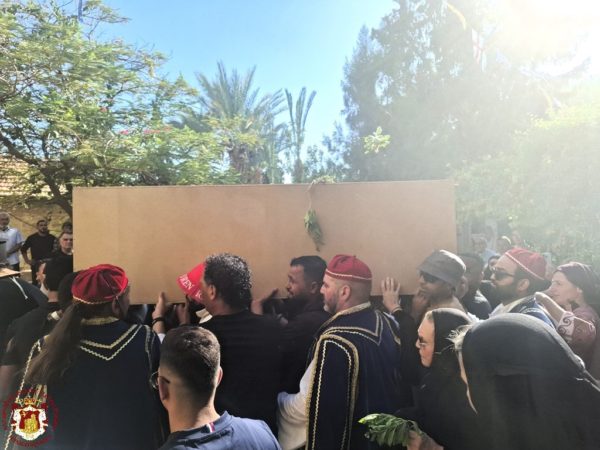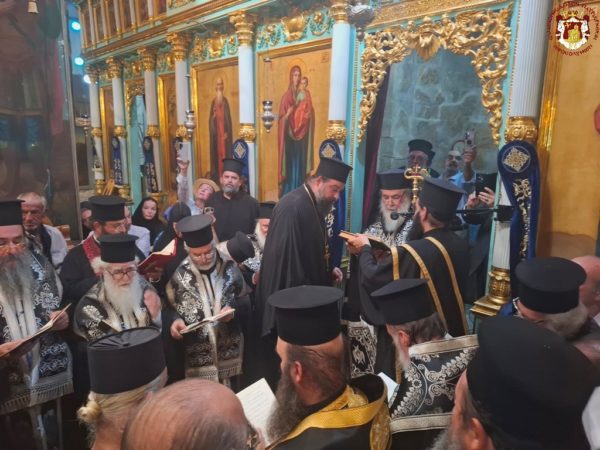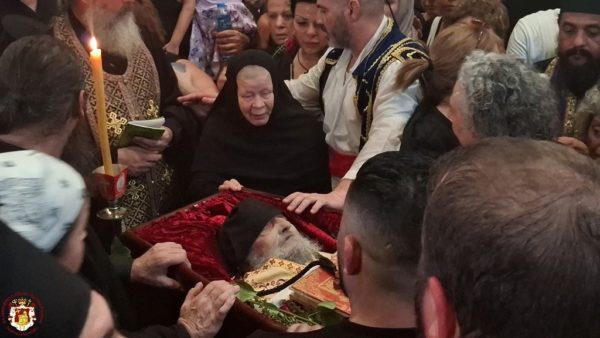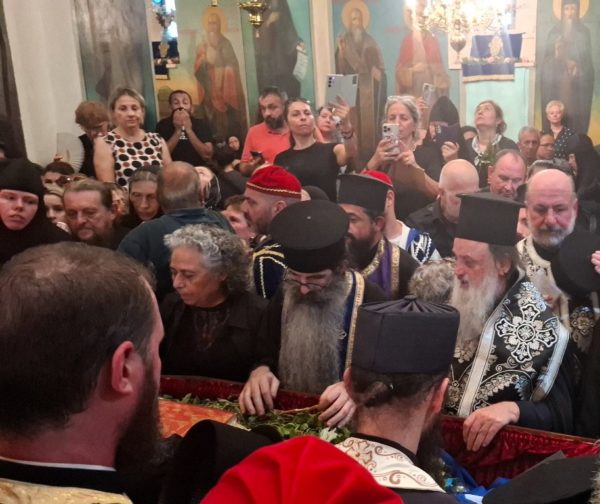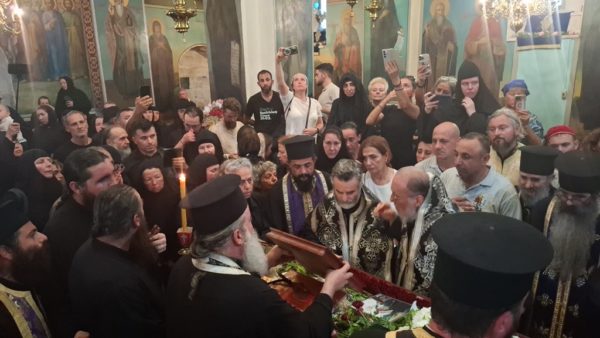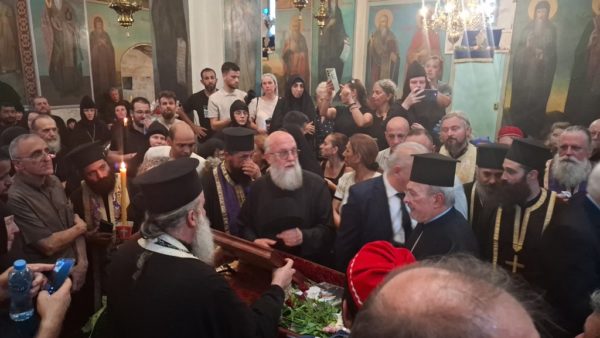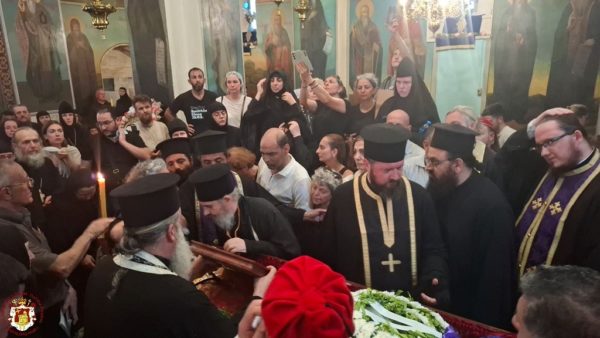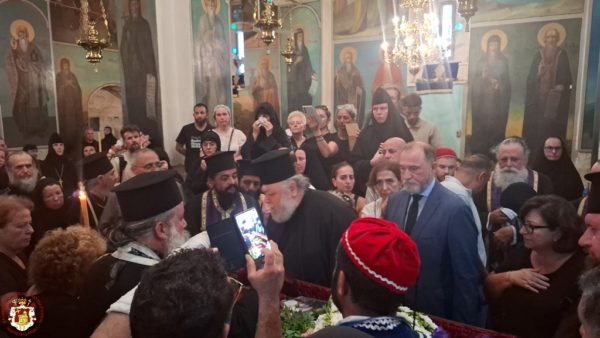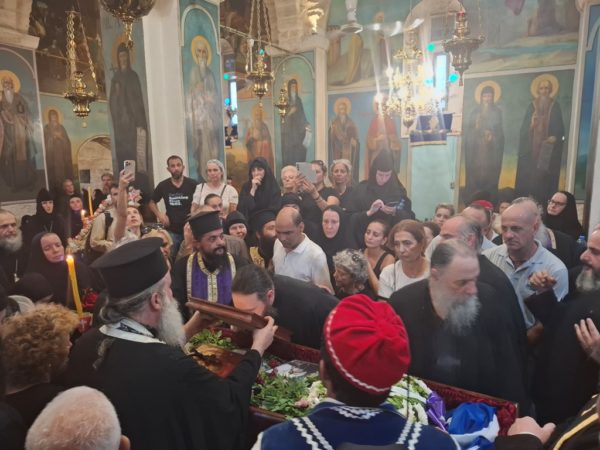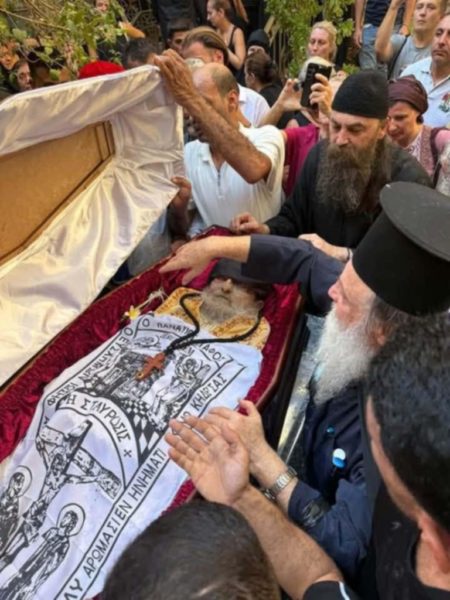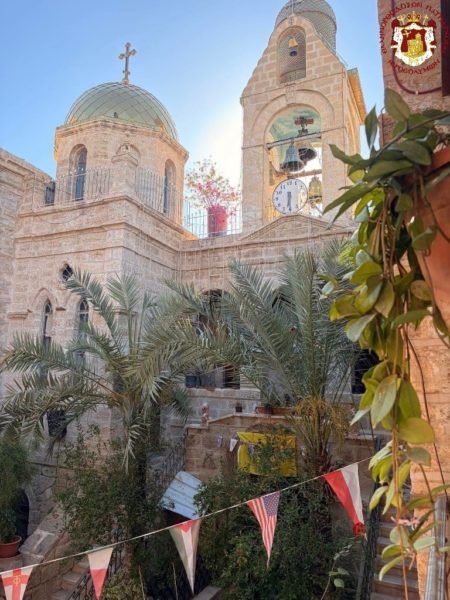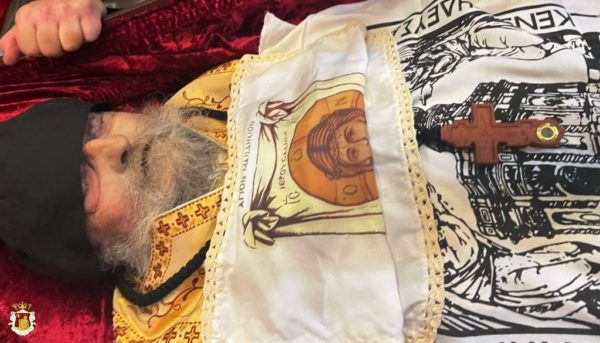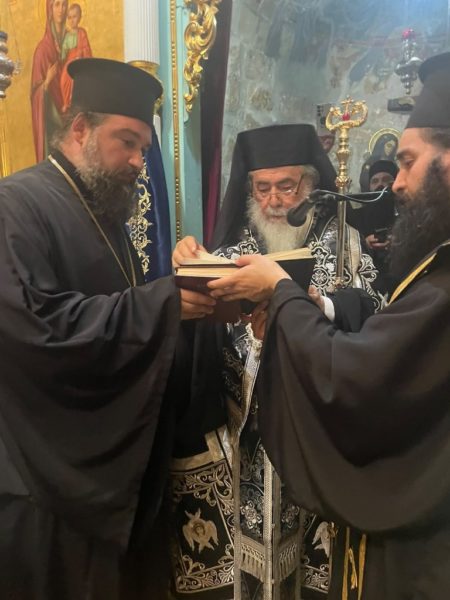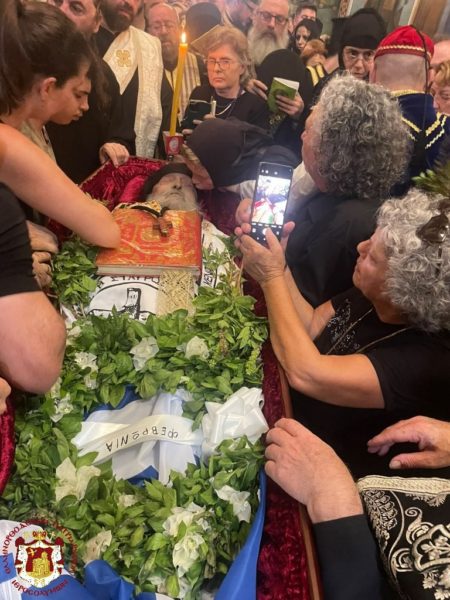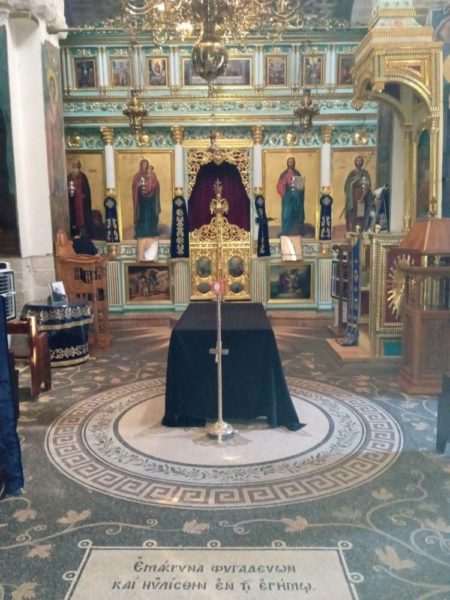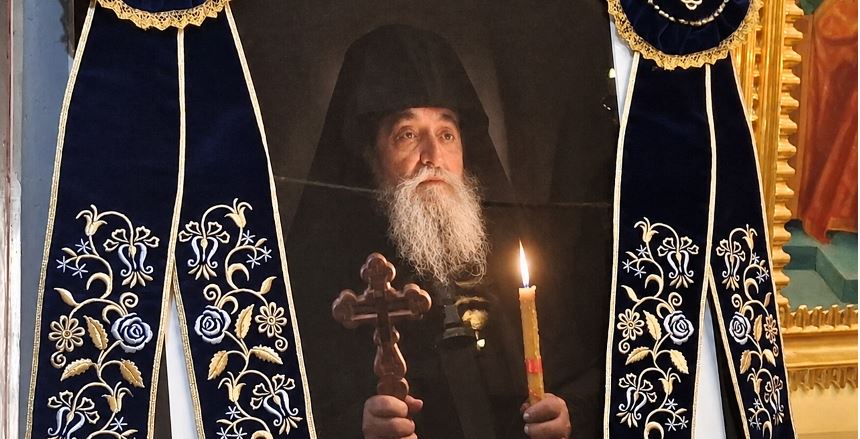
On the afternoon of Monday, 1st/14th September 2026, the Funeral Service of the blessed Hegumen of the Holy Monastery of Saint Gerasimos of the Jordan, Archimandrite Chrysostomos Tavoulareas, was held, following his falling asleep in the Lord on 24th August/6th September 2026, due to a severe illness with cancer.
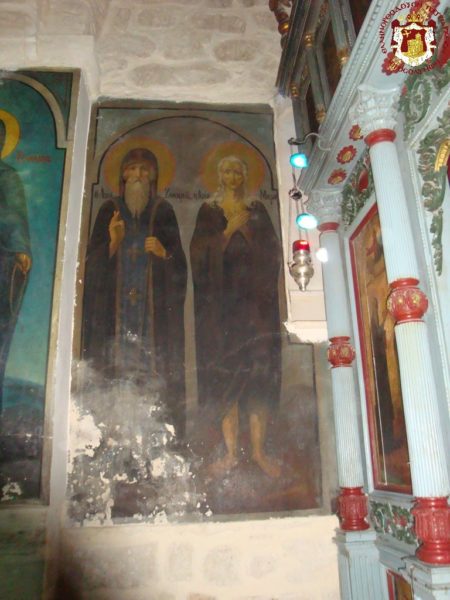
The blessed Archimandrite Chrysostomos, following his passing at the “Hygeia” Hospital, was brought to the Holy Monastery, which he served for over forty years, strengthening and developing it significantly in the fear of God, devotion, and love.
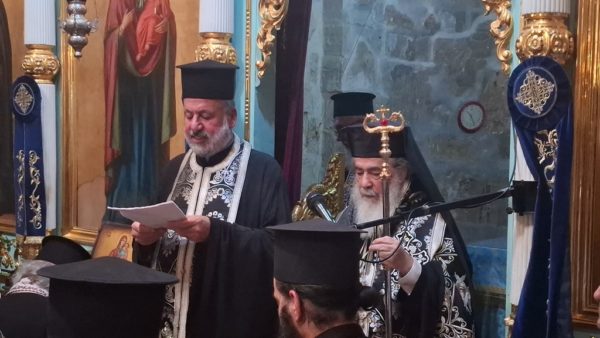
The Funeral Service was led by His Beatitude our Father and Patriarch of Jerusalem Theophilos, co-officiating with all the Hierarchs of the Patriarchate, the Holy Sepulchre Hieromonks, the Priests of the Patriarchate from all areas of its jurisdiction, the Fathers of the Monastery, nuns, representatives of the Palestinian Authority, the trustees of the Community of Jericho, the representative of the Ministry of Interior of Israel Mr Caesar Marjie, the Trustees of the Christian Communities of many regions, his spiritual children, and a great crowd of people—many of whom had benefited from his kindness—in prayer, devoutness, and joyful sorrow in the hope of our common Resurrection.
The Funeral Oration was delivered by the Elder Chief Secretary, His Eminence Archbishop Aristarchos of Constantina, as follows:
“Your Beatitude, Father and Master,
Venerable Choir of Hierarchs,
Mr Consul General of Greece,
Reverend Fathers,
Devout Pilgrims,
The departure unto the Lord of our beloved brother, Archimandrite Chrysostomos Tavoularéas, Hegumen of the Holy Monastery of St Gerasimos the Jordanite, has gathered us here for this his funeral service, deeply grieved and saddened by our separation from him, yet comforted and strengthened by Christ, the immortal King, our God and Saviour Jesus Christ, who became incarnate, was crucified and rose again, “the firstborn from the dead, and the ruler over the kings of the earth, who loved us and washed us from our sins in His own blood” (Rev. 1:5). As he journeys towards “heaven, whence also we eagerly await the Saviour, the Lord Jesus Christ”, according to the divine Apostle Paul (Phil. 3:20), our prayers accompany him, that he may find mercy and grace, rest and rejoicing.
To our supplications we dutifully add our praise for his life and conduct. We remember that Archimandrite Chrysostomos was born in Kalamata in the Peloponnese in 1952 and received his elementary education there. In 1977 he came to Jerusalem and was received as a novice to serve at the Basilica of the Nativity in Bethlehem. One year later, in 1978, he joined the Holy Sepulchre Brotherhood, received the monastic tonsure at the hands of the blessed Patriarch of Jerusalem Benedictos and was given the name Chrysostomos. That same year he was ordained a deacon by the blessed Archbishop of Lydda Hymenaeus at the Monastery of the Holy Cross in Jerusalem. He remained serving as a deacon at the Basilica of Bethlehem, and in 1979 he was ordained a priest by the blessed Archbishop Cornelius of Sebasteia, and at the same time appointed Hegumen of this Holy Monastery of St Gerasimos, receiving also the office of Archimandrite.
From then onwards, for more than forty years, at various times serving as a substitute and filling vacancies caused by a shortage of clergy in the Holy Monasteries of the Mount of Temptation, Hozeva and St John the Baptist on the Jordan, he laboured with exemplary zeal for the advancement of this ancient and historic Monastery of St Gerasimos, or Kalamon.
Being a natural oasis in the desert, he also transformed it into a spiritual oasis. He kept its gates open and made its facilities available for pilgrimage and accommodation to a multitude of pilgrims of every nationality, to the Christians of the Holy Land, and particularly to the members of our Orthodox flock from north and south, to the Scout Movement and the pupils of the Patriarchal School of Holy Zion, to diplomats and to simple people.
He laboured zealously, at times even at the risk of his life, to safeguard the property of the Monastery from the expansionist designs and intrusive acts of encroachment of those living in the surrounding area, having the Patriarchate and the Consulate General of Greece in Jerusalem as his advocates and supporters in this endeavour.
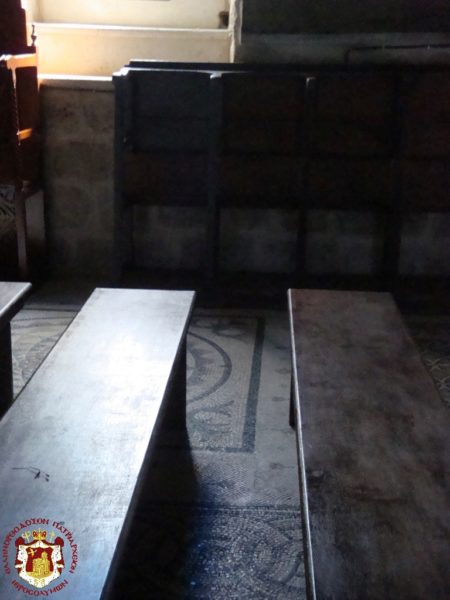
Making good use of the donations of pilgrims and the income derived from the cultivation of the Monastery’s agricultural property, both through hired workers and through his own labour, he adorned the floor of the main church, the chapels and the courtyards with tasteful Byzantine mosaics.
With the permission of the Patriarchate, he erected, on Patriarchal land in Jericho, a complex of buildings which, when rented by the Patriarchate as residences, offices or shops, may provide significant income for its various needs.
Being active, hospitable, charitable and brotherly, he received those in need and assisted them financially. He was loved and respected. He succeeded in harmoniously combining the Monastery’s foremost character as a place of work, social service and charity with its monastic and liturgical character, namely, the celebration, within the measure of his strength, of the prescribed monastic services, usually as vigils with the participation of pilgrims.
He renovated the old premises of the Monastery and went on to erect new buildings, which are used as guesthouses. His kindly countenance will remain indelibly engraved for many years in the memory of the members of the Holy Sepulchre Brotherhood and of the devout pilgrims.
For these good works of his, which we have mentioned, towards our Holy Community and towards his neighbour in need, we beseech our all-merciful God that, in His compassionate judgement, He may count them in his favour, together with the fortitude and without murmuring with which he endured the trial of his health; that He may forgive him whatever he may have committed, whether willingly or unwillingly; that He may appoint him among the righteous and the holy in Paradise; and that He may grant his soul the “sweetest nectar, the light-bearing nectar” of His thrice-radiant Godhead. Amen.
May his memory be eternal.”
After the Funeral Service, the blessed Elder Chrysostomos was interred in a tomb that he himself had prepared before the Gate of the Monastery.
Following his interment, the traditional mercy meal (makaria) was served in the Monastery’s refectory.
May his memory be eternal!
From the Chief Secretariat