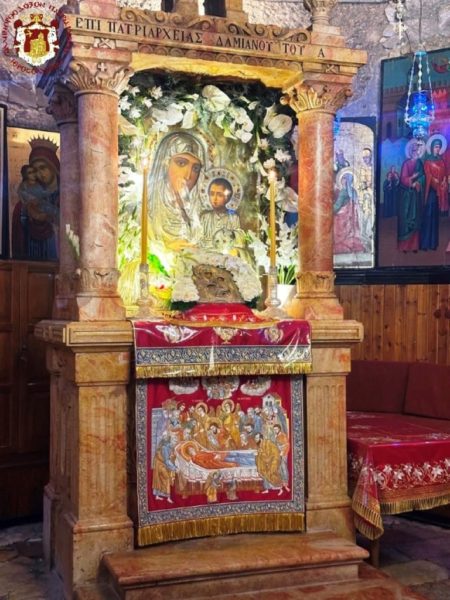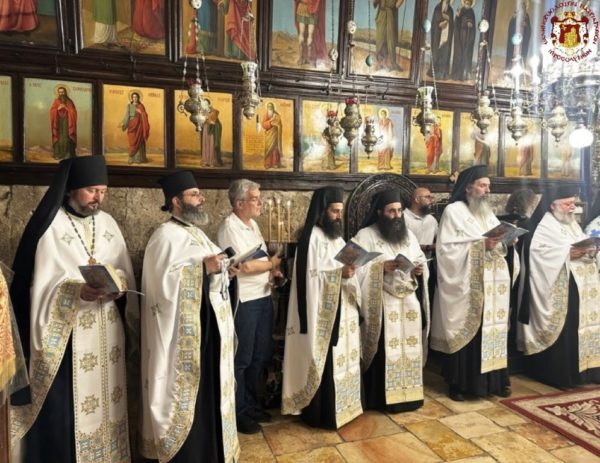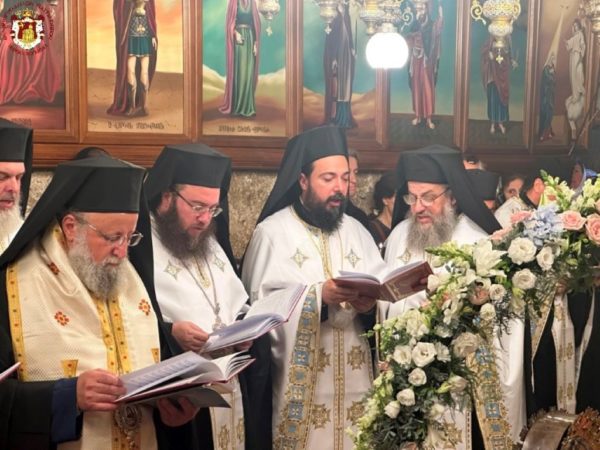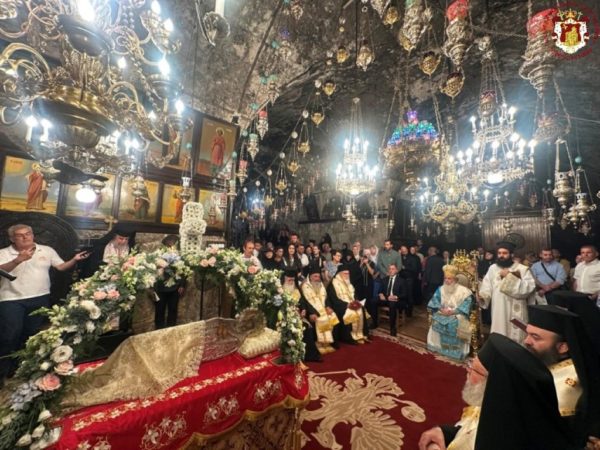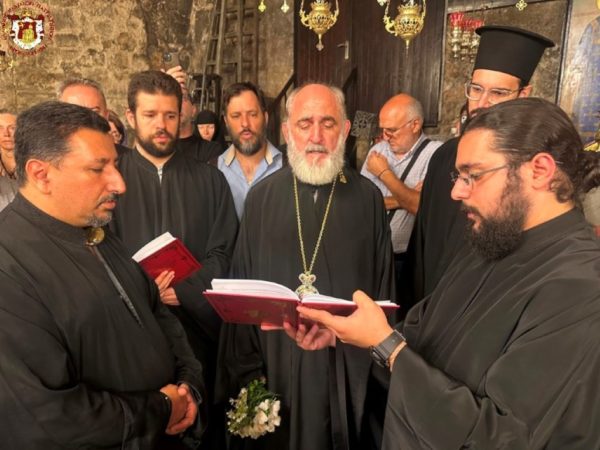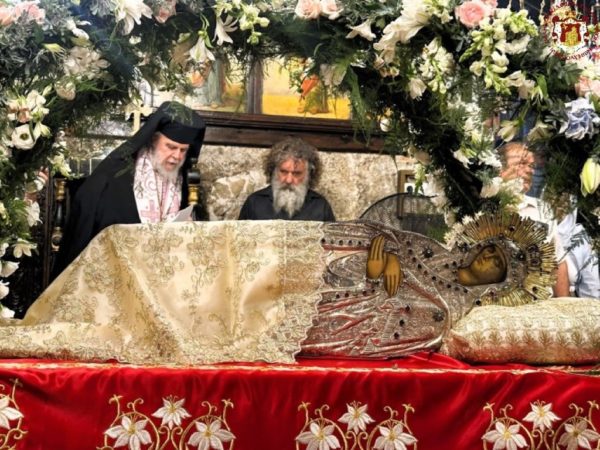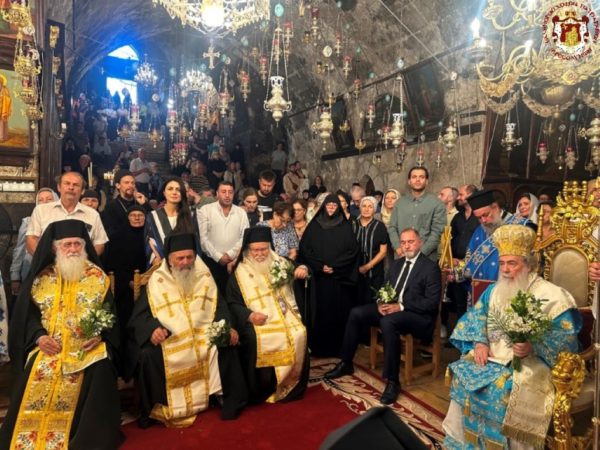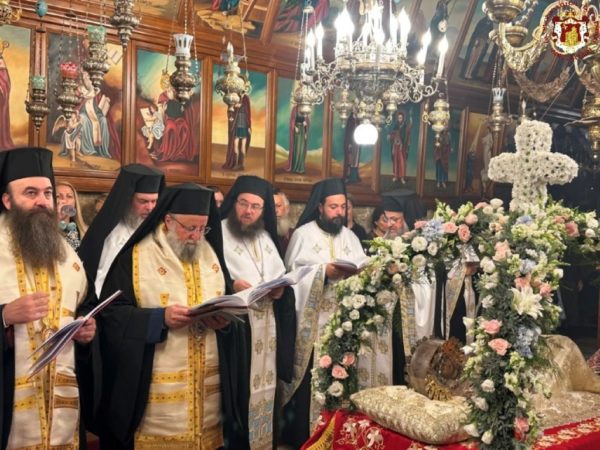
On the morning of Thursday, 14/27 August 2026, the Service of the Lamentations of the Dormition of the Theotokos was observed at the Church of the Dormition in Gethsemane.
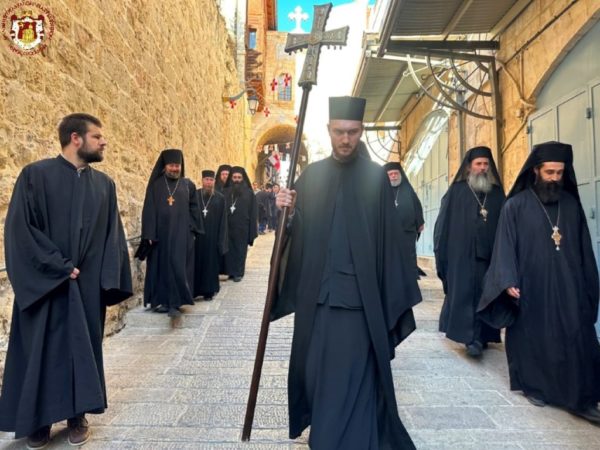
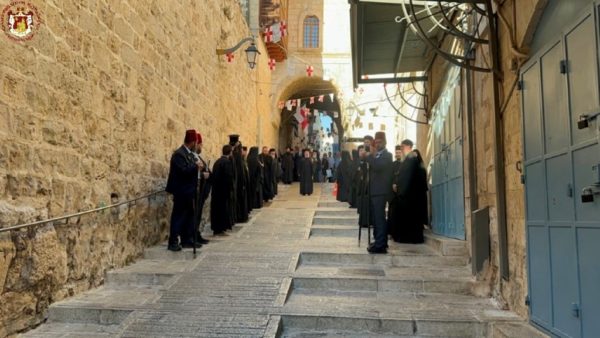
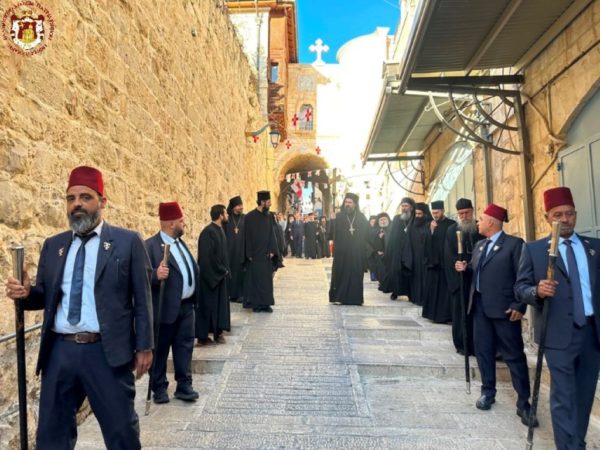
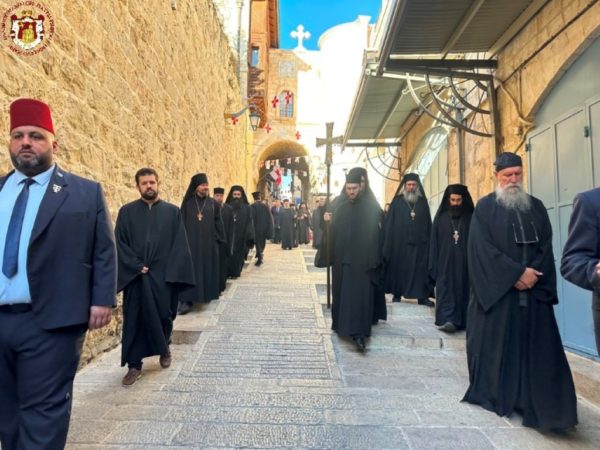
For this service, the Patriarchal Entourage, under His Beatitude our Father and Patriarch of Jerusalem, Theophilos, departed from the Patriarchate at 7:30 a.m. and proceeded on foot along the Via Dolorosa, continuing to Gethsemane and to the rectory, where they waited until the arrangements for the reception had been completed.
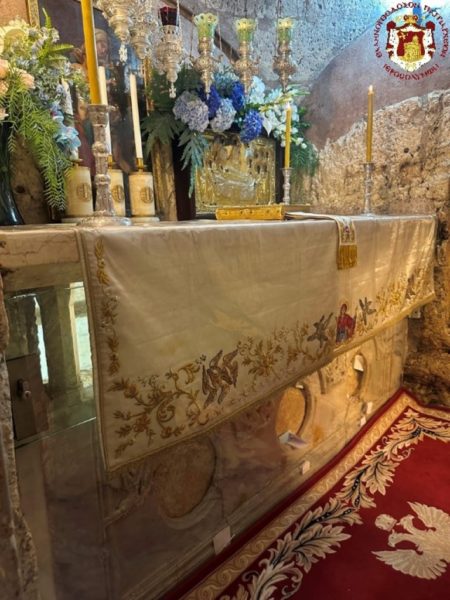
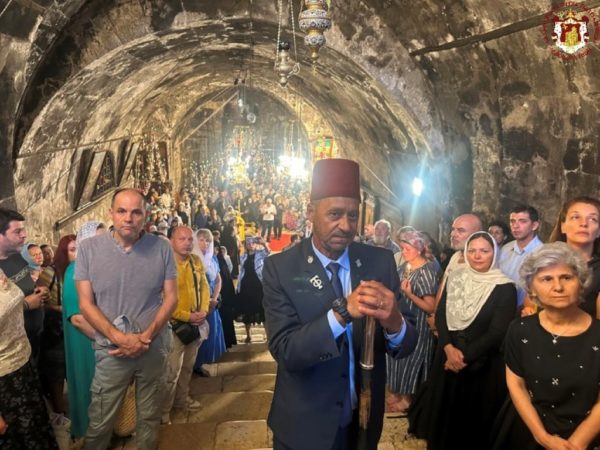
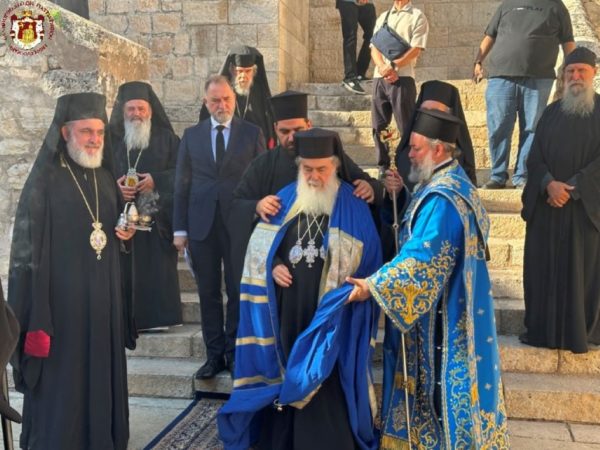
Following the reception in the courtyard of the Church, the Patriarchal Entourage went down into the Church, accompanied by the chanting of hymns of the Dormition. They then venerated the Tomb of the Theotokos.
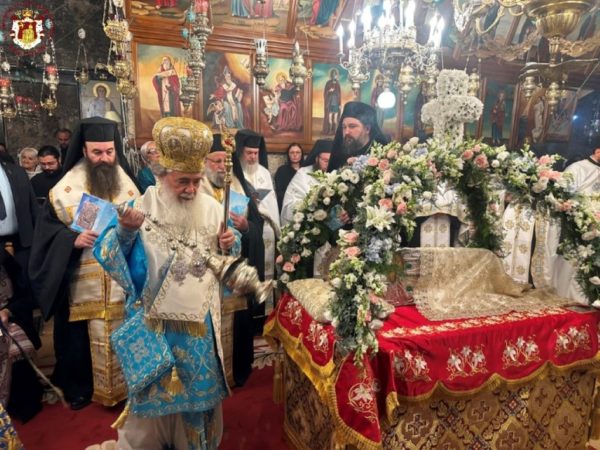
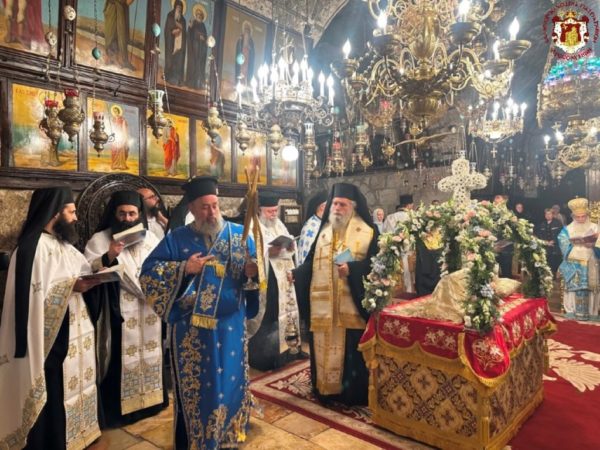
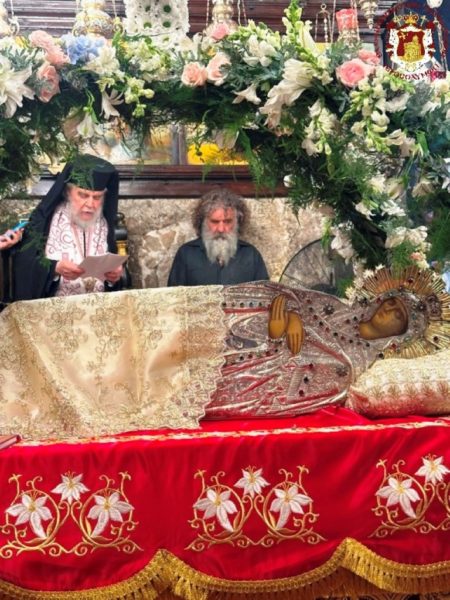
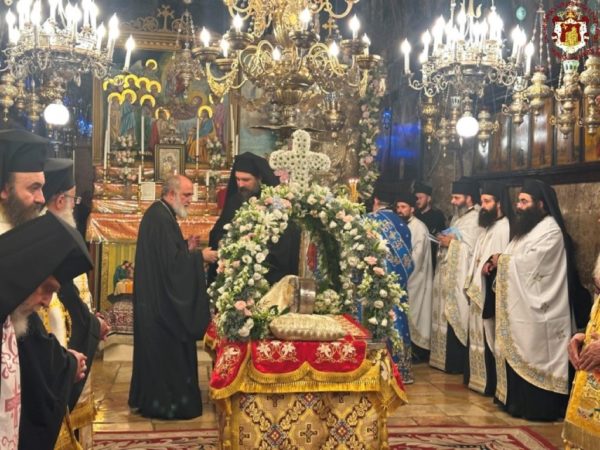
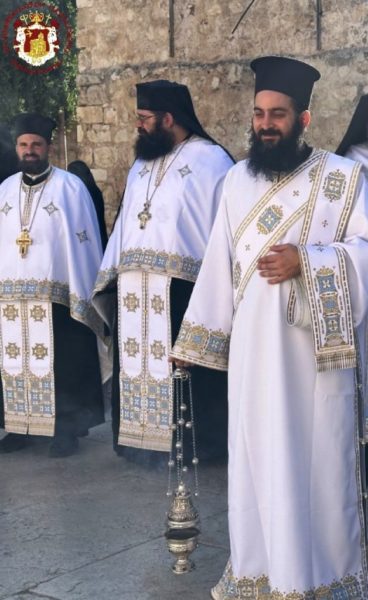
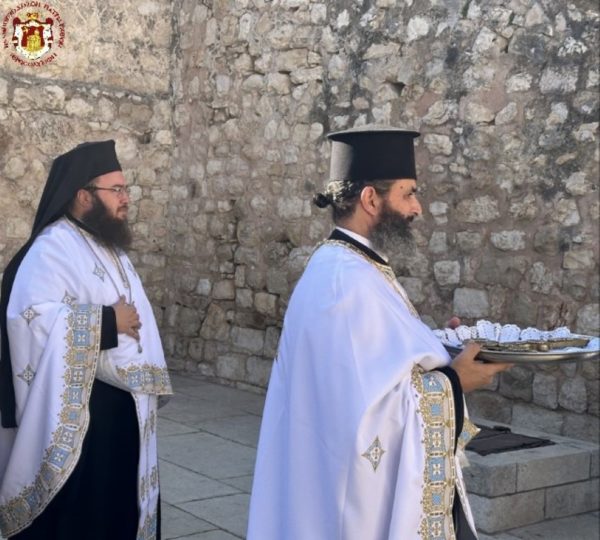
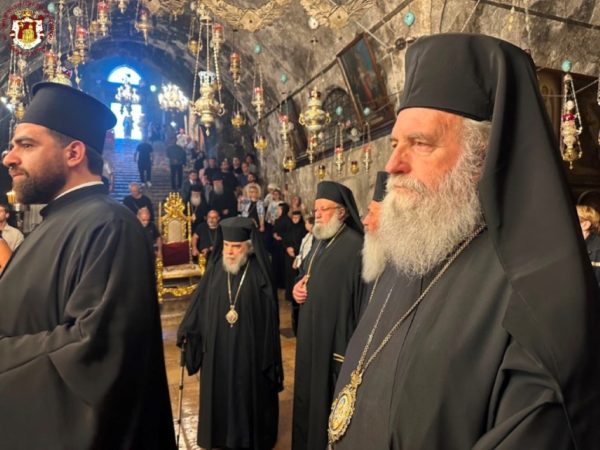
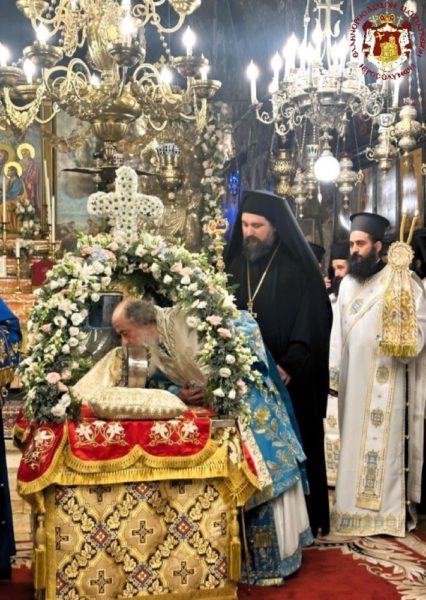
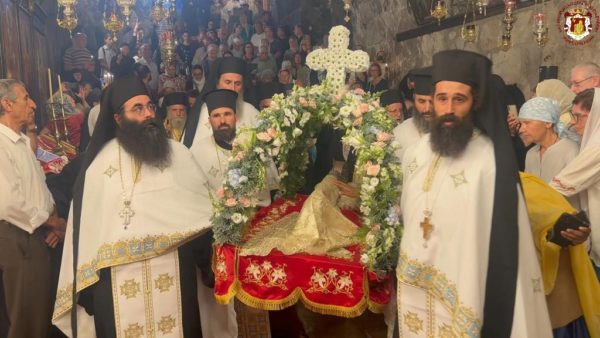
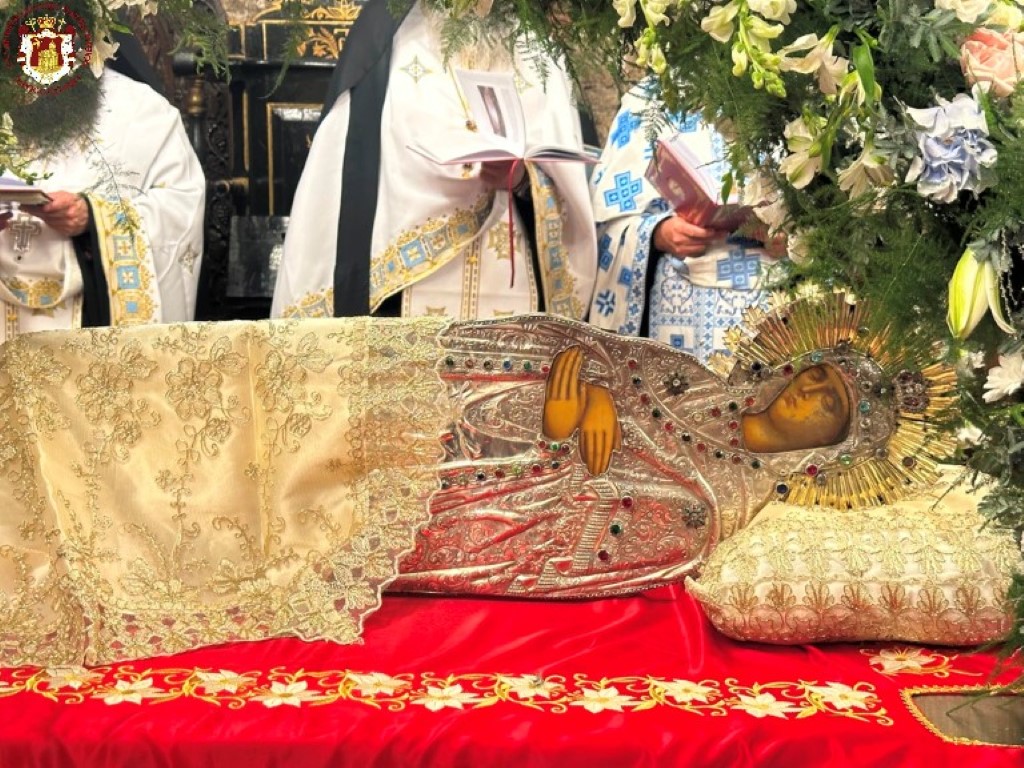
Upon His Beatitude’s vesting, together with the Hierarchs, Hieromonks and priests, the moving service commenced around the beautifully prepared Holy Epitaph, with the chanting of the Lamentations in three Stasis. During the First Stasis, the Patriarch censed, while during the Second and Third Stasis, the Hierarchs censed. This was followed by the festive homily on the Dormition of the Most Holy Theotokos, delivered in Greek by the Elder Chief Secretary, His Eminence Archbishop Aristarchos of Constantina, as follows:
“Your Beatitude, Father and Master,
Most Reverend Hierarchs,
Your Excellency Mr Consul General of Greece,
Reverend priests,
Devout pilgrims,
Today the whole Church throughout the world celebrates a venerable, all-holy and joyous feast, and the Church of Jerusalem, in a particular way, as the guardian of the sacred shrine of the Tomb of the Theotokos at Gethsemane. She celebrates the feast of the Eve of the Dormition of our most blessed and glorious Lady, the Theotokos and Ever-Virgin Mary, in this moving and magnificent service of the Lamentations, dedicated to her who, according to the Fathers of the Church, is “beyond all praise, pure Mother of God” (Ode 3 of the Canon of the Feast of Saint Anna, 25 July).
According to the particular liturgical order appointed for this service, prayers and supplications are offered to “the ever-watchful Theotokos in her intercessions, and the unfailing hope of our protection”, and to the “unbreakable protection, after God” of the Most Holy Theotokos. Hymns, Beatitudes and Megalynaria are sung in her honour, she whose surpassing purity and holiness “transcend all understanding.” She is the one whose “beauty in virginity and radiant splendour of purity” so astonished the Archangel Gabriel, sent to her by God, that he was left wondering and amazed how he might address her, and could utter only what he had been commanded: “Rejoice, thou that art highly favoured,” “the Lord is with thee; blessed art thou among women” (Luke 1:28), and “The Holy Spirit shall come upon thee, and the power of the Highest shall overshadow thee; therefore also that Holy One who is born shall be called the Son of God” (Luke 1:35). When she replied, “Behold the maidservant of the Lord! Let it be to me according to your word” (Luke 1:38), then “together with the bodiless voice, the Bodiless One became incarnate”; He who is without beginning received a beginning in time. Through the coming of the Holy Spirit, He assumed flesh, “endowed with a rational soul,” receiving flesh from the pure blood of the Most Holy Theotokos. Then God became flesh; He became man.
As the Church sings: “The Word, invisible in His essence and Maker of all things, appeared to men as man, from the pure Mother of God, recalling man to participation in the Godhead” (Theotokion of Ode 7 of the Midnight Office Canon, Fourth Tone, Sunday).
This transcendent mystery of the Incarnation of God constitutes the basis, the foundation and the cornerstone of our faith. Called by God to this purpose, and freely responding to His call, the Ever-Virgin Mary became His co-worker in this divine mystery. Through the giving of her flesh, she became Theotokos, as the Church sings: “She is by nature higher than all creation, for she gave birth for us in the flesh to the Creator of all” (Theotokion of Ode 9 of the Sunday Canon, Grave Tone). And as Saint Cyril of Alexandria explains: “She remained a Virgin after childbirth, just as she was before childbirth and before conception; she remained Ever-Virgin throughout her whole life, undefiled and spotless. For such was it fitting that she who bore God should be” (PG 77, 1152A; Saint John of Damascus, Homily on the Nativity of the Theotokos, ed. Ath. Yeftić, p. 235). “God, in an unconfused union, becoming incarnate, deifying that which is human” (Theotokion of the Resurrection, Fourth Tone).
Within the womb of the immaculate body of the Theotokos, the first-fruits of the re-creation, regeneration, renewal, restoration and salvation of humanity from the corruption brought about by the Ancestral Fall were accomplished through the Incarnation of the Son and Word of God, our Lord Jesus Christ, that is, through His assumption of our human nature. This first-fruit was brought to completion through all the events that followed in His earthly incarnate dispensation: His Nativity according to the flesh, His Baptism, His Cross and His Ascension. Through all these things, the Lord raised to heaven and seated at the right hand of the Father the human nature which He had assumed from the Virgin, thereby glorifying and deifying it.
Of this honour and glory, to which man has been deemed worthy by divine grace, that is, of man’s participation in “the divine nature” (2 Peter 1:4), the Theotokos is the first and most worthy participant. For she, who became the co-worker of God in this mystery, conceived without seed, through the Holy Spirit, the Son and Word of God; she who carried Him in her womb, gave birth to Him according to the flesh, nursed Him, ministered to Him and followed Him even unto the Cross, when, in accordance with the prophecy of Simeon the God-receiver, “a sword pierced through her own soul” (Luke 2:35).
According to Nicholas Cabasilas: “She was the first to become conformed to the death of the Saviour, and for this reason she was also the first of all to partake of the Resurrection” (The Theotokos, Apostoliki Diakonia Publications, Athens, 1989, p. 214). She became the type and exemplar of life in Christ, for, according to Saint Gregory Palamas: “Even after the ascension into heaven of Him who had taken flesh from her, she alone of all the Apostles was at once their support and consolation, both hearing and seeing them and in every way assisting in the preaching of the Gospel” (PG 151, 2464C). And her death became life-bearing, transferring her into heavenly and immortal life.
The Orthodox Church, preserving in her Tradition all that she received from the beginning, offers worship and doxology to the Holy Trinity, while to the Virgin she offers reverence, honour, praise and hymnody. The Orthodox Church’s teaching concerning Mary is not Mariology but Christology: it is honour for her personal holiness, but at the same time gratitude for her co-operation in the work of our salvation through the Incarnation of the Son and Word of God.
The Orthodox Church believes and proclaims that the Ever-Virgin Mary, as a descendant of Adam and bearer of Original Sin, underwent its consequences, namely death, and was buried “in Gethsemane, in the place where the holy Apostles, gathered together at the divine command, laid her to rest.” At the same time, however, she believes that her body, as the body that had received God and had been sanctified through the Incarnation, was not left upon the earth to undergo corruption. According to Saint Andrew, Archbishop of Crete the Jerusalemite: “She who gave birth escaped corruption, and the tomb did not receive corruption, for corruption does not touch the holy” (PG 97, 1081D). The Church does not mourn the death of the Theotokos, but “celebrates” it today, according to Saint Gregory Palamas, “as a holy falling-asleep, or transition to another life” (PG 151, 2461A).
According to Saint John of Damascus, today: “The blessed and all-holy soul of the Theotokos is separated from her most blessed body, and the body is entrusted to lawful burial; yet it does not remain in death, nor is it dissolved by corruption” (Saint John of Damascus, PG 96, 716AB). “For just as, when she gave birth, her virginity remained inviolate, so, when she was translated, her body was preserved undissolved and was transferred to a dwelling more excellent and more divine” (PG 96, 716B).
We, too, blessed by divine grace to celebrate such a universal and solemn festival under the Primate of the Mother of Churches, His Beatitude, our Father and Patriarch of Jerusalem, Theophilos, and especially here beside the sacred Tomb of the Theotokos, from which she was translated to the heavenly dwellings, let us give thanks to our Triune God, and let us hymn the Theotokos together with Saint John of Damascus: “Rejoice, thou foreordained Mother of God; rejoice, thou chosen beforehand according to the eternal counsel of God” (PG 96, 761A). “Let all creation celebrate the ascent of the Mother of God” (PG 96, 760D). “Come, let us all, with longing in our hearts, descend together to the tomb as she descends into it” (PG 96, 761A). “Come, let us all depart with her in spirit as she departs this life” (PG 96, 761A). “Let the earth rejoice at the laying down of her body; let the air leap for joy at the ascent of her spirit” (PG 96, 760D). “O sacred, wondrous, venerable and venerated Tomb!” (First Encomium on the Dormition, Yeftić, p. 138.)
And let us add the supplication of the Mother of Churches: “Intercede, O Theotokos, with your Son and God, that He may inspire the rulers of the earth, with the Spirit of His peace, for the precious gift of life and the welfare of their peoples; that He may ‘speak into their hearts what is of benefit for the Church of the Holy Places’, for the protection of the Christians of the Holy Land, ‘the little flock’ which the Lord commands not to fear, because ‘it is your Father’s good pleasure to give you the kingdom’ (Luke 12:32).”
And may He grant rest to the souls of the Fathers of the Holy Sepulchre who have fallen asleep, both from ages past and in more recent times, those who laboured for the preservation of the Holy Places, and particularly of this venerable Tomb of the Theotokos, as silent yet unfailing witnesses to the Incarnate presence of God upon the earth. So be it.”
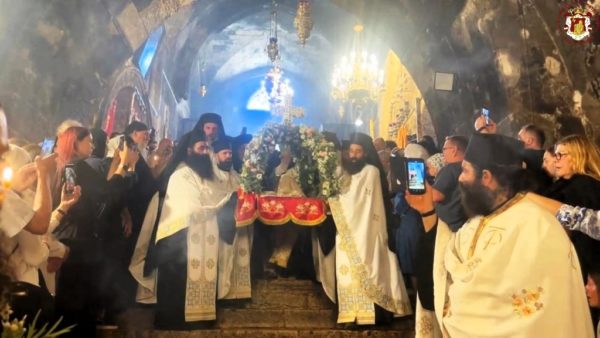
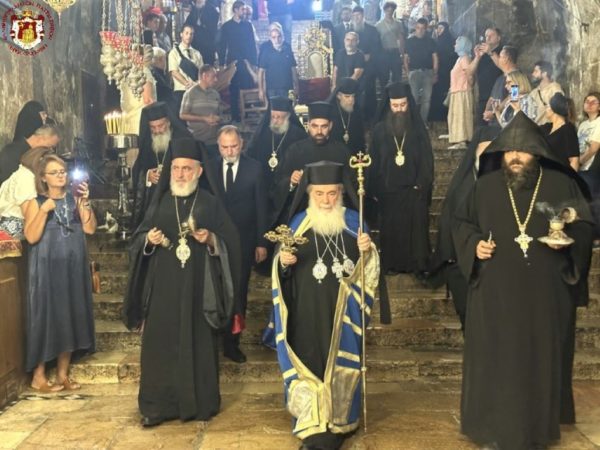
Following this, the Evlogetaria, the Lauds and the Doxology were chanted. When these had been completed, the priests lifted the Epitaph and carried it up the steps as far as the inner entrance of the Church.
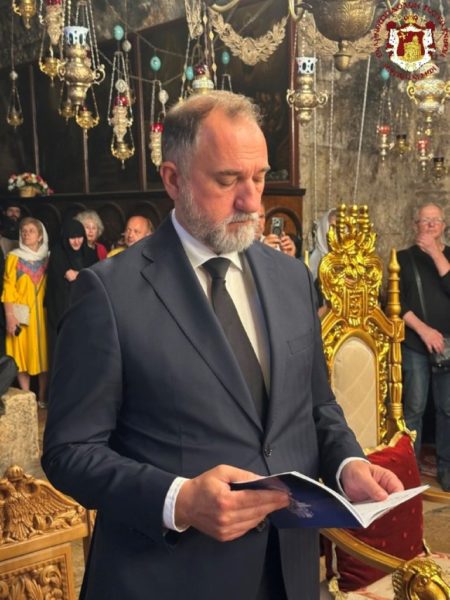
There, a prayer of supplication was offered for the pious and Orthodox Christians, for our nation, and for peace and the good order of the whole world, in the presence of the Consul General of Greece in Jerusalem, Mr Dimitrios Angelosopoulos, and the Consulate staff, with the participation of many dozens of pilgrims, both local and from various Orthodox countries, as well as monks and nuns, seeking protection, blessing and spiritual strengthening from “the ever-watchful Theotokos in her intercessions and the unfailing hope of our protection.”
The priests then carried the Epitaph back down into the Church and placed it in the area of the Platytera, to the south of the Tomb of the Theotokos, in preparation for the feast of the Dormition on the following day, 15 August.
At the conclusion of this service, His Beatitude, the Entourage and the pilgrims proceeded to the Rectory, where the energetic Hegumen, His Eminence Metropolitan Joachim of Helenopolis, offered refreshments.
From the Chief Secretariat