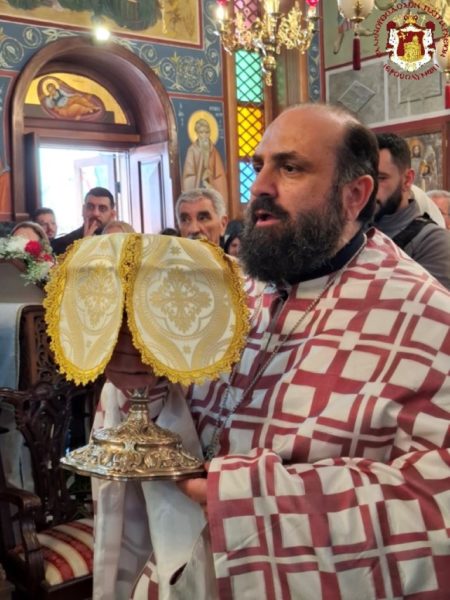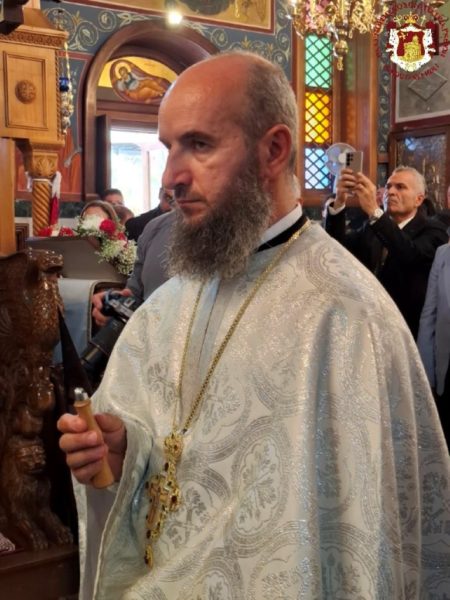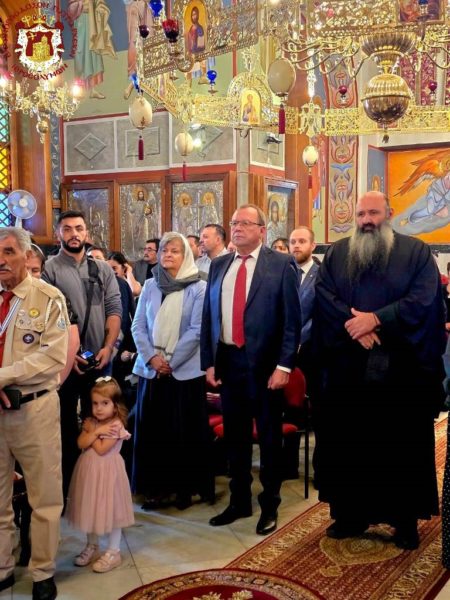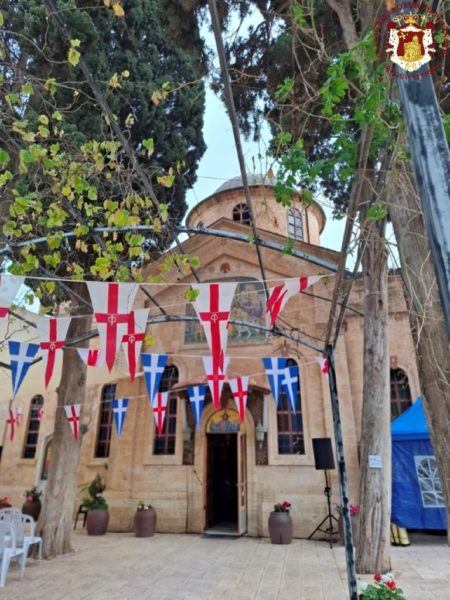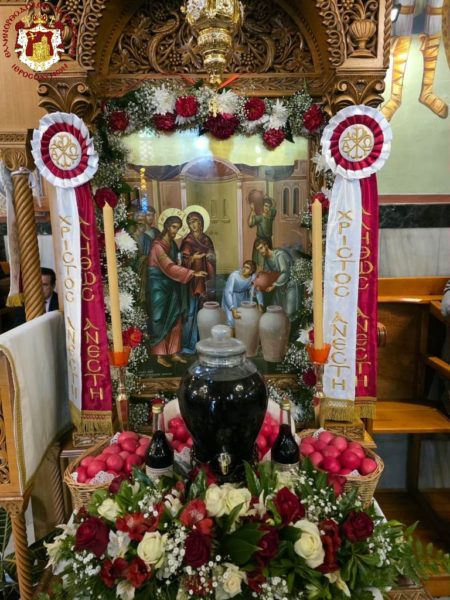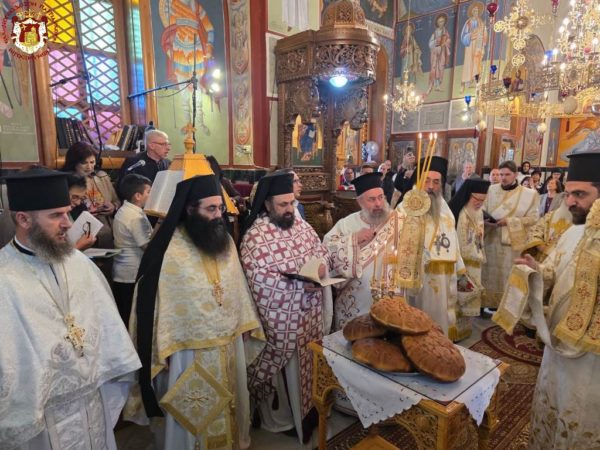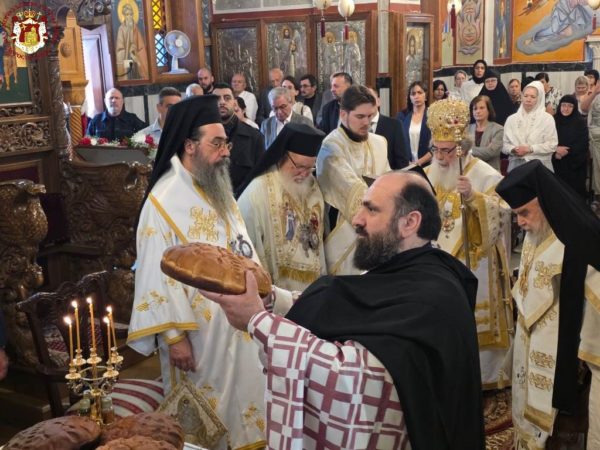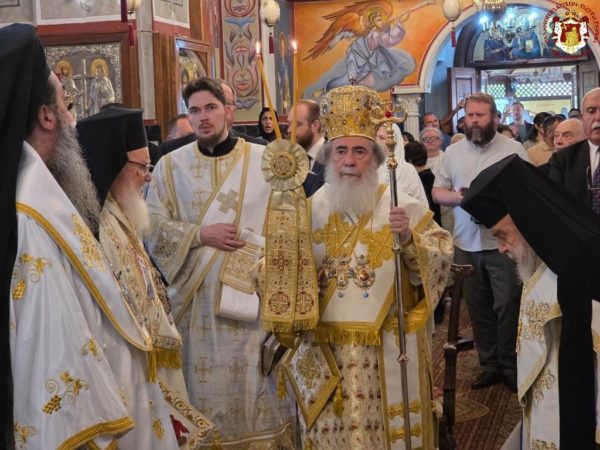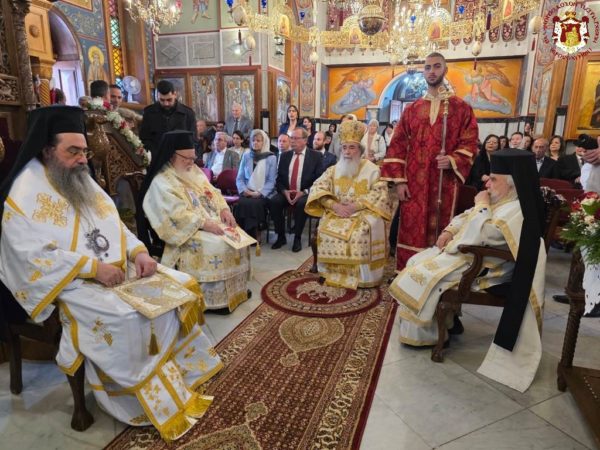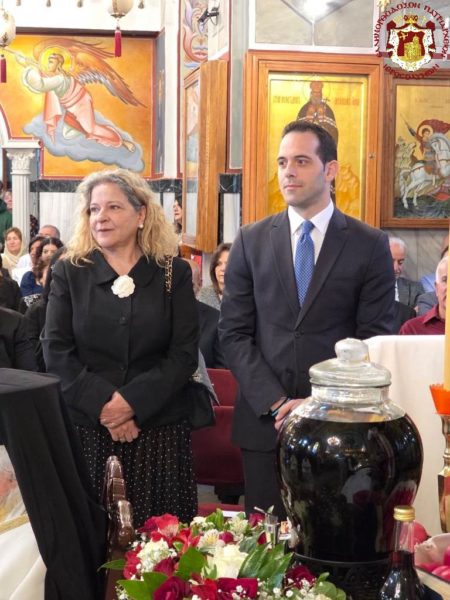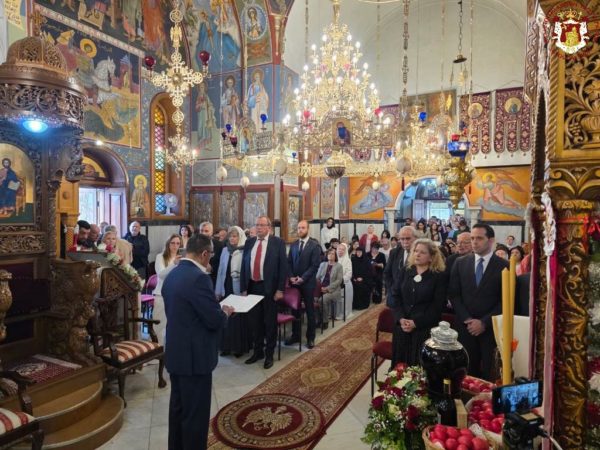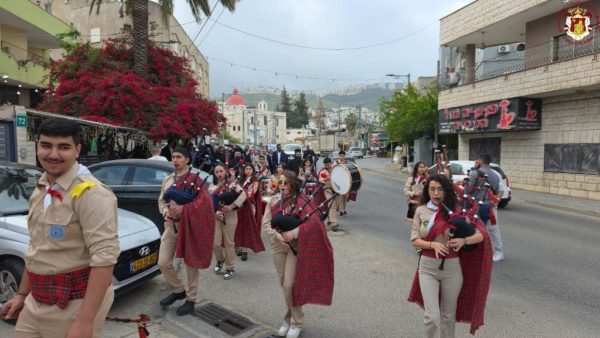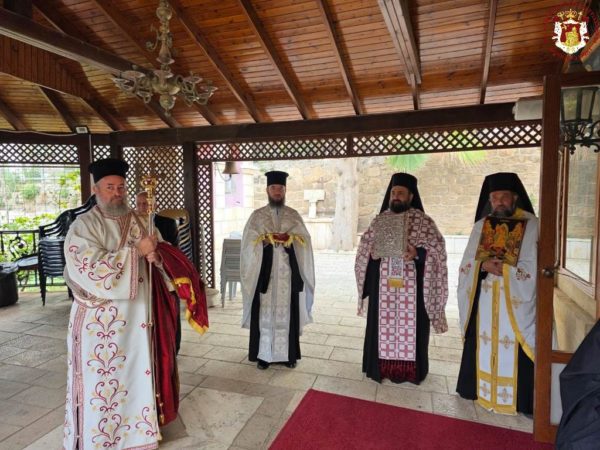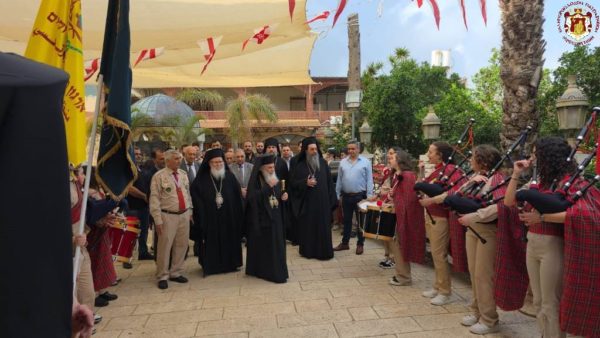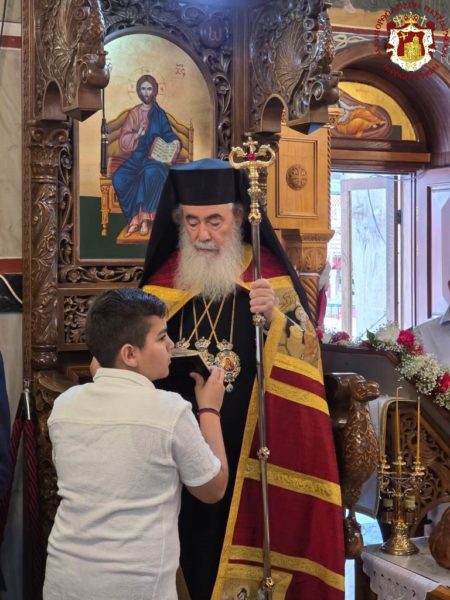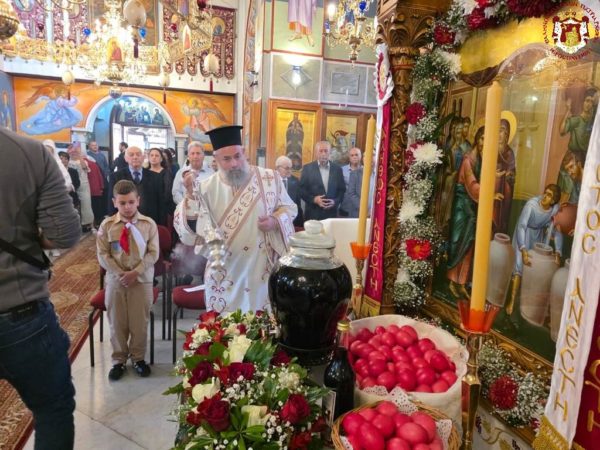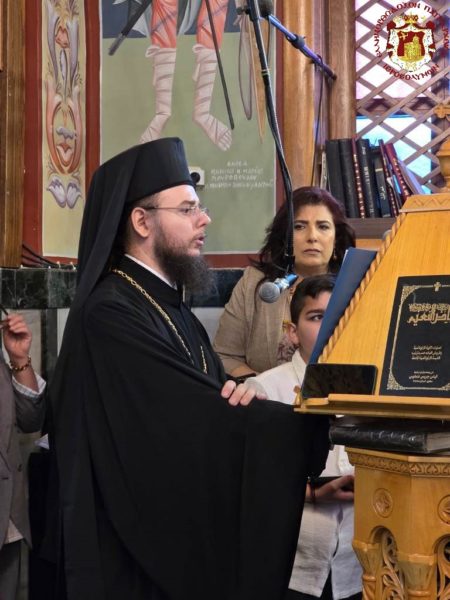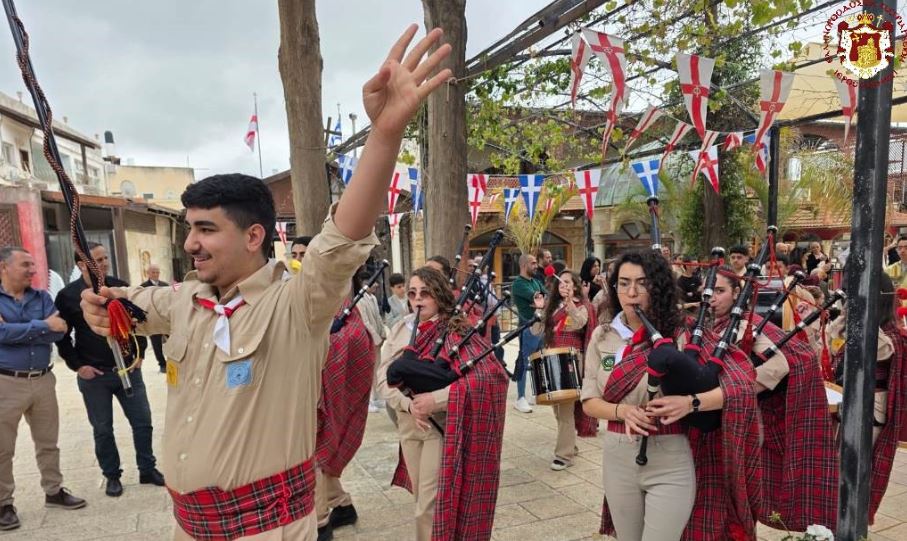
On Sunday, the 6th/19th of April 2026, the Patriarchate celebrated the Sunday of Thomas.
According to its own tradition, the Community of Cana of Galilee observes on this day as the event of the confession of the Apostle Thomas, who was from Cana (John 20:19–31), together with the first sign wrought there by Christ, namely the transformation of water into wine (John 2:1–11).
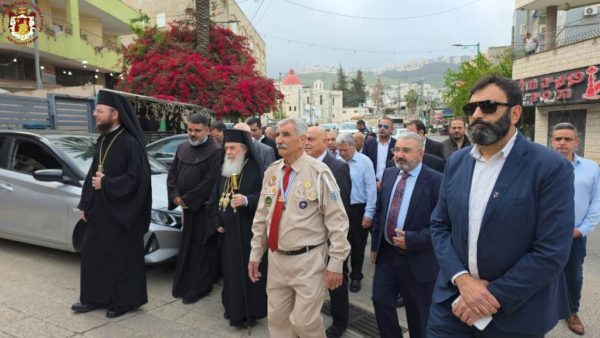
At this double feast, His Beatitude, our Father and Patriarch of Jerusalem, Theophilos III, presided on the Sunday morning Liturgy. His Beatitude had formerly served as Hegumen in Cana. He was received by the Scouts and members of the faithful, along with the oncelebrating with Him, their Eminences Metropolitan Kyriakos of Nazareth, Archbishop Aristarchos of Constantina, Metropolitan Makarios of Acre, local Priests, and not least the Hegumen of Cana, Archimandrite Leontios.
Before the Holy Communion, His Beatitude delivered the following sermon:
“Come, let us partake of the new fruit of the vine of divine gladness, in this auspicious day of the Resurrection, and of the Kingdom of Christ; praising Him as God unto the ages,” the hymnographer of the Church proclaims.
Beloved brethren in Christ,
Pious Christians,
The grace of the Holy Spirit hath gathered us all together this day in this holy place of Cana of Galilee, that we may celebrate, on the one hand, the inauguration of the Resurrection of Christ and the touching of the holy Apostle Thomas; and, on the other, the wedding of Simon the Canaanite, to which Christ was invited together with His disciples, and where He turned water into wine.
On this holy day of Pascha, we celebrate the Feast of feasts, that is, the radiant Resurrection of Christ, in which the uncreated Light shone bodily from the Tomb unto all. Wherefore the hymnographer also cries aloud: “It is the day of Resurrection, let us be radiant, O ye people… for Christ our God hath brought us from death unto life, and from earth unto heaven.”
Indeed, the Resurrection of Christ constitutes the foundation and the culmination of the mystery of the Divine Providence, namely the Incarnation of the Word of God and our Saviour Christ, from the most pure blood of the Ever-Virgin Theotokos Mary; for “if Christ be not risen, then is our preaching vain, and your faith is also vain” (1 Cor. 15:14).
The faithful unbelief of the Apostle Thomas, and his touching with his fingers of the pierced side of Jesus Christ, confirm that Christ truly rose bodily from the tomb. Likewise, the presence of Christ at the wedding of His friend Simon, together with His disciples and His Mother, and the sign wrought there, the changing of water into wine, bear witness to the mystery of the Divine Providence, which was fulfilled in the person of Jesus Christ, “whom God hath raised up, having loosed the pains of death: because it was not possible that he should be holden of it” (Acts 2:24), as the Apostle Peter proclaims, invoking the Prophet David, who says concerning Christ the Messiah: “I foresaw the Lord always before my face… because thou wilt not leave my soul in hell, neither wilt thou suffer thine Holy One to see corruption” (Acts 2:25–27; Ps. 16:8–10).
Today, the local Church of Cana celebrates two great events: the wedding of Simon the Canaanite and the touching of the holy Apostle Thomas. Through both these events, Christ “manifested forth his glory; and his disciples believed on him” (John 2:11). And Thomas, having touched the side of Jesus, confessed, saying: “My Lord and my God” (John 20:28).
These scriptural events are of great significance. Marriage is a prefiguration of the union of Christ the Bridegroom with His Bride, the Church. “This is a great mystery: but I speak concerning Christ and the Church” (Eph. 5:32), the divine Paul proclaims. Noteworthy here is the interpretation of Saint John of Damascus, who says: “Thus it becomes a mystery, the truth being hidden within the type; for the taking of the woman from the man and her union with him prefigured Christ and the Church.”
The touching of Thomas, which took place after eight days, when Jesus appeared in the midst of His disciples, the doors being shut (cf. John 20:26), also pertains to the manifestation unto us of our risen Saviour Christ. This is expressed most clearly by the renowned interpreter, Saint Cyril of Alexandria, who says: “Though we shut the doors, Christ comes unto us and appears to us all, both invisibly and visibly; invisibly as God, and visibly again in the body. And He permits us to touch His holy flesh. For by the grace of God we draw near, receiving into our hands Christ Himself through participation in the mystical blessing, that we also may firmly believe that He has truly raised up His own temple.”
In other words, beloved brethren, through our participation in the mystical blessing, that is, the Holy Communion of the Body and Blood of Christ, we also touch Christ and proclaim His Resurrection, and likewise the co-resurrection of our human nature in Him, as the hymnographer also declares: “In awe…He is blessed”.
Concerning the presence of Christ at the marriage which took place here, our holy Father Cyril points out: “Marriage, which is honourable, was sanctified, and the curse laid upon the woman was taken away. For no longer shall children be brought forth in sorrow, since Christ has blessed even the beginning of our birth.” In simpler terms, honourable marriage is sanctified, and the curse against Eve, who, being deceived, was in the transgression (1 Tim. 2:14), is abolished, and children shall no longer be brought forth in sorrow, for Christ has blessed the very origin of our birth.
According to Saint Cyril, the marriage at Cana signifies the Word of God, Christ, Who as Bridegroom was united most closely with human nature as His bride. “And the Word was made flesh, and dwelt among us” (John 1:14), says the Evangelist John. And Saint Athanasius the Great, interpreting this saying, declares: “When we hear that the Word was made flesh, we do not understand that the Word was wholly turned into flesh, but that He put on flesh and became man.”
Thus, the Son and Word of God, Christ, put on our human flesh and became man; and we, beloved brethren, are called to put on Christ, the Light of the world, the unwaning light of His Resurrection. “For as many of you as have been baptised into Christ have put on Christ” (Gal. 3:27), exhorts the inspired Paul. Moreover, we are called to partake of “the new fruit of the vine,” that is, of the Body and Blood of Christ, Who has inaugurated for us His heavenly Kingdom.
And with the hymnographer let us beseech the Theotokos and Mother of God, saying: “Guide us in the path of repentance, ever turning us away from the ways of evil, and appeasing the all-good Lord Whom we provoke to anger; O thou who knew not wedlock, blessed Mary, refuge of despairing men, dwelling-place of God.”
Christ is risen! Christ is the peace of the world. Christ is our life and our Resurrection.”
At the conclusion of the Divine Liturgy, there was a procession three times around the Church, and the Gospel reading, “At that time there was a marriage in Cana of Galilee,” was proclaimed before the gates of the Church.
Finally, a reception at the Rectory followed, and at midday a rich festal meal was set in the hall of the Monastery, where the customary addresses were delivered. After the meal, His Beatitude made pastoral visits to members of the flock whom he remembers from the days of his Hegumenship in Cana.
From the Chief Secretariat