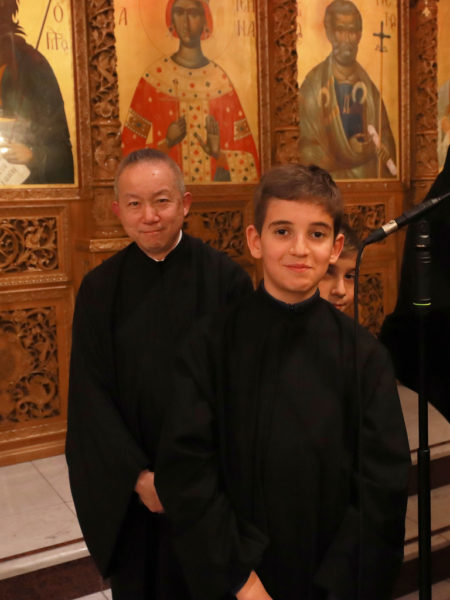
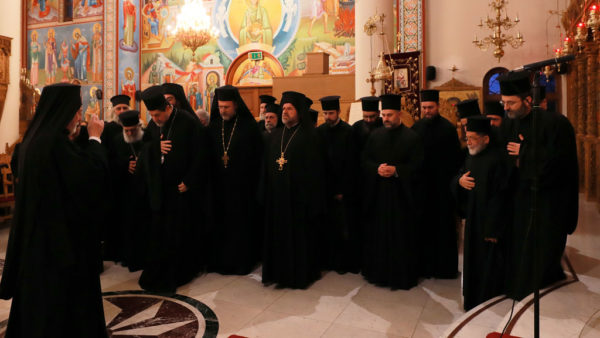
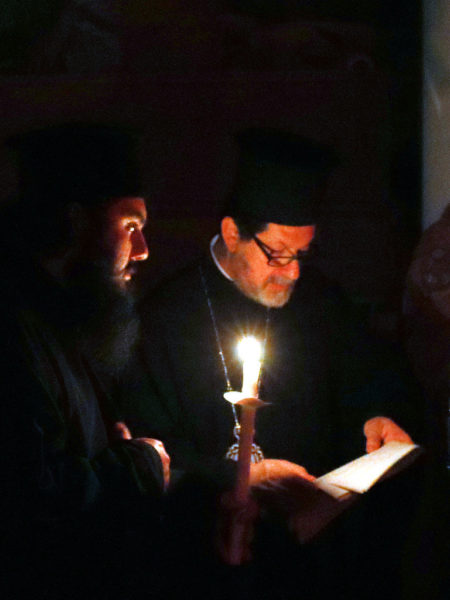
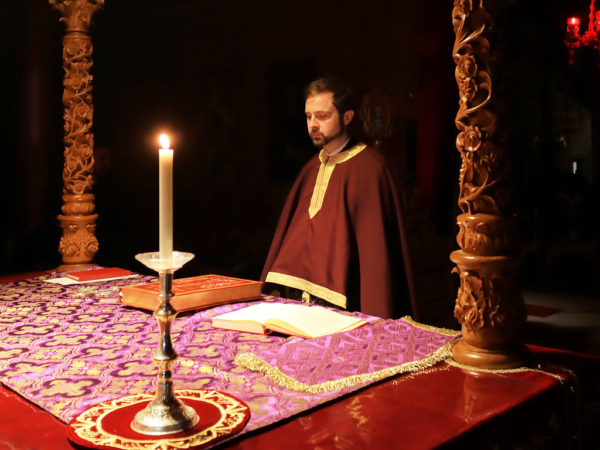
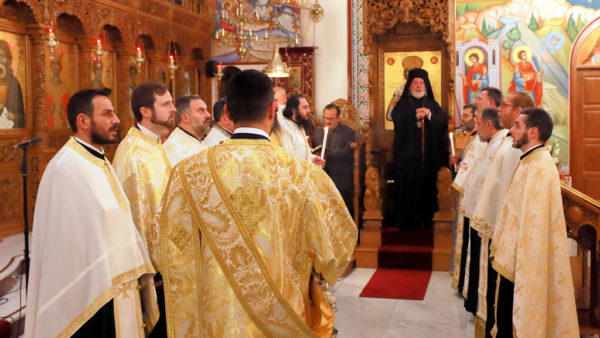
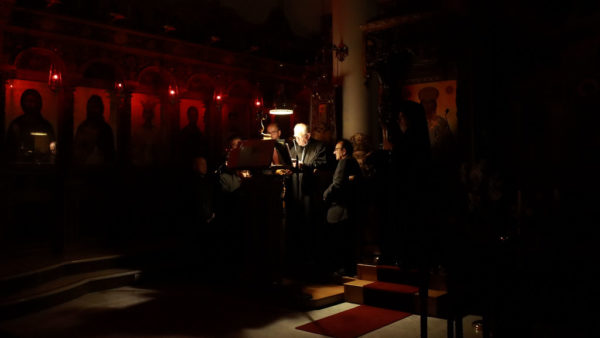
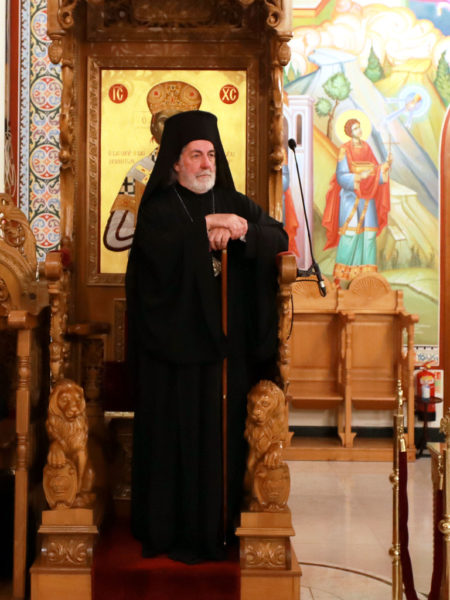
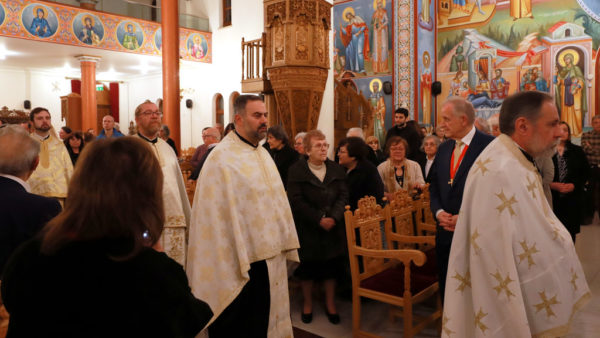
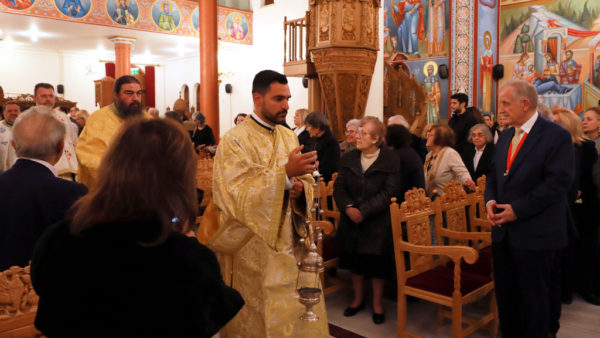
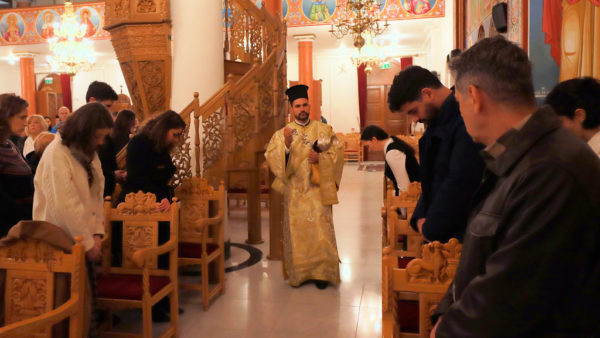
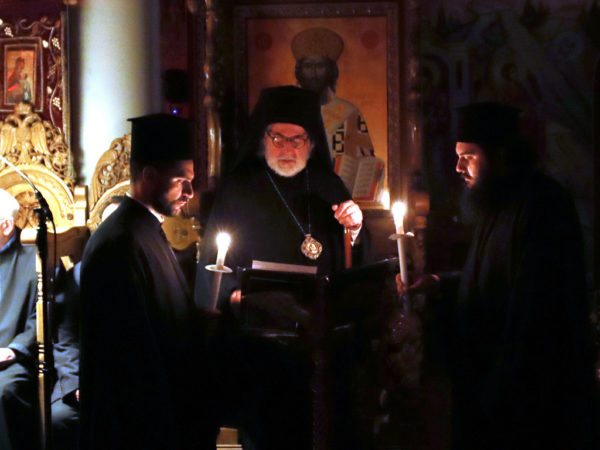
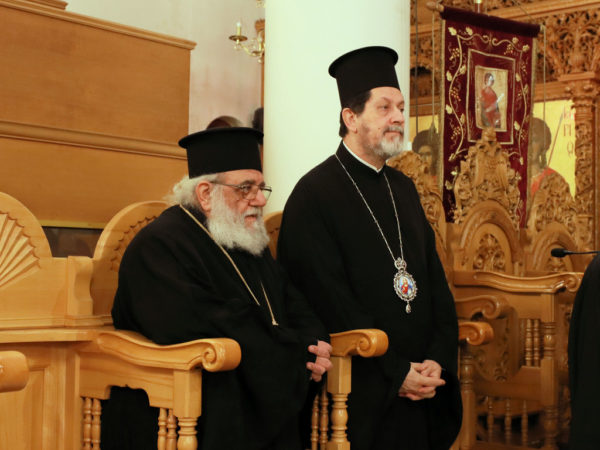
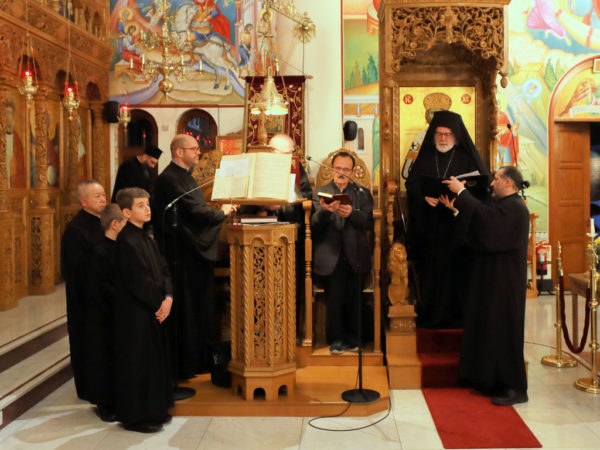
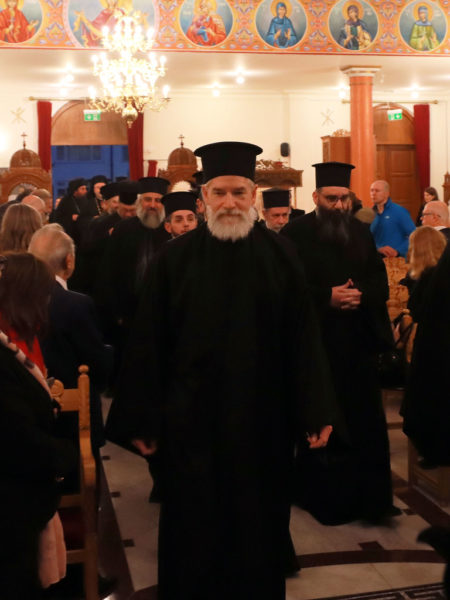
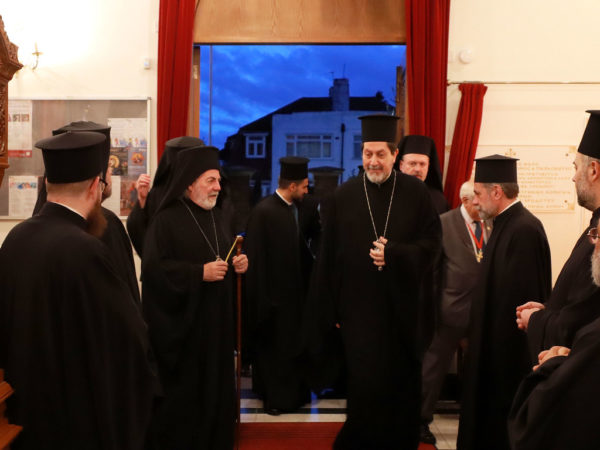
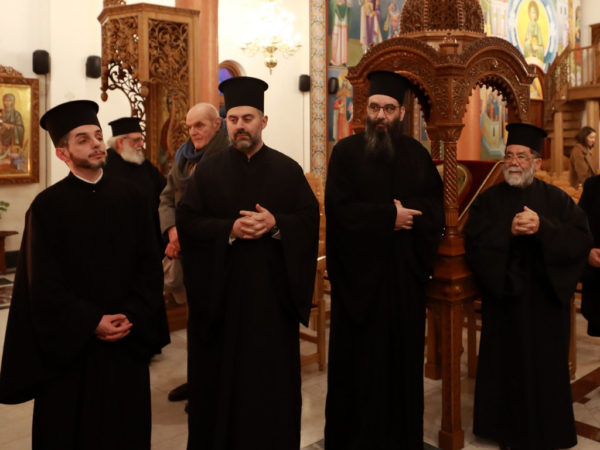
On the evening of Sunday, 22 February 2026, at the Holy Church of Sts Panteleimon and Paraskevi, His Eminence Archbishop Nikitas presided over the Vespers of Forgiveness, marking the commencement of Holy and Great Lent.
Joining His Eminence in prayer were His Eminence Metropolitan Athanasios of Cologne and His Grace Bishop Iakovos of Claudiopolis. Numerous clergymen from the greater London area also attended, as is customary at the beginning of Great Lent.
Before the end of the service, His Eminence delivered the following homily:
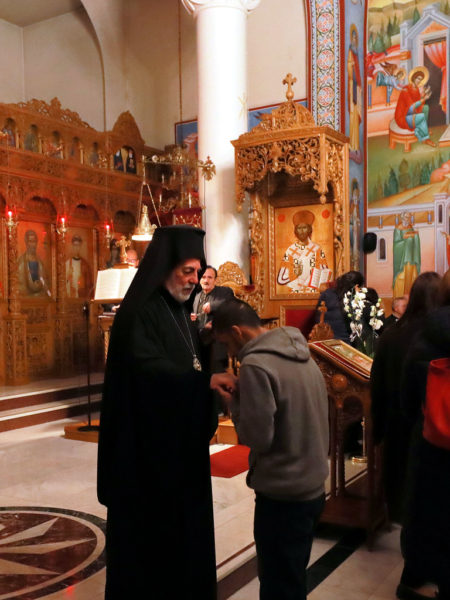
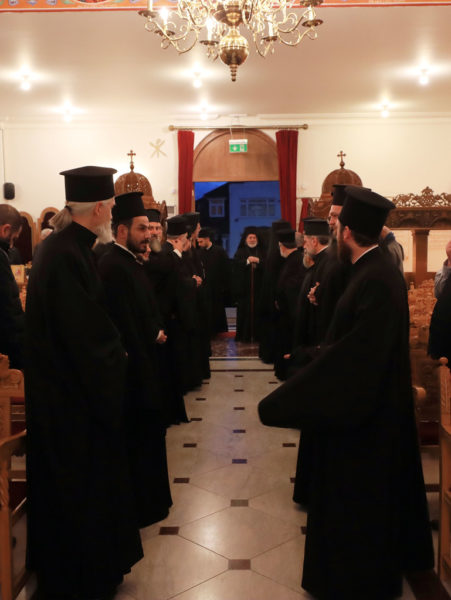
At the conclusion of the Vespers, the clergy approached His Eminence one by one to ask forgiveness and receive his blessing. The faithful then followed, exchanging words of forgiveness with one another, so that the Fast might begin in peace, reconciliation, and renewed unity in Christ.
Archbishop Nikitas’ Homily
Daniel the prophet, a man greatly beloved, when he saw the power of God, cried out: “The court sat for judgment, and the books were opened.” Consider well, my soul: dost thou fast? Then despise not thy neighbor. Dost thou abstain from food? Condemn not thy brother, lest thou be sent away into the fire, there to burn as wax. But may Christ lead thee without stumbling into the Kingdom.” (The Praises, The Sunday of the Last Judgement)
We gather this evening, my beloved spiritual children, as we prepare to enter into the days of Holy and Great Lent. We gather as a family to hear the message of the Church through the hymns and various readings. This is the time when the Church sounds the trumpet and invites all of her children to meditate on our separation from God because of our sins and ponder on the hope Christ has given us to regain Paradise and the heavenly Kingdom.
Through our hymnology we are reminded that “the Kingdom of God is not food and drink, but righteousness and abstinence with holiness” … and that we should fast and do good; and in exchange for earthly things may the Lord reward us with the things of heaven.” (The Matins of the Fifth Sunday of Lent)
Lent, beloved, is not a time to focus on what we eat and drink. It is the time for us to reflect on our lives and our relationships. We need and must properly define our relationship with God, our sisters and brothers, and even with ourselves. It is the time to free and liberate ourselves from the many idols that we have created, and we must make ourselves rich in virtues, especially with true humility and love.
These blessed gifts are achieved not by abstaining from foods; rather, by abstaining from sin and by walking the path of spiritual joy, for we are all invited to “joyfully begin the all-hallowed season of abstinence; and let us shine with the bright radiance of the holy commandments of Christ our God, with the brightness of love and the splendour of prayers, with the purity of holiness and the strength of good courage.” This is what Christ requires of us all, and the Church summons us to follow these commandments.
Let us, then, set out on the mystical journey to Pascha with joy in our hearts, not with gloomy faces and hearts. As one of the great hymnographers tells us – “let us exalt our minds through freedom from the passions; let us arm our flesh with purity and our hands with acts of compassion; let us make our feet beautiful with the preaching of the Gospel; and let us put the enemy to flight and gain victory.” (Matins, the Sunday of Orthodoxy)
All of these directives are given to us, so we might walk the path properly and so that our minds and hearts do not drift to other places and realms.
Our Father among the Saints, Basil the Great, educates us with the following words:
“Fasting sends prayer up to heaven, as if it were its wings for the upward journey. Fasting is the expansion of households, the mother of health, the pedagogue of youth, an adornment for seniors, a good companion on journeys, and a safe housemate for married couples.” (St Basil, First Homily on Fasting)
This wise and great teacher of old instructs us as to what the fast can offer and do for us. It is, indeed, a way to help us develop self-control, a clear mind, and a means to help quench the passions that lead to our destruction.
As St Basil also writes in one of the homilies on fasting:
“Fasting is as old as humanity: it was legislated in Paradise. It was the first command that Adam received: You shall not eat from the tree of knowledge of good and evil. You shall not eat legislates fasting and self-control… It is because we did not fast that we were banished from Paradise. So let us fast that we may return to it.”
Certainly, in these simple and wise words we see the Spirit guide the hand of the saint in his writing the discourse.
In closing the treatise on fasting, the great hierarch also states:
“The Lord has brought us to this period of time. May He grant that we, like competitors, display the steadfastness and vigour of perseverance in these preliminary contests and so arrive at the appointed day of coronation.”
And now, to my brother clergy, the Lord says to you – “Comfort, comfort my people” – give them strength these days and fill their hearts with courage, compassion and love. Let us, my brethren and co-workers, guide our people on the path of salvation, so we may reach the spiritual banquet of Pascha and be nourished with the Body and Blood of the Lord, our Saviour Jesus Christ.
Let us keep the fast as best we can, remembering always that it “drives away temptations.” “It sanctifies the Nazarite and perfects the priest. For it is impossible to venture upon priestly activities without fasting.”
Let us, then, dear people of God, forgive one another and let us ask God to forgive all of us, as He is a good, loving, compassionate and forgiving God. May His mercy and grace be upon all.