Archbishop Makarios of Australia: “We preserve Greek, with sacred devotion, as the language of worship almost universally”
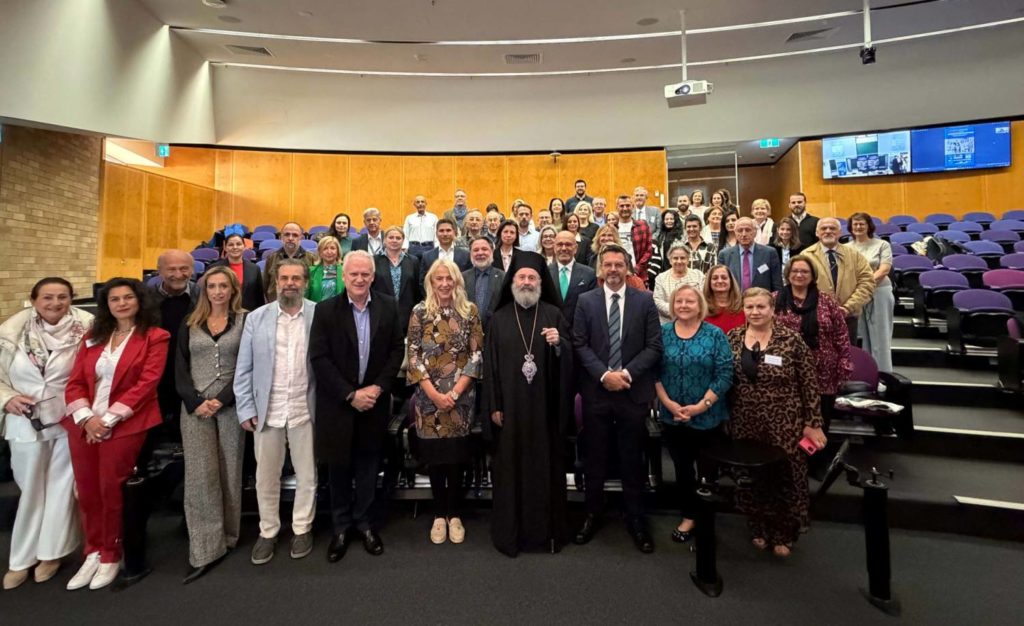
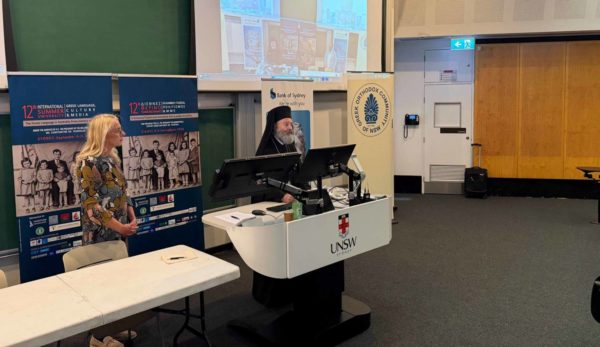
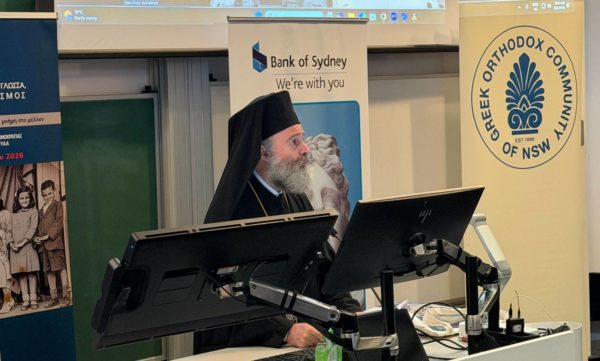
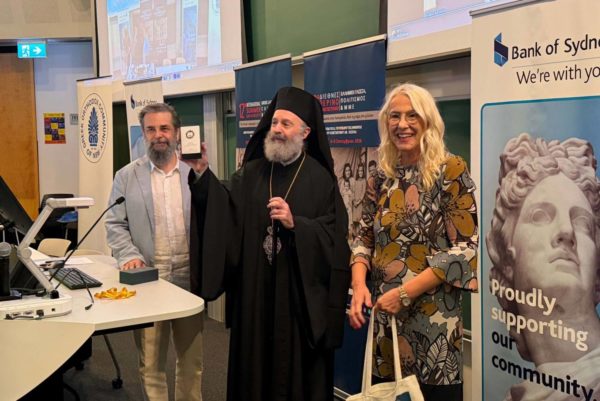
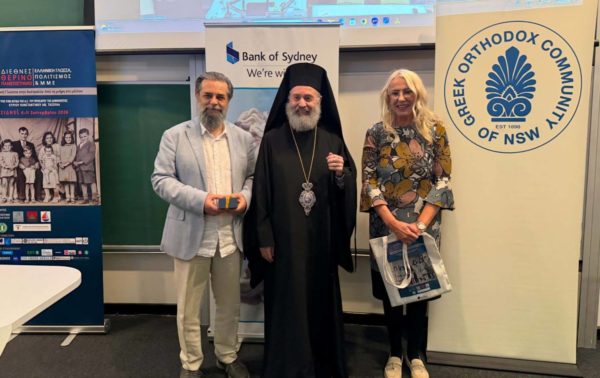
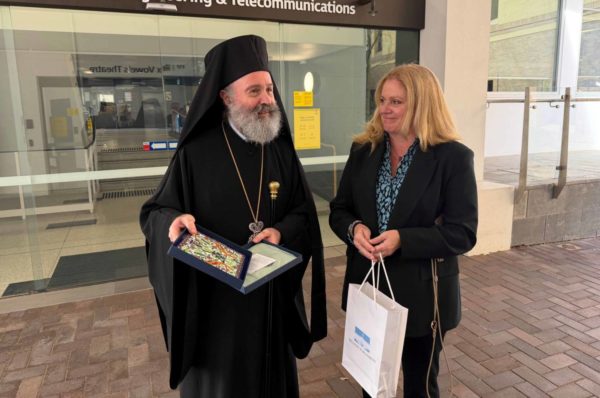
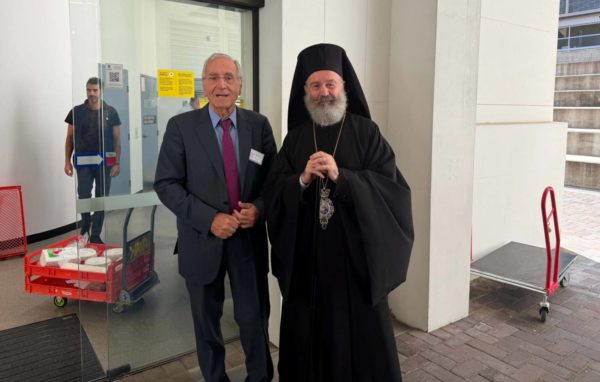
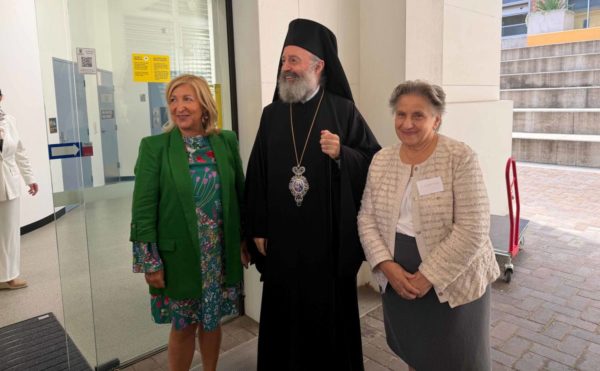
On Tuesday, 8 September, His Eminence Archbishop Makarios of Australia attended and delivered an address at the opening ceremony of the proceedings of the 12th International Summer University, “Greek Language, Culture and Media – The Greek Language in Australia: From Memory to the Future”. This leading academic and cultural event is being hosted in Sydney and, specifically, at the University of New South Wales (6–11 September 2026).
In his introductory remarks, His Eminence thanked the Organising Committee of the International Summer University for the honourable invitation, while congratulating its organisers, particularly the Dean of the School of Education of the University of Ioannina, Ms Tsitsanoudis-Mallidis, founder and academic director of the programme, and the Head of the Greek Studies Programme at the University of New South Wales, Dr Vassilios Adrahtas. At the same time, he expressed his grateful thanks to the President of the Hellenic Republic, Mr Konstantinos Tassoulas, under whose auspices the event is being held.
In the main part of his address, the Archbishop spoke, among other things, about the common journey of the Greek language and the Orthodox faith over approximately the last two thousand years. “They journeyed together not as ‘parallel lives’,” he emphasised, “but as realities and values that became interwoven ‘without confusion, without change, without division and without separation’, in order to create the unique edifice of ‘Romiosyni’, which would bestow upon universal civilisation so many achievements and values, immortal and unsurpassed by time.”
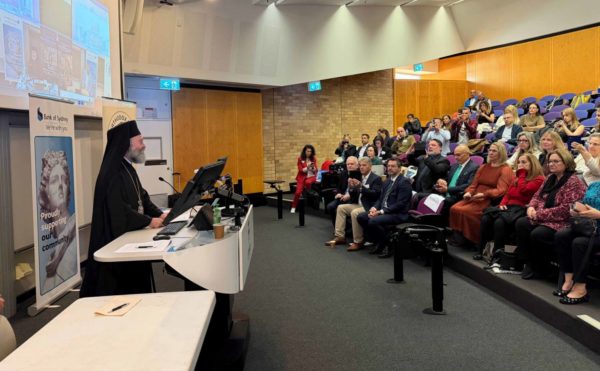
Subsequently, focusing his attention on the subtitle of the Conference theme, he observed that “here in the Antipodes, the first migrants brought the language as a precious legacy in their spiritual luggage, since it was not only the code of communication, given that English was unknown and inaccessible, but also the umbilical cord which, together with the Orthodox faith, connected them with the homeland.”
“With the passage of time, for the younger generations Greek may have lost its primacy in education and communication,” he acknowledged. Nevertheless, he noted emphatically “that it was and is the language in which the grandmother will tell fairy tales and stories from the homeland, the language in which we will joke with one another, the language in which we will quarrel, the language in which we will communicate at home and, above all and foremost, the language in which we will pray.”
“The Orthodox Church in Australia,” he pointed out, “with sacred devotion preserves Greek as the language of worship almost universally.” “The graduates of our Theological College are taught Ancient and Modern Greek at a very high level,” he added, “and, most recently, a Postgraduate Programme of Studies in Greek Philosophy has also been established.” “If the Church relinquishes this precious treasure of language, the future of Hellenism here in Australia appears bleak,” he stressed in conclusion.
His Eminence concluded his address with a brief observation. “I believe that it is somewhat inelegant and inappropriate to speak about the rescue and preservation of Greek,” he noted, and continued: “Our language is not some half-dead patient, much less an embalmed museum exhibit. Greek, for the Greek diaspora of Australia, is a living reality that does not need ‘conservators’. Here, on the distant Fifth Continent, our language continues to express the dreams and aspirations of our compatriots abroad, and it is this vision and prospect that we must strengthen, with our gaze directed towards the future and not only towards the past.”
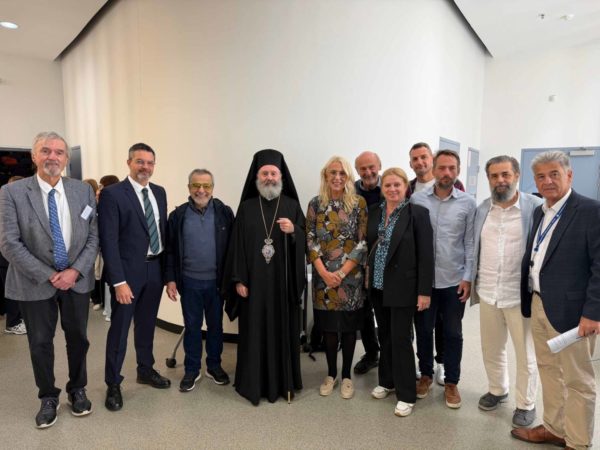
It is noted that the 12th International Summer University is organised by the Centre for the Study of Social Issues, Media and Education of the Department of Early Childhood Education of the School of Education of the University of Ioannina, in collaboration with the Greek Studies Programme of the University of New South Wales and Unity in Philia, and with the support of the General Secretariat for Greeks Abroad and Public Diplomacy of the Ministry of Foreign Affairs of Greece. Dozens of distinguished academics and professionals from universities and organisations in Greece, Australia and other countries are participating in its proceedings. Also present at the opening ceremony, in addition to Archbishop Makarios, was the Consul-General of Greece in Sydney, Mr Georgios Skemperis, who also delivered an address.
H αναδημοσίευση του παραπάνω άρθρου ή μέρους του επιτρέπεται μόνο αν αναφέρεται ως πηγή το ORTHODOXIANEWSAGENCY.GR με ενεργό σύνδεσμο στην εν λόγω καταχώρηση.
 Ακολούθησε το ORTHODOXIANEWSAGENCY.gr στο Google News και μάθε πρώτος όλες τις ειδήσεις.