Conclusions of the Fourth Bioethics Conference of the Ecumenical Patriarchate on the theme: “Declining Birth Rates”
Rethymno, 2-4 October 2026.
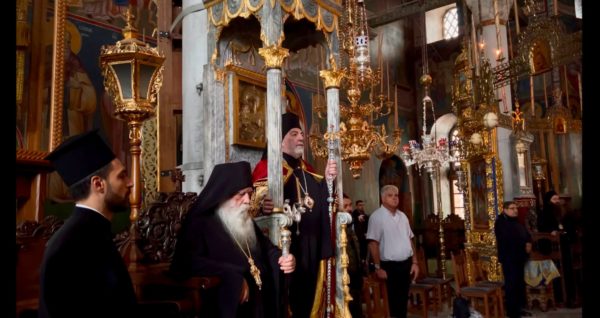
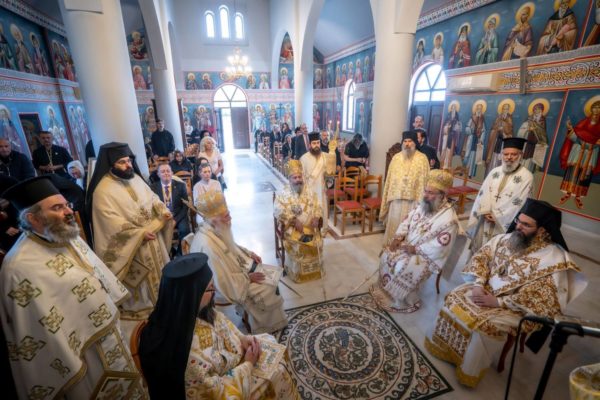
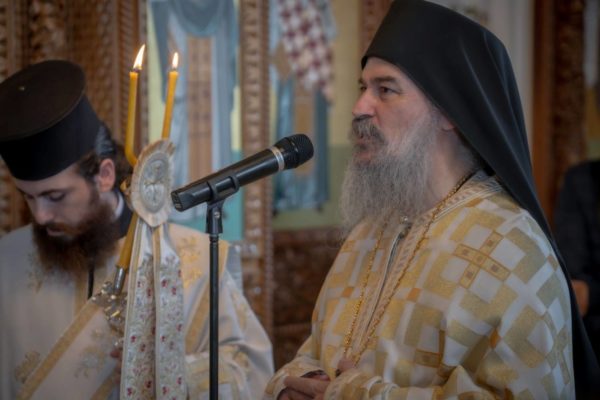
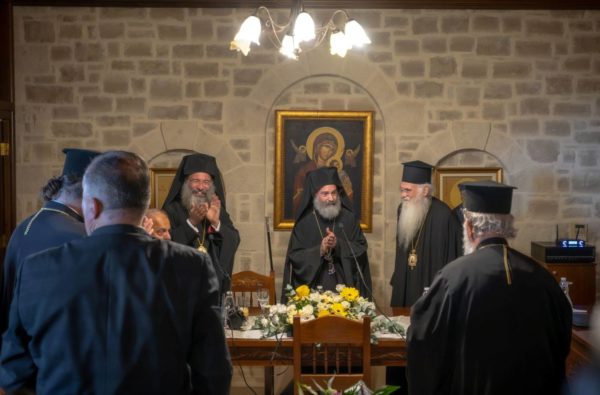
On Friday, 2 October 2026, in the Main Hall of the “THEOMITOR” Conference Centre of the Holy Metropolis of Rethymno and Avlopotamos, the proceedings of the Fourth Academic Bioethics Conference of the Ecumenical Patriarchate commenced, on the theme of “Declining Birth Rates”. The Service of the Blessing of the Waters was celebrated by His Grace Bishop Isidoros of Andida, while the formal opening session was chaired by His Eminence Metropolitan Gregorios of Peristeri, Professor of the School of Theology of the National and Kapodistrian University of Athens (NKUA), and the overall coordination of the speakers was undertaken by Archimandrite Romanos Anastasiadis.
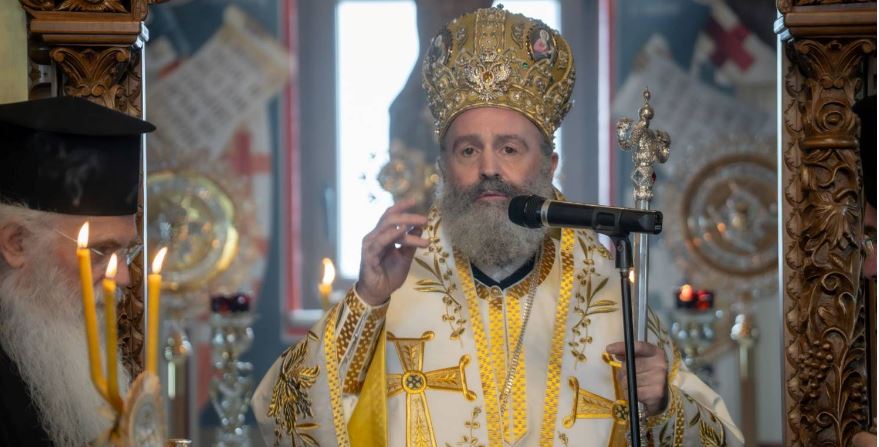
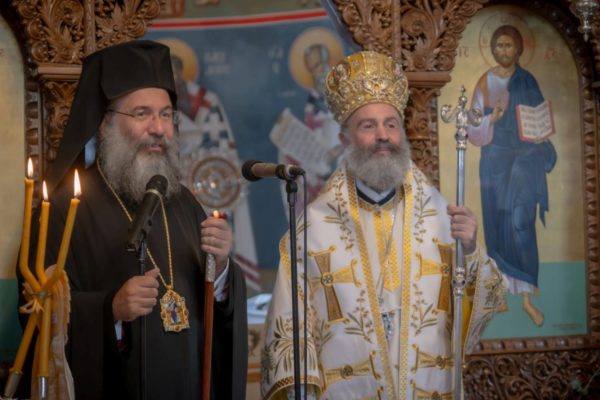
Following the Service of the Blessing of the Waters, His Eminence Archbishop Makarios of Australia, Representative of the Ecumenical Patriarch and the Mother Church and President of the Organising Committee of the Conference, read the Venerable Message of our Patriarch, who, among other things, emphasised:
“Declining birth rates are frequently attributed to economic hardship, changing social conditions and the misguided understanding of the emancipation of women. We do not deny the negative impact of all the above upon the reduction in the number of births and the consequent decline in population in certain countries, among them Greece. Nevertheless, we are deeply convinced that, first and foremost, this dramatic contraction constitutes a spiritual problem, resulting from the ‘forgetfulness of the sacrificial ethos of love’ and not from economic and other difficulties. For this reason, we paternally exhort Christian families to walk, with complete trust in the divine will, the path of lawful and God-pleasing marriage, cooperating with God not only in the begetting of children, but in the raising of good and virtuous children.”
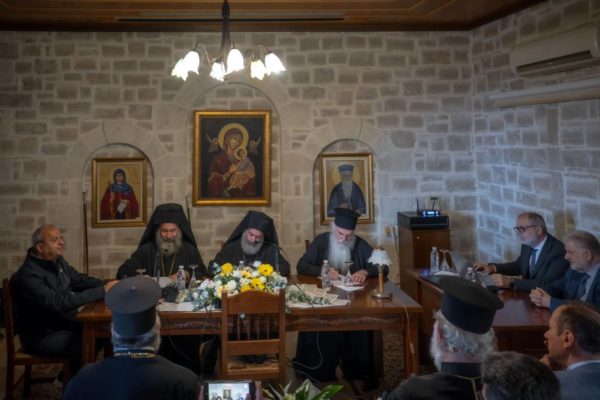
His Eminence Archbishop Makarios of Australia then delivered an address in his capacity as President of the Synodal Committee on Bioethics of the Ecumenical Patriarchate. He warmly welcomed the conference participants and expressed his joy that the Bioethics Conference constitutes a meeting point of theology, the humanities and the biomedical sciences, seeking to provide answers to the great and pressing questions of contemporary humanity. This was followed by addresses from His Eminence Archbishop Evgenios of Crete, President of the Holy Eparchial Synod; the local Hierarch, His Eminence Metropolitan Prodromos of Rethymno and Avlopotamos; and representatives of the local, political and academic authorities.
The first day of the Conference concluded with the introductory address of Archbishop Makarios of Australia, entitled: “For in Christ Jesus I have begotten you through the Gospel” (1 Cor. 4:15): A Theological Approach to Childbearing and Declining Birth Rates. Employing a contemporary theological discourse firmly grounded in the wisdom of the Fathers of our Church, His Eminence emphasised that the Church cannot address the demographic problem from the perspective of statistical analysis, but must approach contemporary people and the Christian family with a spirit of understanding and oikonomia, looking towards the salvation of the human person and not merely the perpetuation of the human species. The spiritual father is called, with love and respect for the freedom of the human person, to minister to this very mystery of salvation, without reducing his pastoral ministry to numbers. The purpose of the spiritual father is to inspire and guide people towards life and perfection in Christ within blessed marriage.
A fruitful discussion followed, after which an official dinner was offered in honour of the President and the distinguished conference participants by the local Shepherd, His Eminence Metropolitan Prodromos of Rethymnon and Avlopotamos.
It should be noted that those present at the opening and the first formal session included His Eminence Archbishop Evgenios of Crete; Their Eminences Metropolitan Prodromos of Rethymno and Avlopotamos, Metropolitan Nikolaos of Mesogaia and Lavreotiki, and Metropolitan Gregorios of Peristeri; Their Graces Bishop Evmenios of Chora, Bishop Athinagoras of Canberra, Bishop Methodios of Knossos, Bishop Panaretos of Tamasos, Patriarchal Exarch of Lithuania, and Bishop Isidoros of Andida.
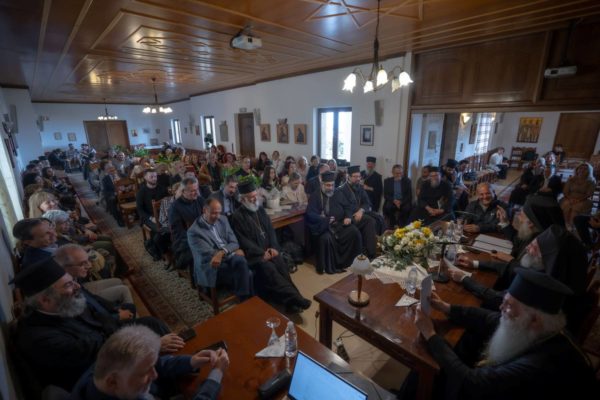
Also present were the Honourable Emmanouil Chnaris, Member of Parliament for Rethymno; the Regional Governor of Crete, the Honourable Archon Exarchos of the Great Church, Mr Stavros Arnaoutakis; Ms Maria Lionis, Deputy Regional Governor of Rethymno; the Honourable Georgios Marinakis, Mayor of Rethymno; Deputy Mayors; heads of the local Military Authorities and Security Forces; the Dean of the School of Theology of NKUA, Professor Emmanouil Karageorgoudis; the Vice-Rector for Finance and Infrastructure of the University of Crete, Professor Georgios Stamatopoulos, representing the Rector of the University of Crete; the Vice-Rector for Research and Innovation, Professor Michail Tatarakis, representing the Rector of the Hellenic Mediterranean University; Professor Michail Stroumpakis, President of the Patriarchal Academy of Crete; members of the academic and scientific community; clergy; monastic brotherhoods and sisterhoods; and a large audience.
On Saturday, 3 October, the proceedings of the Conference continued. During the first session, entitled “The Gift of Life and Childbearing: Theological, Bioethical and Social Dimensions”, chaired by the Dean of the School of Theology of NKUA, Professor Emmanouil Karageorgoudis, papers were presented by: His Eminence Metropolitan Nikolaos of Mesogaia and Lavreotiki, on the topic: “The Family and the Desire to Have Children”; His Grace Bishop Isidoros of Andida, Assistant Professor at the School of Theology of NKUA, on the topic: “‘Be Fruitful and Multiply’ in the Teaching of Saint Gregory of Nyssa: Biological and Spiritual Declining Birth Rates”; Professor Konstantinos Pantos, Doctor of Medicine, on the topic: “Fertility – Declining Birth Rates: The Importance of Information”; Professor Miltiadis Vantsos of the School of Theology of the Aristotle University of Thessaloniki, on the topic: “Medically Assisted Reproduction as a Means of Addressing Declining Birth Rates? A Christian Bioethical Approach”; Professor Konstantinos Kornarakis of the School of Theology of NKUA, on the topic: “Declining Birth Rates in Contemporary Culture as a Crisis of the Person: A Critical Consideration from the Perspective of Theological Anthropology”; and, finally, the paper of the absent Honourable Archon Didaskalos of the Nation Konstantinos Delikostantis, Professor Emeritus of the School of Theology of NKUA, was read, on the topic: “The Emancipation of Women and Declining Birth Rates”.
During the first session of the day, following a proposal by the President of the Conference, His Eminence Archbishop Makarios of Australia, which was received with great enthusiasm by all the conference participants, it was decided that the present Conference would be dedicated to the venerable person of His All-Holiness Ecumenical Patriarch Bartholomew, who this year completes 35 consecutive years at the helm of the Great Church (22 October 1991).
During the second thematic session, entitled “The Gift of Life and the Responsibility of the Human Person: The Question of Abortion”, chaired by Associate Professor Dimitrios Skrekas of Byzantine Philology at the University of Crete, presentations were delivered by Protopresbyter Vasileios Kalliakmanis, Professor Emeritus of the School of Theology of the Aristotle University of Thessaloniki, on the topic: “The Human Person Between the Joy of Life and the Pain of Abortion”; and Professor Evangelos Protopapadakis of the School of Philosophy of NKUA, on the topic: “The Ethics of Abortion: An Old Ethical Debate in an Entirely New Light”.
This was followed by the third and final thematic session, entitled “Care for the Human Person: Social Responsibility, Pastoral Care and Medical Ministry”, chaired by the Honourable Manousos Klados, journalist and President of the Historical and Folklore Society of Rethymno. Presentations were delivered by Professor Konstantinos Kotsiopoulos of the School of Theology of the Aristotle University of Thessaloniki, on the topic: “The Demographic Problem: Sociological and Theological Dimensions”; the Protopresbyter Christophoros Chronis, Assistant Professor of the School of Theology of NKUA, on the topic: “The Pastoral Ministry of the Church in the Face of the Bioethical Challenges of Declining Birth Rates: From Uncertainty to Trust in Divine Providence”; and Professor Emeritus Christos Lionis of the School of Medicine of the University of Crete, on the topic: “Declining Birth Rates – The Role and Contribution of the Family Physician and Primary Health Care Services in Addressing the Problem”.
The presentations of the Conference highlighted declining birth rates as a complex and multidimensional issue which extends beyond the narrow confines of the demographic problem and touches upon crucial aspects of human life and our society. Through the encounter of Orthodox Theology with Bioethics, Medicine, Philosophy and Sociology, issues concerning the family and childbearing, fertility and assisted reproduction, abortion, as well as the place and responsibility of the human person in relation to the gift of life, were examined.
Particular reference was also made to the pastoral care of the Church and to the contribution of medical science in addressing the problem of declining birth rates. The presentations provided the opportunity for substantial reflection and fruitful dialogue, with interesting contributions and questions from the conference participants.
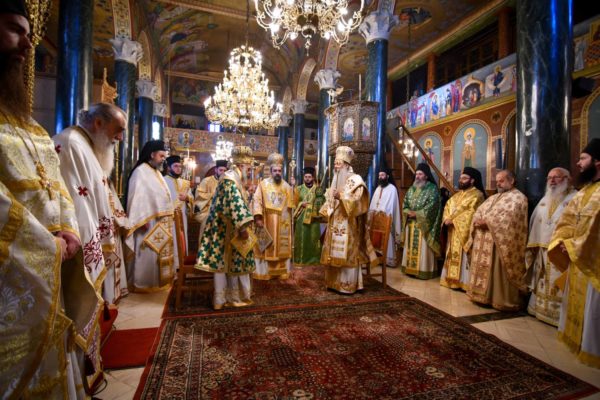
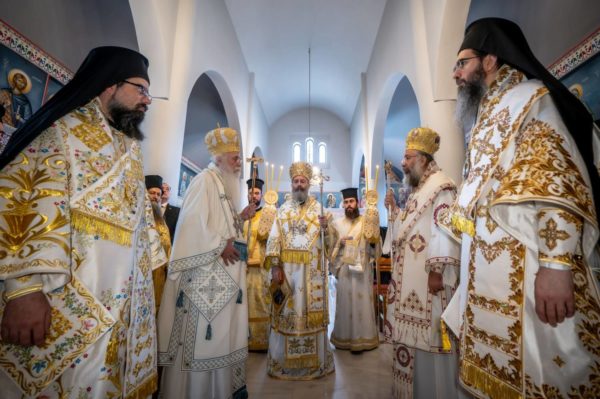
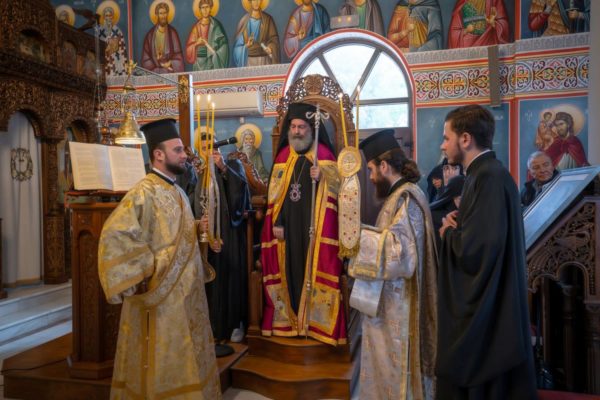
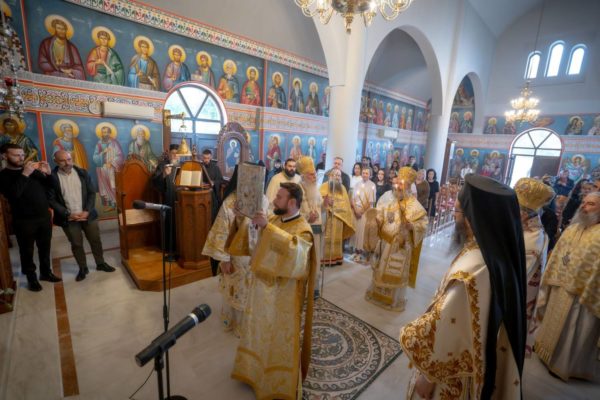
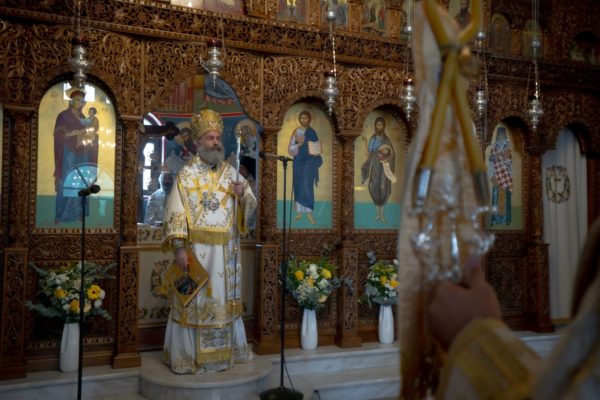
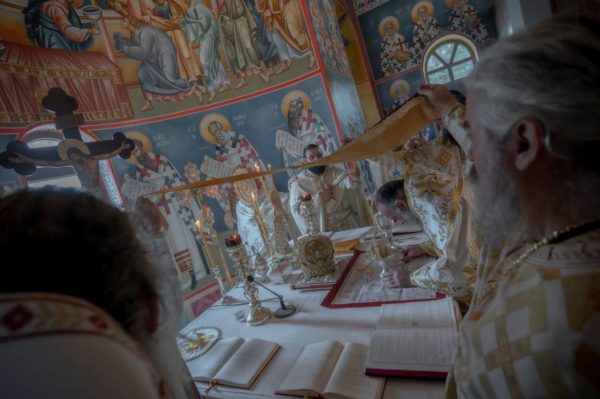
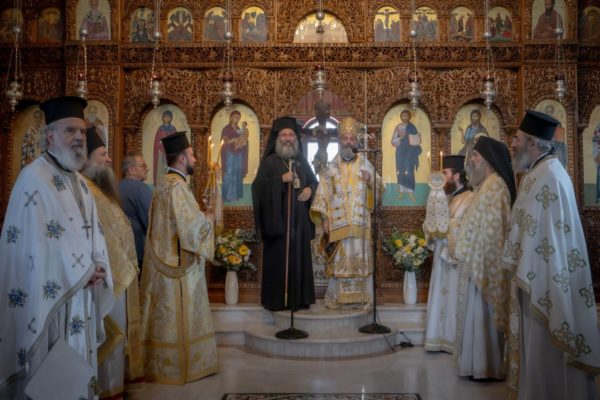
On Sunday, 4 October 2026, a Divine Liturgy concelebrated by several Hierarchs was celebrated in the Katholikon of the Holy Monastery of Saint Anastasia the Roman, presided over by His Eminence Archbishop Makarios of Australia and concelebrated by Their Eminences Metropolitan Nikolaos of Mesogaia and Lavreotiki and Metropolitan Prodromos of Rethymno and Avlopotamos, together with Their Graces Regional Bishops, Evmenios of Chora and Athinagoras of Canberra; Archimandrite Parthenios Kalyvianakis, Chancellor of the Holy Metropolis; the Abbot and Founder of the Monastery, Archimandrite Vasileios Papadakis; presbyters and deacons, with the participation of the conference delegates and many faithful. The homily was preached by His Grace Bishop Panaretos of Tamasos, Patriarchal Exarch of Lithuania.
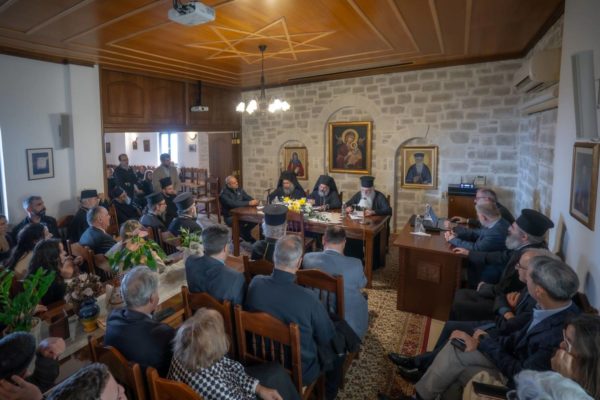
The proceedings of the Conference were concluded in the Archontariki of the Holy Monastery, where, following the completion of the Eucharistic Synaxis, the concluding session took place, during which the relevant conclusions were considered and approved.
Before the official conclusion, Archbishop Makarios of Australia spoke with particular warmth about the contribution of Metropolitan Prodromos of Rethymno and Avlopotamos and his collaborators to the successful organisation of the Conference, thanking him for his care, organisation and incomparable hospitality. At the same time, he conveyed to all the blessing and paternal wishes of His All-Holiness Ecumenical Patriarch Bartholomew.
His Eminence Metropolitan Prodromos, responding to these words, praised the contribution of Archbishop Makarios of Australia to the preparation and successful outcome of the Fourth Bioethics Conference of the Ecumenical Patriarchate, while making particular reference to his multifaceted ecclesiastical ministry, both to his flock in Australia and to the Orthodox Church as a whole.
The following conclusions are subsequently proposed for further reflection and discussion:
Marriage has, first and foremost, a soteriological character, since it aims at the unity of the spouses and the transformation of their relationship into a communion of love and, ultimately, into union with God. This sacramental understanding, without diminishing the body and conjugal intimacy, constitutes a transcendence of self-love, leading to the transformation of eros into a loving offering and communion. Childbearing is likewise an essential purpose and blessing of marriage, without, however, exhausting or restricting its theological content and soteriological orientation to this alone.
The Church does not approach birth merely as a biological event, but as a spiritual reality: She regenerates the human person “in Christ” through the Gospel, Baptism and the Divine Eucharist. It is on these premises that She approaches the serious problem of declining birth rates. Support for the family and childbearing is necessary, without, however, reducing the human person to a means of achieving demographic or national objectives. Every child possesses value not because he or she increases the population of a country, but because each is a unique and unrepeatable person, created “in the image of God”. The continuity of a people depends upon the preservation of its faith, ethos, education and spiritual identity, and not solely upon the numerical increase of its population.
Accordingly, the survival of a nation is not merely a matter of demographic policy; it is also a matter of spiritual regeneration. Particularly in the case of Greece, which, according to official statistical data, is facing a serious demographic problem, further dimensions of the phenomenon were examined, and it was observed that Greeks are not only diminishing numerically, but that, at the same time, something deeper of their spiritual character and soul is also being lost. The problem will not only be how many Greeks there will be tomorrow, but also what kind of Greeks they will be. The Church must remind us that the true strength of a people is measured not only by its numbers, but also by the quality of its ethos.
The pastoral approach to childbearing must respect the freedom and responsibility of the spouses, without the spiritual father substituting his own judgement for their personal decisions or turning childbearing into a criterion of spirituality. Pastoral concern should focus primarily on the deeper disposition, motives and actual circumstances of the spouses’ lives, and not necessarily on the number of children. At the same time, the clergyman must recognise the limits of his ministry and, where necessary, cooperate with specialists. Behind demographic choices stand human persons, fears, anxieties, traumas and existential questions. The Church is called to cultivate trust, to strengthen young people and couples, to support the formation of families, and to bear witness that welcoming a new life is not merely compliance with a moral obligation, but an act of love, freedom, hope and openness towards the other.
Declining birth rates constitute an exceptionally complex and multifactorial phenomenon which cannot be interpreted exclusively in economic, demographic or sociological terms. The Church cannot restrict Her discourse on declining birth rates to a “demographic policy with a religious character”. Economic insecurity, delays in forming a family, the increased demands involved in raising children and uncertainty about the future coexist with deeper cultural and spiritual changes: the crisis of the family and interpersonal relationships, the strengthening of individualism, the weakening of the willingness to commit and make sacrifices, and changing priorities in values. Consequently, addressing the demographic problem is primarily a question of values and only secondarily a political matter. The authentic response of the Church is the spiritual growth of the human person “according to the image of God”, the building of a relationship with the other person, and the integration of biological life into the broader orientation towards the fullness of life in Christ. Thus, “be fruitful” acquires theological depth and essentially precedes “and multiply”.
Of particular pastoral importance is the timely, responsible and scientifically substantiated education of young people concerning fertility and the factors that affect it. Information must not be transformed into manipulation, but should serve free and conscious decision-making. Education concerning fertility is not merely an instrument of demographic policy, but forms part of the broader concern for health, quality of life and the responsible exercise of the freedom of the human person.
Declining birth rates cannot constitute a cause for the devaluation of women, nor can efforts to address them lead to the revival of social stereotypes or the instrumentalisation of motherhood. Substantive equality between the sexes, the overcoming of outdated perceptions concerning the roles of men and women, shared responsibility within marriage, and practical support for the family by the State, society and the Church constitute necessary prerequisites for freedom in the sphere of family life and childbearing.
With regard to abortion, there is a need to move beyond a simplistic confrontation between competing rights and to shift attention towards the responsibility of society as a whole. The good of life is sacred and inviolable for the Orthodox Church. At the same time, however, Her pastoral care presupposes meaningful support for the pregnant woman, the mother and the family, particularly when the decision to undergo an abortion is connected with economic, social or psychological pressure. The Church’s witness must therefore combine absolute respect for the gift of life with love expressed in practical action.
Medically assisted reproduction cannot be regarded merely as a means of addressing declining birth rates. The possibilities offered by contemporary medicine raise serious bioethical questions and require discernment, responsibility and respect for human dignity, the freedom of persons and the meaning of parenthood. Technological possibility does not automatically correspond to what is morally right. Christian bioethics is called to avoid both uncritical acceptance and blanket rejection, while facilitating pastoral support for people who often experience childlessness painfully and are called to make difficult decisions. The related challenges are situated within a broader framework of trust, hope and respect for the mystery of life.
H αναδημοσίευση του παραπάνω άρθρου ή μέρους του επιτρέπεται μόνο αν αναφέρεται ως πηγή το ORTHODOXIANEWSAGENCY.GR με ενεργό σύνδεσμο στην εν λόγω καταχώρηση.
 Ακολούθησε το ORTHODOXIANEWSAGENCY.gr στο Google News και μάθε πρώτος όλες τις ειδήσεις.