An interview with Ambassador of Hungary in Athens about Orthodoxy, vandalized churches in Lesvos and cooperation with Ecumenical Patriarchate
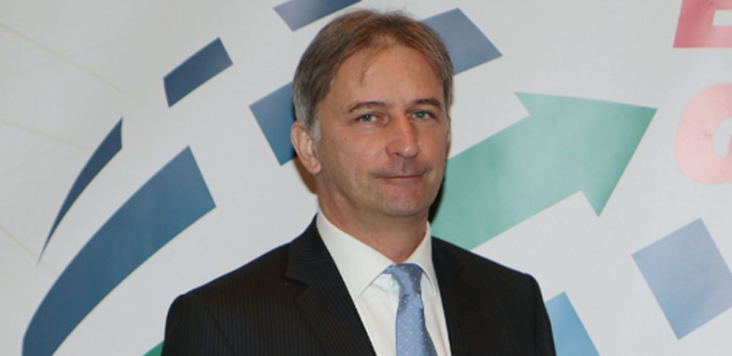
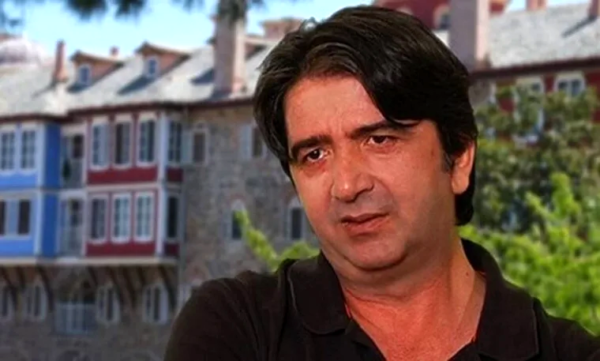
Erik Haupt, Hungary Ambassador to Russia, has given an interview to ope.gr and journalist Natalia Dandolou.
Recently have noticed that the Hungarian government has shown great interest in strengthening and supporting Orthodoxy and Christianity. What has led to these initiatives?
The Fundamental Law (Constitution) of Hungary states among its basic principles that we recognise the role of Christianity in preserving our Nation and that we appreciate the various religious traditions of our country. This is not simply the recognition of historical facts but also a program for the present and for the future. Hungary has been following mainly the Western Christian tradition; nevertheless, Orthodoxy has also been present for more than 1000 years, enriching our traditions and, especially that of minorities living in Hungary. On the other side, our first King, Stephen of Hungary (1000-1038) was officially recognized as a saint also by His All-Holiness the Ecumenical Patriarch. All this shows that we always have been in some way a bridge between Eastern and Western Christian traditions.
We recently read from the Jerusalem Patriarchate that it grants scholarships to Christian students to study. Do you want to tell us a few words about this initiative?
Our traditional international scholarship program, called “Stipendium Hungaricum”, is directed to our international partners in general. Besides that, we have a special initiative, launched in 2016 within the Hungary Helps Program, targeting vulnerable communities. The “Scholarship Programme for Christian Young People” is for young people who in their countries might experience systemic difficulties in access to higher education. We are very proud to offer the best of our science and training, mostly in English language, as Hungary’s contribution to make our world a better place. In fact, we would like to help those young people who, after obtaining useful educational and professional skills, are committed to return home and work for the future of their own communities. Therefore, in the selection procedure we take into account the advice of local Church leaders from their countries of origin.
The Hungarian government also offered a large sum of money for the reconstruction of churches that had been vandalized on Lesvos. What has led to this decision?
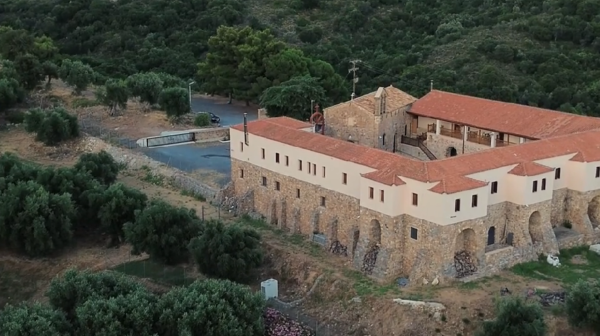
We feel outraged, and cannot accept for any reason that places of worship of any religion be vandalized. That is always a worrying sign and I think we should demonstrate solidarity in his field. When providing funds for an earthquake damaged church some years ago, our Prime Minister said that since Christian values represent the most important cohesion factor for towns and countries in Europe, reconstructing churches should be regarded as evident as rebuilding our own homes. In fact, our historical and present experience made us recognize that besides education, this is another crucial factor for the life and the self-preservation of any community. Through the Hungary Helps Program we wanted to give this – perhaps small but heartfelt – signal of solidarity towards our Greek friends. There are things that we cannot offer to do but this was certainly within our possibilities and Hungary was glad to help.
Are there any other plans to support Orthodoxy, and what are they?
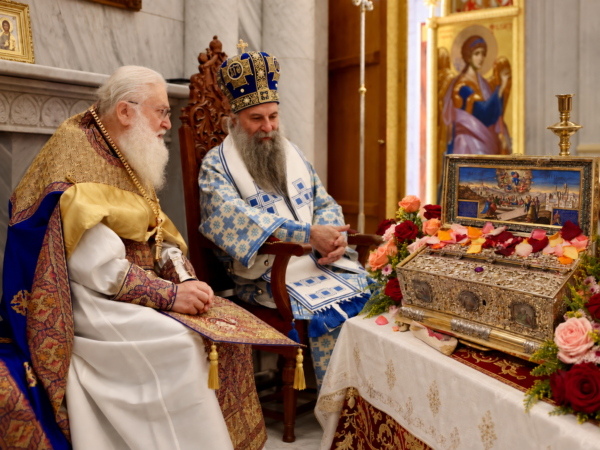
Nowadays we have cooperation agreements with various Orthodox Churches present in Hungary. The agreement between Hungary and the Ecumenical Patriarchate was signed in 2014 by Prime Minister Viktor Orbán and His All-Holiness Patriarch Bartholomew I. According to the Agreement, the Government fosters the presence of the Orthodoxy in public interest activities, like education, social activities and cultural life. In 2017 in Budapest downtown, an ecclesiastic centre of the Ecumenical Patriarchate was inaugurated. Similarly, last December a centre was established for the Syriac Orthodox Church, too. The Serbian Orthodox Church’s historic seat in Szentendre, with its beautiful ecclesial museum, finished renovation works in 2019. The Russian and the Bulgarian Orthodox community in Budapest have seen some important works, too. According to Prime Minister Viktor Orbán, Hungary historically was a strong country when it considered Churches as allies and not as enemies. The above-mentioned initiatives show that Hungary regards Orthodoxy as partner both in Hungary and in other parts of the world.
How do you judge the relationship between the two countries? In which areas is there cooperation?
The cooperation of Hungary and Greece is excellent, with the spirit of true partnership. I think the fact that both Greece and Hungary highly appreciate their Christian civilization could be an area of cooperation within Europe, too.
Do you see room for cooperation in religious tourism?
I think that after this pandemic finishes religious tourism will see a revival, too. That was already an international trend in recent years and the importance of sustainable, local-focused or regional tourism will grow further. Tourists from Hungary will be certainly interested in visiting the precious Orthodox heritage abroad. They will be certainly eager to see, for example, the beautiful mosaic image of Saint Eirene (Piroska for the Hungarians) in the Hagia Sophia basilica of Istanbul: she was daughter of King Saint Ladislaus of Hungary (11th Century) and can be regarded as a spiritual link between Hungarians and Orthodoxy. I would like to highlight also the figure of Saints Cyril and Methodius as another spiritual “bridge” between our nations. We have in Hungary a memorial place, the spot of ancient Mosaburg, today’s Zalavár next to Balaton Lake, where the two Thessaloniki-born brothers’ presence had been recently certified archeologically as well. That is worth to be visited also by pilgrims.
What are the initiatives and priorities of the Hungarian Embassy in Athens?
Besides of our task to represent Hungary in Greece we put strong stress on the cultural cooperation, fostering our ties in this field too. It is always a moving moment to organize an art-exhibition or a concert, to publish works of HungARIAN WRITERS IN Greek translations.
Finally, a personal question. How is your life in Greece? What do you like most and what has impressed you?
Greece is a beautiful country, with natural beauty and cultural richness. The hospitality of the Greek people is amazing and I am very happy to be here.
H αναδημοσίευση του παραπάνω άρθρου ή μέρους του επιτρέπεται μόνο αν αναφέρεται ως πηγή το ORTHODOXIANEWSAGENCY.GR με ενεργό σύνδεσμο στην εν λόγω καταχώρηση.
 Ακολούθησε το ORTHODOXIANEWSAGENCY.gr στο Google News και μάθε πρώτος όλες τις ειδήσεις.