The feast of the healing of the Paralytic at the Patriarchate
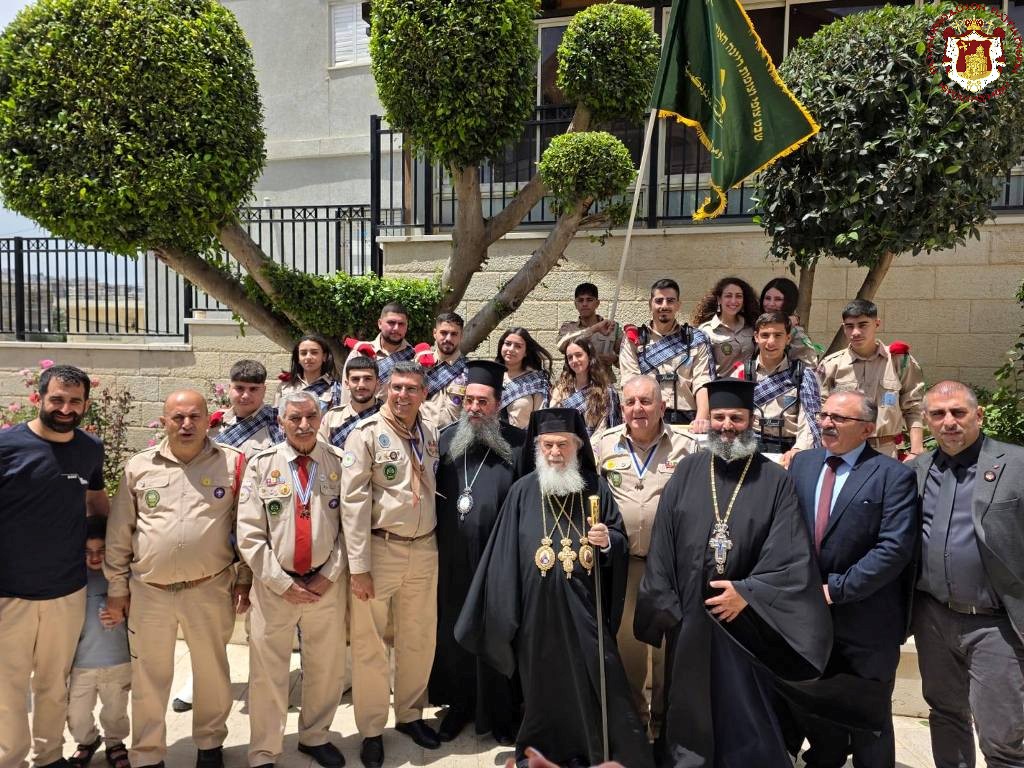
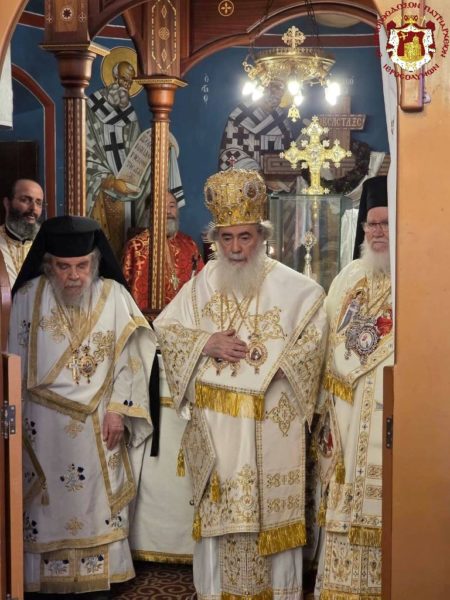
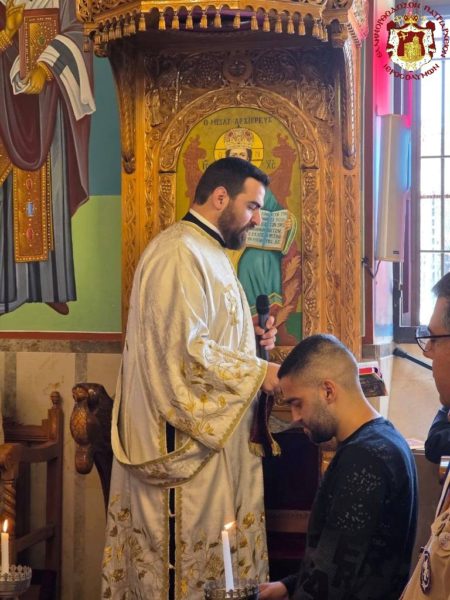
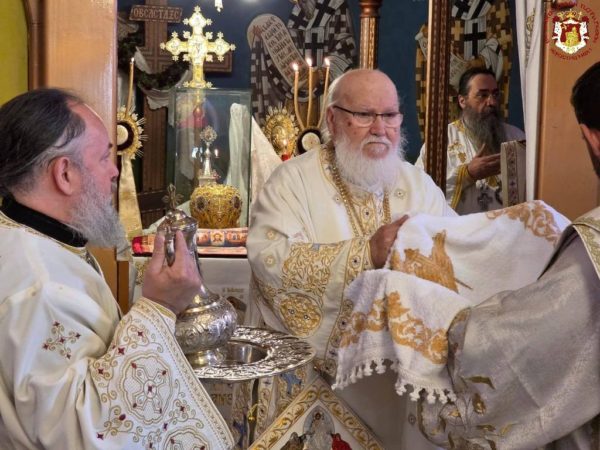
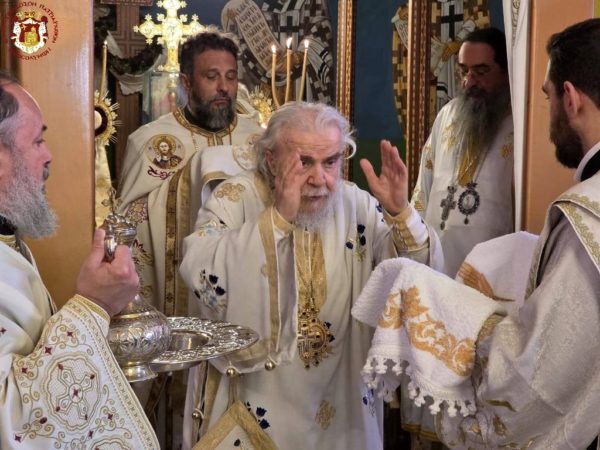
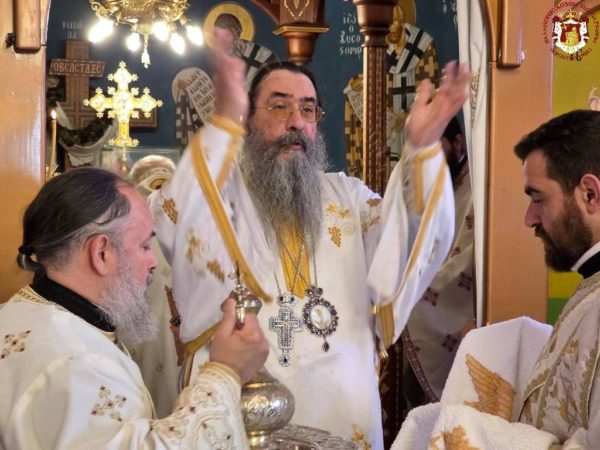
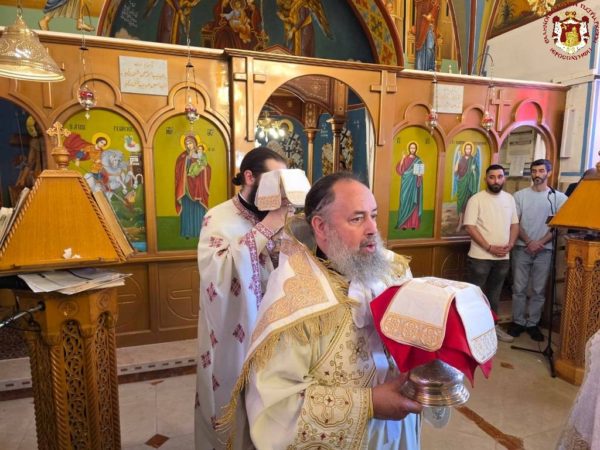
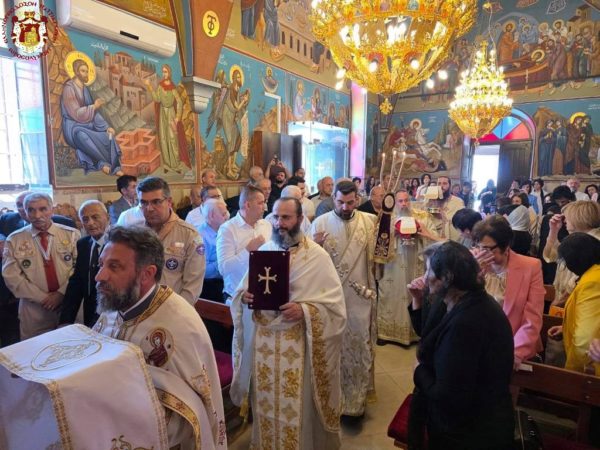
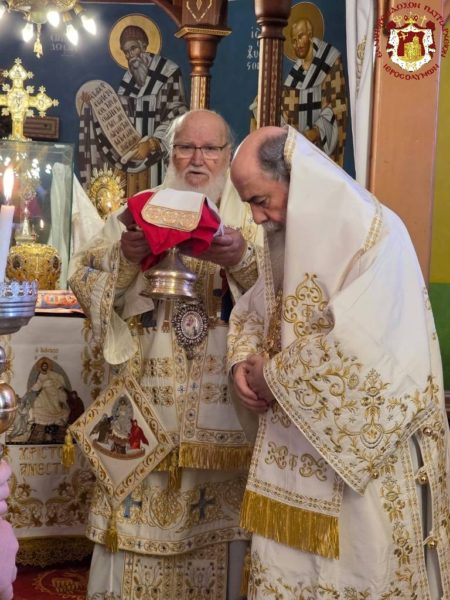
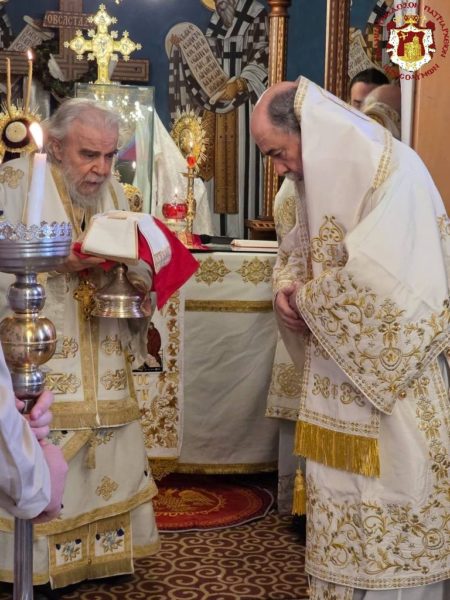
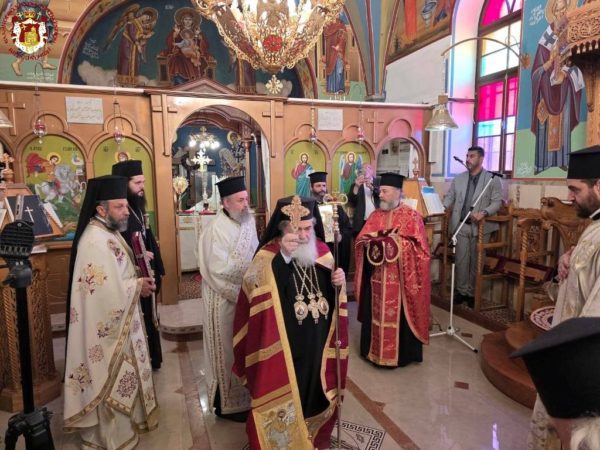
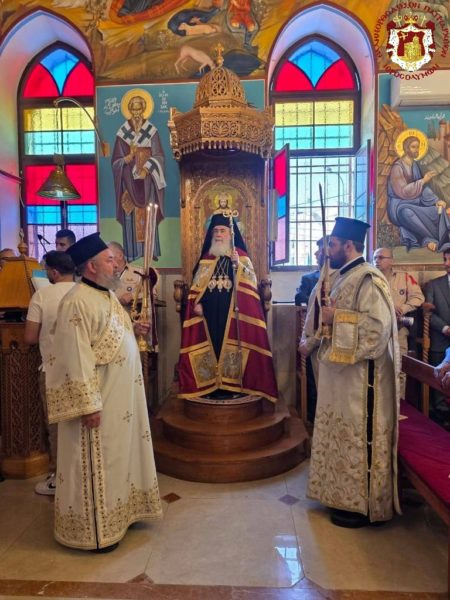
On Sunday, the 20th of April / 3rd of May, the Patriarchate celebrated the Sunday of the Paralytic, in accordance with the book of the Pentecostarion, in the Arabic-speaking Greek Orthodox Community of the town of Reineh, which is under the jurisdiction of the Holy Metropolis of Nazareth.
The miracle of the healing of the Paralytic is handed down to us by the Evangelist John (John 5:1–15).
According to this narrative of the Evangelist John, this man lay as a paralytic at the Sheep Pool, by the porch of Solomon, for thirty-eight consecutive years. The Sheep Pool was situated near the Temple of Solomon, and the one who was able to enter first was healed when an Angel of the Lord troubled the water. For this reason, when the Lord asked him, “Wilt thou be made whole?”, the Paralytic answered, “Sir, I have no man, when the water is troubled, to put me into the pool: but while I am coming, another steppeth down before me.” And the Lord healed him, saying unto him, “Rise, take up thy bed, and walk.” And immediately the man was made whole, and took up his bed, and walked: and on the same day was the sabbath” (John 5:8–9).
When the healed paralytic met the Lord, the Lord said unto him: “Behold, thou art made whole: sin no more.” Through this miracle, the Lord healed not only the body, but also the soul of the Paralytic.
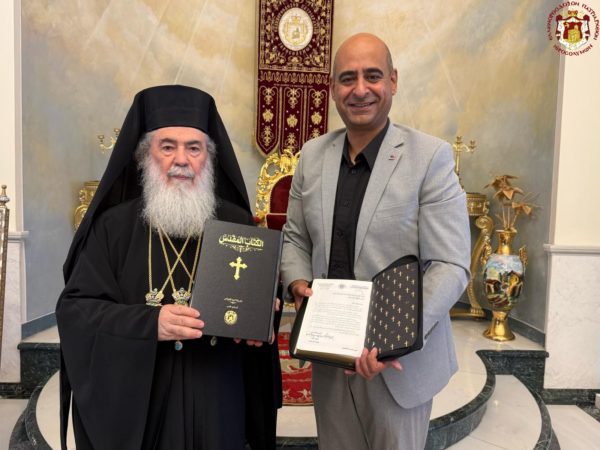
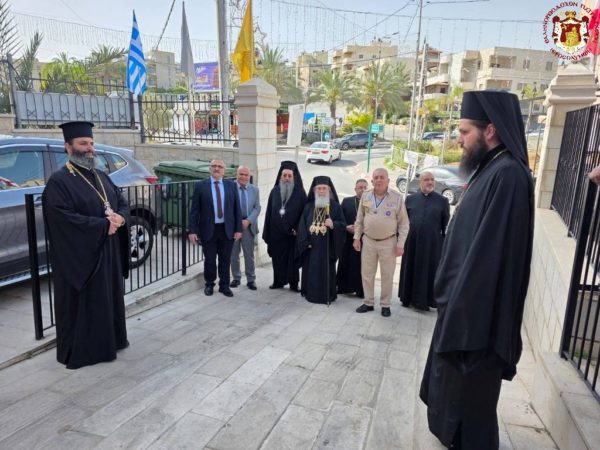
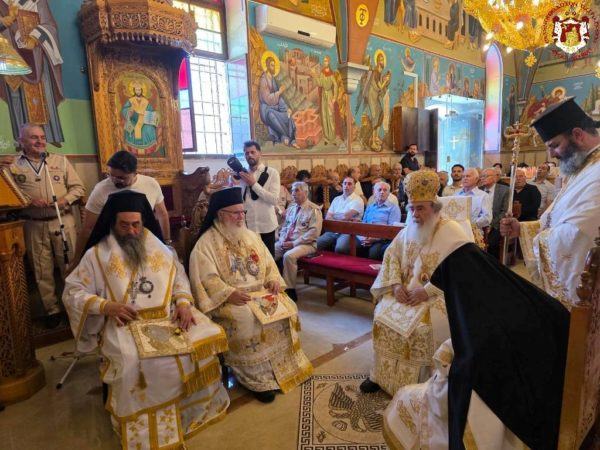
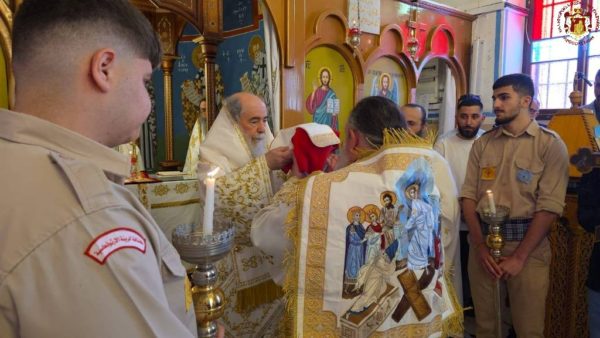
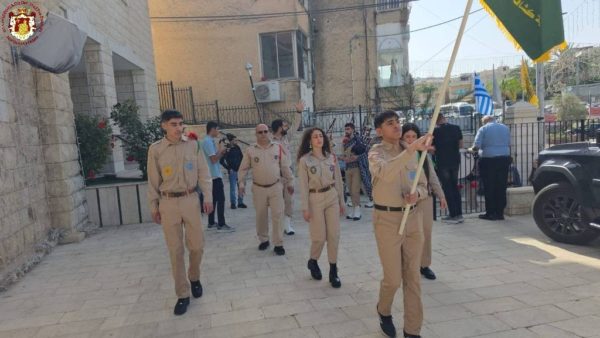
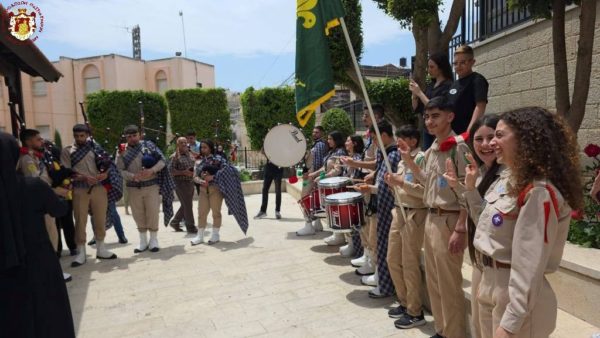
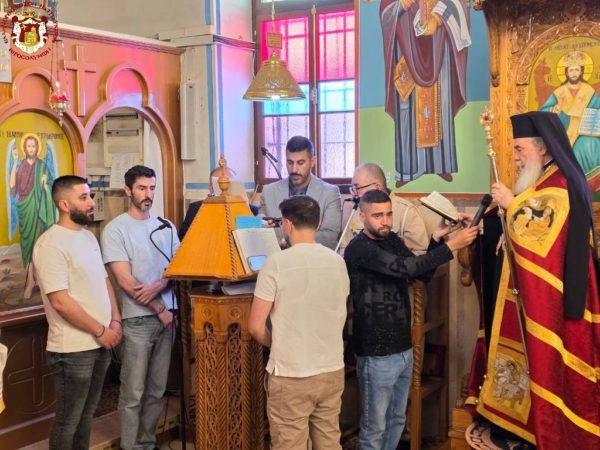
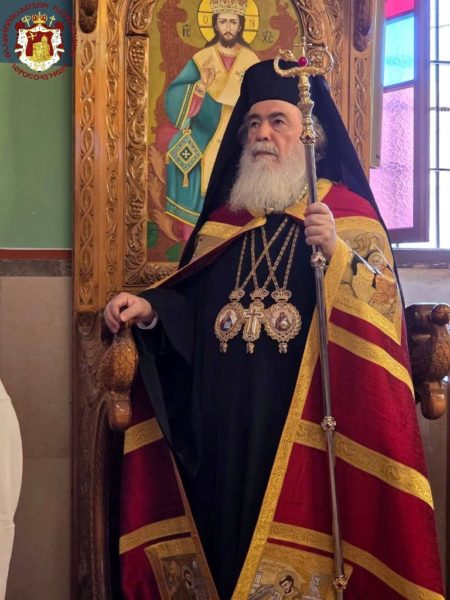
At this feast, His Beatitude our Father and Patriarch of Jerusalem, Theophilos III, presided over the Divine Liturgy in the town of Reineh near Nazareth. Concelebrants were their Eminences: Metropolitan Kyriakos of Nazareth, Archbishop Aristarchos of Constantina, and Metropolitan Makarios of Acre–Ptolemais, and the head of this community, Dean Priest Fr Simeon, together with other Hieromonks, local and Russian-speaking Priests. The chanting was delivered by the Church choir, while the faithful of the parish participated devoutly, and the Scouts offered a warm reception.
Before the Holy Communion, His Beatitude delivered the following Sermon:
“And a certain man was there, which had an infirmity thirty-eight years. When Jesus saw him lie… He saith unto him, Wilt thou be made whole? The impotent man answered him, Sir, I have no man, when the water is troubled, to put me into the pool… Jesus saith unto him, Rise, take up thy bed, and walk” (John 5:5–8), the Evangelist John says.
Beloved brethren in Christ,
Pious Christians,
The grace of the Holy Spirit has gathered us all together today, on the Sunday of the Paralytic, in this community holy church of your town, Reineh, that we may celebrate the Resurrection of our Saviour Jesus Christ and, together with the healed Paralytic, proclaim His power and His great mercy.
During His manifestation in the flesh upon the earth, the Son and Word of God the Father, our Lord Jesus Christ, performed signs, that is to say, miracles, first in Galilee and then in Jerusalem, where through His Passion on the Cross and His Resurrection He fulfilled the mystery of the Divine Providence hidden from the ages, as the wise Paul proclaims: “Unto me, who am less than the least of all saints, is this grace given, that I should preach among the Gentiles the unsearchable riches of Christ; and to make all men see what is the fellowship of the mystery, which from the beginning of the world hath been hid in God, who created all things by Jesus Christ: to the intent that now unto the principalities and powers in heavenly places might be known by the Church the manifold wisdom of God” (Ephesians 3:8–10).
And we ask: what is this knowledge, through the Church, of the manifold wisdom of God? Let us hear Saint Gregory of Nyssa, who says: “The manifold wisdom of God, which by means of opposites has wrought great and wondrous things; how, life came through death, and righteousness through sin, and through the curse came blessing, glory through dishonour, and strength through weakness.”
This very wondrous and miraculous event of the healing of the infirm Paralytic by the power of Christ, we discern in the word of the Lord, saying to the man lying there: “Wilt thou be made whole?” The infirm answered Him, “Lord, I have no man to put me into the pool.” Jesus saith unto him: “Rise, take up thy bed, and walk” (cf. John 5:6–8).
Noteworthy here is the interpretation of the God-bearing Fathers of the Church, Cyril of Alexandria and John Chrysostom: “The command,” says Saint Cyril, “is divine, bearing the clearest proof of authority and power beyond man. For He does not pray that the sickness of the one lying there be removed, lest He should appear, according to some, as one of the holy Prophets; but rather, as Lord of powers, He commands with authority.”
“He does not merely raise him up,” says the divine Chrysostom, “but also commands him to take up his bed, so that the miracle which has taken place may be confirmed, and that no one might think that what has occurred is an illusion or a pretence.”
It is noteworthy that the healing of the paralysed man by the Lord was preceded by his faith in the Lord Himself, Who “took our infirmities, and bare our sicknesses,” according to that which was spoken by the Prophet Isaiah (cf. Matthew 8:17). Emphasising the prior faith of the Paralytic, Saint Cyril says: “Immediately the Paralytic performs that which was commanded, and through obedience and faith secures for himself the long-desired grace.”
The healed Paralytic proclaimed his faith openly when they asked him: “What man is that which said unto thee, Take up thy bed, and walk?” At first the healed man did not know who He was; yet afterwards, when “Jesus findeth him in the temple, and said unto him, Behold, thou art made whole: sin no more, lest a worse thing come unto thee. The man departed, and told the Jews that it was Jesus, which had made him whole” (cf. John 5:12–15).
Interpreting the Lord’s word to the Paralytic, “Behold, thou art made whole: sin no more, lest a worse thing come unto thee” (John 5:14), the divine Chrysostom says: “Hence we learn… that his disease had been laid upon him because of sins.”
Indeed, my beloved brethren, many illnesses are the consequence of sins; yet not every sickness is due to sin, according to the Lord’s own words concerning the man blind from birth: “Neither hath this man sinned, nor his parents: but that the works of God should be made manifest in him” (John 9:3).
Let us also hear Saint Theophylactos, who asks and answers: “Are all diseases from sins? Not all, though most are. Some are indeed because of sins, as in the case of this Paralytic… while others are for testing and proclamation, as in the case of Job, that his virtue might be made manifest.”
And as the divine Chrysostom says: “Certain afflictions arise from slothfulness; for gluttony, drunkenness, and idleness give birth to such sufferings.”
To the reasonable question as to why the Lord chose this particular Paralytic from among so many other sick persons at the Sheep Pool, the great Origen replies: “He chose the one most grievously afflicted, and whose long duration of suffering had rendered salvation seemingly hopeless.”
Christ chose this Paralytic, says the divine Chrysostom, because his illness was incurable and beyond remedy. Furthermore, the Lord wished to reveal His great love for mankind. He also desired to show that through his affliction the Paralytic had become virtuous, and was therefore worthy of mercy and benefaction: “That He might demonstrate both His power and His philanthropy; His power, because the disease had become incurable; and His philanthropy, because He showed mercy to the one most worthy of compassion and benefaction.”
The Paralytic of today’s Gospel passage, my beloved brethren, stands as a most vivid example both of patience and of absolute trust in the infinite loving-kindness of God. For we too have a pool, that is to say, a place of healing and restoration: “the Church of the Lord and God, which He hath purchased with His own blood” (Acts 20:28), according to the Evangelist and Apostle Luke.
Christ is the new Pascha, that is to say, the Risen Man, Who has opened unto us the gates of Paradise. Wherefore, together with the hymnographer, let us say:
“O Lord, it was not the pool that healed the Paralytic, but Thy word renewed him; nor did his long-standing infirmity hinder him, for the power of Thy voice was shown to be swifter. He cast away the grievous burden, and bore the weight of his bed, as witness to the multitude of Thy compassions. Glory be to Thee.”
Christ is Risen! Many blessed and peaceful returns!”
At the reception in the hall after the Divine Liturgy, His Beatitude once again addressed his flock as follows:
“Working signs and performing wonders, O only King, Thou didst willingly endure the Cross, as One compassionate, and by death hast slain death, and hast given life unto us,” proclaims the hymnographer of the Church.
Honourable President and esteemed members of the Church Committee,
Holy Fathers and brethren,
Pious Christians,
On this Paschal festal day, we bless our God and Saviour Jesus Christ, Who rose from the dead and granted unto us His unwaning light amid the continuing darkness and confusion of the war crisis in our region.
We say this because, according to Saint John the Theologian, “the darkness is past, and the true light now shineth” (1 John 2:8). This true and substantial light is the risen Jesus Christ, the Physician of our souls and bodies, “who healeth all manner of sickness and all manner of disease” (Matthew 4:23).
This healing power, together with the infinite loving-kindness of our Saviour Christ, is clearly manifested in the miracle celebrated today, namely the healing of the Paralytic at the Sheep Pool in Jerusalem. A true and faithful witness of this event throughout the ages remains the holy Church of Christ, and especially that of Jerusalem, together with its devout fullness, that is to say, its Christ-named flock. Likewise, a true witness is also our local Church in Reineh, which heeds the word of the Lord: “Fear not, little flock; for it is your Father’s good pleasure to give you the kingdom” (Luke 12:32).
This very Kingdom is what we celebrate in a Paschal manner, as the hymnographer cries out:
“We celebrate the death of death, the overthrow of Hades, the beginning of another life, even life eternal, and leaping for joy, we hymn the Cause thereof, the only blessed and most glorious God of our fathers.”
This beginning of the other life, that is to say, the life set free from sin and sickness, was also granted to the Paralytic who endured for thirty-eight whole years. This kinship has been bestowed upon us by our God and Saviour Christ, Who rose from the dead, through His Body, the Church. Wherefore the divine Paul exhorts us, saying: “Now therefore ye are no more strangers and foreigners, but fellow citizens with the saints, and of the household of God” (Ephesians 2:19).
Yes, my beloved brethren, being of the household of God in this very Holy Land, sanctified by the redeeming blood of the Righteous One, Christ, and by His three-day burial, we are by no means “strangers and foreigners,” but native witnesses and heralds of the promises of the holy Prophets and Apostles, and above all of the Resurrection of our Saviour Jesus Christ, Who said unto us: “These things I have spoken unto you, that in me ye might have peace. In the world ye shall have tribulation: but be of good cheer; I have overcome the world” (John 16:33).
Christ is Risen! Many blessed and peaceful returns!”
A Paschal meal followed. The Community expressed its gratitude to His Beatitude for his moral and material support in its life and work.
From the Chief Secretariat
H αναδημοσίευση του παραπάνω άρθρου ή μέρους του επιτρέπεται μόνο αν αναφέρεται ως πηγή το ORTHODOXIANEWSAGENCY.GR με ενεργό σύνδεσμο στην εν λόγω καταχώρηση.
 Ακολούθησε το ORTHODOXIANEWSAGENCY.gr στο Google News και μάθε πρώτος όλες τις ειδήσεις.