Archbishop Makarios of Australia was awarded an Honorary Doctorate from the University of Thessaly
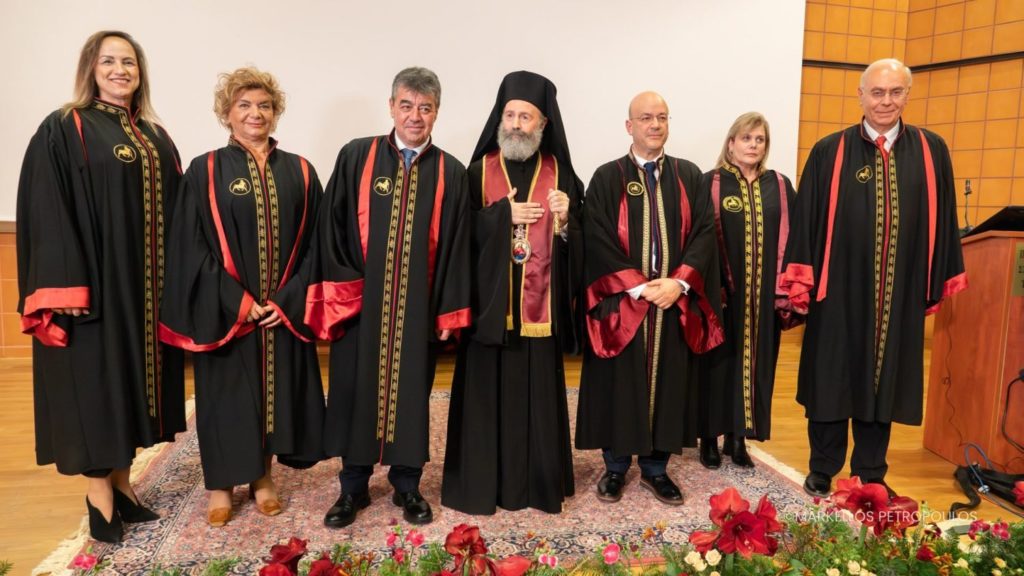
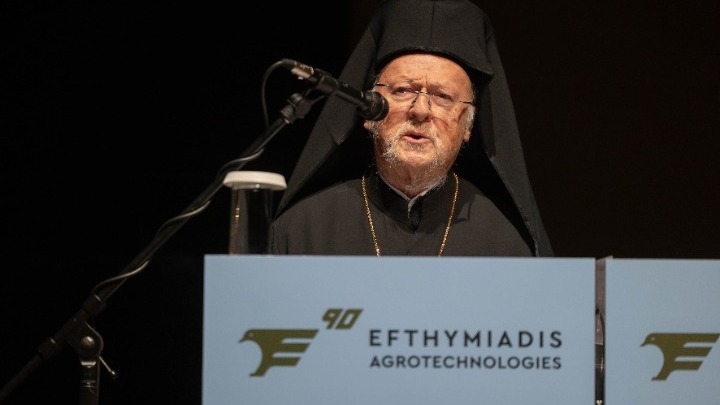
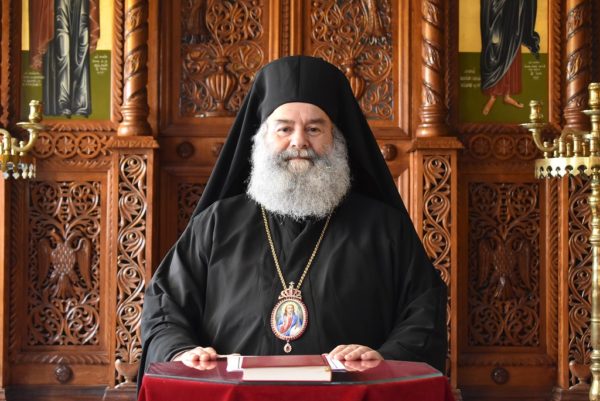
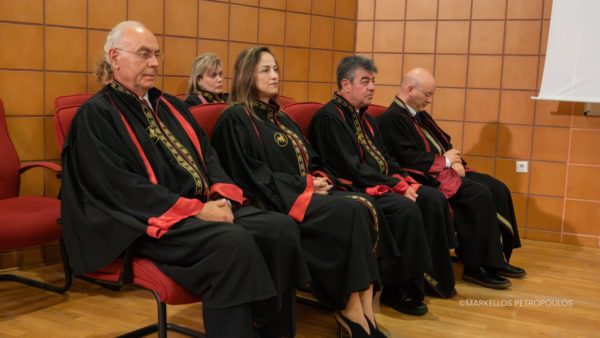
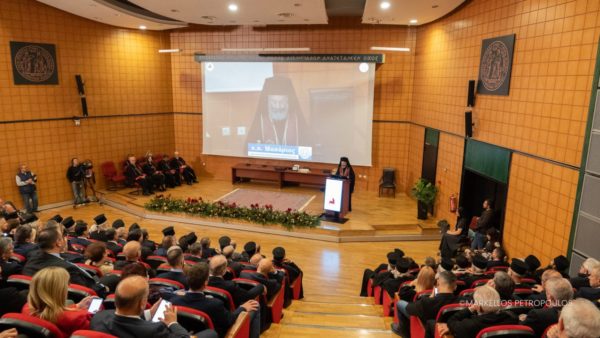
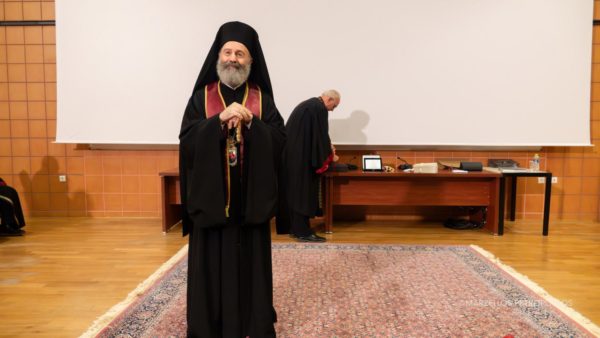
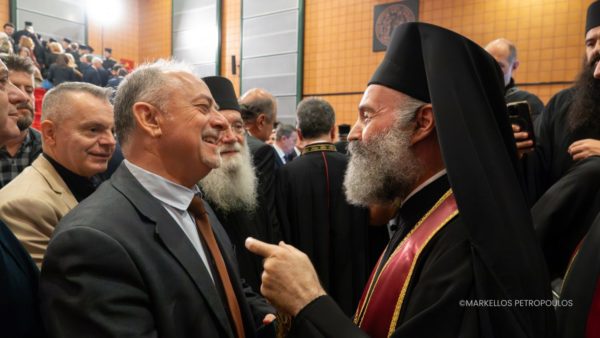
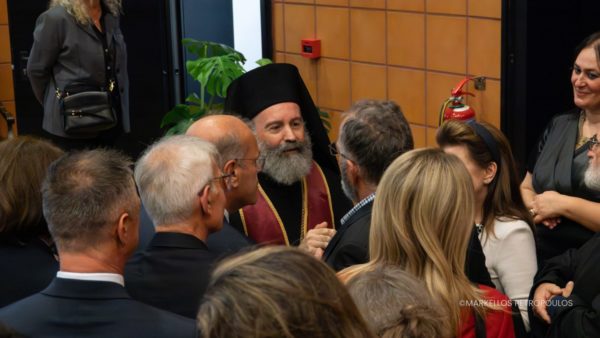
With great solemnity, on Tuesday, 11 November, in Larissa, the ceremony was held for the proclamation of His Eminence Archbishop Makarios of Australia as an Honorary Doctor of the Department of Medicine of the School of Health Sciences at the University of Thessaly.
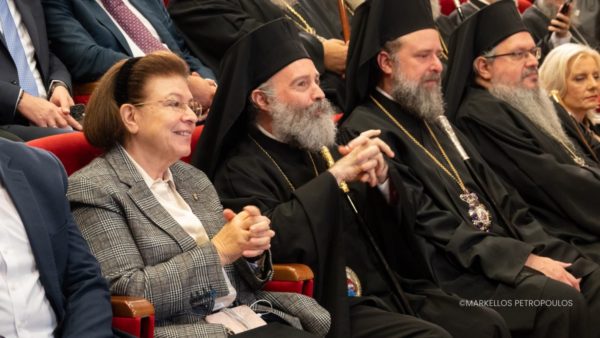
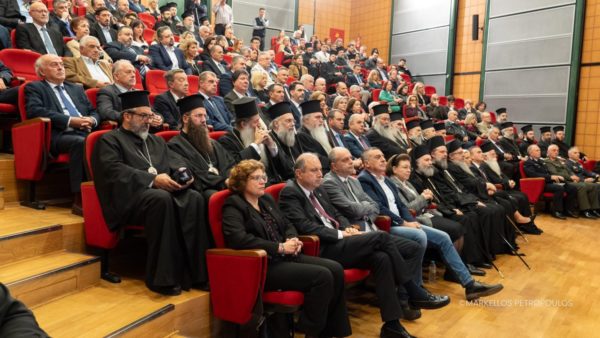
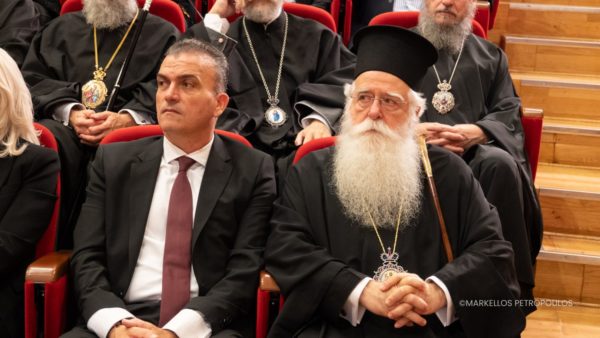
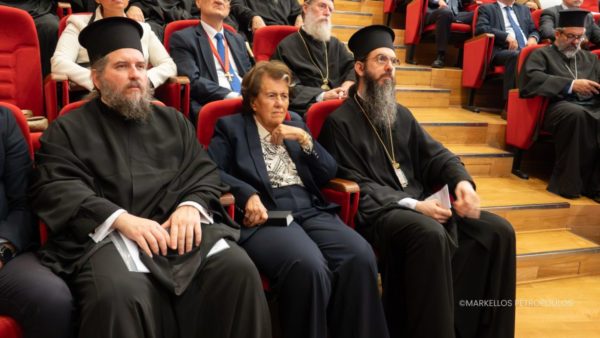
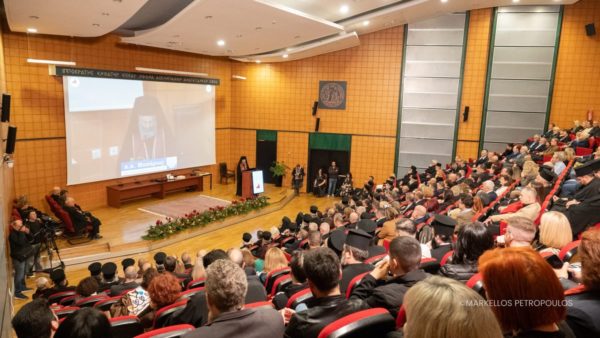
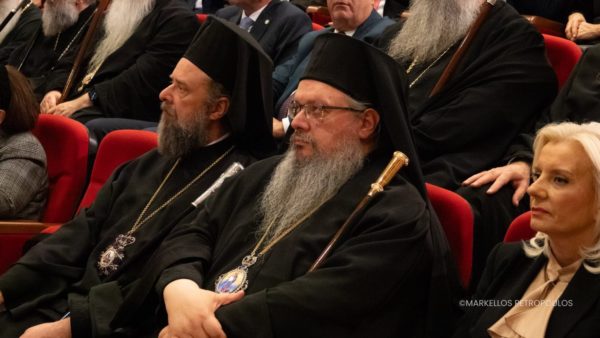
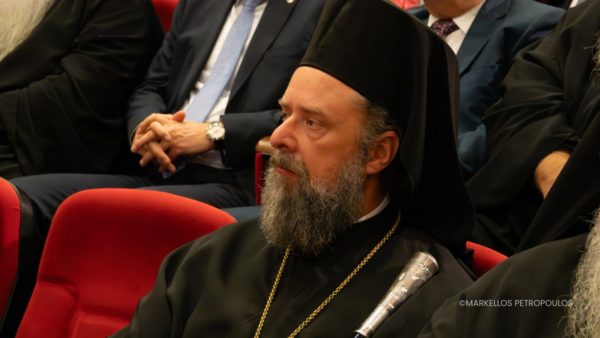
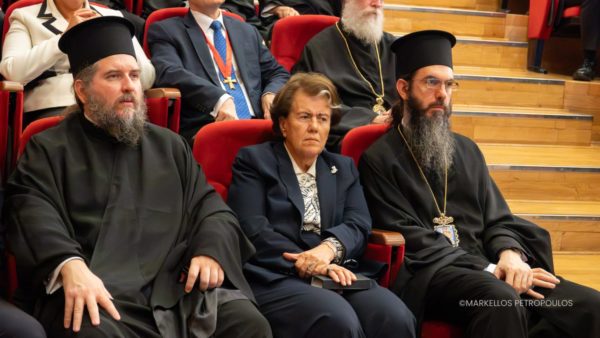
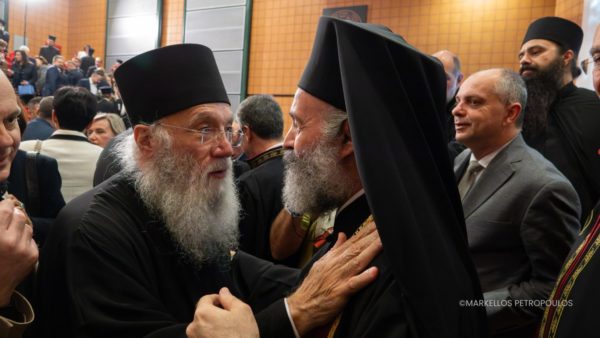
The ceremony, hosted in the “Hippocrates” Auditorium of the Department of Medicine, was attended on behalf of His All-Holiness Ecumenical Patriarch Bartholomew by His Eminence Metropolitan Philotheos of Thessaloniki; representing the Holy Eparchial Synod of the Archdiocese of Australia was His Grace Bishop Athinagoras of Canberra. Also present were the local hierarch, His Eminence Metropolitan Ieronymos of Larissa and Tyrnavos, and a host of Metropolitans and Bishops, including Their Eminences Metropolitan Ignatios of Demetrias and Almyros, Metropolitan Grigorios of Cameroon, Metropolitan Georgios of Kitros, Katerini and Platamon, Metropolitan Chariton of Elassona, Metropolitan Timotheos of Thessaliotis and Fanariofersala, Metropolitan Ioustinos of Nea Krini and Kalamaria, Metropolitan Chrysostomos of Trikala, Gardiki and Pyli, and Metropolitan Symeon of Fthiotida, as well as Their Graces Bishop Epiphanios of Olvia, Bishop Nikiforos of Amoriou, Bishop Prodromos of Toliara and Southern Madagascar, and Bishop Isaak of Bujumbura and Burundi.
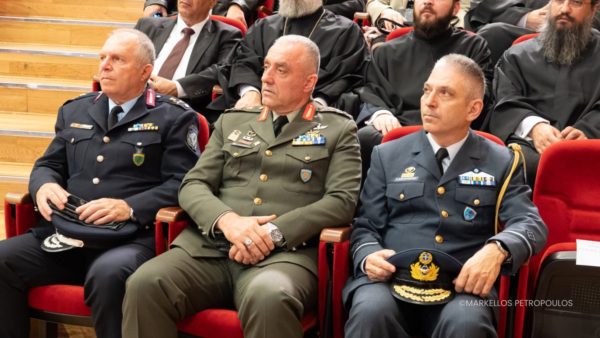
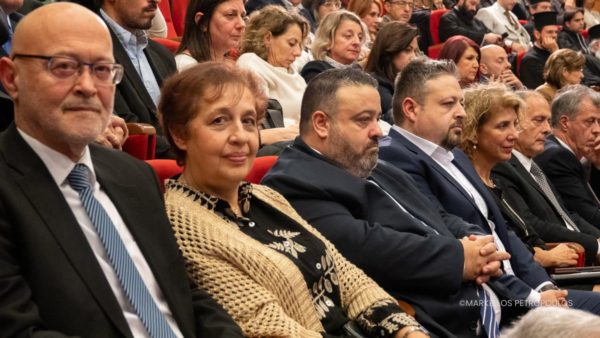
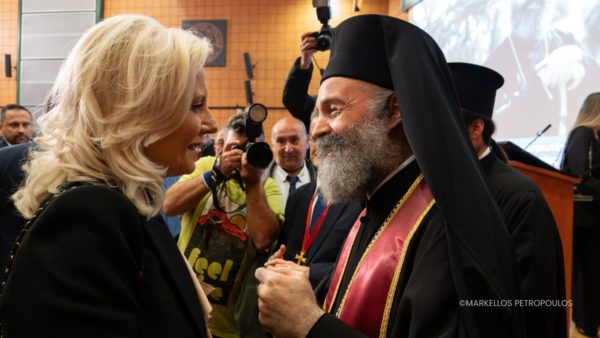
Also in attendance were Greece’s Minister of Culture, Ms. Lina Mendoni, Member of Parliament for Larissa Mr. Christos Kapetanos, Mr. Dimitrios Koureta, Regional Governor of Thessaly, Mr. Athanasios Mamako, Mayor of Larissa, Ms. Eirini Karalariotou, Secretary of the Decentralised Administration of Thessaly–Central Greece, along with rectors, vice-rectors, professors, and students from universities across Greece, as well as representatives of the Armed Forces and Security Services.
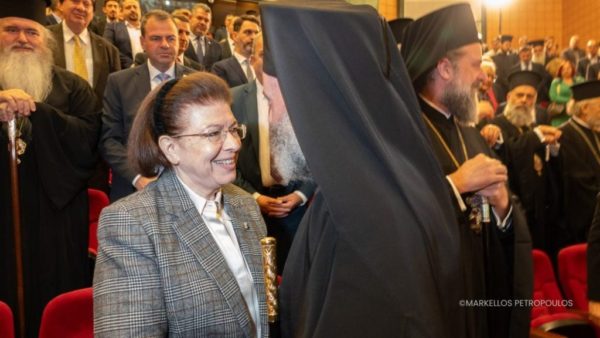
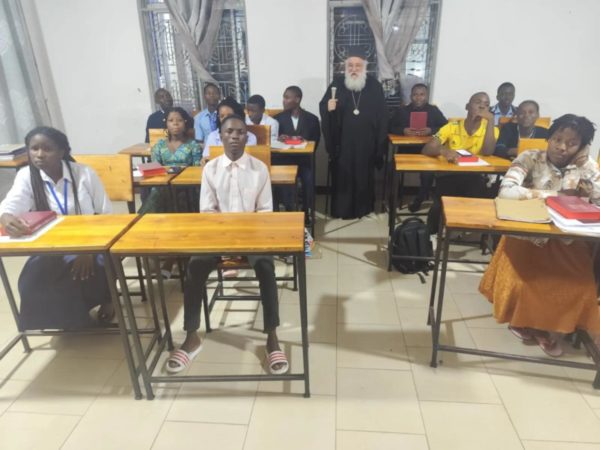
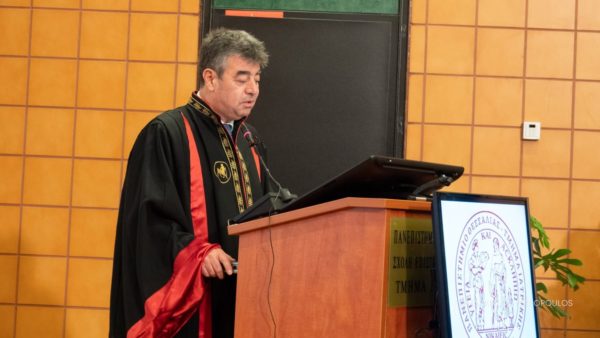
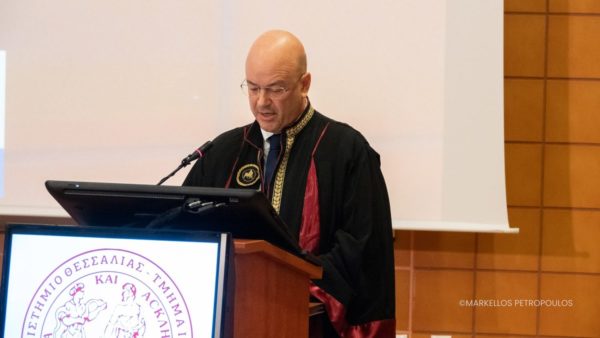
The ceremony began with an address by the Rector of the University of Thessaly, Professor Charalambos Billinis, who noted that Archbishop Makarios “is among the personalities who have supported and advanced the mission of the University of Thessaly and left their mark on the academic community,” adding that “for many years he offered valuable service as a Visiting Professor in the postgraduate programs, leaving an excellent impression on both students and fellow academics.”
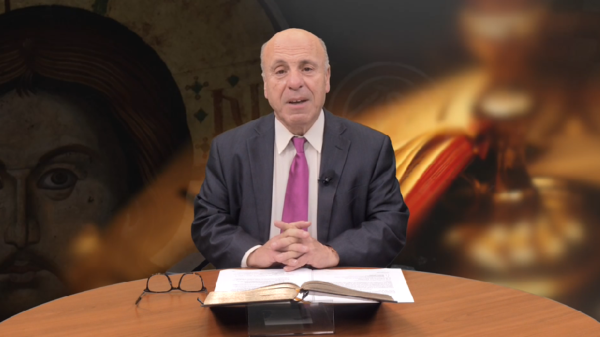
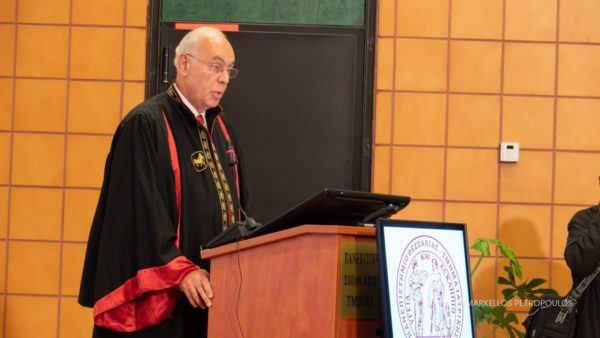
The commendation for the honouree was delivered by Professor Athanasios Giannoukas, specialist in Vascular Surgery, who described the Archbishop as “a man whose life and witness exemplify spiritual cultivation, scientific integrity, and selfless love for humanity.” He emphasised the Archbishop’s contribution to the university in fostering the “scientific conscience and moral responsibility of young scientists, highlighting the need for medical knowledge always to be accompanied by humanity, respect, and a sense of the sacredness of life.”
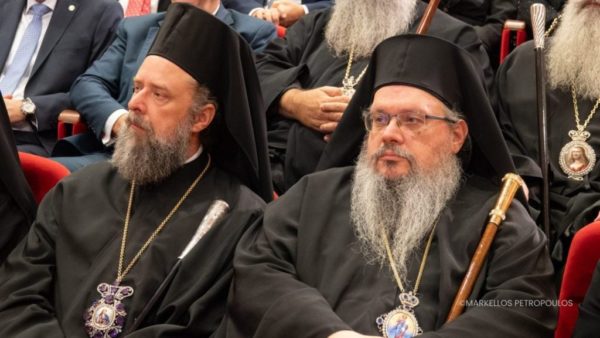
Professor Giannoukas added, “Today’s honour is not simply bestowed upon a church leader, but upon a minister of love and light who, through his example, bridges faith and knowledge, theology and science, the Church and society. Medicine alleviates bodily pain; the Church consoles and cares for the soul. In the person of His Eminence Archbishop Makarios, these two paths meet and walk together, united in the service of humanity and the glory of God.”
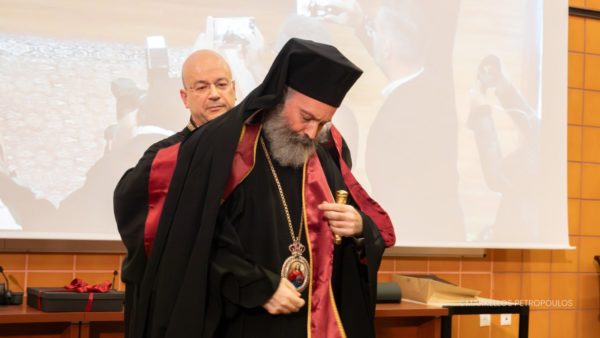
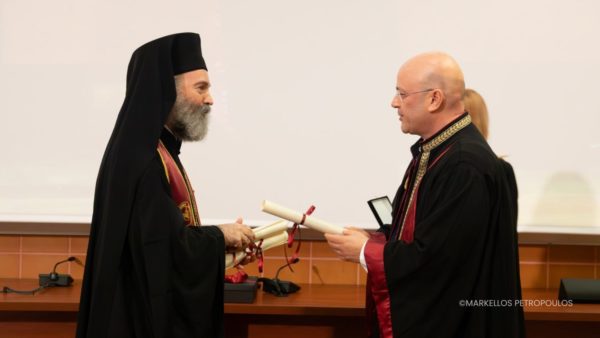
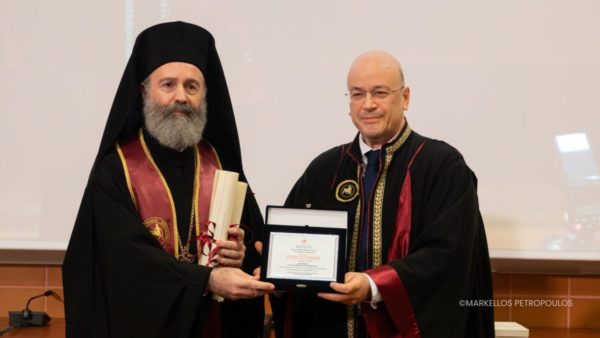
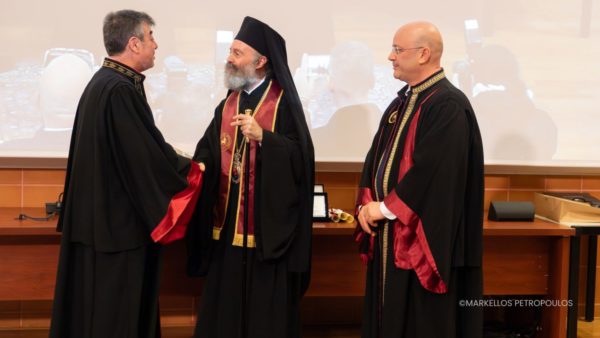
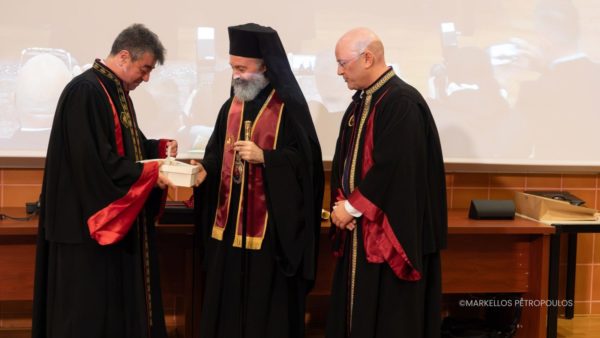
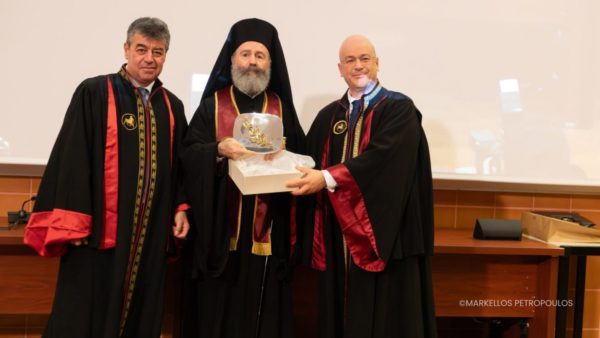
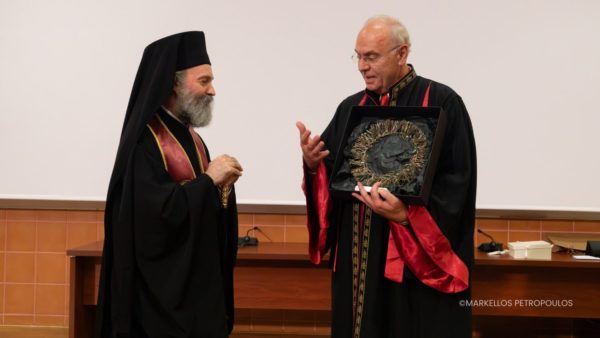
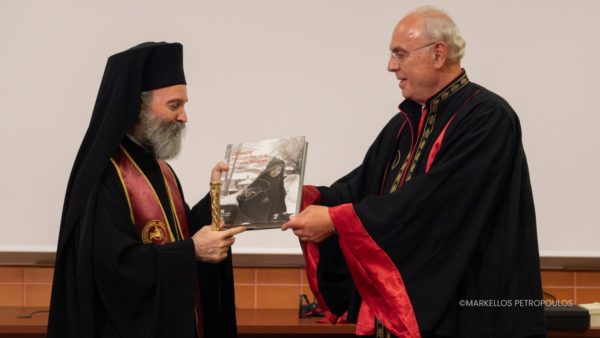
Following this, the Decree of Honour and the Proclamation were read, and the honorary insignia and diploma of the Department of Medicine were presented to the Archbishop by the Department Chair, Professor Aristeidis Zibis, who also vested him with the academic robe.
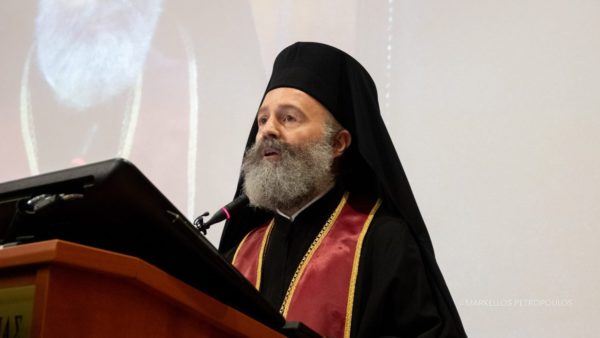
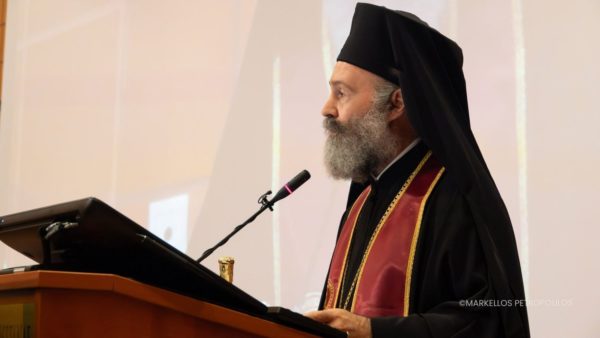
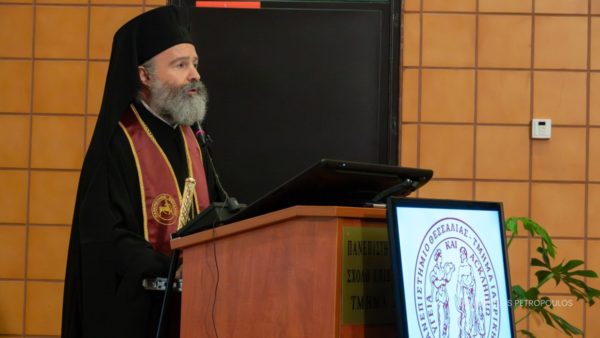
The ceremony concluded with an inspired lecture by Archbishop Makarios of Australia, titled:
“‘I seek a human being’ on the highways of the internet: Relationships and dependencies in the digital age.” At the beginning of his address, His Eminence expressed heartfelt gratitude for the honour of being proclaimed an Honorary Doctor, and reflected that “it may seem paradoxical for a theologian and cleric to receive such recognition from a School of the Sciences, as medicine and pastoral care may at first appear to have different aims and methodologies.” Yet, he observed, “perhaps the distance separating medicine from the pastoral art of the Church is not so great, for both serve the human person, each in its own way, within a healing and salvific perspective.”
In the main part of his lecture, the Archbishop outlined Orthodox anthropology, stressing that faith in God is primarily a lived relationship of love with God through one’s neighbour. Drawing a connection between Diogenes’ “I seek a human being” (Ἄνθρωπον ζητῶ) and the paralytic’s lament at Bethesda, “I have no one” (Ἄνθρωπον οὐκ ἔχω), he showed that genuine human relationship cannot exist apart from God.
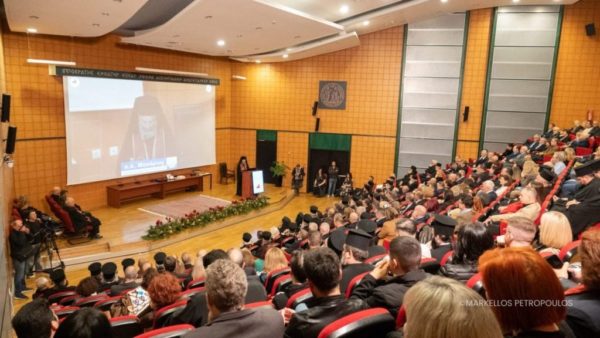
His Eminence vividly analysed human relationships and the forms of dependency created in the modern digital world, urging that we must “seek the person behind the profile, the human being behind the machine, the relationship behind social networking, the meaning behind the chat, the emotion behind the emoji, the knowledge behind the information.”
He concluded by affirming that the ultimate goal of humanity’s ongoing search must be Christ Himself, the One who guarantees liberation from the inescapable bonds of decay and death.
H αναδημοσίευση του παραπάνω άρθρου ή μέρους του επιτρέπεται μόνο αν αναφέρεται ως πηγή το ORTHODOXIANEWSAGENCY.GR με ενεργό σύνδεσμο στην εν λόγω καταχώρηση.
 Ακολούθησε το ORTHODOXIANEWSAGENCY.gr στο Google News και μάθε πρώτος όλες τις ειδήσεις.