Doxology on the National Anniversary of 28 October 1940
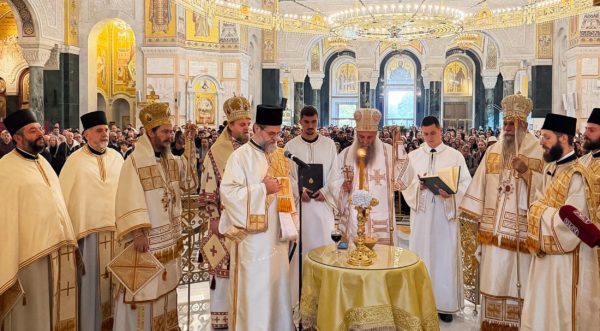
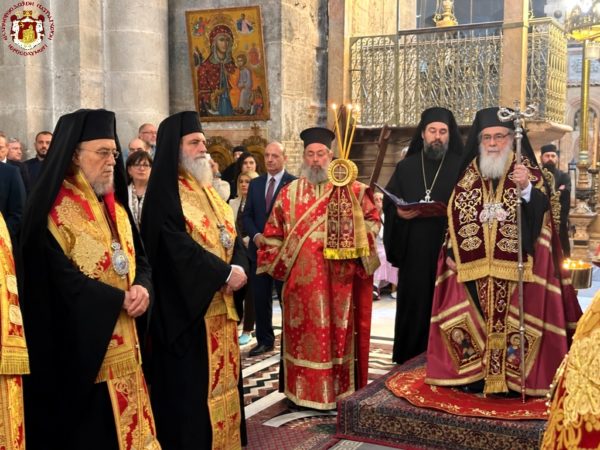
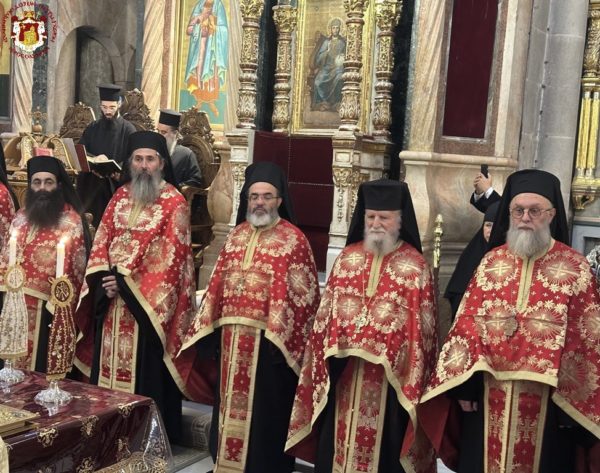
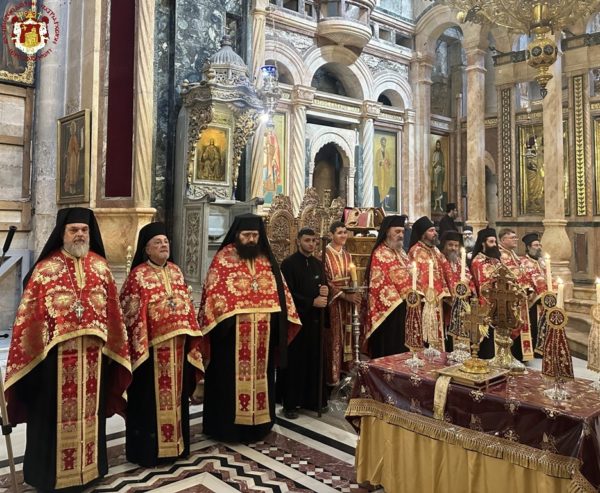
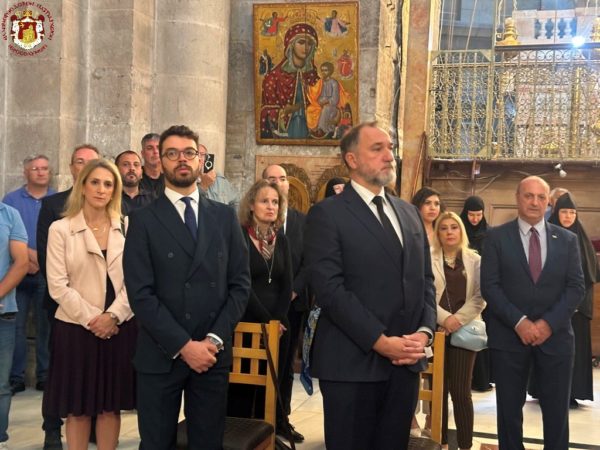
At 10:30 on the morning of Wednesday, 15/28 October 2026, a Doxology was celebrated in the Catholicon of the Church of the Holy Sepulchre to commemorate the national anniversary of 28 October 1940.
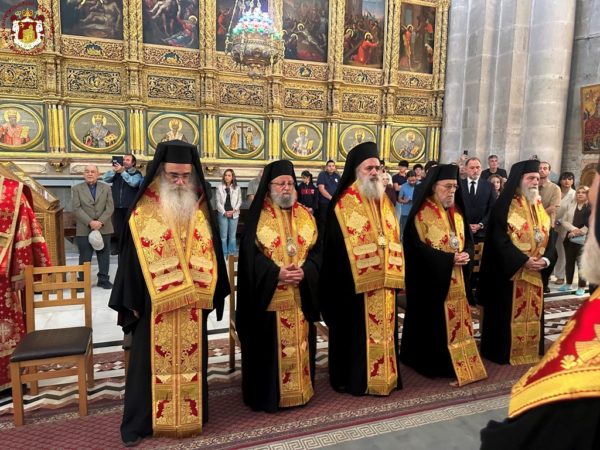
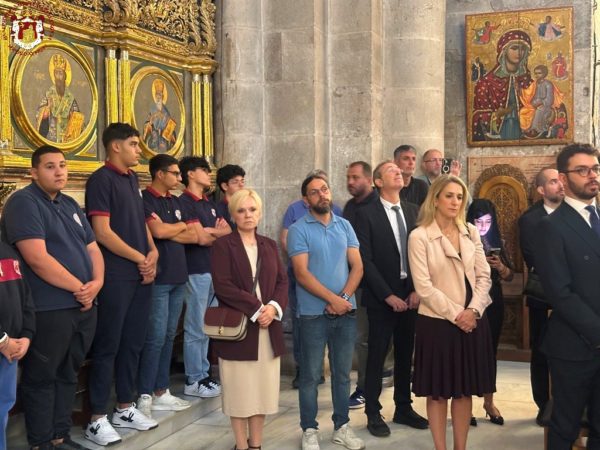
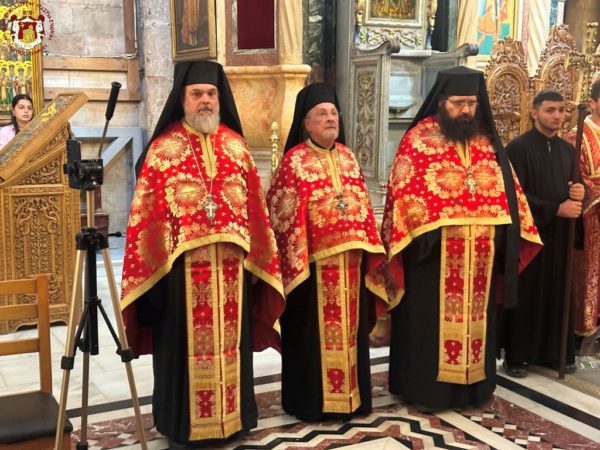
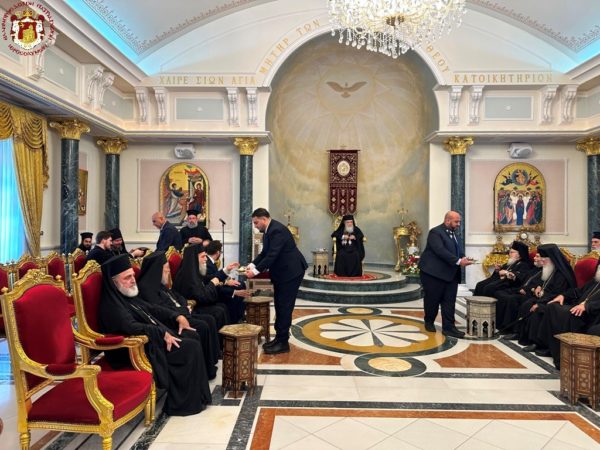
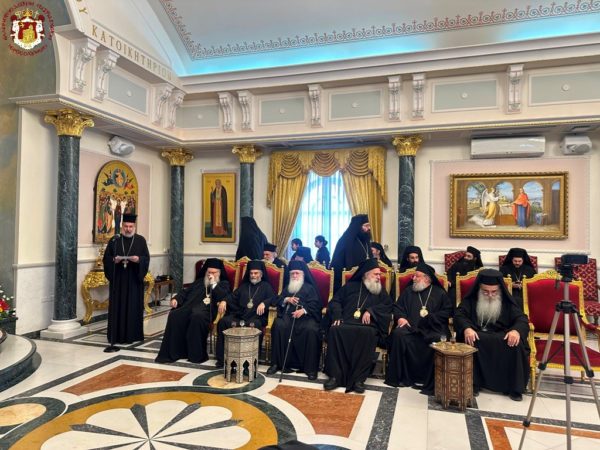
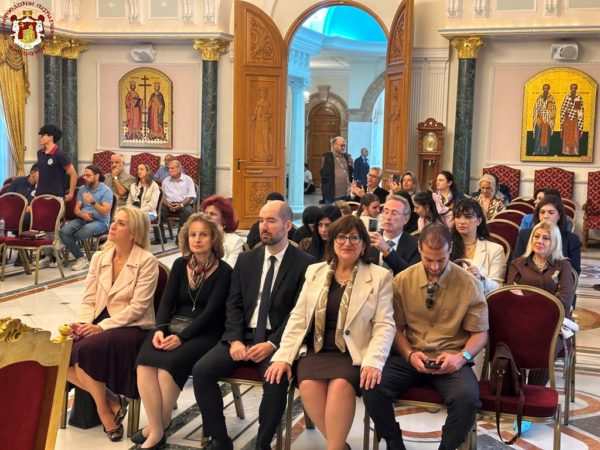
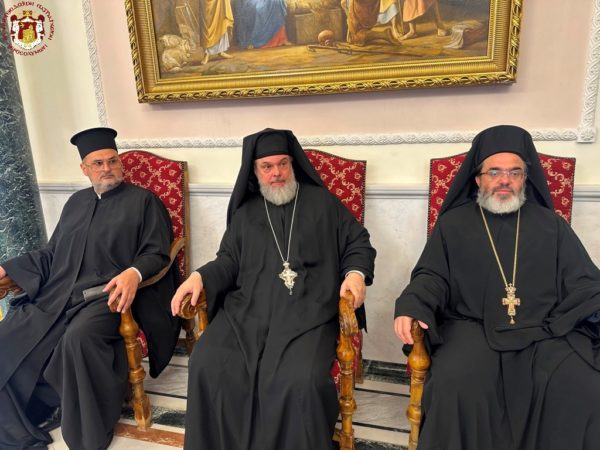
This Doxology was offered in honour of the combatants of 1940–1945, who fought valiantly to cast off the yoke of the Italian invader and German occupation. It served as a supplication for the repose of their souls. The service was presided over by His Beatitude our Father and Patriarch of Jerusalem, Theophilos, concelebrating with the Most Reverend Hierarchs and the Fathers of the Holy Sepulchre Brotherhood, in the presence of the Consul General of Greece in Jerusalem, Mr Demetrios Angelosopoulos.
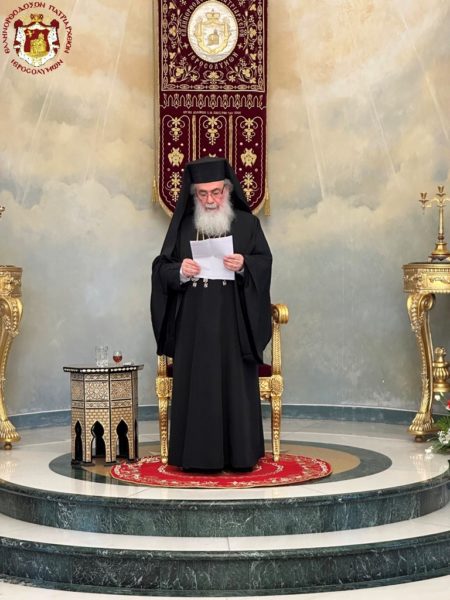
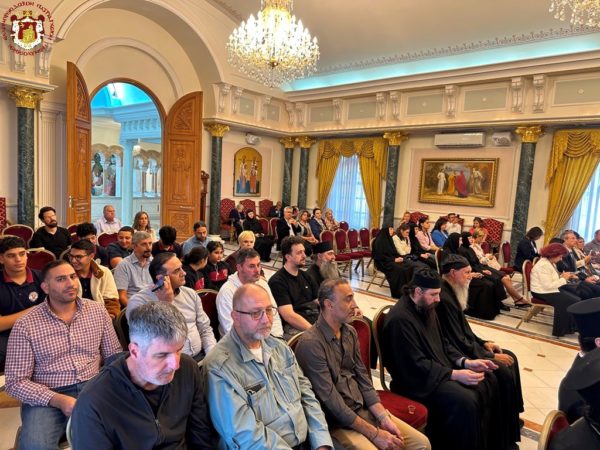
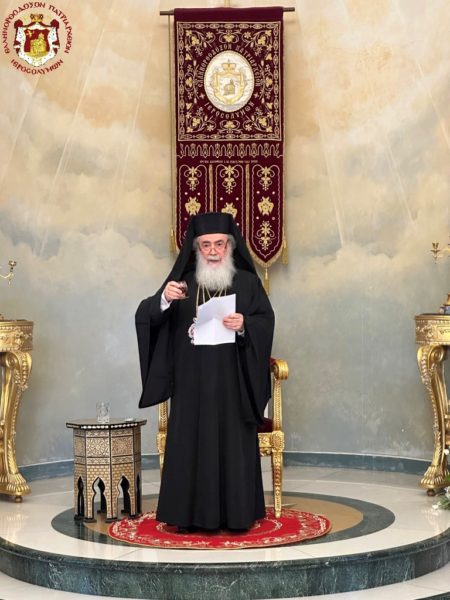
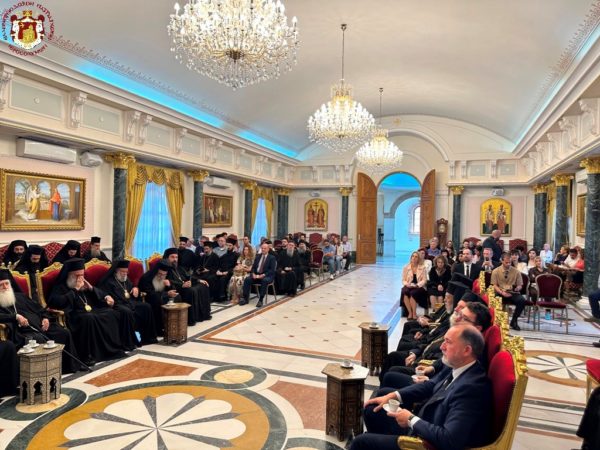
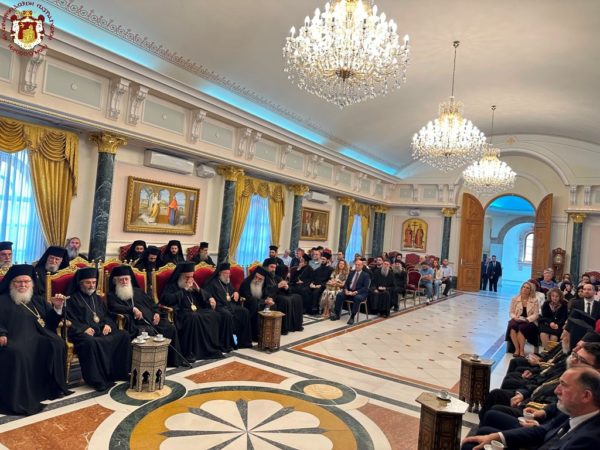
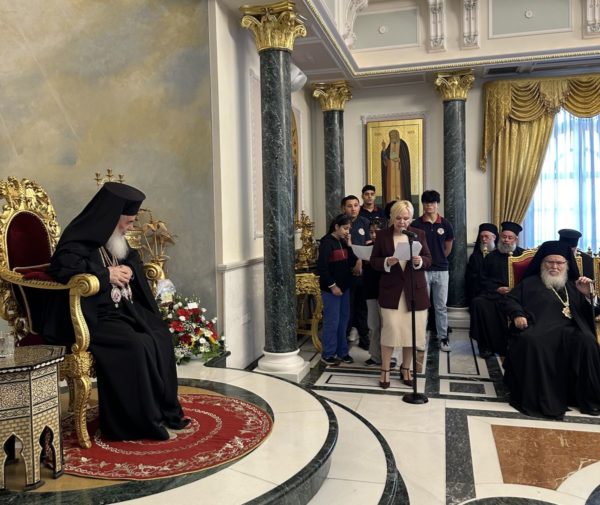
Following the Doxology, a reception was held at the Patriarchate, where His Beatitude addressed the assembly in Greek as follows:
‘Your Excellency, Consul General of Greece, Mr Demetrios Angelosopoulos,
Reverend Holy Fathers and Brethren,
Beloved Brethren in Christ,
Today’s commemorative observance of the 28th of October stands among the paramount milestones across the enduring history of the Greek nation and lineage. The collective uprising of the Greek people against the forces of abhorrent Nazi and Fascist totalitarianism attested once more to the nobility of their spirit—a spirit sustained by divine and universal moral values, foremost among them reverence for the human person and the bounds of man’s habitation. As the wise Apostle Paul proclaimed: “And He has made from one blood every nation of men to dwell on all the face of the earth, and has determined their preappointed times and the boundaries of their dwellings” (Acts 17:26).
The 28th of October 1940 constitutes an indelible exemplar of selfless sacrifice in defence of the honour, liberty, independence, and territorial integrity of our valiantly fallen fathers and brothers. Theirs was a sacred struggle against a frenzied and deranged aggressor driven by the racial doctrines of Nazism.
To this end, Our Mediocrity, accompanied by the venerable members of our historic Brotherhood of the Holy Sepulchre and the pious faithful, went to the Church of the Holy Sepulchre, where we offered a Doxology of thanksgiving to the Holy Trinity, “who gives us the victory through our Lord Jesus Christ” (1 Cor. 15:57).
Furthermore, we offered fervent petitions for the eternal memory and blessed repose of the souls of those who fought heroically and bore glorious witness on behalf of our pious nation and its hallowed ancestral soil.
The poignant trauma of the Second World War demonstrated that an anthropocentric conception of human existence and the cosmos terminates inevitably in self-annihilation and nihilism. “The fool has said in his heart, ‘There is no God’” (Ps. 14:1). We observe this because the sacrificial struggle of the combatants of 1940, waged for faith, homeland, and freedom, drew its inspiration from a theocentric understanding of human purpose: the Greek Orthodox Christian ethos.
It is precisely this Greek Orthodox ethos that today’s solemn anniversary affirms, and which we dutifully venerate. The 28th of October 1940 is the day on which the perennial call, “Now the struggle is for all,” resonated across the Greek realm, echoing the voice of the poet: “Liberty! Greeks in the darkness show the way: Liberty! For thee the sun shall weep with joy.”
The epic of 1940 proved that the armour of the spirit and soul prevails over mortal, earthly weaponry, which cannot slay the soul, as the Lord commanded: “And do not fear those who kill the body but cannot kill the soul. But rather fear Him who is able to destroy both soul and body in hell” (Matt. 10:28).
Commendable, too, was the contribution of the Church through the active engagement of both higher and lower clergy, whose evangelical and patriotic exhortations fortified the martial spirit of our soldiers amidst the snowbound, frozen heights of the Albanian front and the Pindus. Patriotism, fortitude, national self-abnegation, and a sacrificial devotion to guarding the divine gift of freedom formed the very sinews of the 1940 epic.
Today’s commemoration and its enduring message bear profound significance for a humanity sorely tried by conflicts and violent upheavals, and particularly for our own Middle Eastern region, which “groans and suffers”.
As for ourselves, “living out in the fields and keeping watch” (Luke 2:8) over the Holy Places of the Cross of righteousness and the empty tomb of the hope-bearing Resurrection of our Saviour Christ, we pray that “the Lord of peace Himself give us peace always by all means” (cf. 2 Thess. 3:16). This magnificent and unrepeatable chapter of the 1940 epic summons us all to vigilance, bidding us to safeguard the sacred deposit of Scriptural moral and spiritual values inherent in faith in Christ, as well as our Roman Orthodox heritage and sacred tradition, for which our fathers and brethren laid down their lives with their precious blood.
In conclusion, let us proclaim:
Long live the “OXI” of 28 October 1940!
Long live the pious lineage of the Roman Orthodox!
Long live Greece!
Long live our Brotherhood of the Holy Sepulchre!’
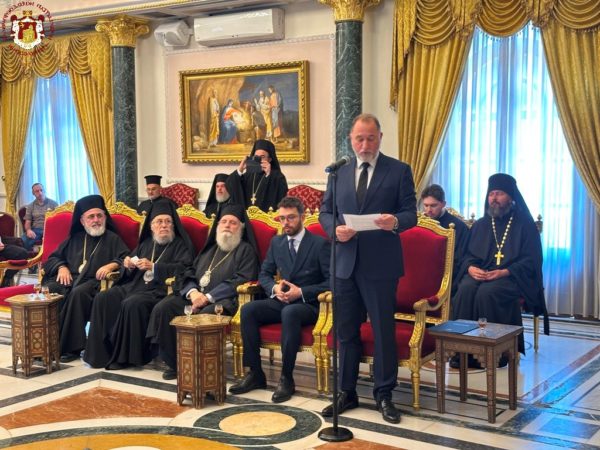
His Excellency the Consul General of Greece in Jerusalem, Mr Demetrios Angelosopoulos, then addressed the gathering as follows:
‘Your Beatitude,
Reverend Fathers and Members of the Brotherhood of the Holy Sepulchre,
Esteemed Compatriots and Friends,
“Italian military forces have attacked our forward positions on the Greco-Albanian frontier from 05:30 this morning. Our forces are defending the ancestral soil.”
With this bulletin, broadcast by Athens Radio Station, the 28th of October 1940 dawned. Merely a handful of words, framed in two brief, crisp sentences. Not a word was superfluous, nor one missing, to convey the gravity of the hour and the stark reality of the ordeal that lay ahead. Spare yet resolute, they breathed a sober determination—much like the sparse forces defending our Epirus frontier at that moment against an unprovoked and overbearing assault upon Greek independence.
Through these austere words, the Greek people learned that History had once more summoned them to their duty. Earlier that night, the nation’s leadership had replied with equal brevity and clarity to coercive intimidation and the blackmailing demand to surrender our sovereignty. Greece thus entered the Second World War, a conflict that had already witnessed the subjugation and fall of hitherto formidable European powers. Most of Europe had already descended into the gloom of totalitarian rule.
Confronted with this formidable trial, the Greeks chose—unanimously, ardently, without vacillation or recrimination, and with a smile—the arduous path of Honour and Dignity. They were fully aware that the aggregate forces of Axis expansionism would inevitably be brought to bear against Greece. The contest would be markedly asymmetric. Yet they entered it not with despair, but with an abiding faith in victory and ultimate vindication—certain that they were proving themselves worthy custodians of Greece’s perennial, luminous stand for liberty.
Indeed, as nations were tested in the crucible of History, our forebears, men and women alike, stood ready to defend not merely our soil, but the core values of our nation and the civilisation forged across its centuries-long journey. They championed the ideals of freedom, mutual respect, peace, and the primacy of the rule of law in international relations. This sacrificial resolve was no naive idealism; it sprang from the profound realisation that a people’s values are inextricably bound up with their deepest, most enduring interests.
Greece’s stance at daybreak on 28 October 1940, alongside the unanticipated victories that ensued, commanded the admiration of allies and adversaries alike. Our allegiance to liberty remained unshaken even when overwhelming Axis forces culminated in the occupation of the country and the untold suffering that followed in its wake. Our government in exile found refuge in the Middle East, in Egypt, and here in Jerusalem, where the continuation of the struggle was orchestrated. Greek forces fought on across the theatres of North Africa, the Mediterranean, and Europe until the liberation of our homeland and final victory—an outcome that placed Greece among the victors of the Second World War and the founding member states of the United Nations.
In recent years, dark clouds have gathered once more over the international community. Our beleaguered region knows this all too well. We are traversing another era of systemic rivalry, fierce conflict, and severe trials for the foundational tenets for which our ancestors took up arms. In the face of this perilous international reality, Greece draws strength from their indelible example, maintaining an unswerving determination to defend not only her own sovereign interests, but also those higher ideals belonging to all Humanity.
Today we mark the 86th anniversary of 28 October 1940. The years have elapsed, and with them has passed the generation that lived and wrote one of the most brilliant chapters in our annals. In a few decades, those of us who had the privilege and honour to know the veterans of 1940, serving as secondary vessels of their lived memory, will no longer be here to recount it. All the greater, therefore, is our solemn obligation to preserve and transmit the beacon of 1940 as an enduring guide towards the liberty of peoples and nations.
Many happy returns. Long live the 28th of October 1940. Long live Greece.’
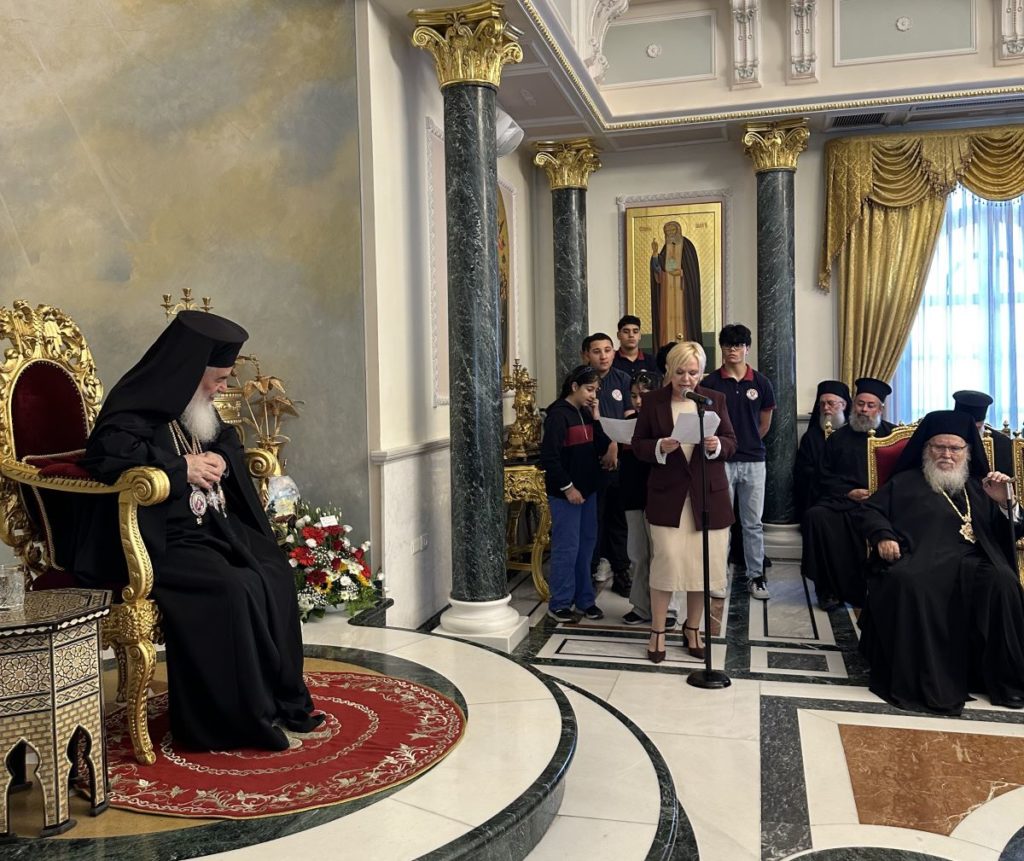
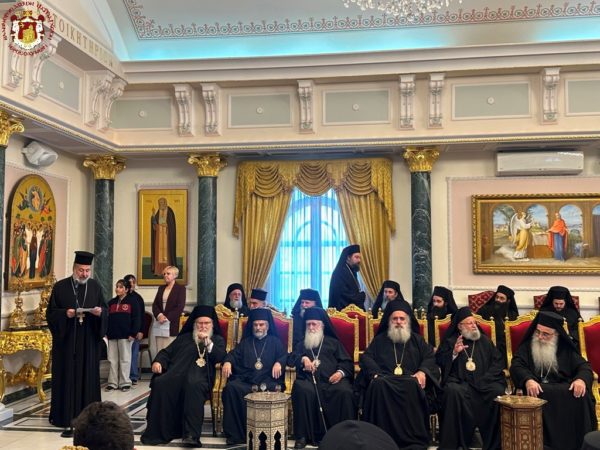
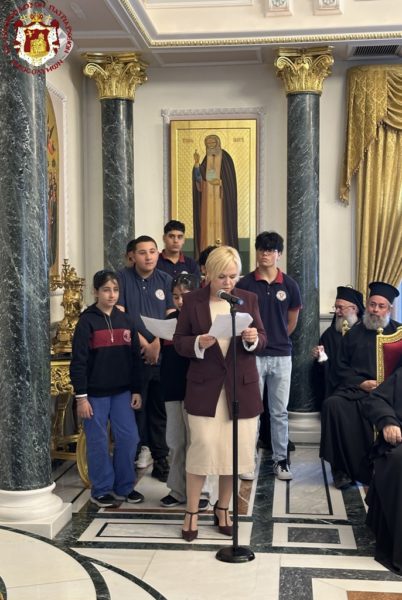
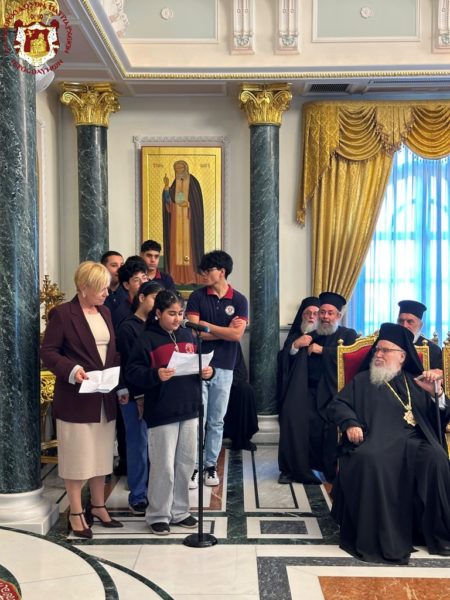
A festive greeting was likewise delivered by Mrs Maria Papadimitriou on behalf of the Patriarchate’s Saint Demetrios School, accompanied by a delegation of pupils.
In closing, the participants paid their respects to His Beatitude.
From the Chief Secretariat
H αναδημοσίευση του παραπάνω άρθρου ή μέρους του επιτρέπεται μόνο αν αναφέρεται ως πηγή το ORTHODOXIANEWSAGENCY.GR με ενεργό σύνδεσμο στην εν λόγω καταχώρηση.
 Ακολούθησε το ORTHODOXIANEWSAGENCY.gr στο Google News και μάθε πρώτος όλες τις ειδήσεις.