Ecumenical Patriarch and and Patriarch of Romania to celebrate Divine Liturgy at Bucharest National Cathedral consecration
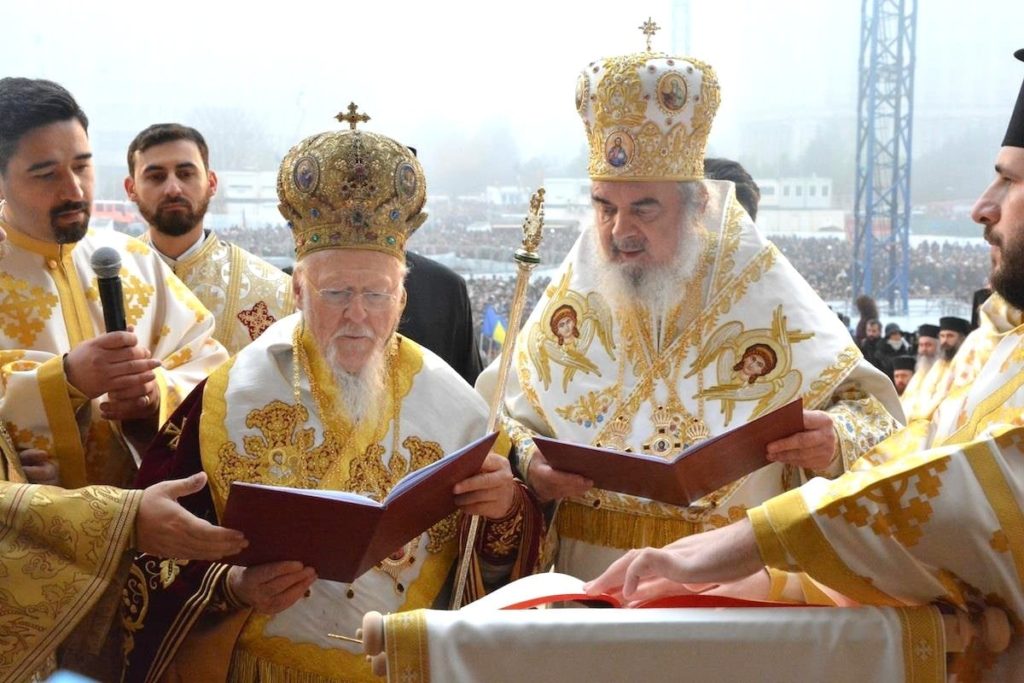
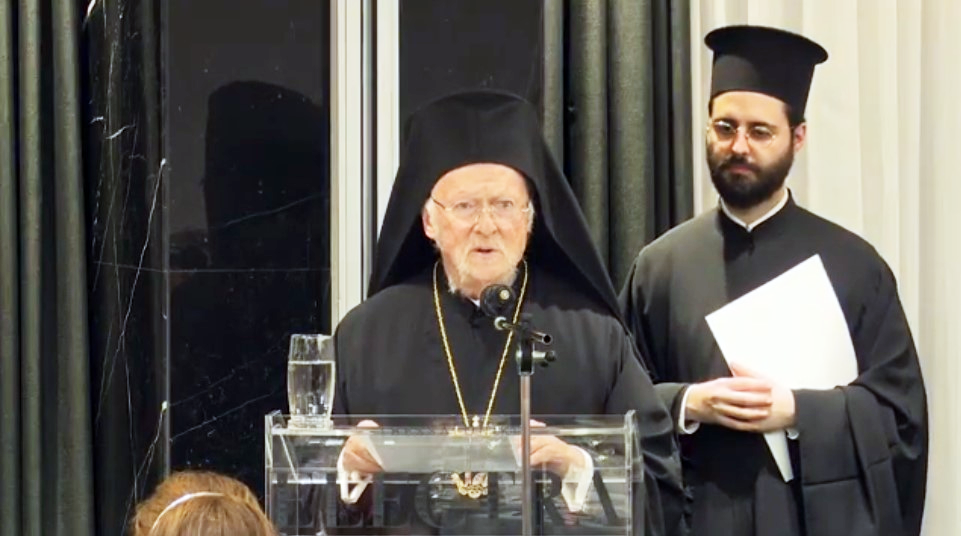
The consecration of the Bucharest National Cathedral (People’s Salvation Cathedral) is scheduled for Sunday, 26 October 2025. The ceremony will be led by His All-Holiness Ecumenical Patriarch Bartholomew and His Beatitude Patriarch Daniel of the Romanian Orthodox Church.
The National Cathedral in Bucharest is preparing to accommodate large gatherings by enabling the Divine Liturgy to be celebrated at an outdoor summer altar. This setup will allow greater participation during significant feast days and national religious events.
The summer altar will be arranged in front of the main western porch (pronaos) of the Cathedral, allowing the service to be held in open air. The square in front of the Cathedral can host around 23,000 worshippers during such celebrations.
Architectural Highlights
The main entrance to the National Cathedral features a monumental porch with arches, flanked by side porticos that define the Cathedral’s architectural ensemble. The design combines Romanian architectural traditions, such as Moldavian niches, Brâncovenesc-style porches, and slender Transylvanian towers, with elements of Western monumental architecture, reflecting the spiritual and cultural unity of Romanians both at home and abroad.
The western porch stands out for its impressive dimensions and graceful arches, serving both a functional role—protecting the entrance—and a symbolic one, as a space of preparation and welcome before entering the sacred interior. The enclosed narthex (exonartex) symbolises liturgical communion and Romanian spiritual hospitality, while additional open porches adorn the eastern, southern, and northern sides.
The north and south porticos, consisting of sequences of columns, mark the boundaries of the outdoor liturgical area, covering a built area of 5,159 square meters and a volume of 28,712 cubic meters. The curved porticos on the southwest and northwest sides—covering 2,079 square meters—frame the main entrance to the Cathedral complex.
The column design pays homage to neo-Romanian architecture, a reinterpretation of the Brâncovenesc style, with intricate vegetal motifs, organic stone drapery, and detailed carvings of acanthus leaves—a symbol of eternal life and resurrection.
Materials such as stone and reinforced concrete ensure the structure’s durability and monumentality, built to stand for centuries as a testament to Romanian faith and identity.
Patriarch Daniel’s Vision
His Beatitude Patriarch Daniel of the Romanian Orthodox Church described the symbolic architecture of the National Cathedral:
“This Cathedral must be an architectural symbol of the supreme liturgical moment—the Eucharist, the communion with Christ, One of the Holy Trinity.
The design symbolises the Chalice, whose cup contains the Cathedral itself, where the Holy Mysteries are performed.
The base of the Chalice represents the infinite love of the Holy Trinity, encompassing creation and calling the faithful to humility, repentance, and eternal communion with God.
Within this sacred space, during major feasts, the faithful will be able to participate in the Divine Liturgy celebrated outdoors.”
Source: Basilica.ro
H αναδημοσίευση του παραπάνω άρθρου ή μέρους του επιτρέπεται μόνο αν αναφέρεται ως πηγή το ORTHODOXIANEWSAGENCY.GR με ενεργό σύνδεσμο στην εν λόγω καταχώρηση.
 Ακολούθησε το ORTHODOXIANEWSAGENCY.gr στο Google News και μάθε πρώτος όλες τις ειδήσεις.