Holy and Great Sovereign Sts. Constantine and Helen venerated today
The Orthodox Church today, May 21, venerates Sts. Constantine and Helen, known as the feast day of the Holy and Great Sovereigns.
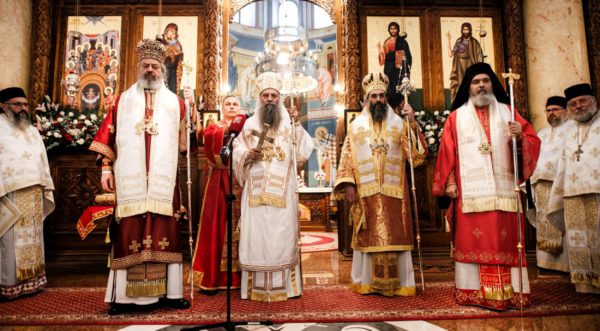
The commemoration of Sts. Constantine and Helen is celebrated with a Divine Liturgy of St. John Chrysostom, conducted on the morning of the feast day and preceded by an Orthros service. A Great Vespers may be conducted in the evening before the day of the Feast.
The great and renowned sovereign of the Christians was the son of Constantius (the ruler of the western half of the Roman Empire), and of the blessed Helen.
Constantine was born in 272 AD, possibly in Naissus – modern-day Nis, in Serbia. In 306, when his father died, he was proclaimed successor to his throne.
In 312, upon learning that rival co-emperors had joined forces against him, he marched into Italy, where, while at the head of his army, he saw in the sky after midday, and beneath the sun, a radiant pillar in the form of a Cross — with the words: “By this shalt thou conquer.”
As for the emperor’s mother, Helen, after her son had made Christianity triumphant throughout the Roman Empire, she undertook a journey to Jerusalem and located the Holy Cross.
After this, St. Helen, erected churches in Jerusalem at the sites of the Crucifixion and Resurrection, as well as in Bethlehem, on the Mount of Olives, whence Christ ascended to Heaven, and many other sites throughout the Holy Land, Cyprus, and elsewhere.
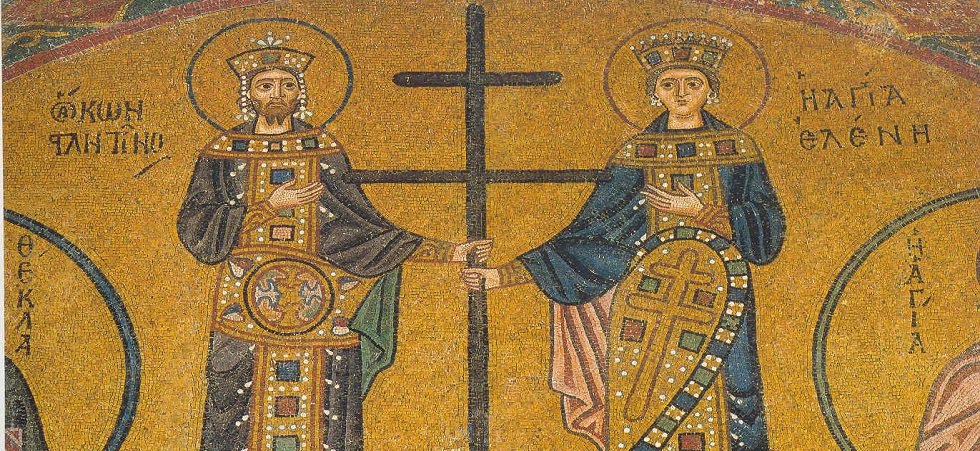
The faithful of the Eastern Roman Empire, known in our day as the Byzantines, greatly venerated St. Helen. The image of the first Christian Roman emperor and his mother holding a Cross between them was a particularly popular image on medieval icons and Church frescoes, an ecclesiastical tradition that continues to this day.
H αναδημοσίευση του παραπάνω άρθρου ή μέρους του επιτρέπεται μόνο αν αναφέρεται ως πηγή το ORTHODOXIANEWSAGENCY.GR με ενεργό σύνδεσμο στην εν λόγω καταχώρηση.
 Ακολούθησε το ORTHODOXIANEWSAGENCY.gr στο Google News και μάθε πρώτος όλες τις ειδήσεις.