“No vision for the future has any value unless it includes social justice and an intact natural environment.”
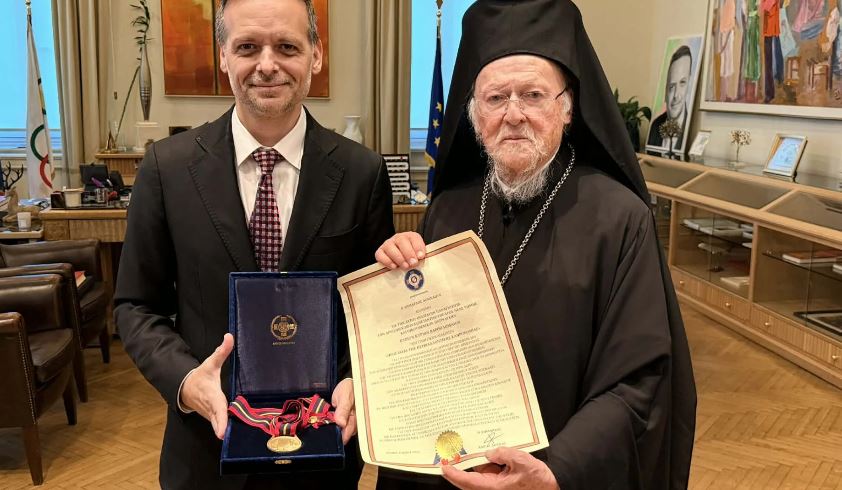
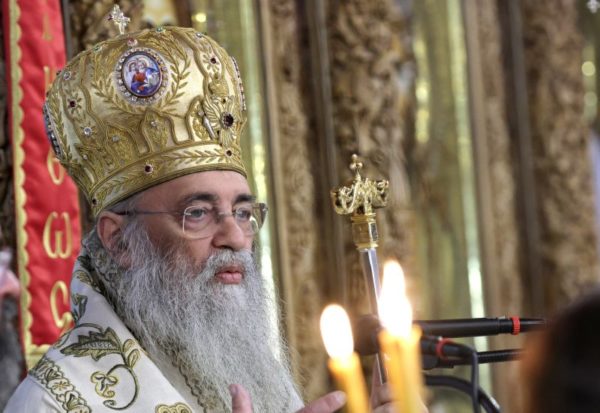
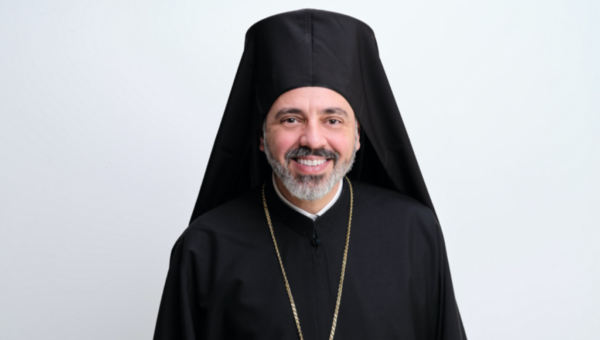
In Athens, His All-Holiness Ecumenical Patriarch Bartholomew arrived on Monday, 4 May 2026.
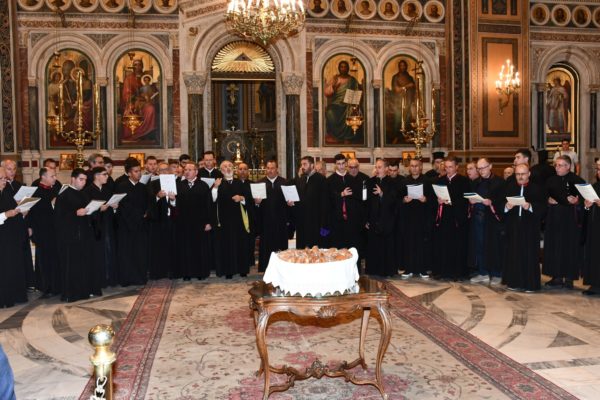
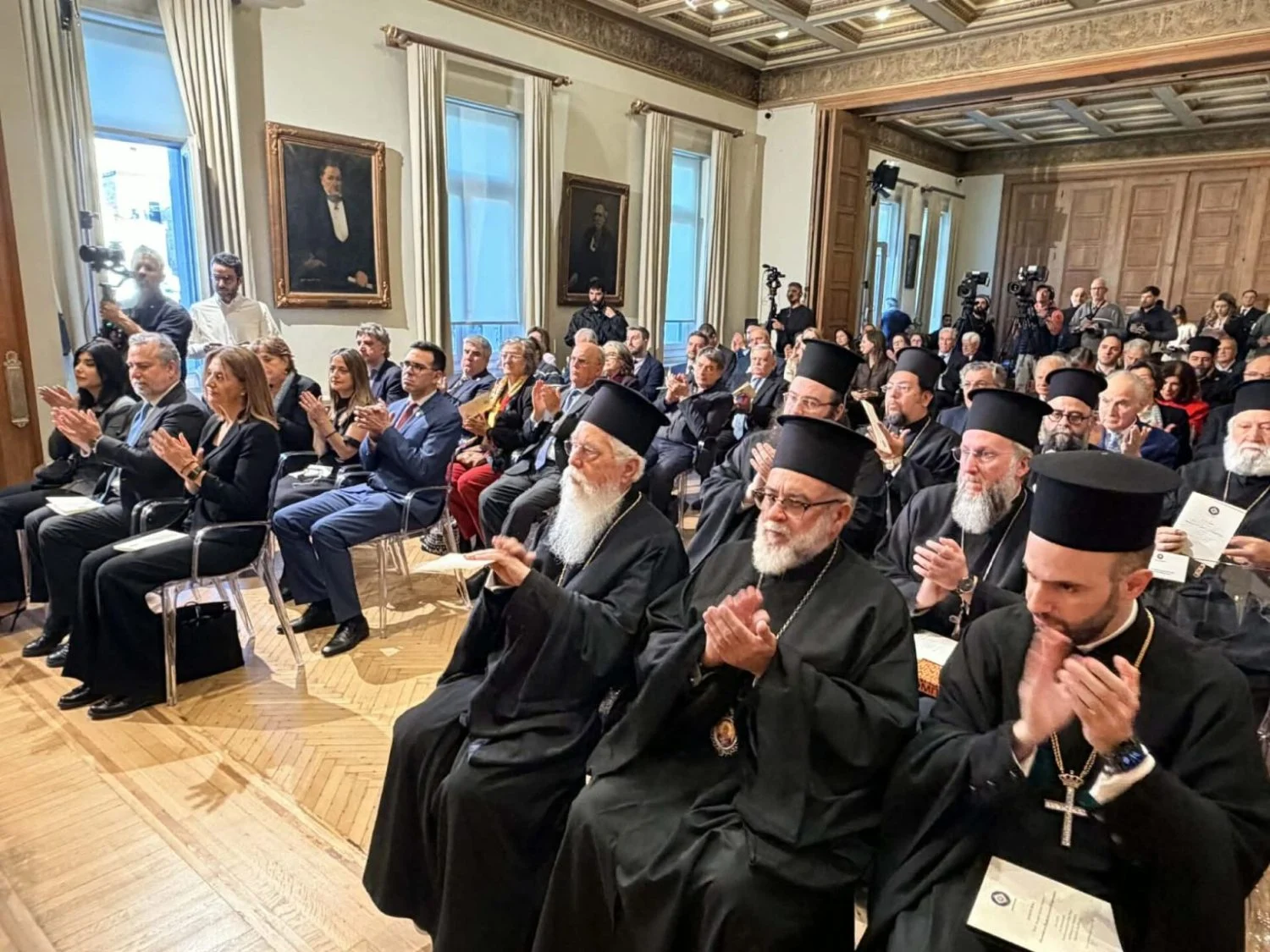
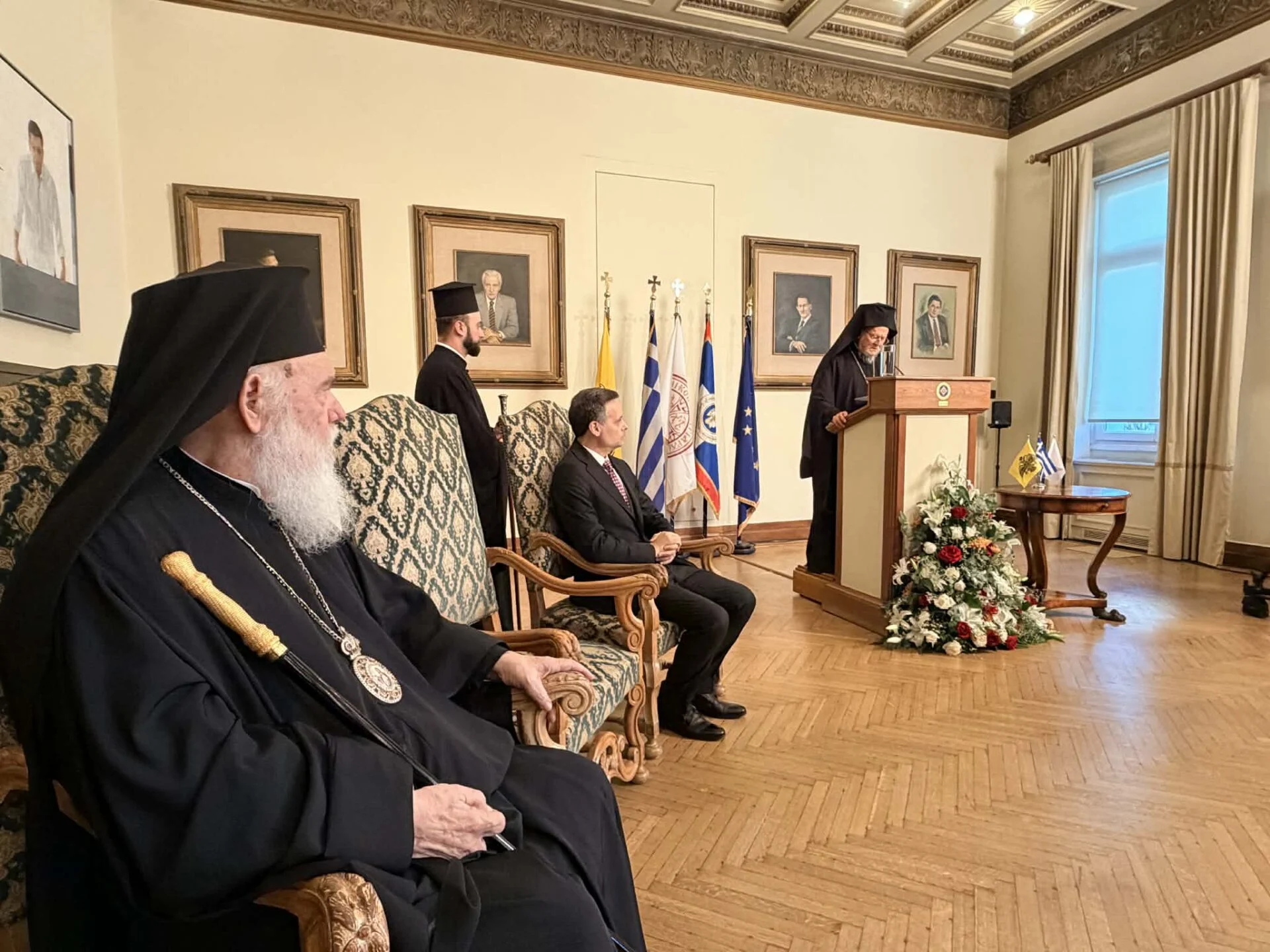
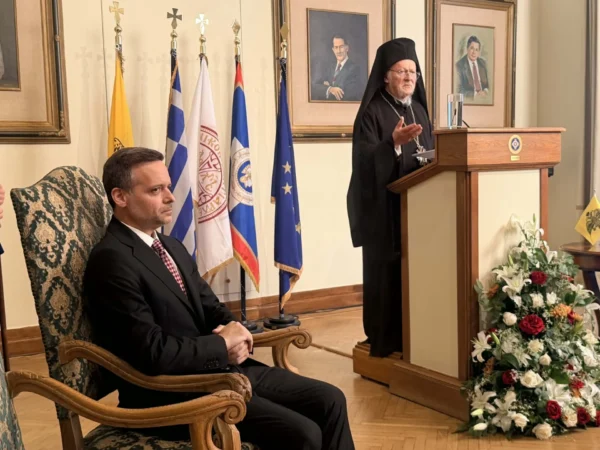
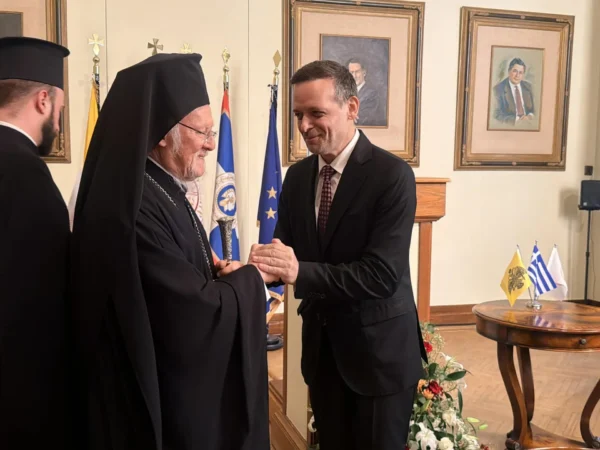
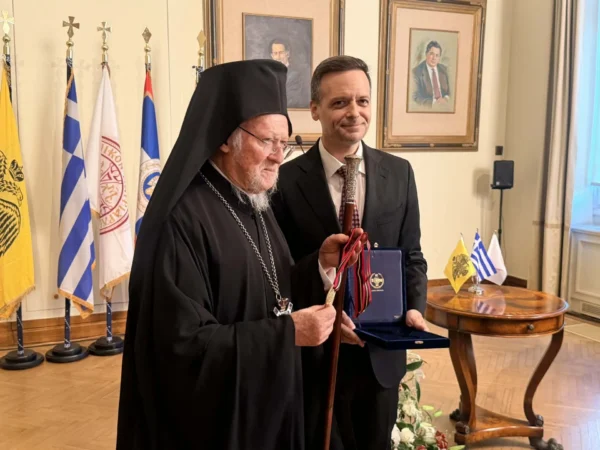
After visiting, according to custom, the Holy Archdiocese of Athens and meeting with His Beatitude Archbishop Ieronymos II of Athens and All Greece, His All-Holiness proceeded to the Ceremonial Hall of the City Hall of the Municipality of Athens. There, the ceremony took place for the awarding of the honorary distinction “Protection of Environmental Heritage” by the Municipality of Athens to the Ecumenical Patriarch.
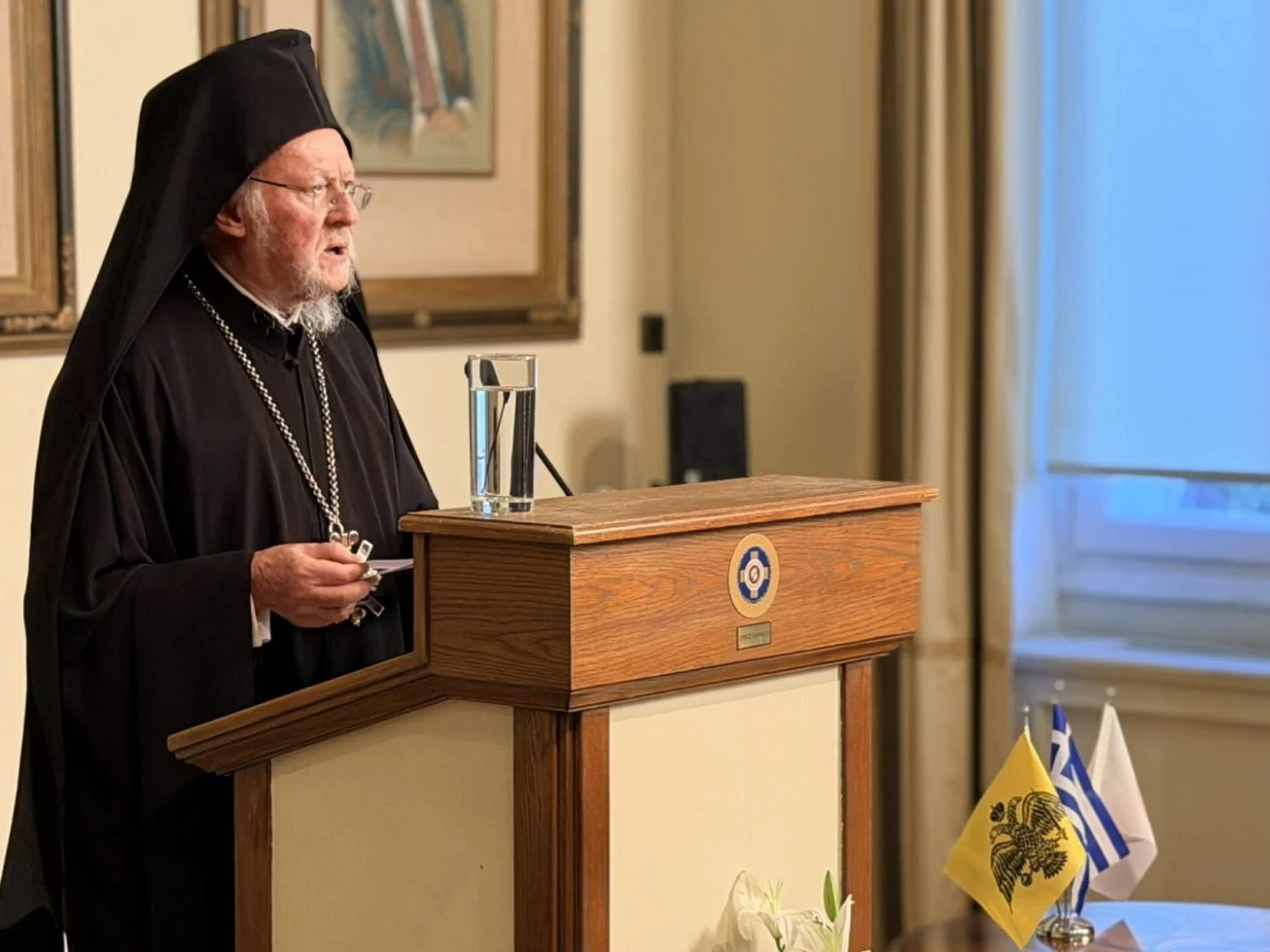
Address of His All-Holiness Ecumenical Patriarch Bartholomew
Most Honourable Mr Mayor of Athens,
Most Honourable Mr President of the Municipal Council, together with its esteemed members,
Most Reverend brother Hierarchs,
Your Excellencies and Honourable representatives of Authorities and Institutions,
Most Honourable Archons,
Distinguished assembly,
Christ is Risen!
We are grateful for the honour bestowed upon our Modesty by the Municipality of Athens, in awarding us the distinction entitled “Protection of Environmental Heritage.” Conscious that this great honour passes to the Holy Great Church of Christ, which we have served for 65 years, 35 of them as its Primate, we glorify the all-giving Lord for all that He has abundantly granted to us, knowing that nothing we have accomplished throughout this long course is our own achievement. All things are grace and gift, heavenly blessing and a gift from above. Glory be to God for all things!
It is an undeniable reality that the natural environment in our time is under threat as never before. It has been said that today there is unfolding “a third world war against nature,” the result of the Promethean titanism of modern man. Unfortunately, the observation of Lynn White still holds true: we humans consider ourselves “superior to nature, we scorn it, and we are ready to use it to satisfy even our most trivial whims.”
In our age, humanity, which has achieved remarkable advances in science, technology, economic life, and other fields, cannot boast about its stance toward creation. We know, yet we act as if we did not know. At the same time, the dominant global model of economic development dangerously intensifies environmental problems and works against the true interest of humanity. The exclusive orientation of economic activity toward profit maximisation ultimately benefits neither economic development nor the common good.
The initiatives of the Ecumenical Patriarchate for the protection of the natural environment are widely known. We take pride in the fact that the Great Church of Christ was the first to highlight the ecological principles and traditions of Christianity. The ecological witness of the Church of Constantinople has inspired parliaments, political leaders, universities, environmental organisations, other Churches and religions. It has prompted theology to study the spiritual and ethical dimensions of the ecological problem, to present the ecological content of Christian cosmology and anthropology, the Eucharistic use of creation, the ecological message of asceticism, and more.
The entire life of the Church, faith, divine worship, communal life, has an ecological character and reference; it is a form of “practical ecology.” Faith in Christ does not render man passive, but makes him a free and dynamic being, who sees the world as a field of responsibility and of fulfilling God’s command “to till… and to keep” (Gen. 2:15) creation. In this spirit, our Metropolises, parishes, and monasteries have implemented and continue to develop various actions for the protection of the natural environment, ecological education programs, and other related initiatives. All these have contributed to the inclusion of ecological themes in ecumenical dialogue and interreligious cooperation. More broadly, we have addressed every person of good will, calling for cooperation in protecting the “very good” creation.
From the beginning, we approached the ecological crisis as a social problem and highlighted the connection between environmental and social issues, emphasising that the destruction of the natural environment primarily and more intensely affects the poor of the earth and vulnerable populations. Climate change and its social consequences, foremost among them the rise of migration due to climate reasons, confirm this truth today.
The exploitation and destruction of creation is not only a sin against God’s creation, but also against humanity. It is unthinkable to care for man while destroying his “home,” and vice versa. Protection of nature and active respect for our fellow human beings are two sides of the same coin, interconnected and inseparable attitudes. Ecological responsibility expresses our duty to hand over to future generations a sustainable natural environment. The Holy and Great Council of the Orthodox Church (Crete, 2016) emphasised that “we must remember that not only present but also future generations have a right to the natural goods granted to us by the Creator.”
The central message of our Patriarchal Encyclicals is that the root of ecological and social problems, and of the many crises, is common, revealing a crisis of our freedom, of its content and direction, a spiritual and moral distortion. The “double solidarity” with creation and with humanity is the new ethos, the appropriate response to contemporary challenges. No vision for the future has value unless it includes social justice and an intact natural environment.
Distinguished attendees,
Indifference toward suffering humanity and toward the destruction of the natural environment is indifference toward God and His commandments. Where there is love and mutual support, where we struggle to protect nature, God is glorified.
The Church resists every development that undermines the human person created in the image and likeness of God and threatens the integrity of creation. This resistance does not signify conservatism or rejection of progress and change, but expresses confidence in human freedom and responsibility. How “conservative” is it, really, to act so that the old city is not turned into masses of concrete, to protest so that cobblestones are not replaced by asphalt, that a stream does not become an industrial channel, that an olive grove is not turned into building plots?
We consider particularly important and necessary the ecological orientation of education, given that the destruction of the natural environment begins in the human mind, and it is from there that healing must begin. As has been said, “an education without ecological orientation is a parody of education.” Childhood and adolescence are especially favorable periods for ecological and humanistic awareness, so that the younger generation may develop a sense of the sacredness and beauty of creation and of the human person. Education can draw from the unique, eco-friendly, person-centered, and communal ethos of Orthodoxy valuable ideals and high values for its mission. The view that Orthodox ethos cannot be lived within modern cultural conditions is entirely unfounded.
With these thoughts and sentiments, we once again warmly thank, in the person of the Honorable and beloved Mayor, the historic Municipality of Athens for awarding this distinction to our humble person. We also congratulate those who crafted the medal, and, expressing our joy for your gracious presence, we convey to you the blessing of the Holy Great Church of Christ and invoke upon you and your loved ones the grace and infinite mercy of the Risen Christ.
Photos: Nikos Papachristou
H αναδημοσίευση του παραπάνω άρθρου ή μέρους του επιτρέπεται μόνο αν αναφέρεται ως πηγή το ORTHODOXIANEWSAGENCY.GR με ενεργό σύνδεσμο στην εν λόγω καταχώρηση.
 Ακολούθησε το ORTHODOXIANEWSAGENCY.gr στο Google News και μάθε πρώτος όλες τις ειδήσεις.