The feast of Saint Sabbas at the Patriarchate
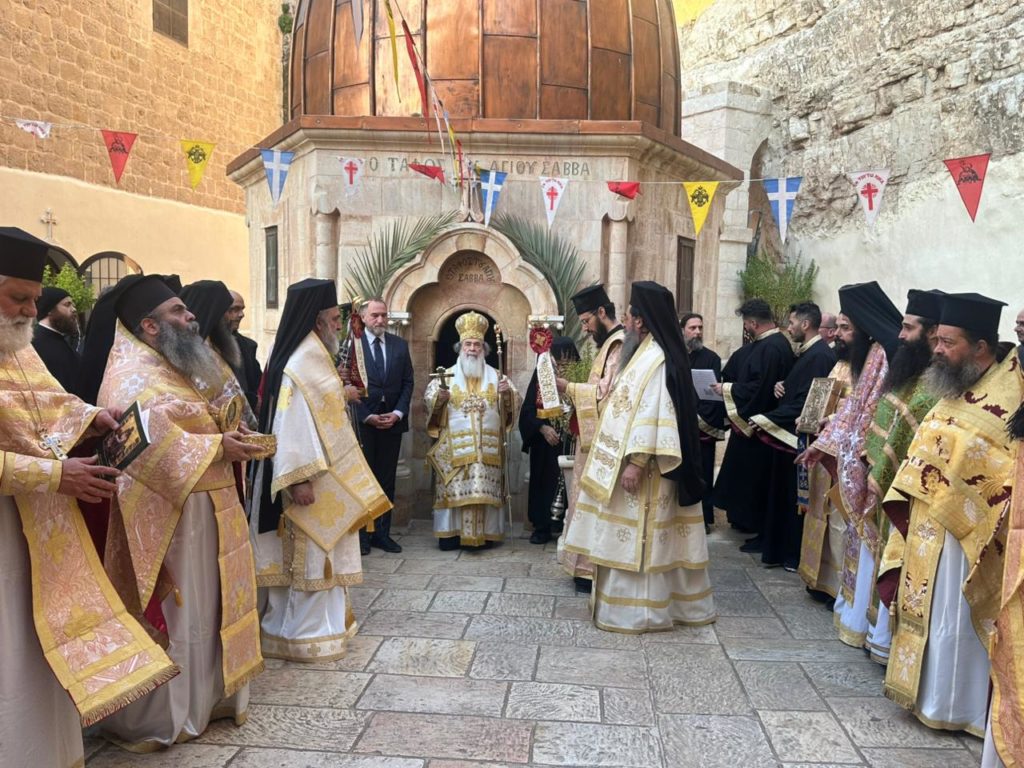
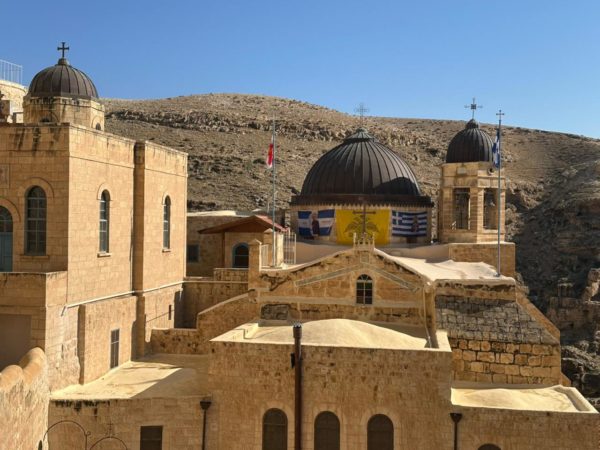
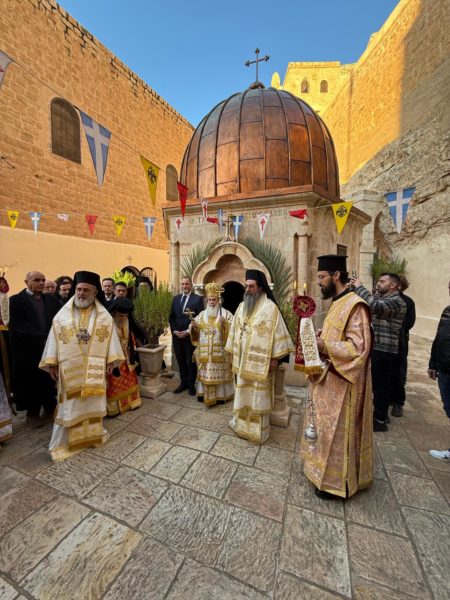
On Thursday, 5/18 December 2025, the Patriarchate celebrated the feast of our Venerable Father Sabbas the Sanctified at the Holy Lavra founded by him, situated on the bank of the Kidron Brook, on the right as one descends towards the Dead Sea.
Saint Sabbas arrived in the Holy Land from his homeland of Cappadocia in the year 456 and became a disciple of Saint Euthymius the Great and Saint Theoctistus, under whose guidance he practised asceticism for many years. Having fulfilled his monastic obediences, adorned himself with every virtue, and sought a blessing, he withdrew and founded a Lavra for monks advanced in the ascetic life, thus establishing the Lavraetic way of life in the Holy Land. The typikon of this life was disseminated throughout the whole inhabited world as a monastic rule, and he guided thousands of monks into life in Christ. He also laboured together with Saint Theodosius the Cenobiarch, contending against the heresy of Monophysitism and defending the Orthodox faith of the one essence and two natures in Christ God, in accordance with the dogma of the Fourth Ecumenical Council of Chalcedon.
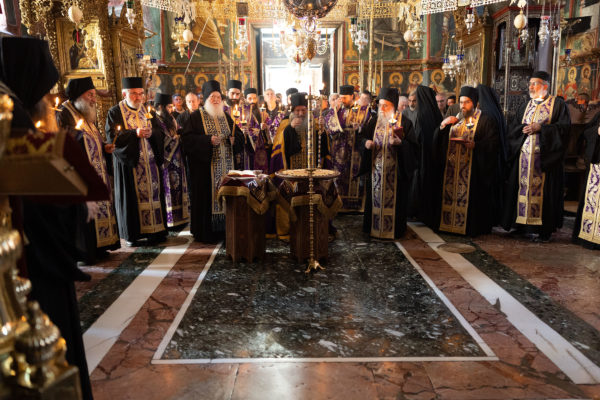
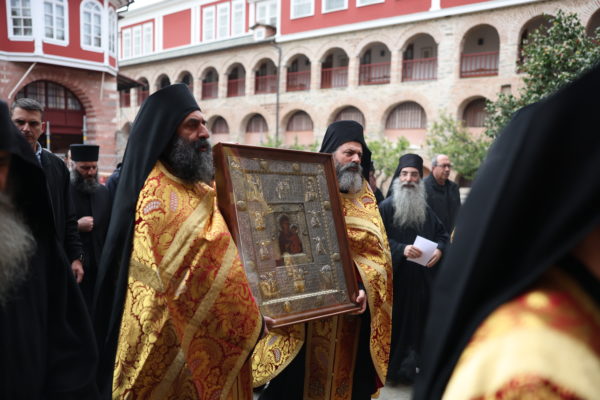
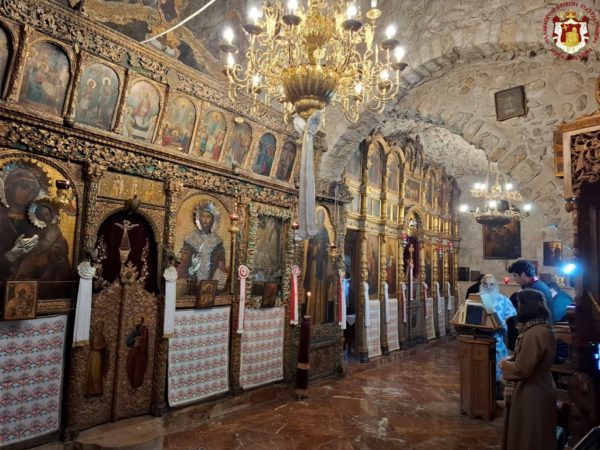
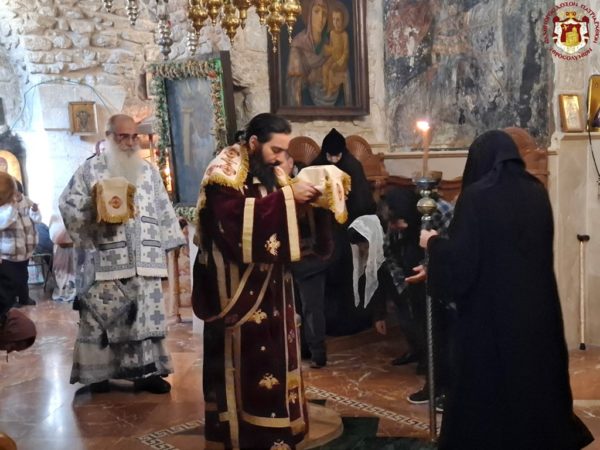
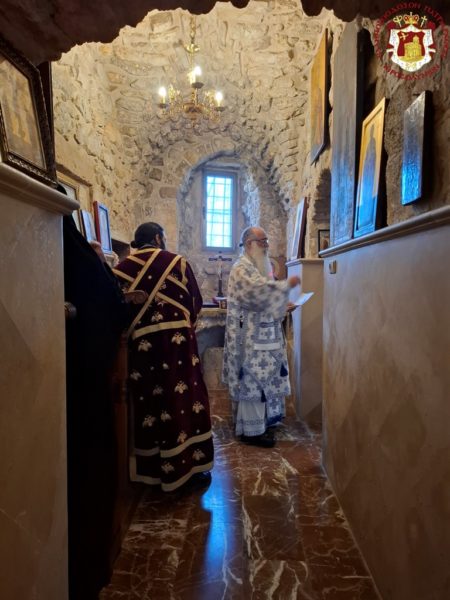
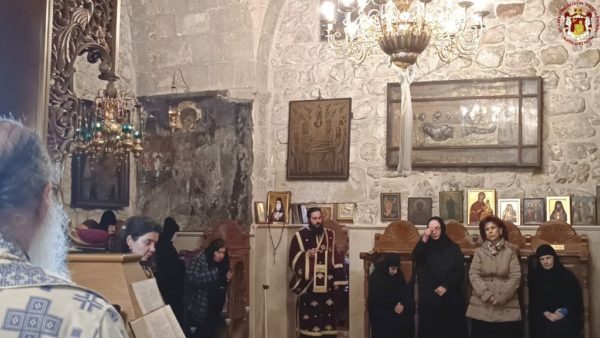
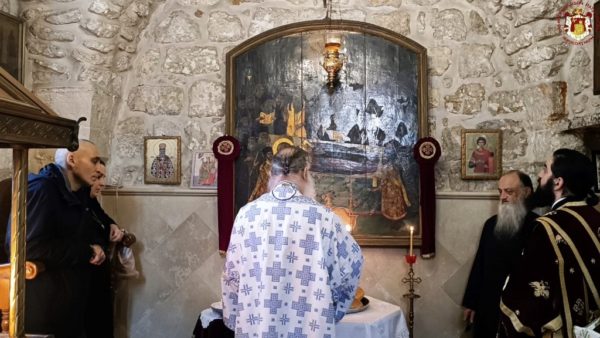
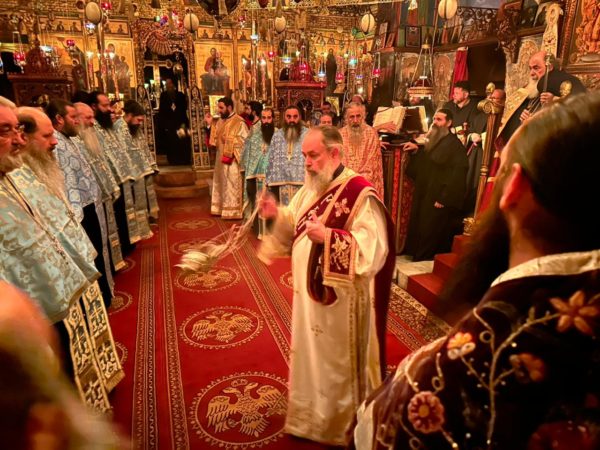
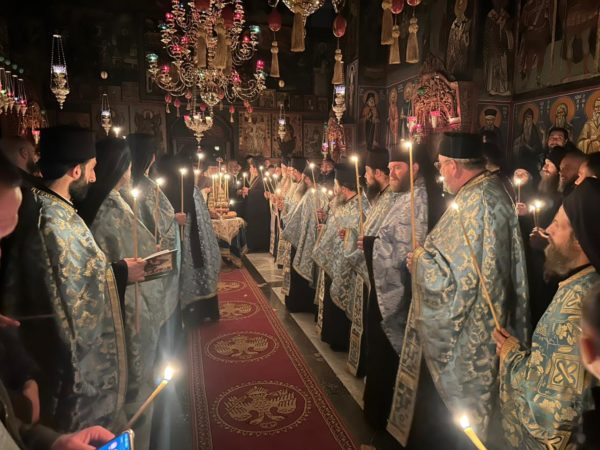
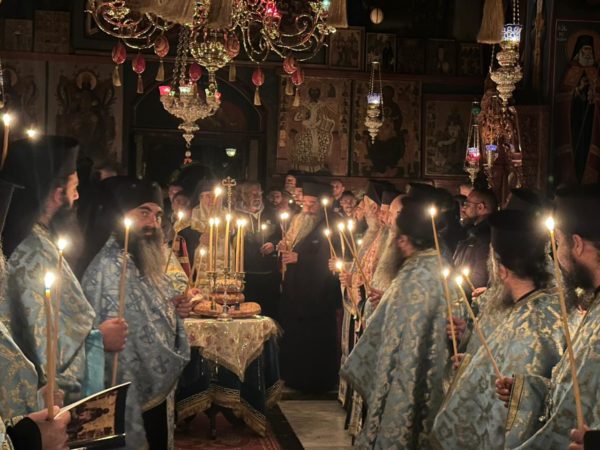
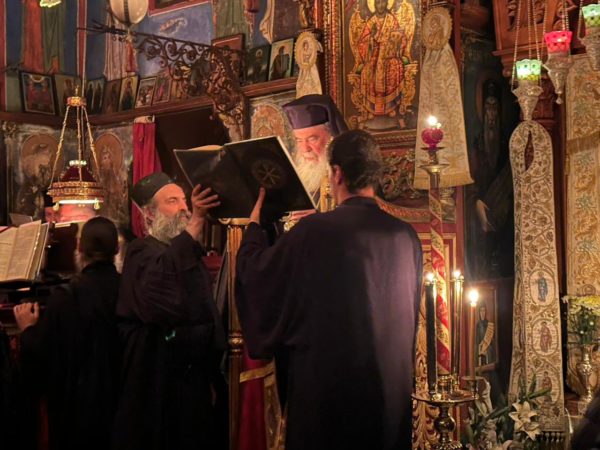
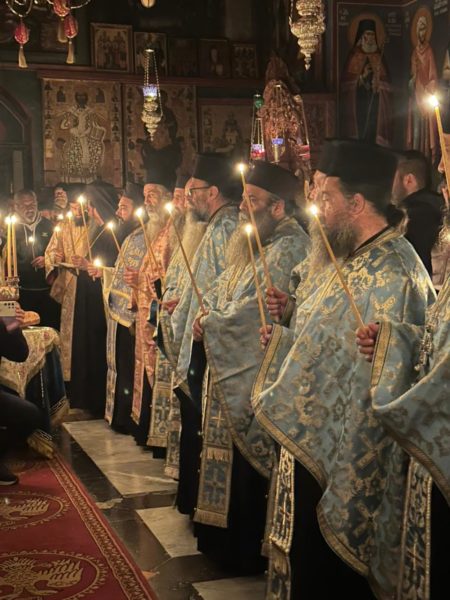
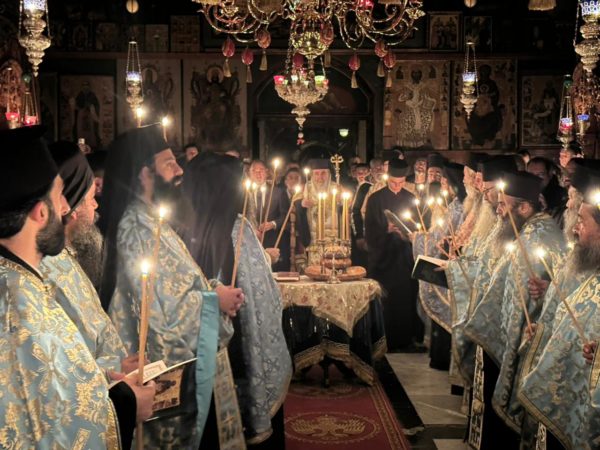
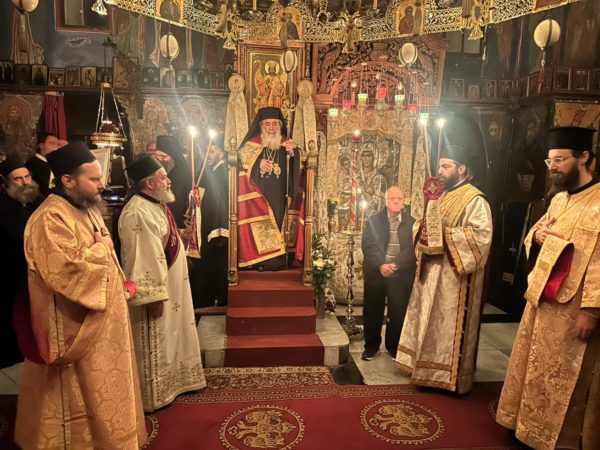
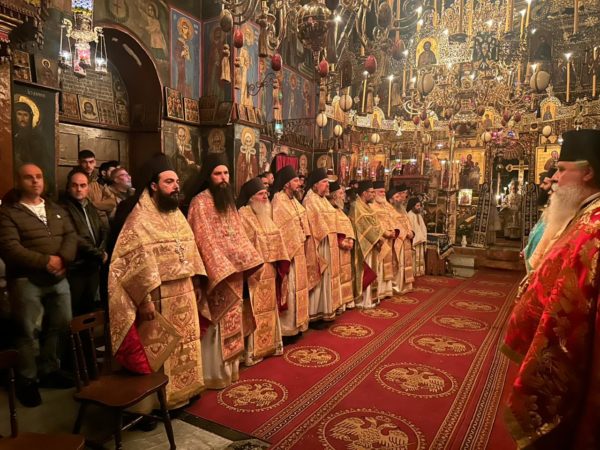
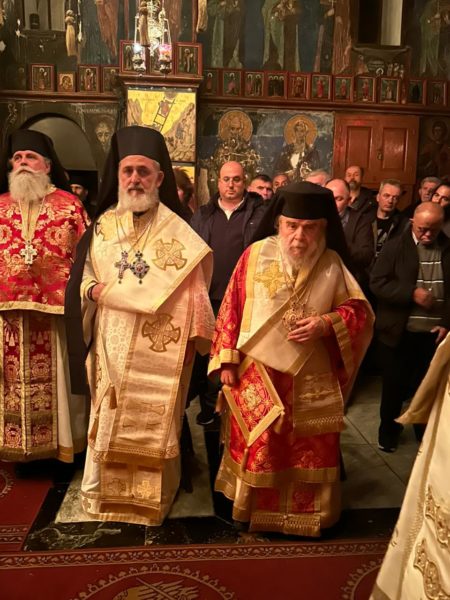
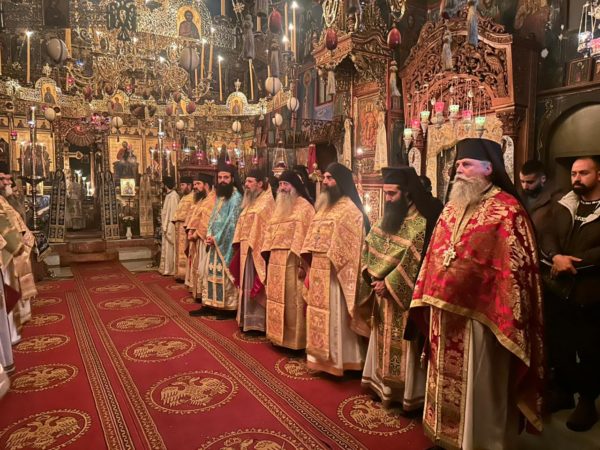
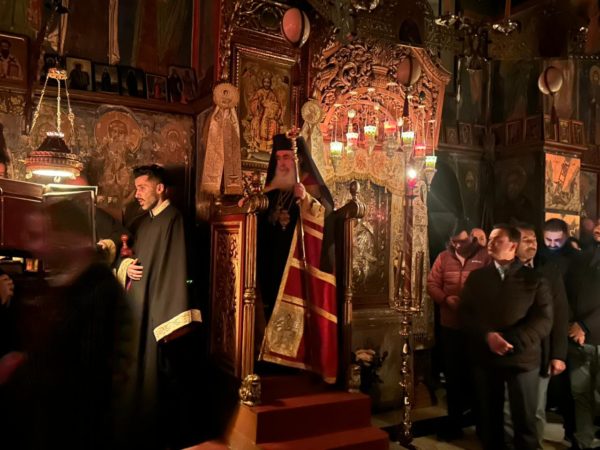
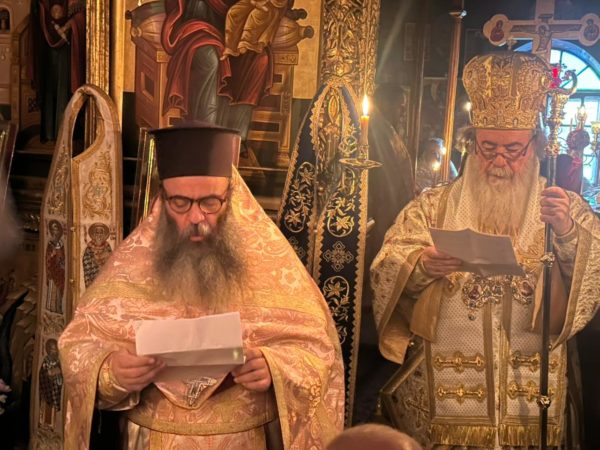
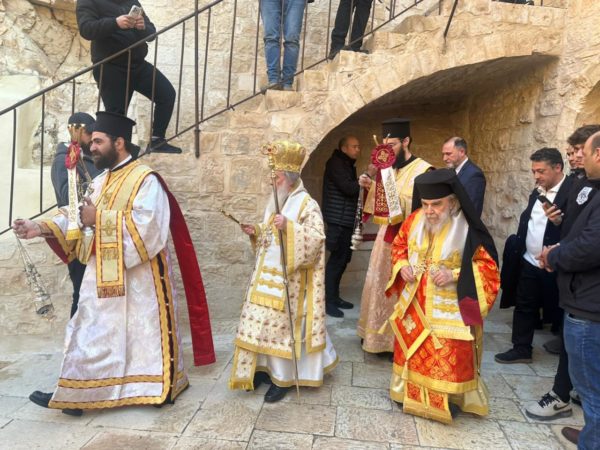
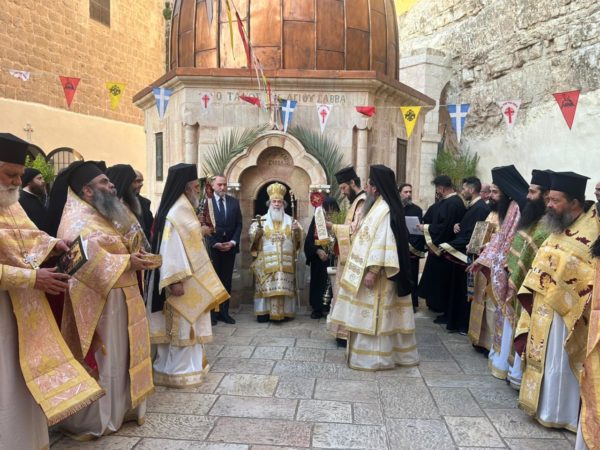
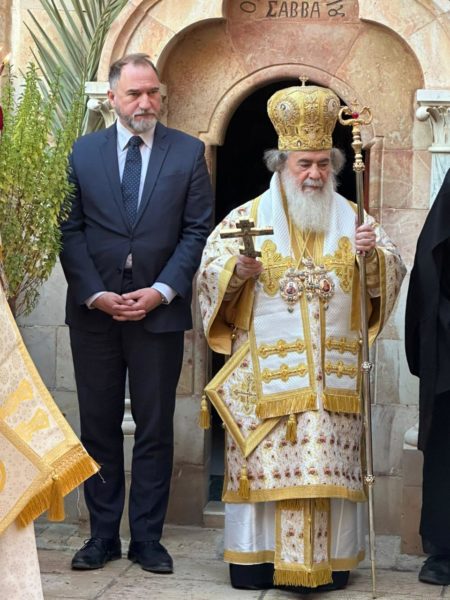
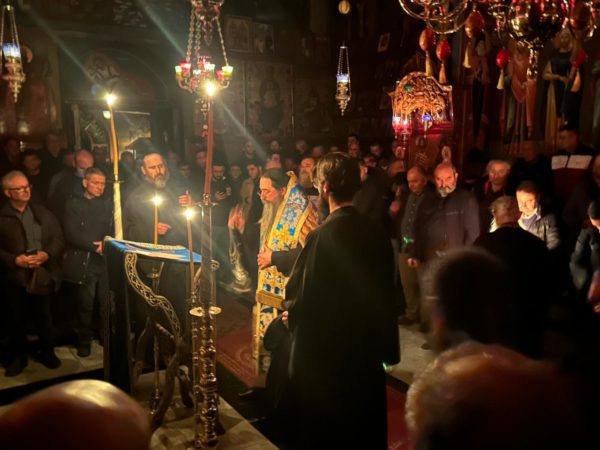
In honour of this luminary of the monastic life, an all-night vigil was celebrated at his Lavra, presided over by His Beatitude our Father and Patriarch of Jerusalem Theophilos. Concelebrating with him were the Elder Chief Secretary, His Eminence Archbishop Aristarchos of Constantina; His Eminence Metropolitan Makarios of Acre–Ptolemais, who was the presiding hierarch of the entire three-day feast; and His Eminence Metropolitan Joachim of Helenopolis, together with Holy Sepulchre hieromonks, including the Archimandrites Niphon, Markellos, and Dositheos; priests from the neighbouring regions of Beit Jala and Bethlehem; the representative of the Russian Ecclesiastical Mission in Jerusalem; the Archdeacon Mark; and the Hierodeacon Eulogios. The chanting was led by the chief cantor of the Church of the Holy Sepulchre, Deacon Efstathios, assisted by the Greek choir on the right and the Arabic-speaking choir on the left under Mr Elias. Faithful attended from Bethlehem, the Shepherds’ Field, and Beit Jala, in the presence of the Consul General of Greece in Jerusalem, Mr Dimitrios Angelosopoulos, and Mr Ypsilantis, under the care of the Spiritual Father of the Lavra, Archimandrite Eudokimos.
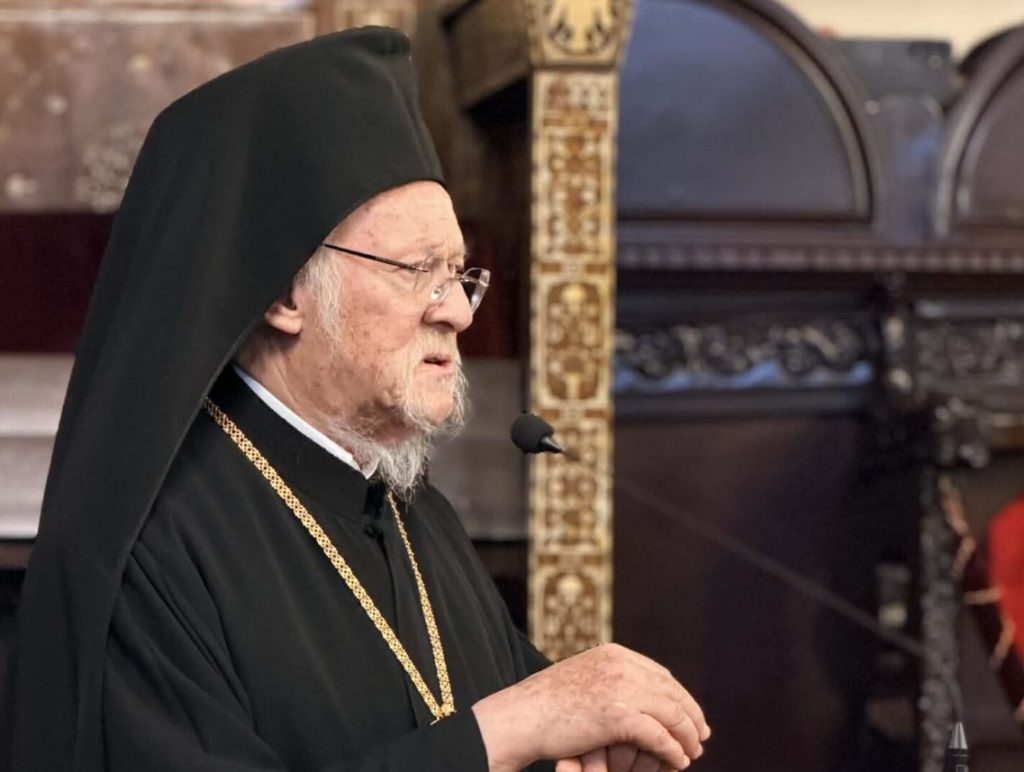
Before the Holy Communion, His Beatitude delivered a Sermon, beginning with the words of the Psalmist:
“O send out Thy light and Thy truth: let them lead me; let them bring me unto Thy holy hill, and to Thy tabernacles” (Ps. 42:3).
Reverend holy Fathers and Brethren,
Devout Christians and pilgrims
The grace of the Holy Spirit has gathered us all in this renowned Lavra of Sabbas the Sanctified, that we may celebrate his most holy memory and offer thanksgiving unto the Holy Trinity God, Who glorifies those who glorify Him.
Our Venerable Father Sabbas, having diligently cultivated virtue from infancy, became an instrument of the Holy Spirit, Who guided his steps to the Holy Places. There he came to know the teachers and citizens of the Palestinian desert, Saint Theodosius the Cenobiarch and Saint Euthymius the Great, who, according to the testimony of his biographer Cyril of Scythopolis, “sent him to the blessed Theoctistus, declaring to him that he should take care of him as one who, by the grace of Christ, would excel in the monastic way of life.”
While the God-minded Sabbas was under the spiritual guidance of Saint Theoctistus, he hearkened to the Davidic saying: “O send out Thy light and Thy truth: let them lead me; let them bring me unto Thy holy hill, and to Thy tabernacles” (Ps. 42:3). Truly our Venerable Father was led unto the holy mountain and into the tabernacles of the Lord; wherefore his hymnographer most vividly proclaims: “Having preserved the image undefiled, and having established the mind as ruler over destructive passions through ascetic struggle, thou hast ascended, as far as was possible, to the likeness. For, manfully constraining nature, thou didst hasten to subject the worse to the better, and to enslave the flesh to the spirit. Wherefore thou wast shown to be the summit of monks, a citizen of the desert, a trainer of those who run well, a most exact rule of virtue…”
According to the Wisdom of Solomon, the righteous Sabbas received “the kingdom of glory, and the diadem of beauty from the Lord’s hand” (cf. Wis. Sol. 5:16), “for God proved him, and found him worthy for Himself: as gold in the furnace hath He tried him, and received him as a burnt offering” (cf. Wis. Sol. 3:5–6).
In other words, the ascetic struggles—that is, the trials, manifold temptations, and steadfast patience—of the wondrous Sabbas rendered him worthy of divine mercy. For Saint Sabbas consumed himself upon the altar, becoming an offering and a sacrifice unto God, as the divine Apostle Paul exhorts: “Be ye therefore followers of God, as dear children; and walk in love, as Christ also hath loved us, and hath given Himself for us an offering and a sacrifice to God for a sweetsmelling savour” (Eph. 5:1–2).
Interpreting these words, Saint John Chrysostom declares: “Become a lover of love; for by it thou wast saved, and by it thou hast become a son.” A lover of this divine love also became the blessed Sabbas, hearkening to the Lord’s commandment: “But I say unto you, Love your enemies… that ye may be the children of your Father which is in heaven” (Matt. 5:44–45). This love of Christ leads man unto perfection, as the Lord Himself proclaims: “Be ye therefore perfect, even as your Father which is in heaven is perfect” (Matt. 5:48).
Wherefore the hymnographer of the Church proclaims: “A divine and venerable ladder, leading unto the heavens, hath thy God-inspired life been made manifest unto all… O blessed Sabbas, converser with Angels, co-dweller with the Righteous and the Saints…”
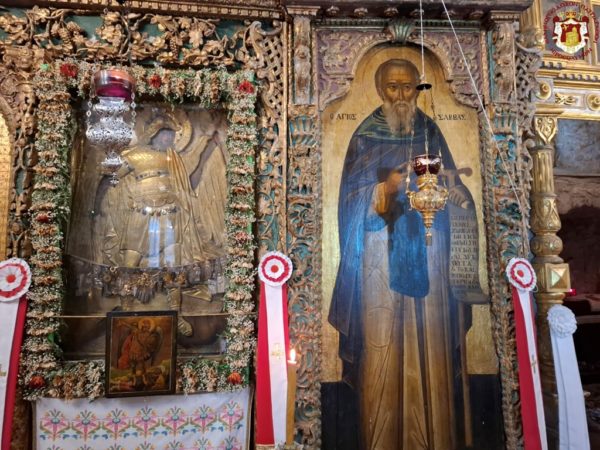
And in confirmation of these praises, the hymnographer also makes mention of the sacred reliquary bearing his fragrant body, saying: “Thy shrine pours forth spiritual fragrance, richly gladdening thy children, who stand about thee in sincerity, O Venerable one, calling to mind thine angelic way of life, the splendour and glory granted unto thee, and thine everlasting delight.”
The remembrance of our God-bearing Father Sabbas, celebrated today through the mystery of the Divine Eucharist, does not refer merely to an event of the past, but rather to a distinguished spiritual personage among the choir of ascetics—one who, as a living spiritual mirror, receives and reflects the glory of the Lord. Thus, the divine Apostle Paul testifies: “But we all, with open face beholding as in a glass the glory of the Lord, are changed into the same image from glory to glory, even as by the Spirit of the Lord” (2 Cor. 3:18).
Interpreting these words, Saint John Chrysostom declares: “Just as silver, when placed before the rays of the sun, itself sends forth rays… so also the soul, when purified and made brighter than silver, receives a ray from the glory of the Spirit and reflects it in turn.”
This transformation is holiness—that is, the righteousness and truth of Christ—concerning Whom Saint John the Evangelist proclaims: “In Him was life; and the life was the light of men. And the light shineth in darkness; and the darkness comprehended it not” (John 1:4–5).
Indeed, my beloved brethren, there is no doubt that we live in times wherein “the spirit of error” (1 John 4:6) prevails—that is to say, falsehood, injustice, and darkness in their manifold forms. And this spirit of error is none other than the spirit of Antichrist, as Saint John the Evangelist bears witness: “And every spirit that confesseth not that Jesus Christ is come in the flesh is not of God: and this is that spirit of antichrist, whereof ye have heard that it should come; and even now already is it in the world” (1 John 4:3).
Wherefore let us prepare ourselves during the present course of the Nativity Fast, that we may worthily receive, in the humble cave of Bethlehem, Christ come in the flesh, from the pure blood of the Theotokos and Ever-Virgin Mary, by the overshadowing of the Holy Spirit. And together with the hymnographer let us cry aloud: “O God-minded Sabbas… thou who hast cast down the spirits of delusion, pure vessel of the Holy Spirit, guide of monks, exact measure of self-restraint, of humility the conspicuous height, ever-flowing fountain, sea of healings: entreat Christ, beseech Christ, O Venerable one, that there be granted unto the Church concord, peace, and great mercy.”
Again and again entreat Christ, O our Venerable Father Sabbas, that peace and righteousness may be granted unto our afflicted region and unto the whole world. Amen. Many and blessed returns.”
After the Dismissal, the boiled wheat was distributed, and a monastic meal followed.
As He departed and bestowed his blessing upon the Fathers of the Lavra, His Beatitude passed, according to custom, also through the Holy Monastery of Abba Theodosius the Cenobiarch.
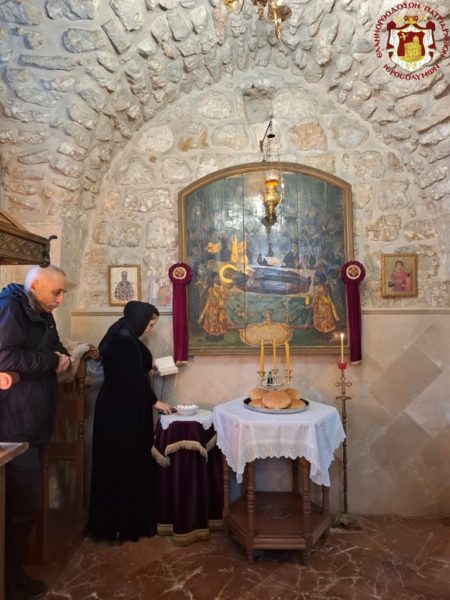
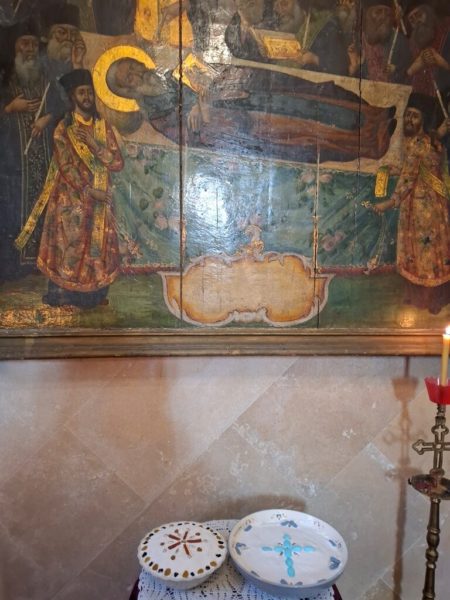
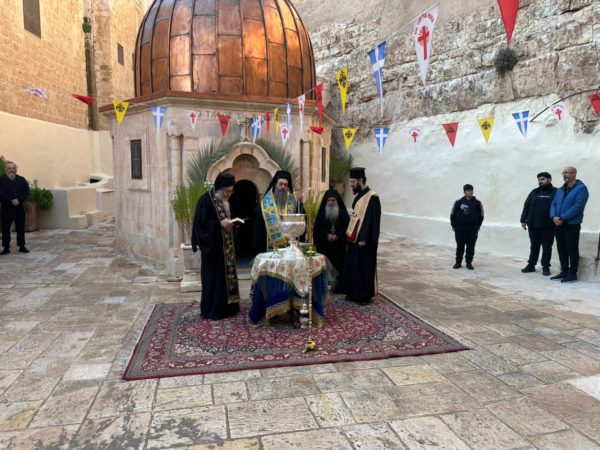
The feast of Saint Sabbas the Sanctified was likewise celebrated at the festal Holy Chapel dedicated to him at the Holy Monastery of the Holy Archangels in the Old City of Jerusalem, with Vespers and the Blessing of the Loaves in the evening, and the Divine Liturgy in the morning, celebrated by His Eminence Archbishop Aristovoulos of Qatar, with the participation of the monastic sisterhood and many faithful from Jerusalem. Following the Divine Liturgy, the faithful were offered hospitality by the Hegumen of the Monastery, His Eminence Archbishop Demetrios of Lydda.
From the Chief Secretariat




H αναδημοσίευση του παραπάνω άρθρου ή μέρους του επιτρέπεται μόνο αν αναφέρεται ως πηγή το ORTHODOXIANEWSAGENCY.GR με ενεργό σύνδεσμο στην εν λόγω καταχώρηση.
 Ακολούθησε το ORTHODOXIANEWSAGENCY.gr στο Google News και μάθε πρώτος όλες τις ειδήσεις.