The feast of the Prophet Elijah at the Patriarchate
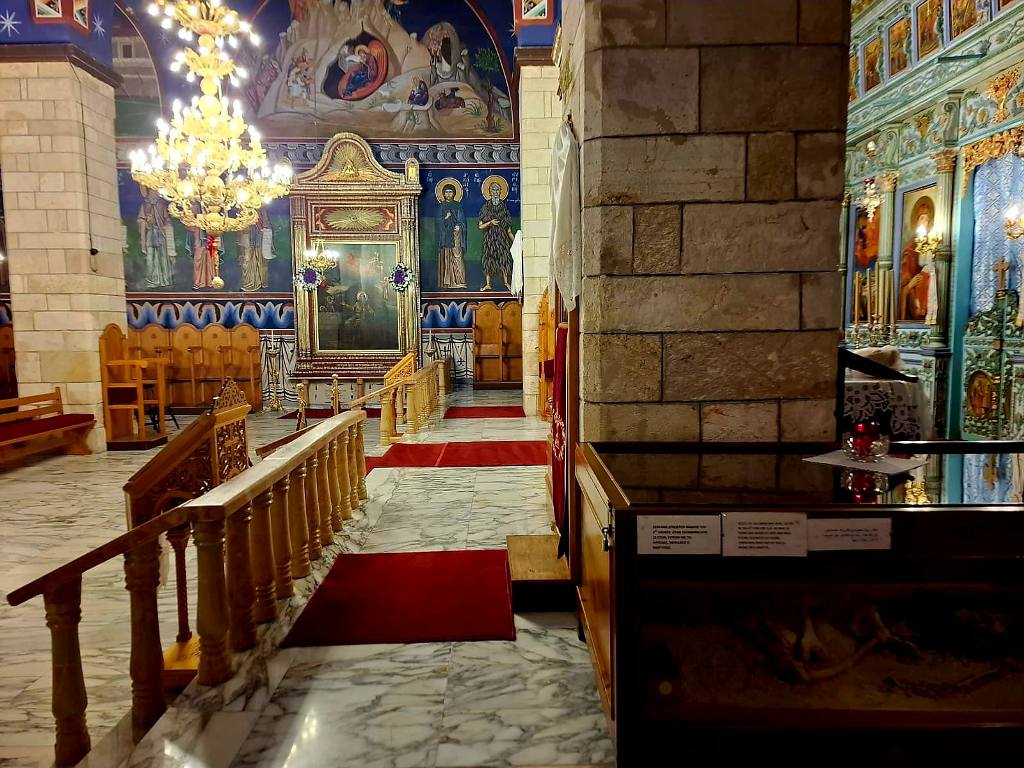
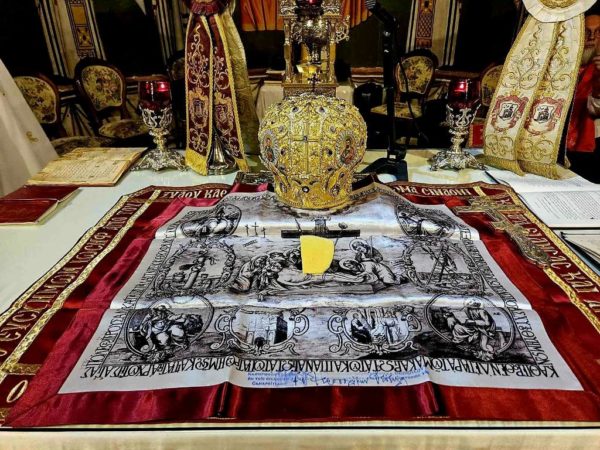
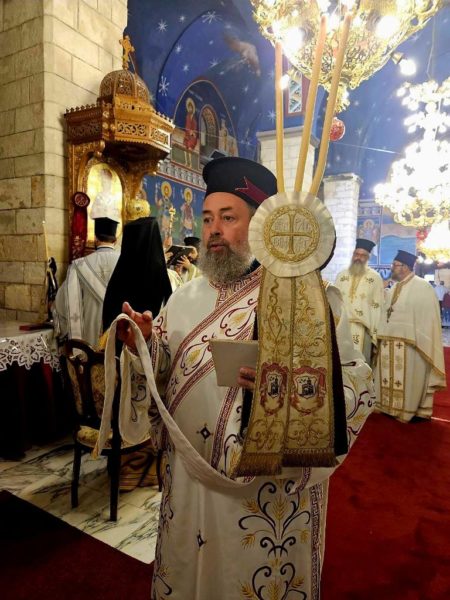
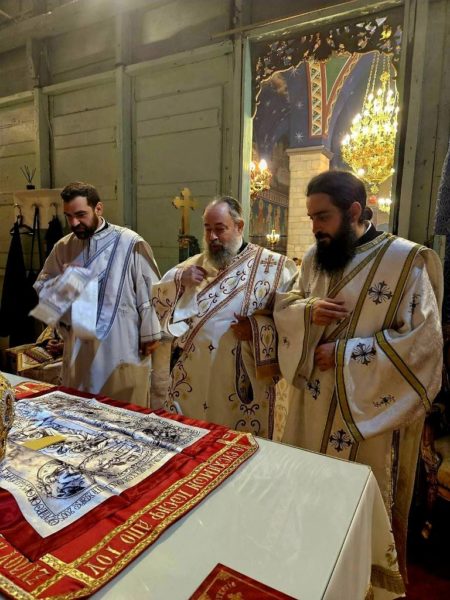
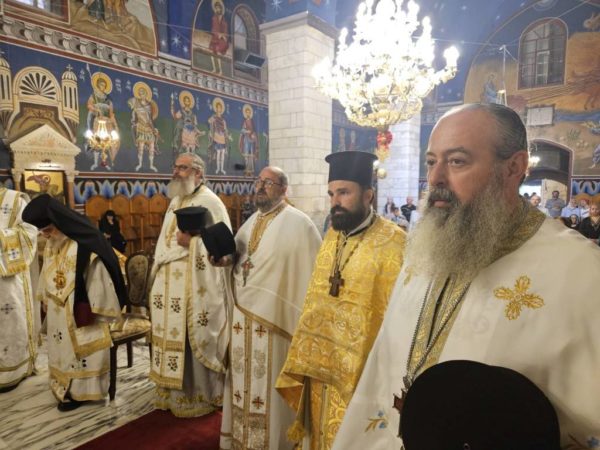
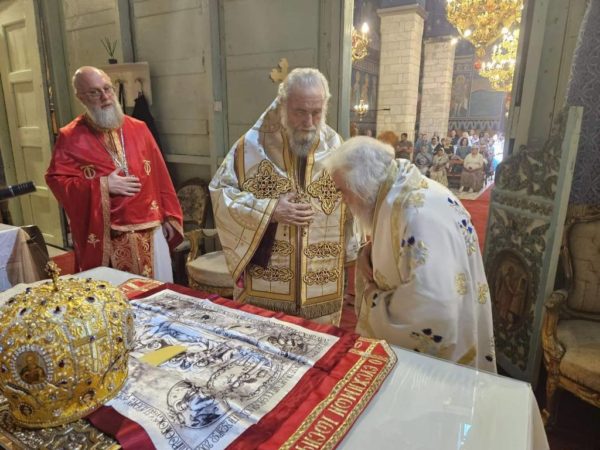
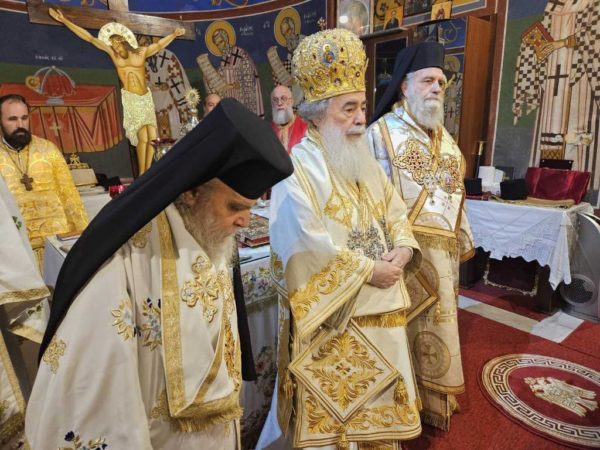
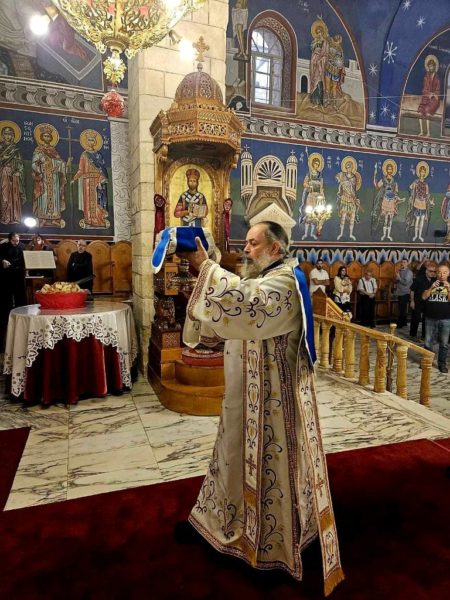
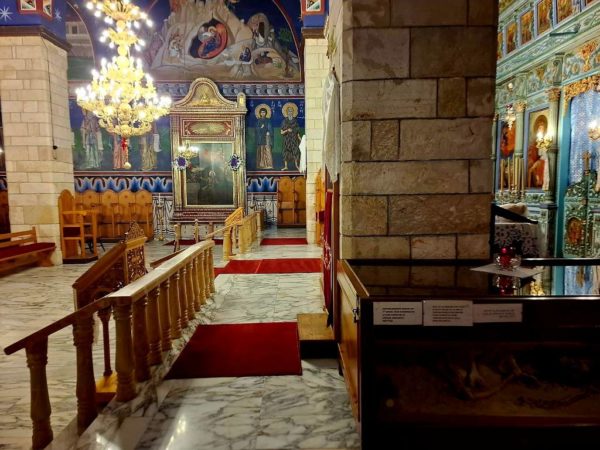
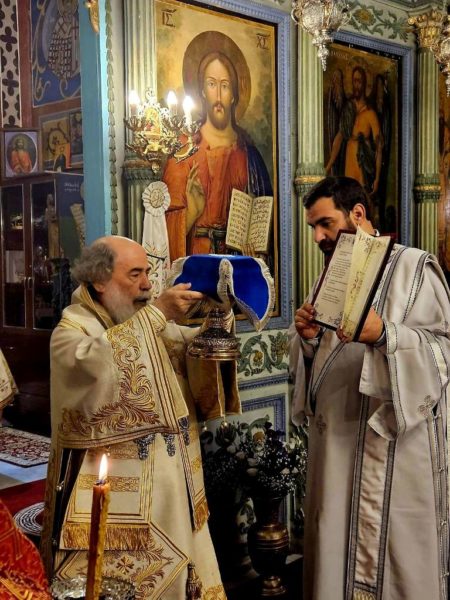
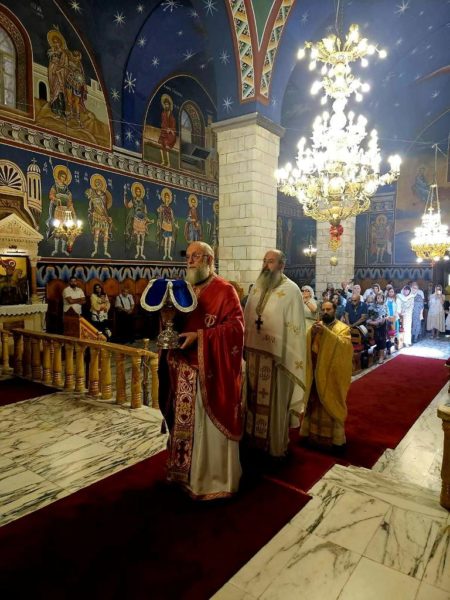
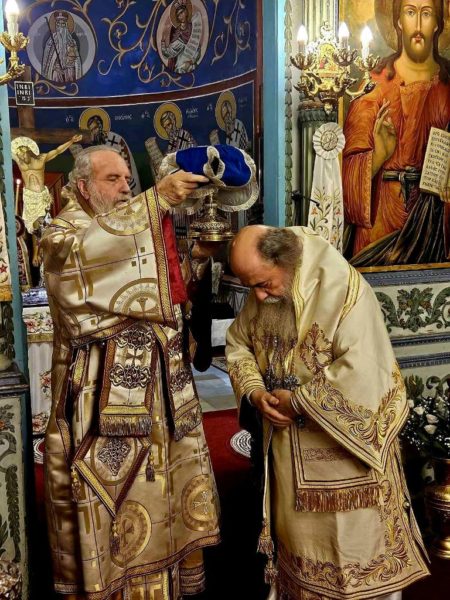
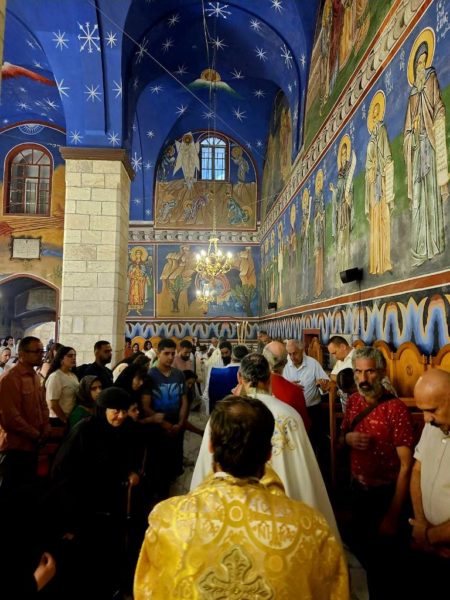
On Saturday, the 20th of July / 2nd of August 2025, the Patriarchate celebrated the commemoration of the holy, glorious Prophet Elijah the Thesvite at his Holy Monastery, situated near the ancient Monastery of the “Kathisma” (Seat) of the Theotokos, between Jerusalem and Bethlehem.
In this feast, the Church remembers the marvellous works of God through the Prophet Elijah upon Mount Carmel, when the Prophet Elijah brought down fire from heaven and consumed the stones of the altar, and afterwards slew the prophets of shame (1 Kings 18:20–40).
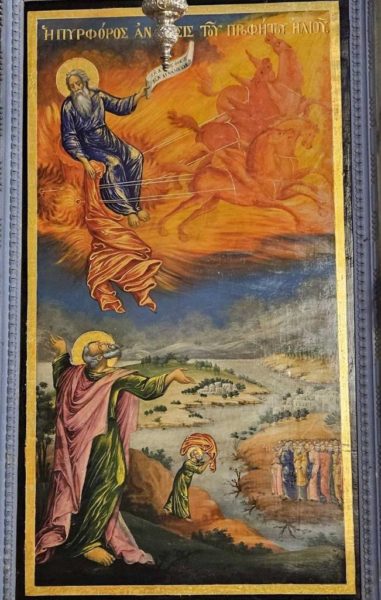
Many are the signs of God wrought through the Prophet Elijah recorded in the books of the Old Testament, such as the raising of the widow’s son in Zarephath of Sidon (1 Kings 17:17–24) and his ascent into the heavens in a chariot of fire (2 Kings 2:1–14), when he also cast his mantle upon the Prophet Elisha, with which he parted the Jordan as upon dry ground.
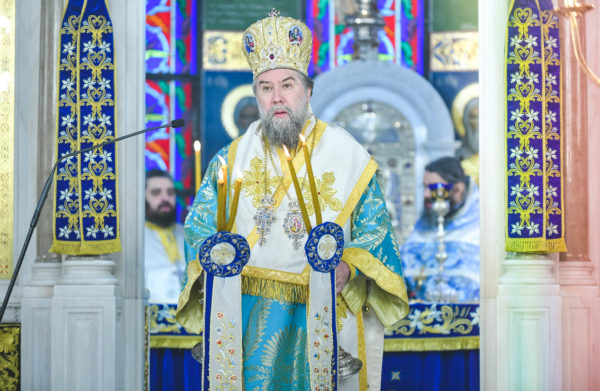
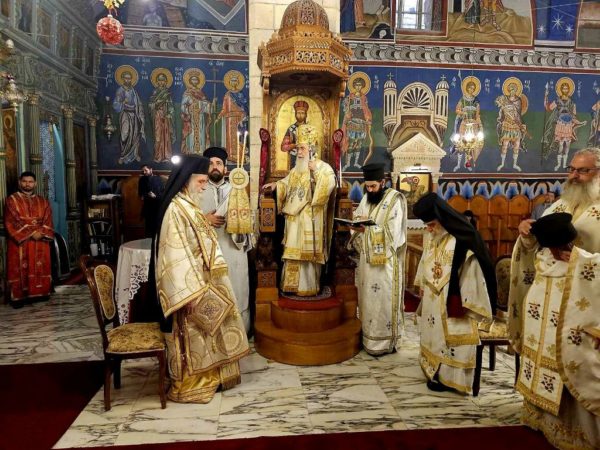
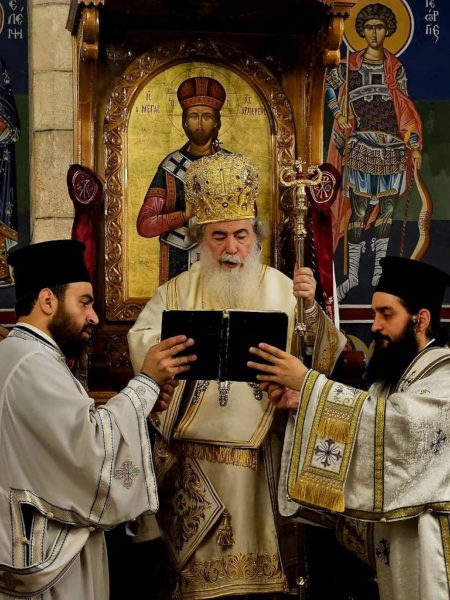
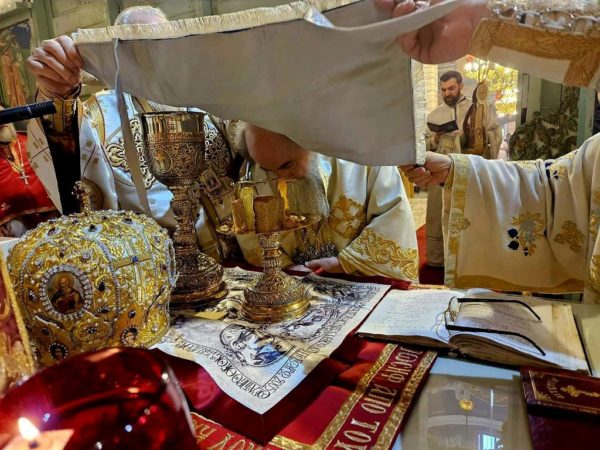
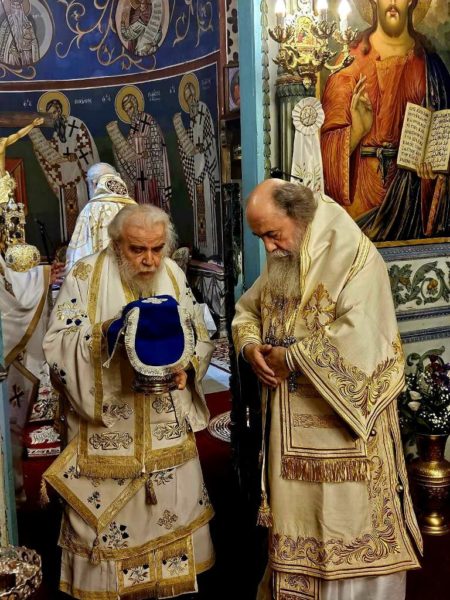
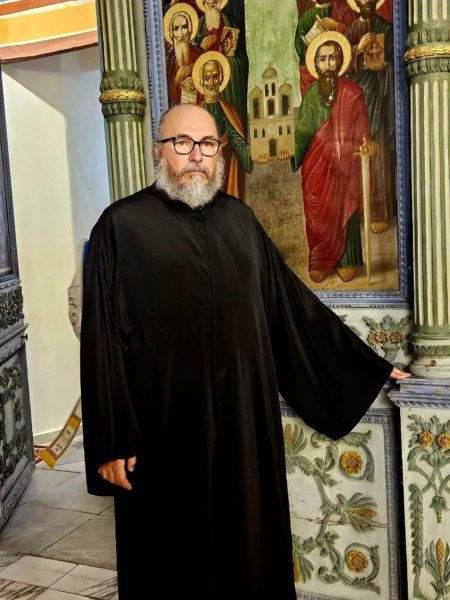
At this Holy Monastery, Great Vespers was celebrated on the eve by His Eminence Archbishop Philoumenos of Pella, and in the morning, the Divine Liturgy was presided over by His Beatitude our Father and Patriarch of Jerusalem Theophilos III. Concelebrating with Him were their Eminences, Metropolitan Hesychios of Capitolias and Archbishop Aristarchos of Constantine, the Elder Kamarasis Archimandrite Nectarios, and the Arabic-speaking Priests Fr. Elias, Fr. Charalambos-Farrah, Fr. Yousef, and Fr. George.
Hieromonk Symeon and Dr. Yacoub chanted on the right in Greek, and on the left the Arabic-speaking choir of Saint James, under Mr. Rimon Kamar, with the participation of a devout congregation, to whom His Beatitude preached the following sermon:
“The one sanctified before his conception, the incarnate Angel, the fiery mind, the heavenly man, the divine forerunner of Christ’s second coming, Elijah the glorious, the foundation of the Prophets, hath spiritually gathered together the lovers of feasts to celebrate his divine memory; by whose intercessions do Thou preserve Thy people, O Christ our God, from every harm, keeping them unharmed from the evil one.”
Beloved brethren in Christ,
Pious Christians and pilgrims,
The grace of the God-inspired Prophet Elijah hath gathered you all today in his Holy Monastery that bears his name, that we may festally honour his divine memory. The Prophet Elijah, who prophesied for twenty-five years (921–896 B.C.), is recognised as the foundation, that is, the very basis, of all the Prophets of the Old Testament, even though he wrote no book. He is called “a man of God” (1 Kings 17:24), for he was distinguished by his exceeding divine zeal. “Elias, for being zealous for the la,w was taken up into heaven” (1 Maccabees 2:58), the writer of the Maccabees writes. “Who wast taken up in a whirlwind of fire, in a chariot of fiery horses”, Sirach writes (Sirach 48:9).
It is to be noted that the zeal of Elijah the Thesvite concerns not only the true worship of the one living God, Who revealed Himself in human history, but also the divine justice, which was overlooked by the rulers and the mighty ones of his time. These did Elijah the Thesvite confront with his fiery zeal, as Sirach declares: “Then stood up Elias the prophet as fire, and his word burned like a lamp” (Sirach 48:1).
In other words, the zeal of Elijah is likened unto fire and a burning lamp. Wherefore “he brought a famine” (Sirach 48:2), that is, drought and hunger (1 Kings 17:1). “By the word of the Lord he shut up the heaven” and likewise “he slew the prophets of Baal” (1 Kings 18:30–40). “By the word of the Lord he shut up the heaven, and also three times brought down fire” (Sirach 48:3), that is, by his word he closed the heavens from rain, and at the same time he commanded and three times fire came down from heaven. “Who broughtest a dead man from death” (Sirach 48:5), that is, who raised from the dead the son of the widow (1 Kings 17:21–23). “Who heardest the rebuke of the Lord in Sinai, and in Horeb the judgment of vengeance” (Sirach 48:7), that is, he who received dreadful revelations — rebukes on Sinai and the condemnatory decrees of God on Horeb (1 Kings 19:8–18). Here we behold that God is revealed unto Elijah in the very place where Moses saw the “back parts” of God (Exodus 33:23).
It is noteworthy that Elijah preacheth the true God also unto the Gentiles, that is, the idolaters. This proves that the purpose of the sacred history revealed in the world by God concerns not only one people or one group of men, but the salvation of the whole human race. According to the testimony of the writer of the Book of Kings, Elijah, who was mysteriously taken up by the “whirlwind”, that is, the tempest, in a chariot of fire, gave unto his disciple Elisha his prophetic spirit, that he might continue the universal redeeming work of God (2 Kings 2:1–18).
The prophetic word of Malachi: “Behold, I will send you Elijah the Thesvite before the coming of the great and dreadful day of the Lord” (Malachi 4:5), most clearly confirms the ineffable continuity of the Old and New Testaments, or rather, the unity in the Holy Spirit of the Prophets and the Apostles. We say this because the particular mission of the Prophet Elijah is “to turn the heart of the father to the son, and the heart of a man to his neighbour, lest I come and smite the earth with a curse” (Malachi 4:6), the Lord says by the mouth of the Prophet Malachi.
Interpreting this prophetic word, Saint Cyril of Alexandria says: because we are in many sins, the wondrous Prophet Elijah goes before us, for our benefit, guiding the people of the earth into concord and unity, so that all may come together into oneness through faith, and in this way may be saved at the Second Coming of the Judge.
To the question of the disciples: “Why then say the scribes that Elias must first come?” Jesus answered and said unto them, Elias truly shall first come, and restore all things (Matthew 17:10–11). By this answer, Christ confirms the truth of the prophecy of Malachi, quoting verbatim the statement of the scribes.
The glorious Elijah was also distinguished by the power of his prayer, wherefore the Apostle James, the Brother of the Lord, cites the Prophet Elijah as an example of the power of prayer, saying: “…The effectual fervent prayer of a righteous man availeth much. Elias was a man subject to like passions as we are, and he prayed earnestly that it might not rain: and it rained not on the earth by the space of three years and six months. And he prayed again, and the heaven gave rain, and the earth brought forth her fruit” (James 5:16–18).
It was the power of prayer that granted the Prophet Elijah the vision of God, when, being in the cave, he heard the word of the Lord: “And he said, Go forth, and stand upon the mount before the Lord. And, behold, the Lord passed by, and a great and strong wind rent the mountains, and brake in pieces the rocks before the Lord; but the Lord was not in the wind: and after the wind an earthquake; but the Lord was not in the earthquake: and after the earthquake a fire; but the Lord was not in the fire: and after the fire a still small voice. And there the Lord was” (1 Kings 19:11–12).
In other words, God appeared unto His righteous servant Elijah as a voice — that is, as the sound of a gentle breeze — in which breeze is prefigured the infinite loving-kindness of God, namely, the mystery of the Incarnation and becoming man of the Word of God, our Saviour Jesus Christ.
We too, beloved brethren, may become partakers of the experience of the vision of God of our righteous Prophet Elijah, through the power and energy of prayer, as the Lord saith: “And all things, whatsoever ye shall ask in prayer, believing, ye shall receive” (Matthew 21:22), and “Be careful for nothing; but in everything by prayer and supplication with thanksgiving let your requests be made known unto God” (Philippians 4:6), the divine Paul commands. Let us say along with the hymnographer: “To see God in the most subtle breeze, as far as it is possible to behold, do thou vouchsafe, O glorious one, having first refined thy body by ascetical practices; wherefore I implore thee by thy prayers (together with the intercessions of the Theotokos) to make fine the coarseness of my mind, and illumine me with the divine gleamings of repentance.” Amen! Many and peaceful returns!”
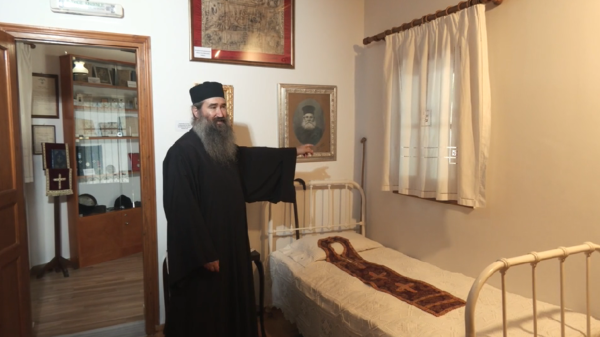
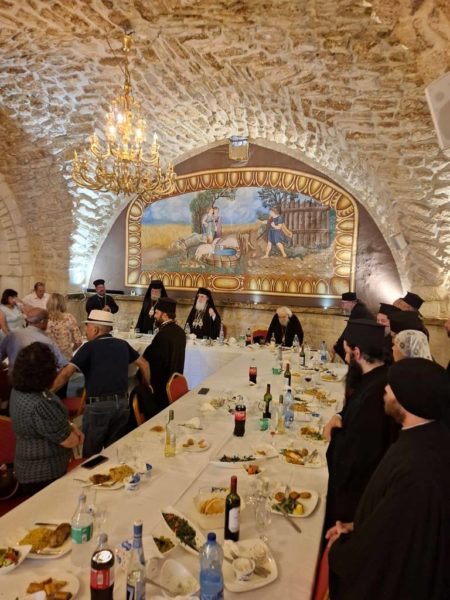
The Divine Liturgy was followed by a reception and a festal meal, offered by the hospitable, industrious, and active renovator Supervisor of the Monastery, Monk Achilleios.
From the Chief Secretariat
H αναδημοσίευση του παραπάνω άρθρου ή μέρους του επιτρέπεται μόνο αν αναφέρεται ως πηγή το ORTHODOXIANEWSAGENCY.GR με ενεργό σύνδεσμο στην εν λόγω καταχώρηση.
 Ακολούθησε το ORTHODOXIANEWSAGENCY.gr στο Google News και μάθε πρώτος όλες τις ειδήσεις.