Thessaloniki: Aristotle University Opens Interreligious Dialogue with the First Interfaith Forum
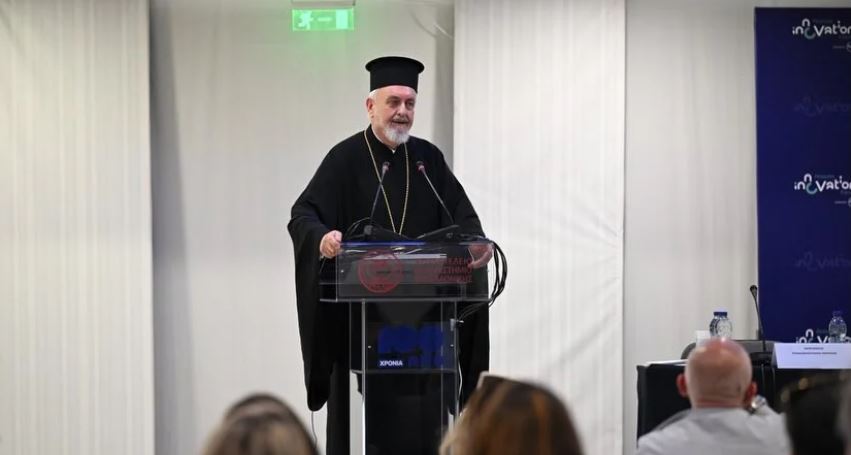
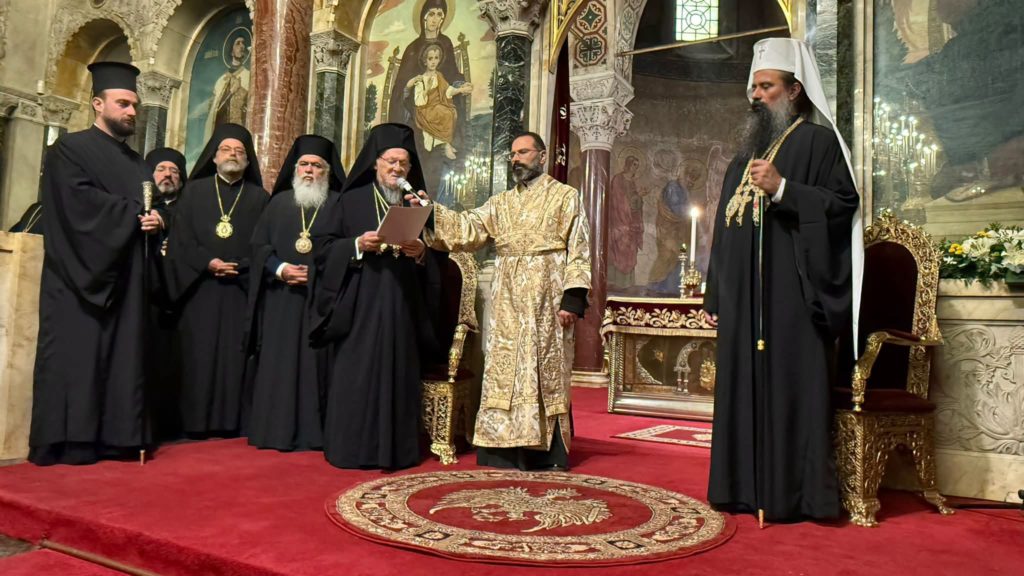
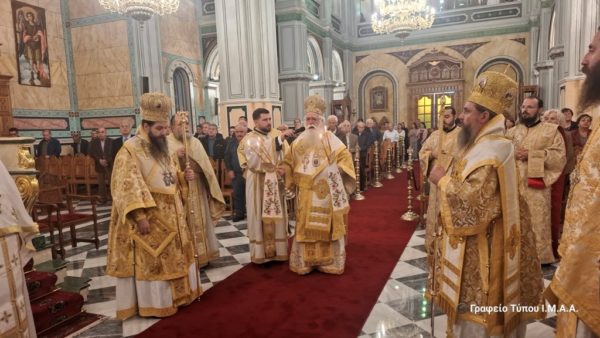
Thessaloniki and Aristotle University laid the foundations on Tuesday, 19 May 2026, within the framework of the Aristotle Innovation Forum, for the beginning of interreligious dialogue among the religions predominant in the city and for the establishment of an interfaith forum.
The Mayor of Thessaloniki, Mr. Stelios Angeloudis, addressing the event held in the “Emilios Riadis” Hall of the Thessaloniki International Fair, noted that “coexistence among states cannot exist unless there is peace among religions, and peace among religions cannot exist unless there is dialogue. What we call interreligious dialogue is a step that works toward making peace both the objective and the outcome. Warm congratulations are due for this initiative of the Vice-Rectorate of Aristotle University and Professor Maggioros, within the celebrations for the 100th anniversary of the founding and operation of Aristotle University and the Aristotle Innovation Forum, to hold such a discussion among religions. The presence today of the religious leaders of our city allows us, through the initiative of the country’s leading academic institution, to send a strong message of optimism that Thessaloniki, united, can build barriers against fundamentalism and intolerance and defend the value of human freedom and dignity.”
The Rector of Aristotle University, Mr. Kyriakos Anastasiadis, stressed that this meeting was not merely theological but was accompanied more profoundly by three elements that characterize the presence of Aristotle University as a space of coexistence and multicultural diplomacy: the need for technology and artificial intelligence to be accompanied by human-centred values, ethics, and discernment. “Thessaloniki is a historic meeting point, and the university is a safe space for dialogue. The younger generation, for whose sake we are here, needs more meaning and less noise, and needs to hear from religious leaders a dialogue that contributes to social cohesion, the management of multiculturalism, which Aristotle University puts into practice through its 17 English-language degree programs, and its internationalisation in action.” He emphasised that this meeting, taking place for the first time in the city, could become the precursor of a major effort toward the establishment of an interfaith forum and dialogue.
The Vice-Rector for Academic Affairs and Development of Aristotle University, Professor Nikolaos Maggioros, described Thessaloniki as a historic crossroads of peoples, cultures, and religions, possessing a strong tradition of coexistence among Christians, Jews, and Muslims. “Its ecumenical heritage, from Alexander the Great and Aristotle to the Apostle Paul, shaped a culture of extroversion and dialogue. Within this framework, the establishment of an Interfaith Forum can function as a modern institution of cooperation and mutual understanding. Aristotle University, with its international presence and its work for human development, can substantially support this effort. The Forum will contribute to the prevention of tensions, the strengthening of social cohesion, the education of young people in values of respect and democracy, and cooperation on contemporary challenges such as bioethics, artificial intelligence, and the environment. The establishment of a Local Interfaith Forum is not merely a new institution, but a substantial investment in peace, social cohesion, and human dignity, transforming Thessaloniki into a living example of a Local Ecumene.”
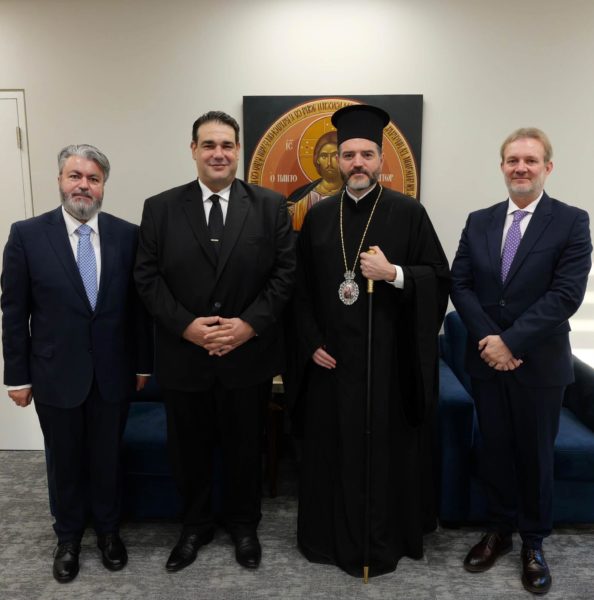
His Eminence Elder Metropolitan Emmanuel of Chalcedon referred to the importance of dialogue and of knowing the other person “so that you may come to realise that he is not, in fact, your enemy. For us, the other is an image of God and must be approached as such. Within this framework, the Ecumenical Patriarchate, for the past five decades, has begun dialogue not only with religious communities and churches, but also initiated engagement with Judaism and Islam so that the possibility of peaceful coexistence might exist, because together we can accomplish much.”
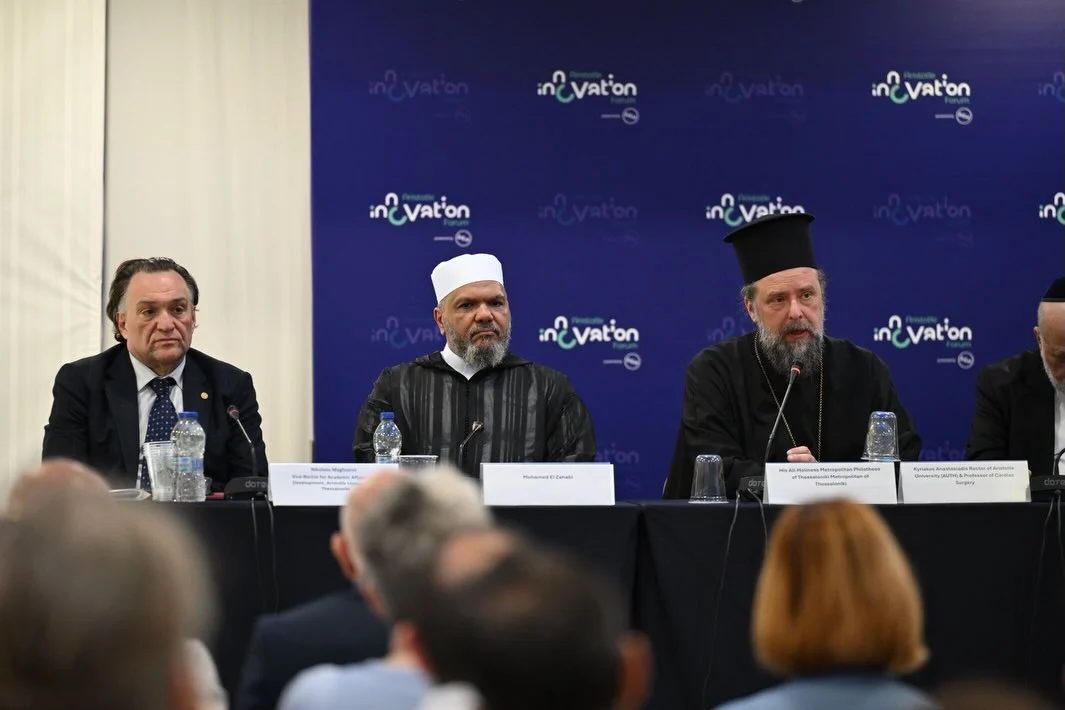
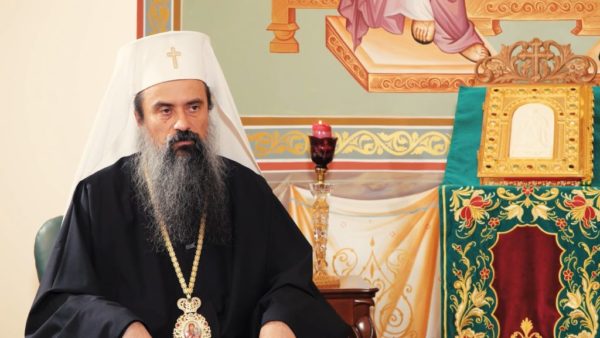
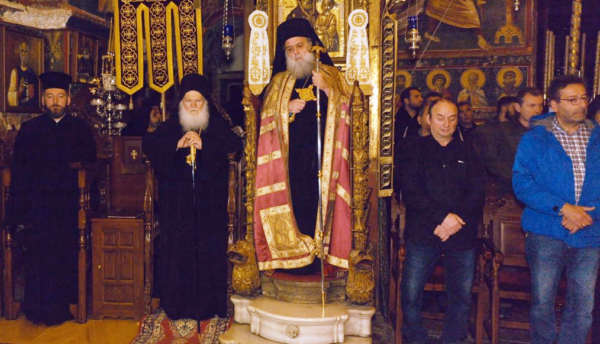
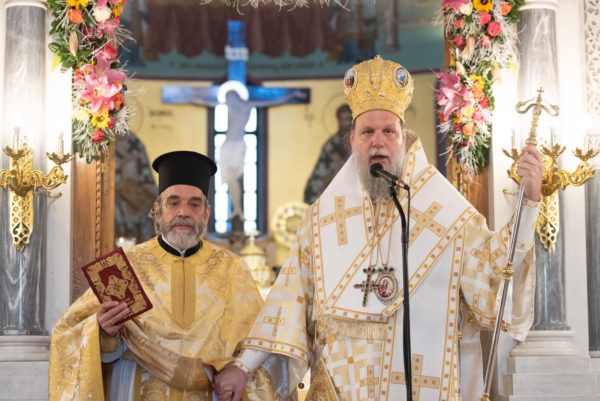
From his side, His Eminence Metropolitan Philotheos of Thessaloniki described how Thessaloniki is in ecclesiastical harmony with the Ecumenical Patriarchate, which has pioneered dialogue initiatives throughout the Orthodox Church. “Aristotle University is pre-eminently a place of dialogue, and the Orthodox Church could not be absent from an interreligious dialogue, since Thessaloniki belongs to the so-called New Lands and exists in harmony with the Ecumenical Patriarchate, which has pioneered questions of dialogue. Thessaloniki has historically been a place of encounter where other peoples and other religions also coexisted. It is our duty to live and exist together with others. The Holy Metropolis of Thessaloniki embraces this effort, and the Metropolises bless this undertaking which begins today.”
Dr Yitzhak Dayan, Rabbi of the Jewish Community of Thessaloniki noted that “it is a great honour to speak in Thessaloniki, in a place that was an important centre of Christianity. Interreligious dialogue is a necessity. We are called to speak, to listen, and to understand. The absence of communication can lead to tragedy. Through dialogue, prejudices cease and the other ceases to be a threat. Every tradition illuminates one aspect of truth and contributes to the advancement of humanity. May Thessaloniki become a place of understanding and hope.”
Imam Mohammed El Zahabi, President of the Religious Committee of the Islamic Mosque of Athens, described how all religions address humanity in order that we may become better people, come to know one another, and thus generate love. “You cannot love someone you do not know, and we cannot know one another if there is no dialogue. We need dialogue to find the path to love and to find one another so that wars may cease.”
The representative of the Roman Catholic Church, Father Georgios, remarked that since the conclusion of the Second Vatican Council, the Catholic Church has sought to engage in dialogue with other religions through ecumenism. “There is more that unites us than separates us. When we follow what God proposes to us, then we are on the right path.”
The Honorary Consul of Armenia, Akis Dagkazian, stressed: “We welcome this initiative. Thessaloniki is a crossroads of civilizations. In Armenia today all religions are free; we have mosques, and we are a people particularly committed to communication with all religions. We support every effort toward Christian and Orthodox dialogue. We stand ready to participate in every initiative that contributes to communication among religions.”
Sotirios Bouboukis, pastor of the Evangelical Church of Thessaloniki, characteristically noted that “the easy thing is to limit ourselves to parallel existence rather than coexistence. We are here because we are neighbours and we all wish to contribute to the peace and cohesion of our city. In order to help one another, we need to know one another. Through the AIF and the Interfaith Forum, we have a historic opportunity: to come to know each other and to write a new page in the history of our city.”
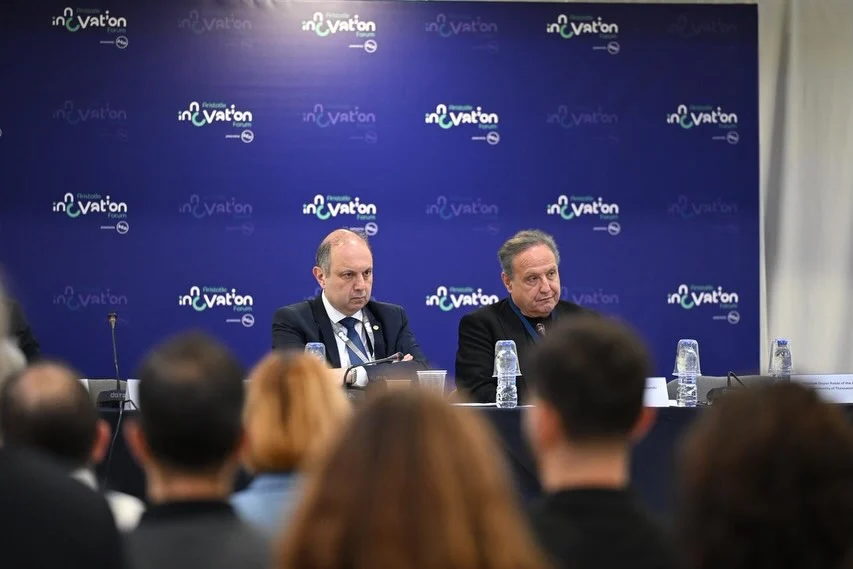
Finally, Professor Maggioros noted that the Centre for Human Development can become the spearhead of this effort, supporting and contributing in manifold ways and with scientific expertise “to various areas of life where, unfortunately, such contributions are greatly needed today.” The next meeting was scheduled for the following AIF.
It is noted that the Aristotle Centre for Human Development aims to support Greek Communities and the Greek Orthodox Church in the countries of North and Sub-Saharan Africa and the Middle East. At the same time, the Centre seeks to support development in these countries by functioning as a platform for the transfer of resources and technical assistance from the wealthy diaspora to poorer and developing regions, for the benefit of students from those countries. Students will be able to come to Greece on scholarship and pursue studies, so that upon returning to their countries they may assist in their development. Furthermore, the aim is to support young scientists from Greece who will have the opportunity to travel to these countries in order to undertake funded practical placements for a period of time (such as physicians, priests, teachers, professors, agronomists, engineers, lawyers, and others).
H αναδημοσίευση του παραπάνω άρθρου ή μέρους του επιτρέπεται μόνο αν αναφέρεται ως πηγή το ORTHODOXIANEWSAGENCY.GR με ενεργό σύνδεσμο στην εν λόγω καταχώρηση.
 Ακολούθησε το ORTHODOXIANEWSAGENCY.gr στο Google News και μάθε πρώτος όλες τις ειδήσεις.