The feast of the Holy Apostles Peter and Paul at the Patriarchate of Jerusalem
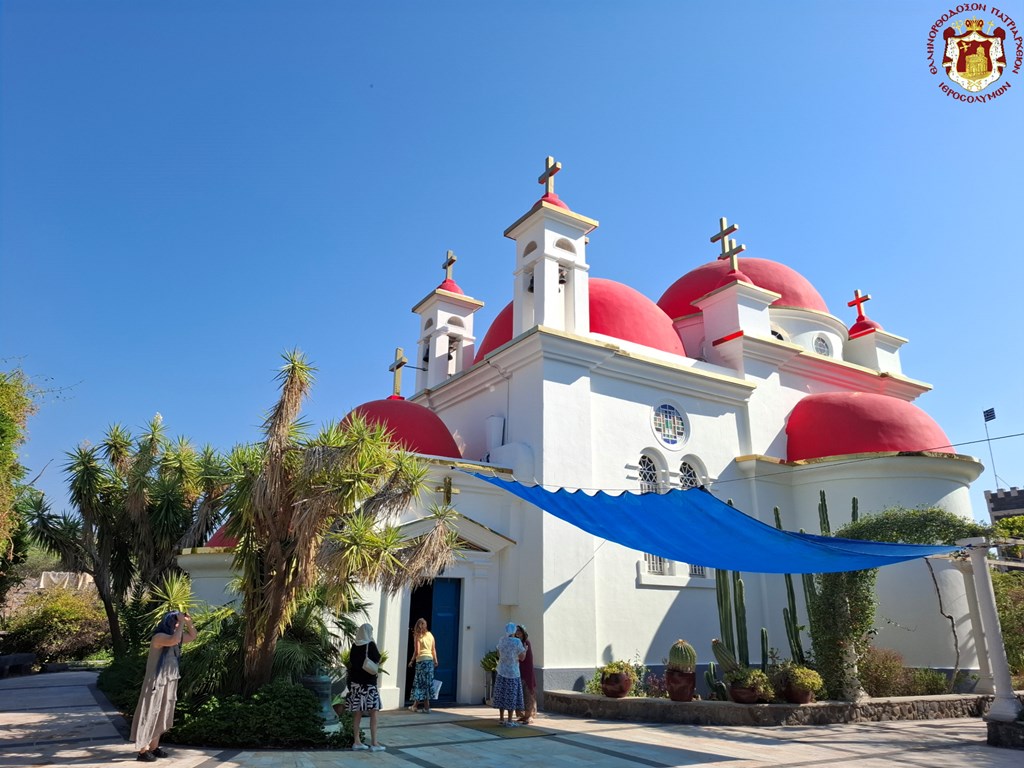
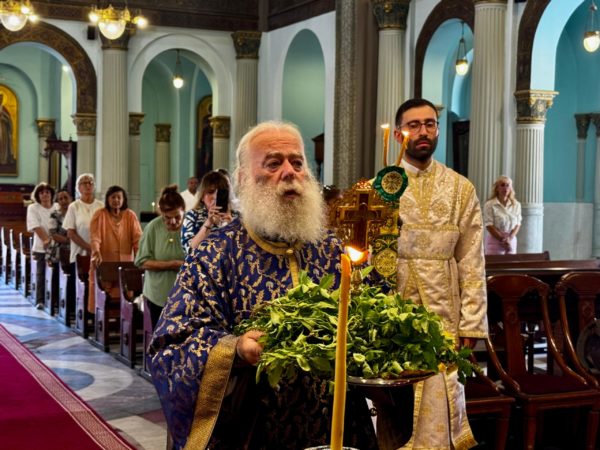
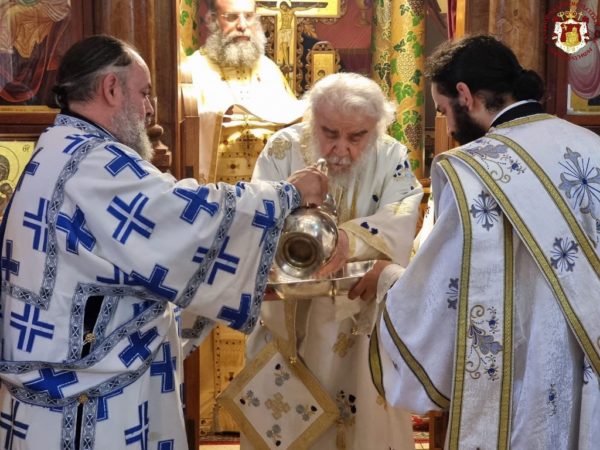
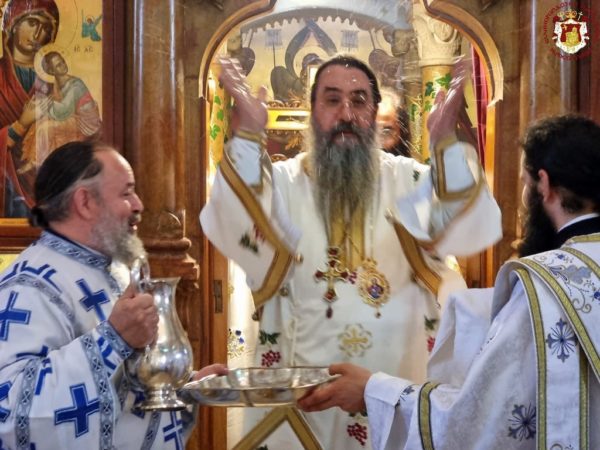
On Saturday, the 29th of June/12th of July 2025, the Patriarchate solemnly celebrated the commemoration of the Holy, Glorious, and Chief of the Apostles, Peter and Paul.
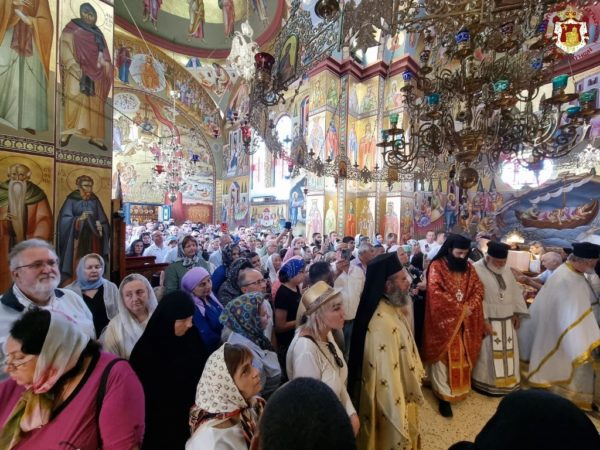
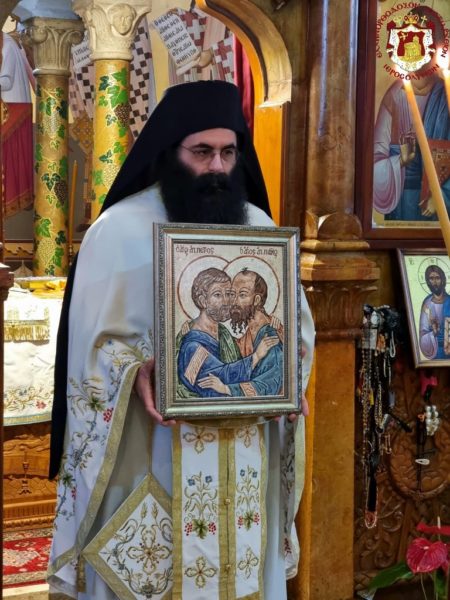
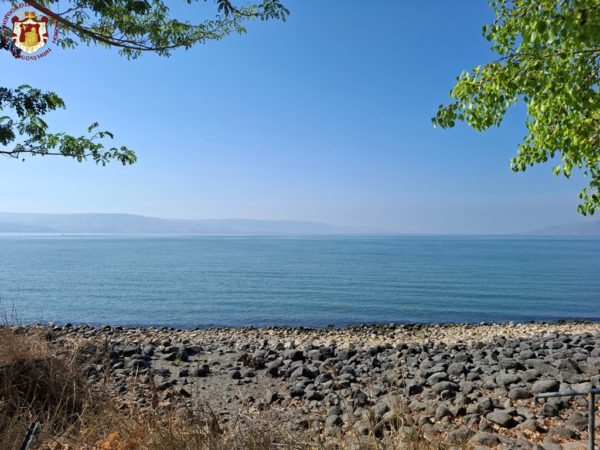
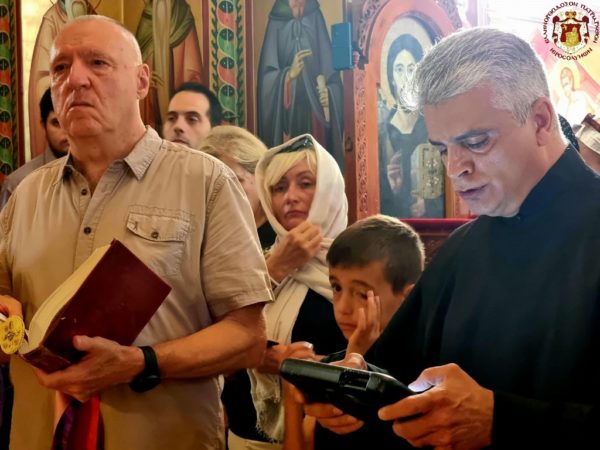
Their sacred memory was honoured in the Church dedicated to their names, which celebrates its patronal feast, located within the Holy Monastery at the city of Capernaum—a place frequently mentioned in the Holy Gospels, now lying in ruins upon the western shore of the Sea of Tiberias.
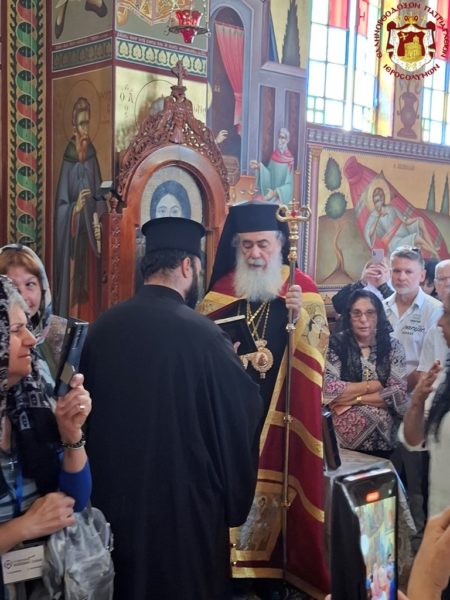
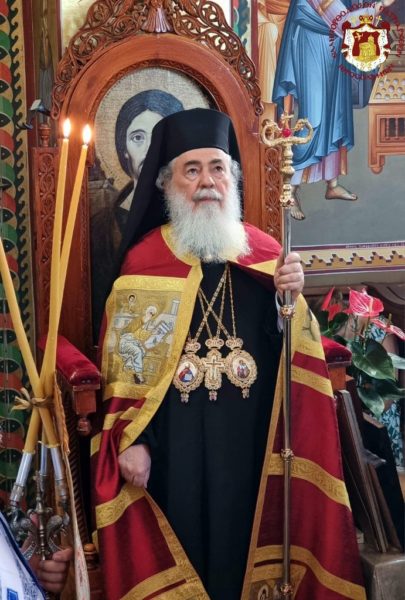
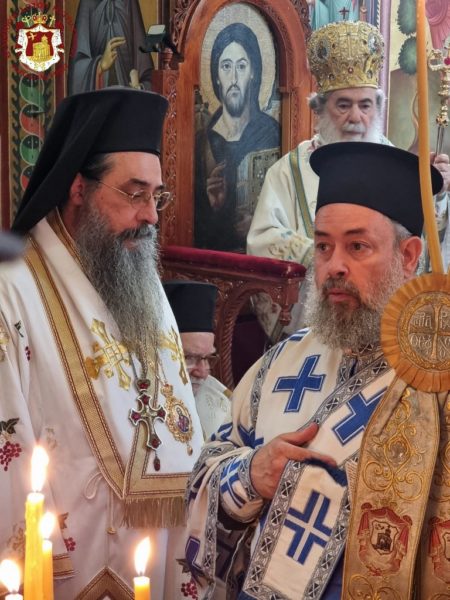
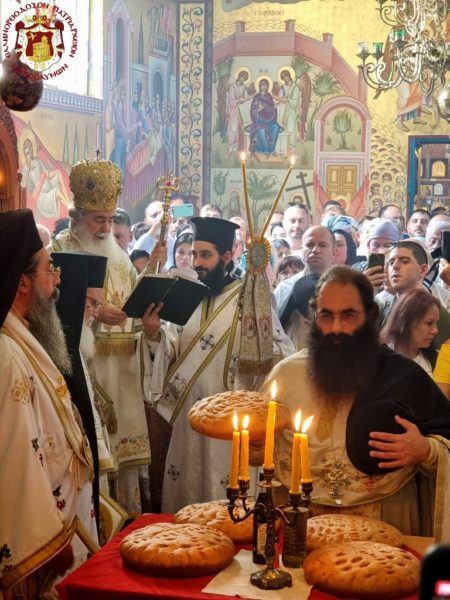
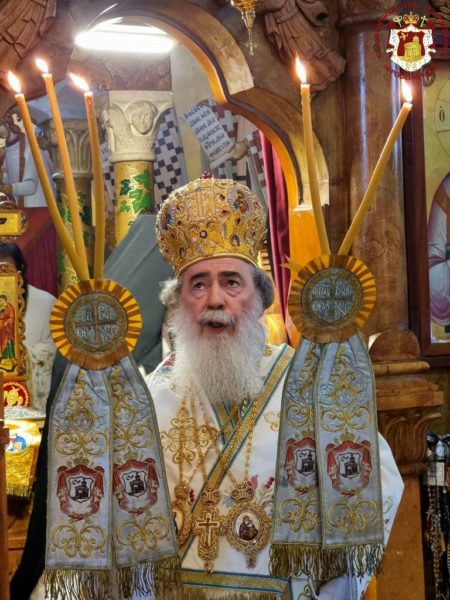
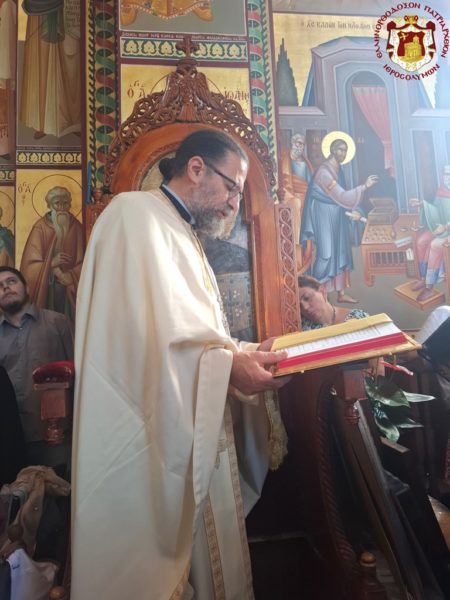
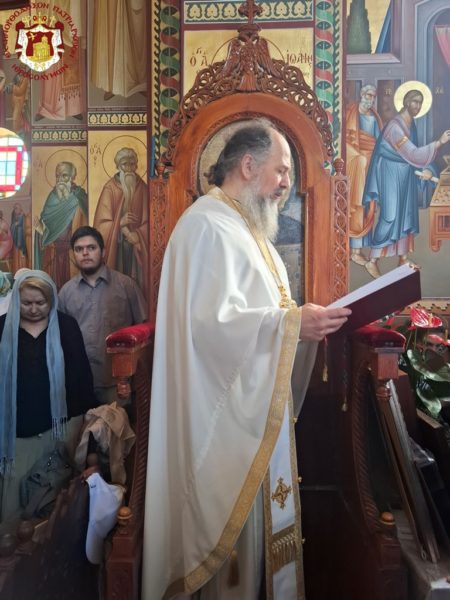
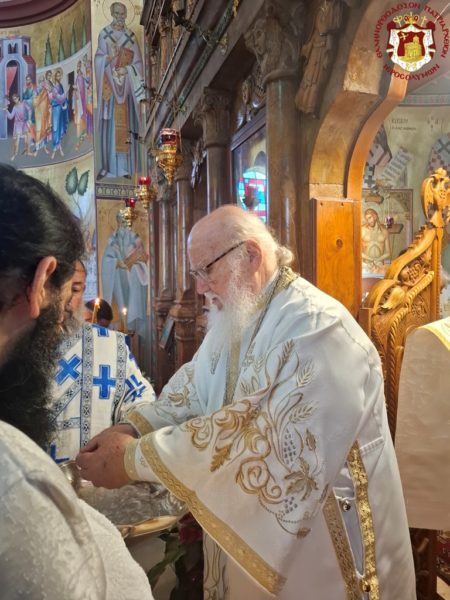
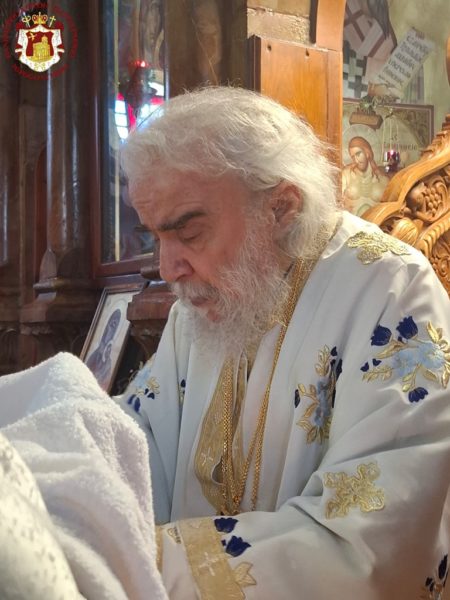
In honour of these two foremost Apostles, the Divine Liturgy was presided over by His Beatitude, our Father and Patriarch of Jerusalem, Theophilos III. Concelebrating with His Beatitude were Their Eminences Metropolitan Kyriakos of Nazareth, Metropolitan Makarios of Ptolemais, and the Elder Chief Secretary, His Eminence Archbishop Aristarchos of Constantina, together with Archimandrite Christodoulos, priests from the neighbouring regions, including the Russian-speaking priest of Capernaum, Fr Mark, Archdeacon Fr Mark, and Hierodeacon Prodromos.
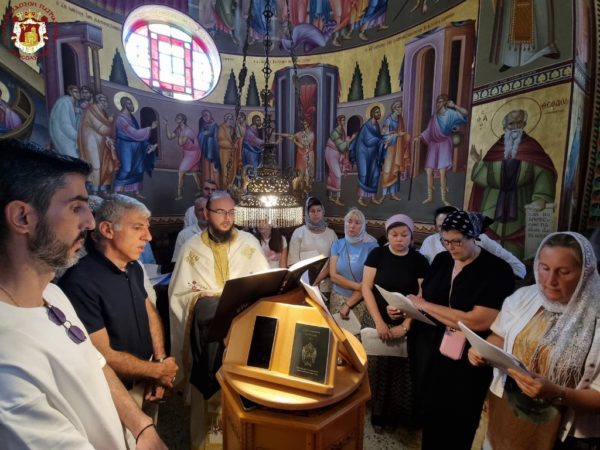
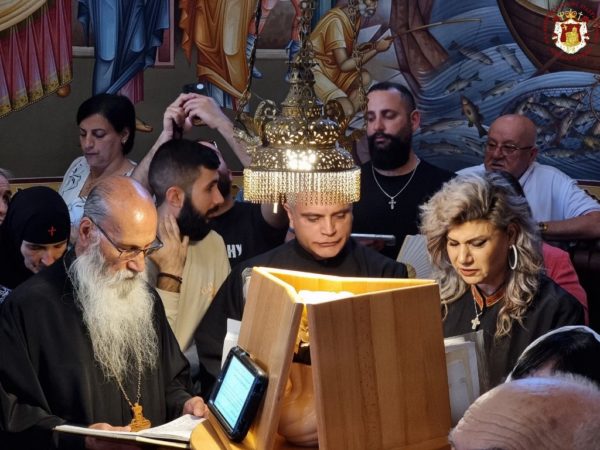
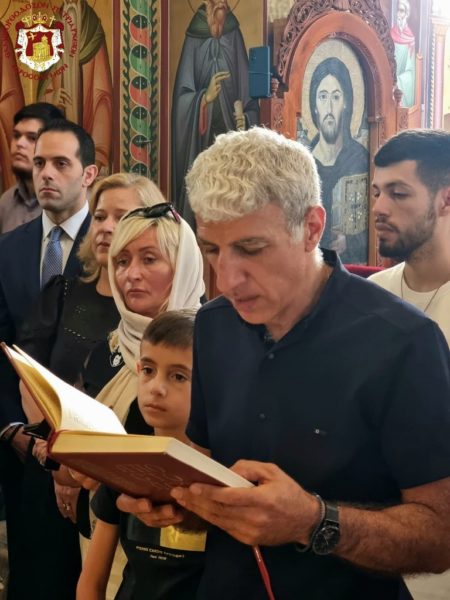
The chanting was offered on the right side in Greek by a choir under the direction of Archimandrite Leontios, and on the left side in Arabic by the choir of Acre, which was founded by the late Archimandrite Philotheos. Present in prayer were Arabic-speaking and Russian-speaking faithful from the communities of Northern Galilee—Shakhnin, Kafr Yasif, and other towns, along with the honourable presence of Her Excellency the Ambassador of Greece to Tel Aviv, Mrs Maria Solomou, and Secretary Mr Nikolaos Mavroeidis.
Before the Holy Communion, His Beatitude delivered the following Sermon:
“He saith unto them, But whom say ye that I am? And Simon Peter answered and said, Thou art the Christ, the Son of the living God. And Jesus answered and said unto him, Blessed art thou, Simon Barjona: for flesh and blood hath not revealed it unto thee, but my Father which is in heaven” (Matthew 16:15–17).
And the Lord said unto His disciple Ananias: “Go thy way: for he is a chosen vessel unto me, to bear my name before the Gentiles, and kings” (Acts 9:15).
Beloved brethren in Christ,
Pious Christians and pilgrims,
The grace of the Holy Spirit hath gathered us all today in this sacred shrine dedicated to the Holy Apostles in Capernaum, that we might celebrate the all-venerable memory of the wisest and foremost among the Apostles, Peter and Paul, chanting and proclaiming: Rejoice, O Apostle Peter, and true friend of thy Teacher, Christ our God. Rejoice, O most beloved Paul, herald of the Faith and teacher of the whole world. “How beautiful are the feet of them that preach the gospel of peace, and bring glad tidings of good things” (Romans 10:15 / cf. Isaiah 52:7, LXX).
This blessed fellowship of the Apostles Peter and Paul, as the interpreter Oicumenios said, became preachers of peace—that is to say, of the reconciliation of God with mankind. Both Peter and Paul received their calling to the apostolic office from the very Lord Jesus Christ Himself. Peter, together with his brother Andrew, were fishermen: “And He saith unto them, Follow Me, and I will make you fishers of men” (cf. Matthew 4:18–19). And as for Paul, it is written: “And as he journeyed, he came near Damascus: and suddenly there shined round about him a light from heaven: and he fell to the earth, and heard a voice saying unto him, Saul, Saul, why persecutest thou Me? And he said, Who art Thou, Lord? And the Lord said, I am Jesus whom thou persecutest: but arise, and go into the city, and it shall be told thee what thou must do” (Acts 9:3–6).
It is noteworthy that the light from heaven which shone round about Saul is none other than the Spirit of the glory of God, our Lord Jesus Christ Himself. For, as the divinely inspired Apostle Peter preaches: “If ye be reproached for the name of Christ, happy are ye; for the Spirit of glory and of God resteth upon you” (1 Peter 4:14).
In other words, Saul—who was later called Paul—was filled with the Holy Spirit, just as all the Apostles were filled with the Holy Spirit on the day of Pentecost: “And they were all filled with the Holy Ghost” (cf. Acts 2:4). Likewise, Paul, once a persecutor of Christ, became a partaker of the words of the risen Jesus to His disciples: “All power is given unto Me in heaven and in earth. Go ye therefore, and teach all nations, baptising them in the name of the Father, and of the Son, and of the Holy Ghost” (Matthew 28:18–19). And He made him (Peter) a witness of the truth.
In interpreting the words above, Saint Cyril of Alexandria says: “Because thou didst proclaim Mine own unshaken divinity, even so do I proclaim thy confession to be unshaken.” And Zigabenos observes: “Indeed, this gift was also given to the other Apostles, but first it was granted unto Peter; for he was the first to confess that the Christ is truly the Son of God.”
The divine revelation given unto the Apostle Paul, as he recounts: “I knew a man in Christ above fourteen years ago, (whether in the body, I cannot tell; or whether out of the body, I cannot tell: God knoweth;) such an one caught up to the third heaven. And I knew such a man, (whether in the body, or out of the body, I cannot tell: God knoweth;) how that he was caught up into paradise, and heard unspeakable words, which it is not lawful for a man to utter” (2 Corinthians 12:2–4). This makes Paul a co-worker in the truth (cf. 3 John 1:8), in the proclamation of the Gospel—that is to say, of the mystery of the divine Providence.
Commenting upon these words of Paul, Saint John Chrysostom asks: “Why was he caught up? So that he should not seem… to be lesser than the other Apostles. For whereas they had been with Christ, and he had not, for this reason, he also was caught up into glory, to be glorified likewise. More plainly: for what reason was he caught up in Paradise? That he might not regard himself as inferior to the rest of the Apostles. Since they had companied with Christ, and he in no way had done so, for this cause he also was caught up, that he might be glorified.”
Both Peter and Paul—being full of the Holy Spirit, just as all the holy Apostles were—are distinguished as the Foremost among them, because the preaching of the Gospel was entrusted by God to them first: Peter unto the Jews, and Paul unto the Gentiles. “But of these who seemed to be somewhat… they added nothing to me: But contrariwise, when they saw that the gospel of the uncircumcision was committed unto me, as the gospel of the circumcision was unto Peter; (For He that wrought effectually in Peter to the apostleship of the circumcision, the same was mighty in me toward the Gentiles)” (Galatians 2:6–8), the wise Paul says.
The Holy Church of Christ honours especially these great luminaries—Peter and Paul—for they cared diligently for all the Churches in every place. “Thou art Peter, and upon this rock I will build My Church; and the gates of hell shall not prevail against it” (Matthew 16:18), the Lord says. And again, the divine Paul testifies: “In weariness and painfulness, in watchings often… in cold and nakedness. Beside those things that are without, that which cometh upon me daily, the care of all the churches” (2 Corinthians 11:27–28).
In other words, beloved brethren, this God-chosen pair of Apostles sealed their confession that Christ alone is the true God, and that His Church is the Ark of salvation. Wherefore let us also say with the sacred hymnographer: “O ye Chiefs of the Apostles and Teachers of the world, intercede with the Master of all to grant peace unto the world and great mercy unto our souls”. And again: “And thou, O Lady Theotokos, be unto us a helper and fervent protector; for in thee do we, thine unworthy servants, place our hope.”
Many happy returns, blessed and peaceful. Amen.”
After the Divine Liturgy, the diligent monk Eirinarchos—who restored the Monastery and adorned the Church with sacred iconography—having also this year minted a special medallion on the occasion of the centenary of the founding of the Holy Church by the ever-memorable Patriarch of Jerusalem, Damianos, received His Beatitude, His retinue, and the faithful congregation at the Rectory, and afterwards offered a bountiful festal meal in the courtyard of the Holy Monastery.
From the Chief Secretariat
H αναδημοσίευση του παραπάνω άρθρου ή μέρους του επιτρέπεται μόνο αν αναφέρεται ως πηγή το ORTHODOXIANEWSAGENCY.GR με ενεργό σύνδεσμο στην εν λόγω καταχώρηση.
 Ακολούθησε το ORTHODOXIANEWSAGENCY.gr στο Google News και μάθε πρώτος όλες τις ειδήσεις.