The National Anniversary of 28th October at the Patriarchate
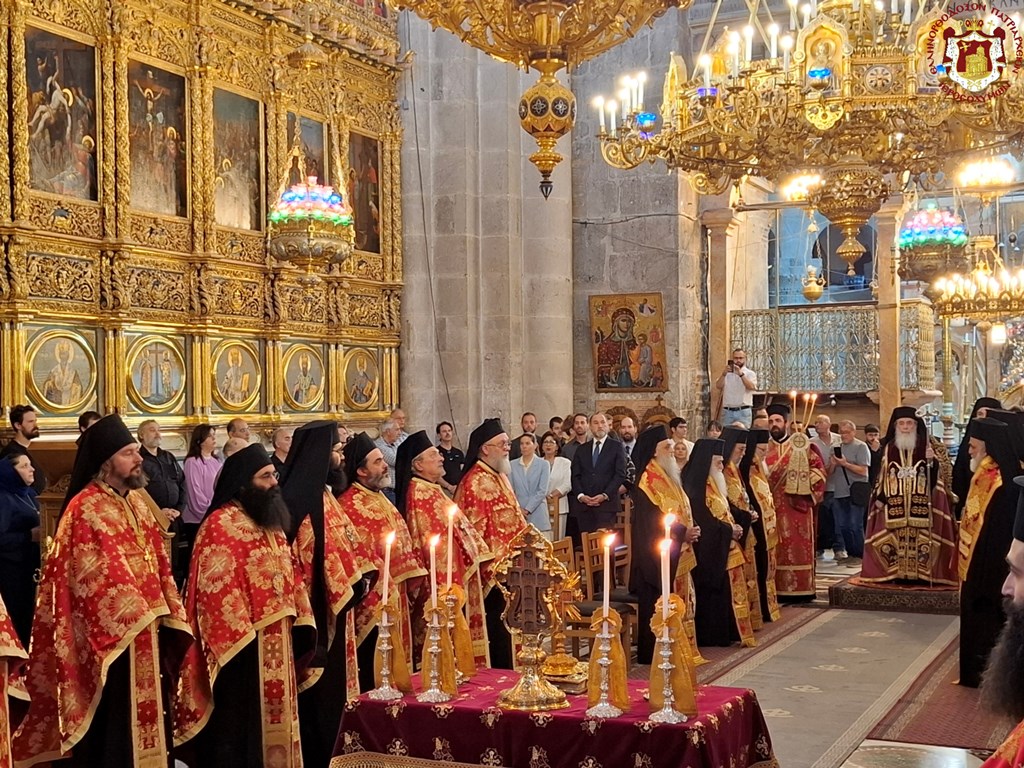
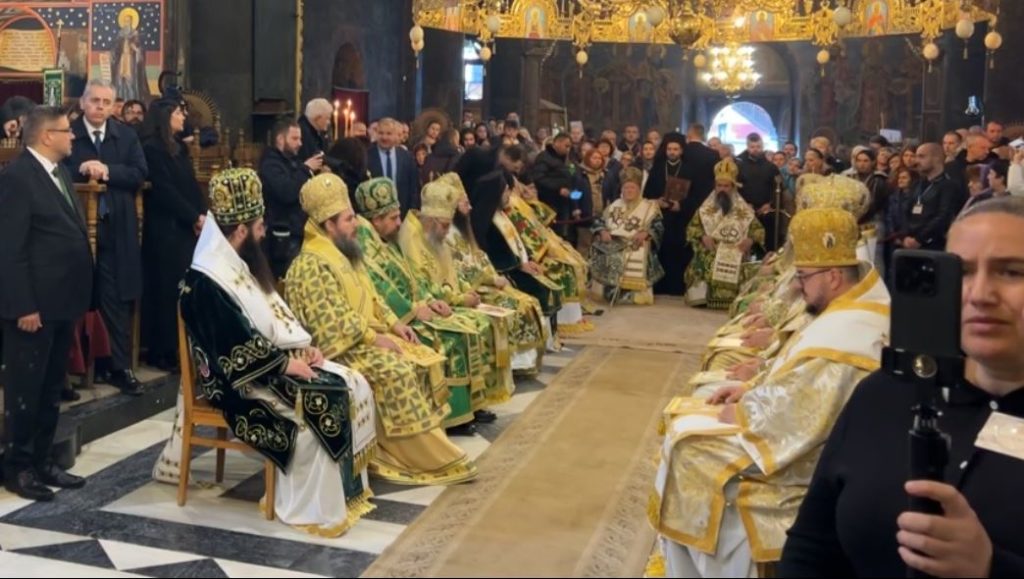
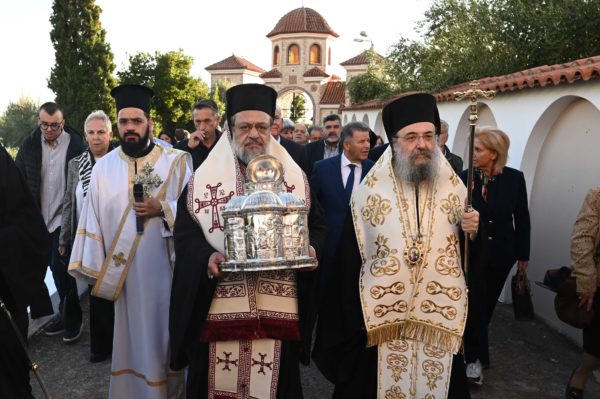
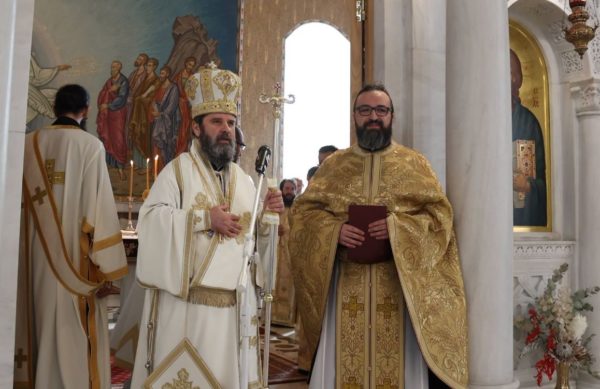
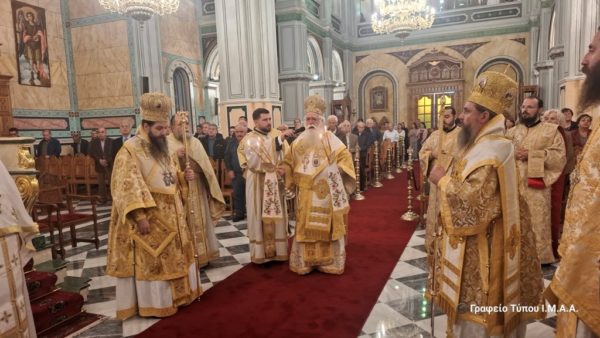
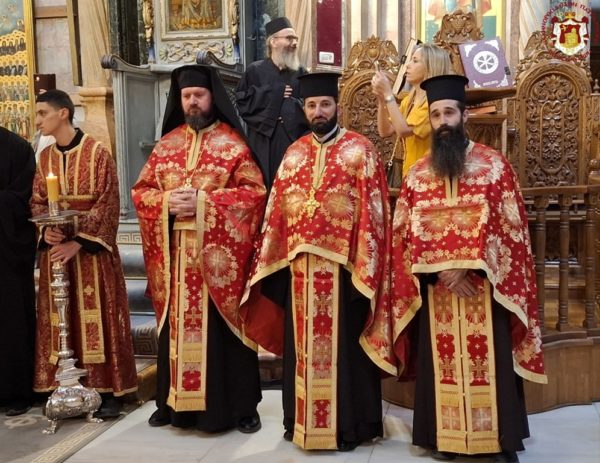
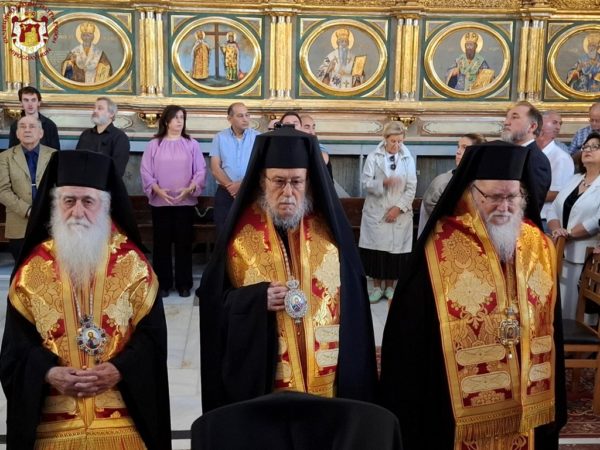
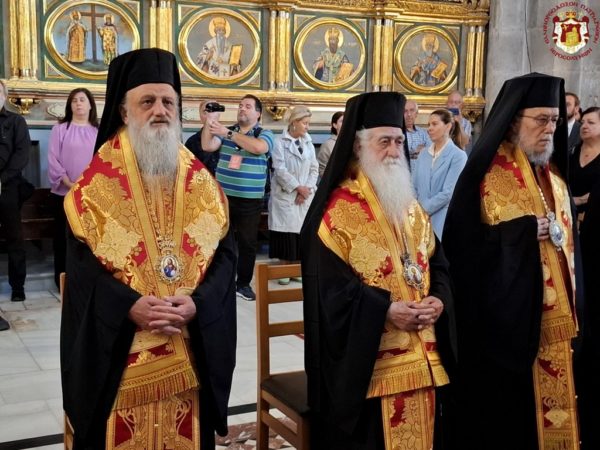
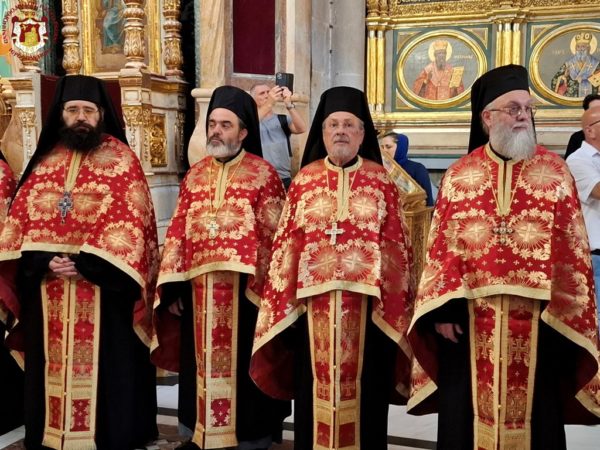
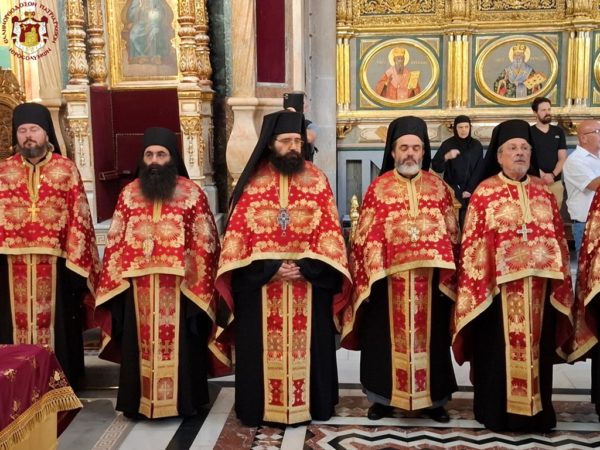
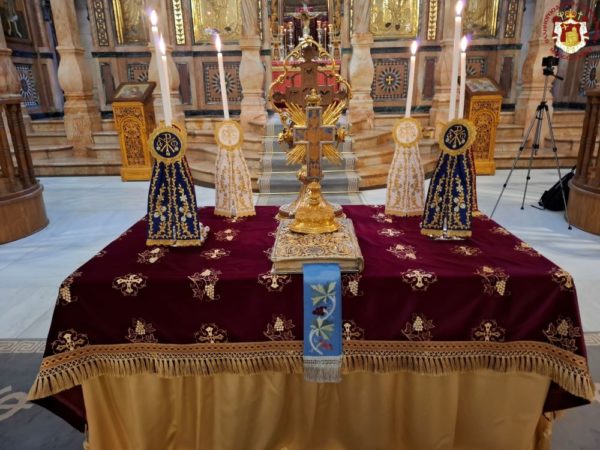
On Tuesday, 15th/28th October 2025, the Patriarchate celebrated the National Anniversary of 28th October 1940 with a Doxology, which was held in the Catholicon of the Church of the Holy Sepulchre.
This Doxology was offered in thanksgiving to God for His assistance to our Nation and its struggle for national defence against the Italian military invasion of 28th October 1940, and for the liberation from the yoke of the German Occupation during the Second World War (1940–1944); and as a supplication for the repose of the souls of the Greeks who fought and fell on the battlefields.
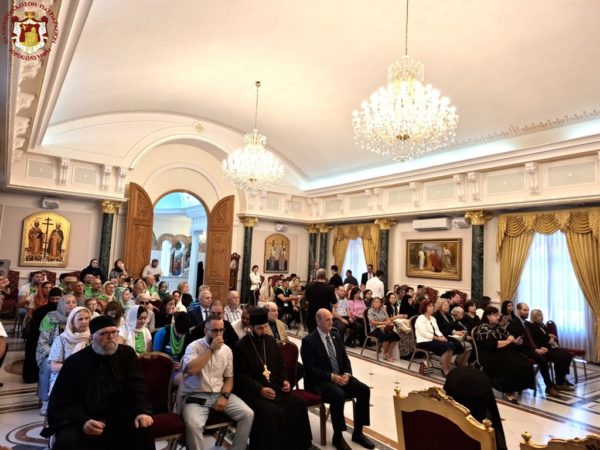
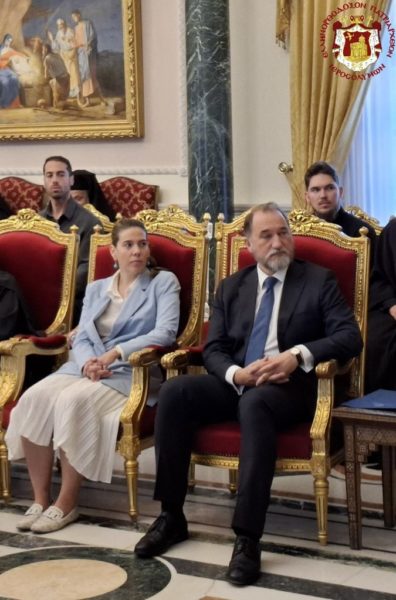
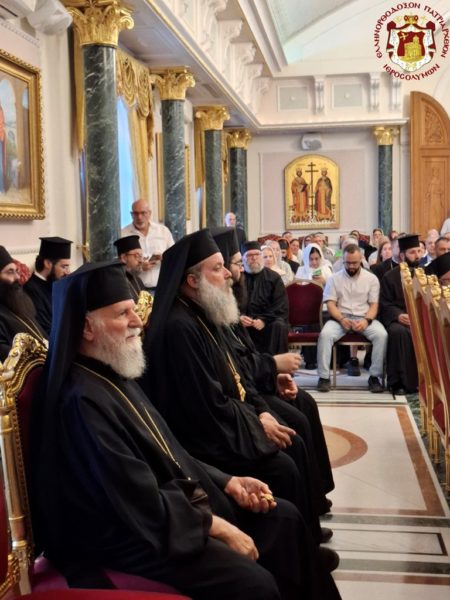
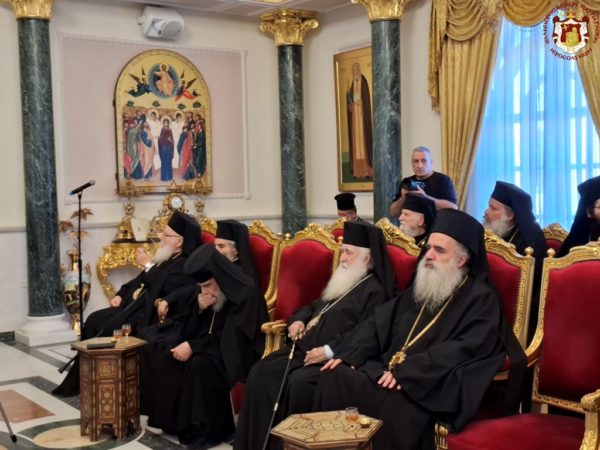
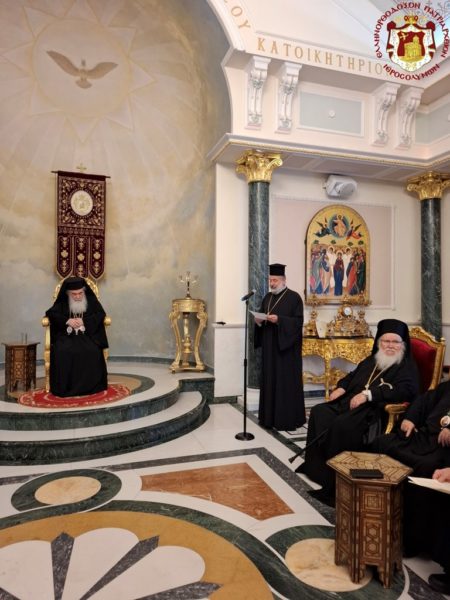
The Doxology was presided over by His Beatitude, our Father and Patriarch of Jerusalem, Theophilos III, concelebrated by the Hierarchs and Hieromonks of the Holy Sepulchre, and attended in prayer by pilgrims and local faithful of Jerusalem, in the presence of the Consul General of Greece in Jerusalem and the staff of the Consulate General.
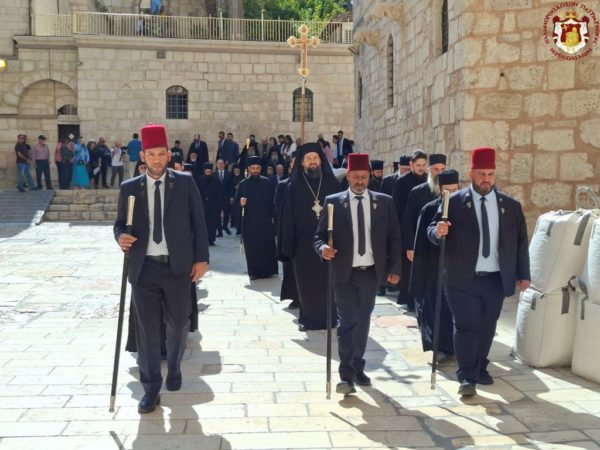
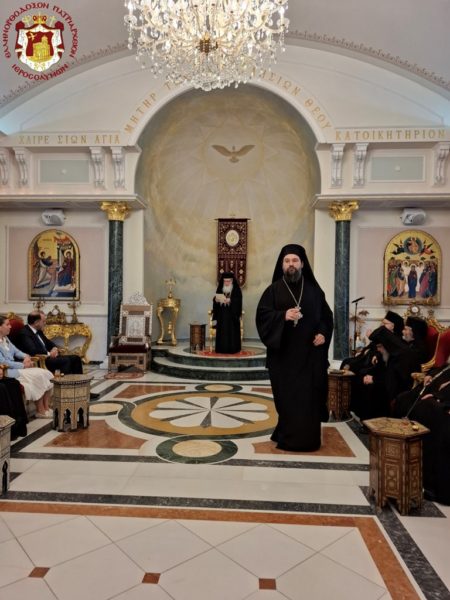
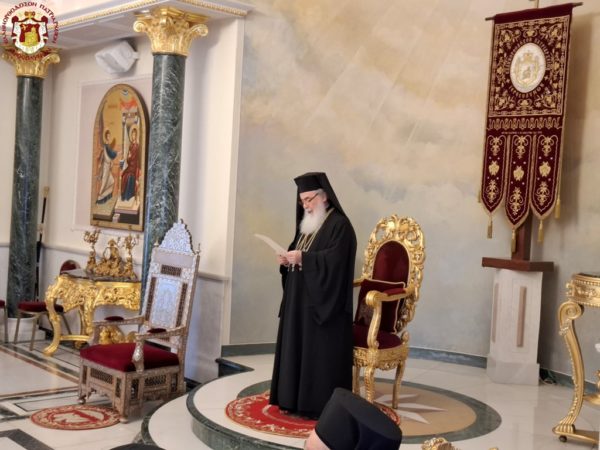
After the conclusion of the Doxology, a small reception took place at the Patriarchate. During it, His Beatitude addressed those present as follows:
“Your Excellency, Consul General of Greece,
Mr Dimitrios Angelosopoulos,
Reverend Holy Fathers and Brethren,
Beloved Brethren in Christ,
With inexpressible joy and pride, we celebrate today the national anniversary of the 28th of October 1940, which once again revealed the greatness of the Greek soul. We celebrate the “No” of the 28th of October to the forces of Fascism and Nazism. We celebrate the triumph of light over darkness, of justice over injustice.
The 28th of October 1940 was regarded as one of the most significant events of the Second World War, for the resistance against the military powers of the Italo-German Axis was recognised as an act of heroism and self-sacrifice in defence of the inalienable good of freedom, independence, and the national territorial integrity of our gloriously fallen fathers and brethren.
For this reason, Our Mediocrity, accompanied by the honourable members—Hierarchs, priests, and monks of our venerable Holy Sepulchre Brotherhood, together with the pious people—went to the All-Holy Church of the Resurrection, where we offered a thanksgiving Doxology to the Holy Triune God, “Who giveth us the victory through our Lord Jesus Christ” (1 Cor. 15:57).
Furthermore, we prayed for the eternal memory and blessed repose of the souls of those who heroically fought and gloriously bore witness for our blessed nation and its sacred ancestral land. For it is written: “God hath made of one blood all nations of men for to dwell on all the face of the earth, and hath determined the times before appointed, and the bounds of their habitation” (Acts 17:26).
The 28th of October 1940 is a day of indelible historical memory—a day on which throughout the Greek dominion resounded the sacred and timeless slogan, “Now is the struggle for all.” This struggle, which was a struggle for honour and dignity, for the moral and spiritual values of the Helleno-Christian civilisation, and above all for the Greek land and its borders, was internationally characterised as a miracle of the faith of the Greeks in the Divine justice, which endureth forever (2 Cor. 9:9), according to the Apostle Paul.
We say this because the contribution of the Church, through the active participation—both physical and moral—of its higher and lower clergy and of the military chaplains, was decisive. Through their national and Evangelical preaching, they strengthened the moral and patriotic spirit of the Greek soldiers. Needless to say, among those who sacrificed themselves, countless priests and eminent Hierarchs of the Church were truly distinguished, having heroically fallen or been atrociously executed by the Nazi forces.
The epic of 1940, which constitutes a distinguished milestone in the historical course of the Greek people and nation, and of Romiosyne in general, has most clearly demonstrated that the course of history is not directed by the rulers and world-lords of this age, who are subject to corruption and death, but by “the Creator God,” the God of peace and righteousness. “Seek peace and pursue it” (Ps. 33:15), the Psalmist exclaims; and, “Seek ye first the kingdom of God and His righteousness” (Matt. 6:33), the Lord says.
Today’s anniversary of the 28th of October 1940 is celebrated in times when the entire world is being tested, particularly our Middle East and its epicentre, the Holy Land, by political and military crises and bloody conflicts.
Therefore, we who minister in these holy places—bearing witness to and proclaiming the Divine justice, reconciliation, and peace—are called, on the one hand, to vigilance, and on the other, to the safeguarding of the sacred consignment of the unfailing and tangible testimonies of our faith in Christ the Lord, lest the spirit of peace and righteousness be quenched (cf. 1 Thess. 5:19).
In conclusion, let us exclaim:
• Long live the “No” of the 28th of October 1940!
• Long live Greece!
• Long live the pious nation of the Rum Orthodox!
• Long live our venerable Holy Sepulchre Brotherhood!”
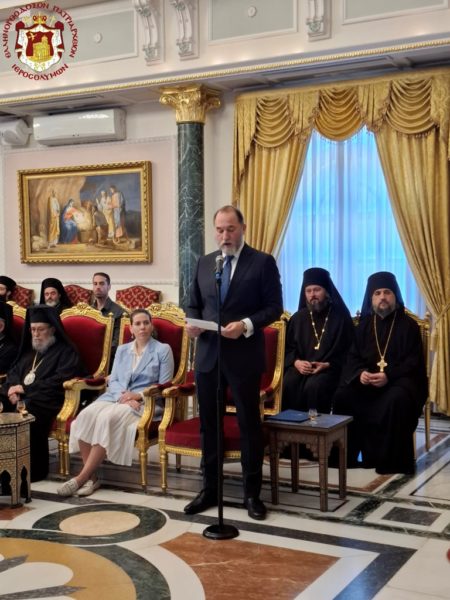
Afterwards, His Excellency the Consul General of Greece in Jerusalem, Mr Dimitrios Angelosopoulos, addressed those present as follows:
“Your Beatitude,
Your Eminences,
Reverend Fathers and members of the Holy Sepulchre Brotherhood,
Beloved compatriots and friends,
Eighty-five years ago, the Greeks were once again called to measure themselves against History. At a time when much of Europe and other parts of the world had already yielded and submitted to the until-then invincible advance of expansionist and totalitarian forces, Greece found herself in the path of that tempest. It was called to choose between the way of submission or the way of struggle. And before this dreadful dilemma, it responded with calm resolve and a laconic yet absolute refusal to the arrogant demand to renounce her values.
It was the greatest of decisions, one that marks and defines the historical course of a nation. A decision for which the country had been carefully prepared, politically, diplomatically, and militarily, based on sound strategic assessments. Yet at the same time, it sprang from a higher moral measure. Greece undertook not merely to defend its territorial integrity and sovereignty, precious as they are, but engaged in the supreme struggle above all out of faith in her values and ideals, for its Freedom and Honour.
The heritage and value system of our people, their convictions and faith, pointed only to that path. In that struggle, the Greeks entered with enthusiasm, resolute for victory, uplifted by the moral elation and the pure joy of proving themselves worthy of the eternal, radiant example of Greece. This steadfast devotion to those higher ideals led to the Heroic Epic of 1940–1941.
Even when the overwhelming military superiority of the combined Axis forces brought about the dreadful occupation of Greece, the struggle never ceased. It continued within the enslaved homeland, as well as through our regular forces and our navy on the great fronts of the Second World War, in Europe, in Africa, in the Mediterranean, and in the Atlantic, until the final victory and the triumph of Freedom, Justice, and Humanity; until the vindication of the very values for which the struggle had begun on 28th October 1940.
Thus, Greece demonstrated that the values of a nation and its pragmatic interests are not disconnected or opposing notions. The defence of fundamental values, even through great sacrifices, constitutes in the end a supreme and genuine national interest. The Church knows this truth well and has taught it, first and foremost, by her example. Our history, from the dawn of our nation, has revealed it. Our forefathers, eighty-five years ago, in their hour of trial, once again followed it faithfully, and were vindicated. This stance and the blood-shed struggles that upheld it placed Greece among the victors of the Second World War and among the few founding members of the United Nations.
Yet this historic course would not have been possible without the unity and concord that arose spontaneously and magnificently on 28th October 1940. It was by no means self-evident that this would occur. On the contrary, for two decades prior, Greece had suffered the terrible wounds of the great National Schism. And after liberation, she would be ravaged by the fratricidal Civil War and the deep scars it left. But on that morning of 28th October, State and Church, government and citizens, political rivals and opponents, Greeks of every background, both within and beyond our borders, came forth wholeheartedly and unconditionally at the call of the Nation’s ideals. And they left indelible the image of a people who, facing a great crisis, went forth smiling to the great Struggle. This, perhaps, is the brightest radiance of that great Heroic Epic.
Are only such immense, historic trials capable of forging unity? And yet, we have never ceased to need that same unity and concord. Especially today, as the international environment once again grows perilous. We are passing through an age of disruption and destabilisation. This year, as we celebrate eighty years since the founding of the United Nations, we witness the greatest number of armed conflicts since the end of the Second World War. For Hellenism, both within and beyond the borders of Greece, which is once again called to chart its course amid global-scale developments, unity and concord are daily imperatives. There is no surplus of strength or time—no room or luxury for self-centred individualism. The example of the generation of 1940 remains a solemn legacy and a precious guide. It is our moral duty to honour it by following it in deed.
Many happy returns to all. Long live 28th October 1940. Long live Greece.”
From the Secretariat-General
en.jerusalem-patriarchate.info
H αναδημοσίευση του παραπάνω άρθρου ή μέρους του επιτρέπεται μόνο αν αναφέρεται ως πηγή το ORTHODOXIANEWSAGENCY.GR με ενεργό σύνδεσμο στην εν λόγω καταχώρηση.
 Ακολούθησε το ORTHODOXIANEWSAGENCY.gr στο Google News και μάθε πρώτος όλες τις ειδήσεις.