Nordic Bishop offers five perspectives on National Cathedral as symbol of Romanian popular piety
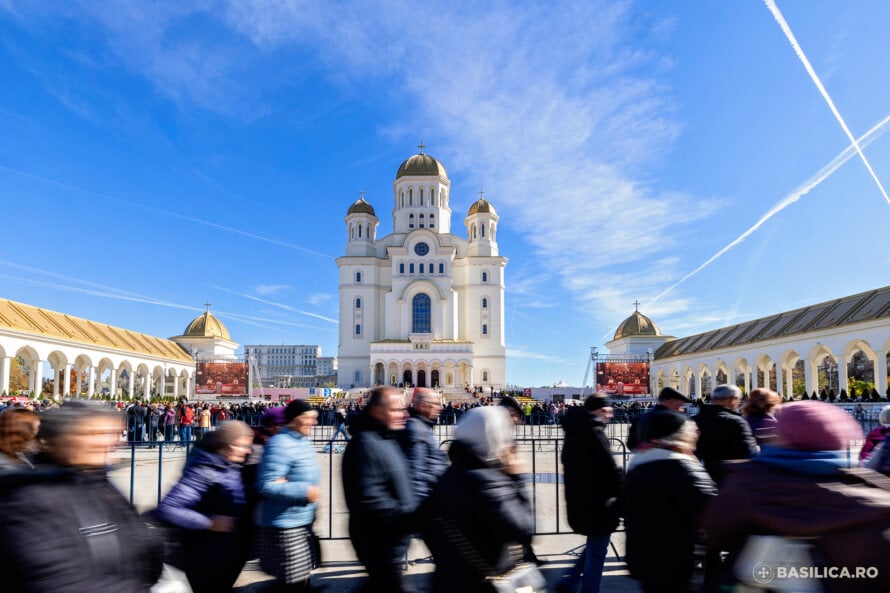
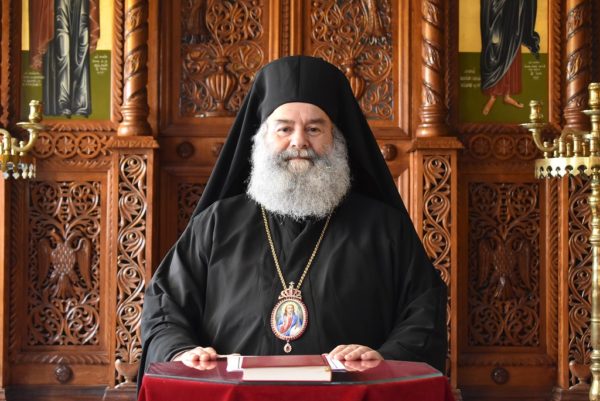
His Grace Bishop Macarie of Northern Europe has proposed five keys to a proper understanding of the National Cathedral.
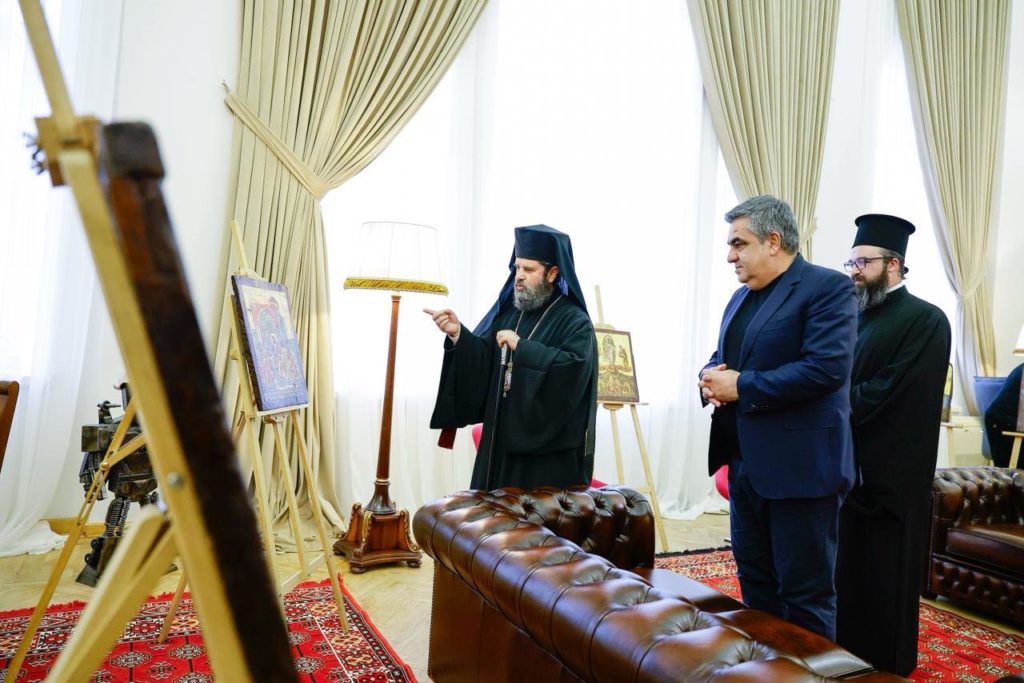
Bishop Macarie took part in the consecration of the mosaic iconography of the National Cathedral — an event about which much has been said and written.
“I am writing down several reflections — possible keys of spiritual understanding of what we have lived together in these days, gathered at and around this temple raised to the glory of God and for our sanctification and salvation,” the hierarch wrote on the Facebook page of the Romanian Orthodox Diocese of Northern Europe.
The result of popular piety
Bishop Macarie stressed that the construction of the National Cathedral was made possible by the piety of the Romanian Orthodox people.
“The religiosity of our nation, in comparison both with Western countries and with neighbouring ones, is considerable. It is visible at major feasts which occasion pilgrimages, and also in the full and often overcrowded churches in cities, and in villages not too heavily affected by migration.”
“Only such a popular feeling made the Cathedral project not just a random objective, but a symbol of national relevance,” the hierarch noted.
His Grace noted that the topic of the National Cathedral was not well received by many opinion leaders and media outlets.
“At one point, the Cathedral became a topic of street protest, of shouted slogans, and of political speculation. Critical books were written about the project, campaigns were launched, ironic songs went viral — to such an extent that a superficial observer of our country could have imagined that no one here wanted the Cathedral.”
The fulfilment of an ideal
The hierarch recalled that the building of a National Cathedral has been an ideal of Romanian society since the gaining of independence.
“The Cathedral is the fulfilment of an old project and ideal of our Church and society, and, symbolically, it crowns and connects to the choir of Romanian saints whose canonisation has taken place in recent years and continues.”
His Grace remarked on the consistency with which the project was handled, highlighting His Beatitude Patriarch Daniel’s determination.
“Many may have doubted — seeing the opposition to the Cathedral — that it could be achieved. Many may have thought that it was not the right moment, or not the case — after all, we have so many problems in the country and in the world.”
“The Patriarch had a historical vision and thought beyond all these things. And only such a vision, supported by a corresponding determination, made it possible for the project to be brought to completion after so many years of delays and difficulties,” the Bishop of Northern Europe underlined.
An offering
A final key to understanding the National Cathedral proposed by Bishop Macarie is that of an offering brought to our forebears.
“The Cathedral, whose main feast is the Ascension of the Lord and, at the same time, Heroes’ Day, is an offering — a monument of thanksgiving to all who, before us, sacrificed themselves for this country, to those who laboured, great and small, each with his work and sacrifice, thanks to whom today we have a country, a nation, a past, an identity.”
“It is also a gift for descendants — a noble inheritance, which will give them an opportunity to rediscover themselves and reconcile with God. It is like a lighthouse, raised for those like us, who find ourselves far away on the sea of this life, so that we do not lose the way home,” his Grace concluded.
Photo: Basilica.ro / Raluca Ene
H αναδημοσίευση του παραπάνω άρθρου ή μέρους του επιτρέπεται μόνο αν αναφέρεται ως πηγή το ORTHODOXIANEWSAGENCY.GR με ενεργό σύνδεσμο στην εν λόγω καταχώρηση.
 Ακολούθησε το ORTHODOXIANEWSAGENCY.gr στο Google News και μάθε πρώτος όλες τις ειδήσεις.