The feast of Saint James the Brother of God at the Patriarchate
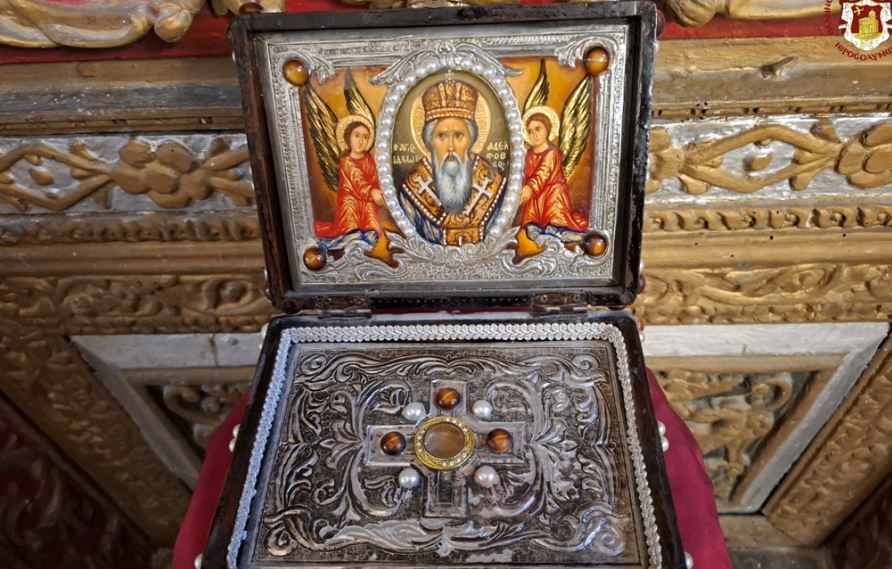
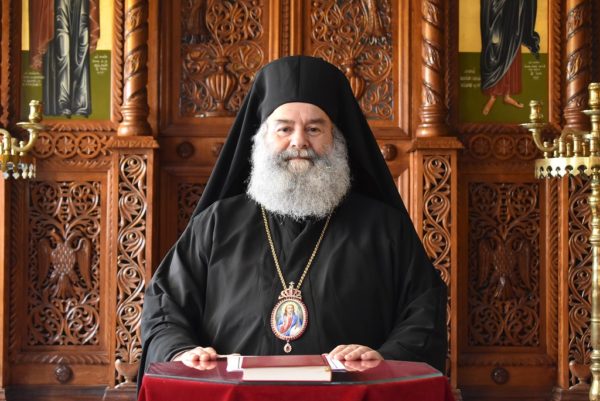
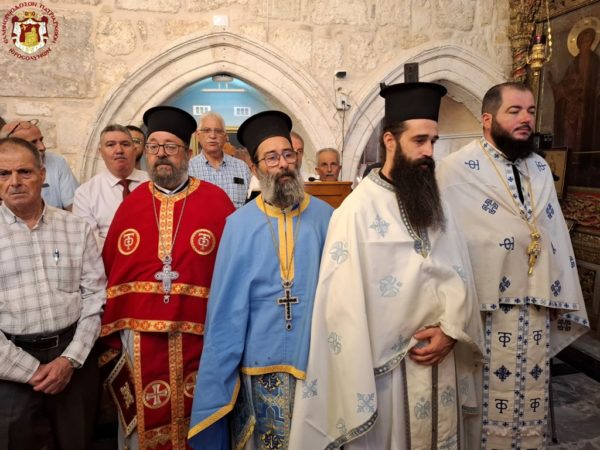
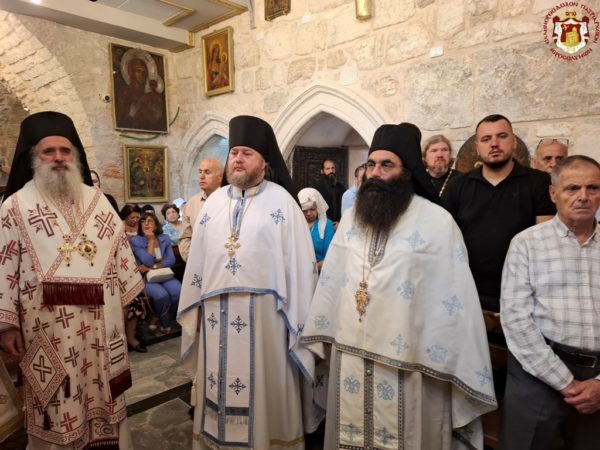
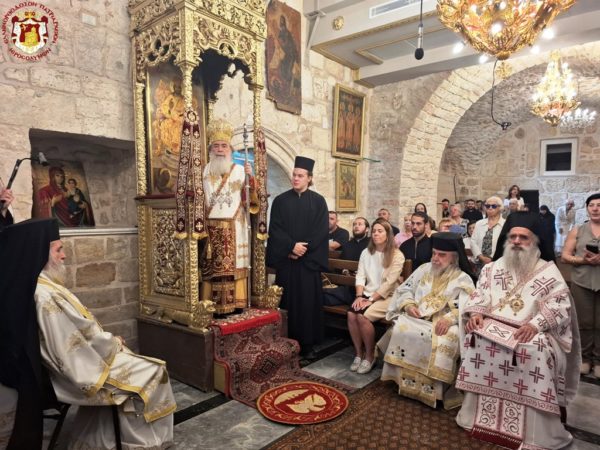
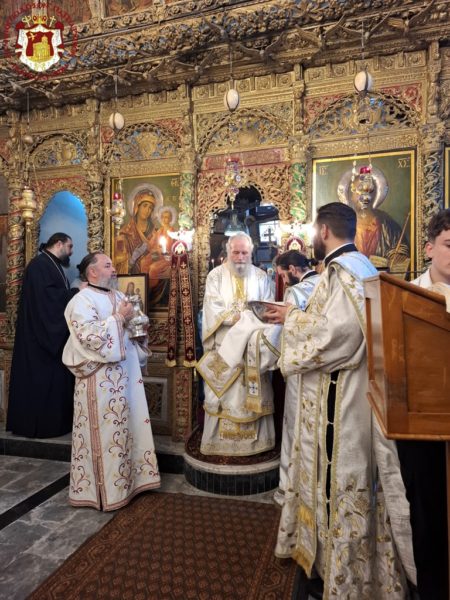
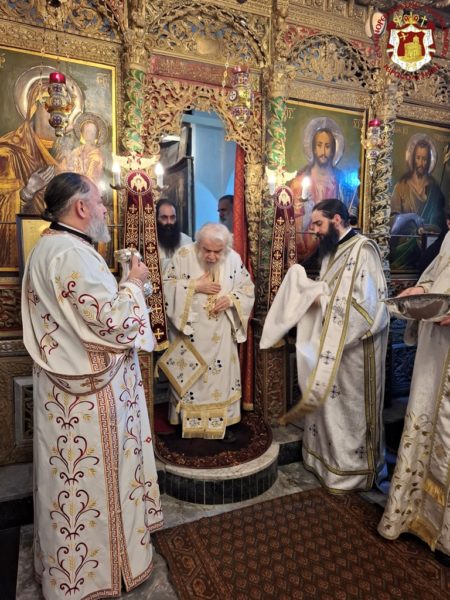
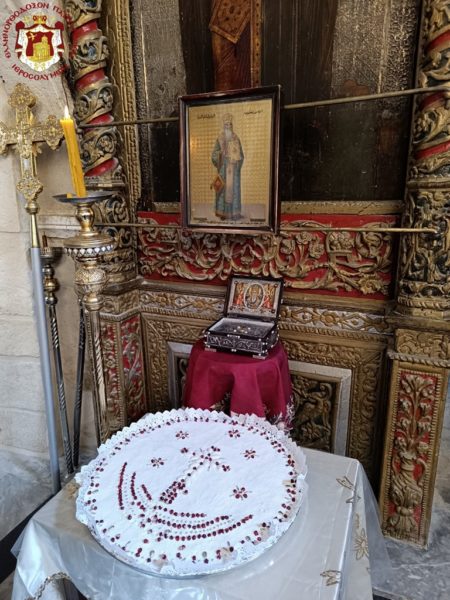
On Wednesday, 23 October / 5 November 2025, the Patriarchate celebrated the feast of the holy and glorious Apostle James the Brother of God in the Cathedral bearing his name, situated between the premises of the Holy Sepulchre Brotherhood and the Church of the Holy Sepulchre, serving as the parish church of the Greek Orthodox Arabic-speaking Community of Jerusalem.
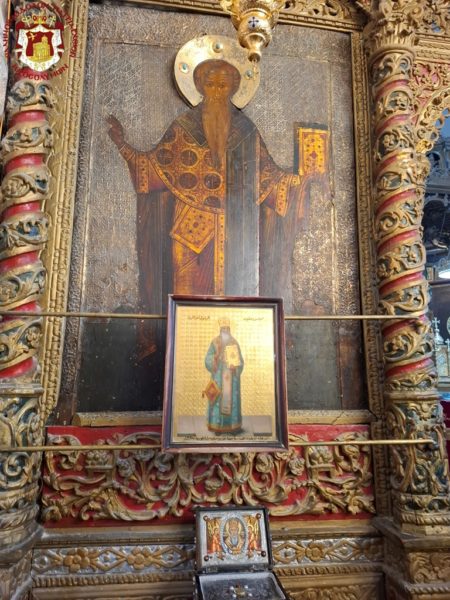
Saint James the Brother of God is honoured by the Church as the son of Joseph the Betrothed, by a woman whom he had before he espoused the Virgin; therefore, he was also called her son and the brother of the Lord, since He Himself was accounted the son of Joseph (Matt. 13:55). According to others, he was the nephew of Joseph, being the son of his brother Cleopas (or Clopas), who was also called “Alphaeus”. He was ordained by the Lord as the first Bishop of Jerusalem, he is the author of the Catholic Epistle in the New Testament, and he confessed the Lord as the Son of God; for this, he was cast down from the pinnacle of the Temple of Solomon by the Jewish leaders.
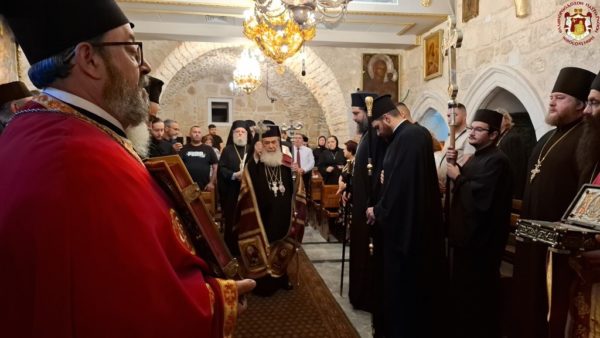
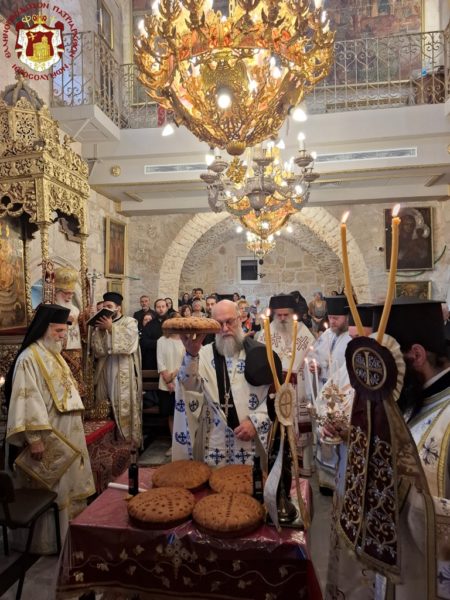
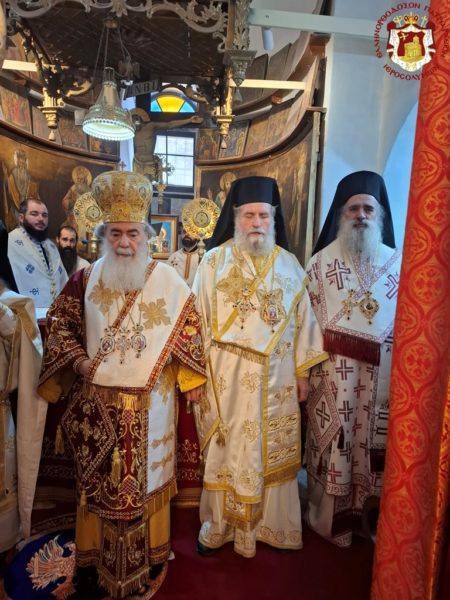
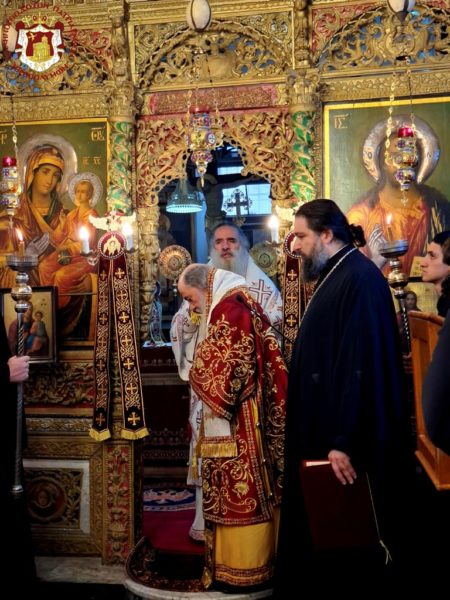
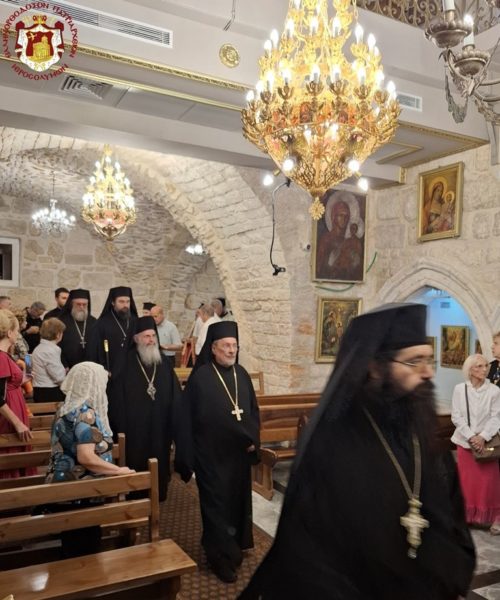
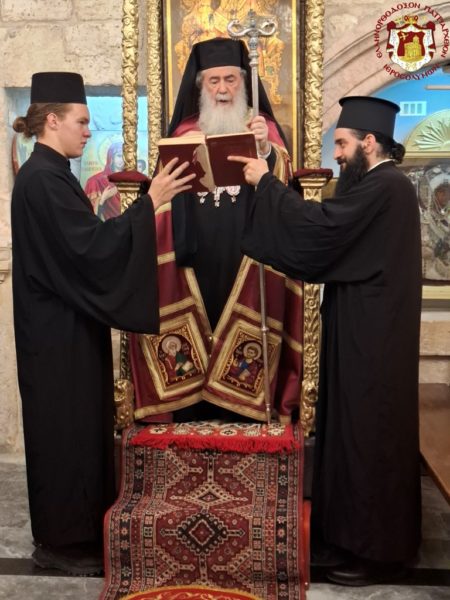
In honour of him as a hieromartyr, Great Vespers was presided over by His Beatitude our Father and Patriarch of Jerusalem, Theophilos, with concelebration by Hieromonks of the Holy Sepulchre Fathers and by the priests of the holy Church, Priests Charalambos Bandour and George Baramki, together with reverent faithful of Jerusalem participating devoutly.
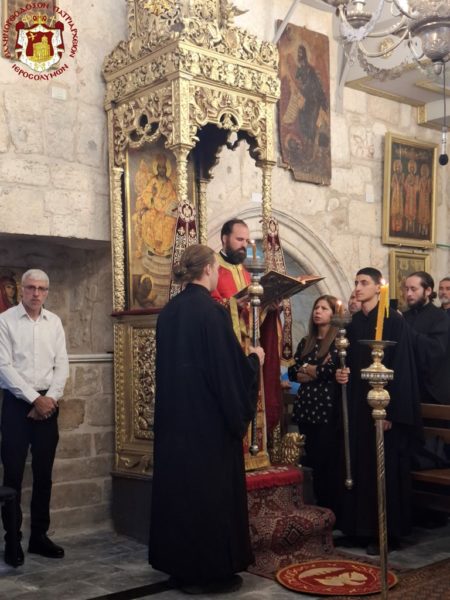
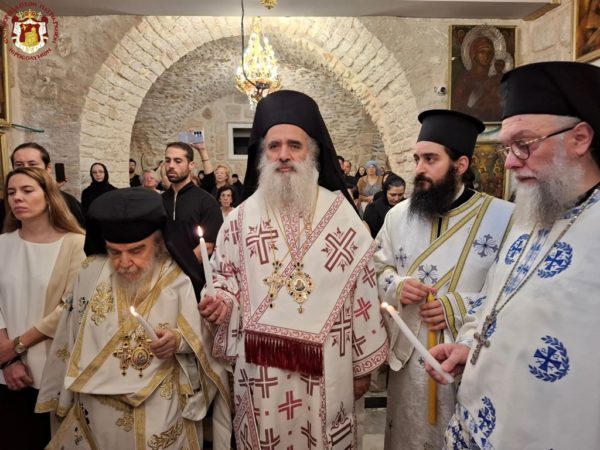
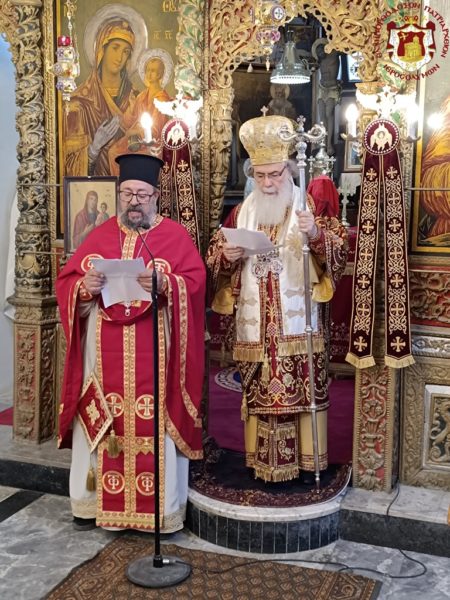
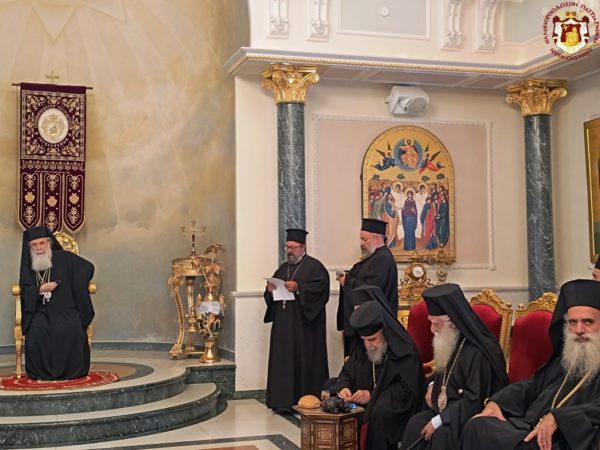
On the morning of the feast, the Divine Liturgy was presided over by His Beatitude our Father and Patriarch of Jerusalem, Theophilos, concelebrated by His Eminence Metropolitan Isychios of Capitolias, His Eminence Archbishop Aristarchos of Constantina, and His Eminence Archbishop Theodosios of Sebastia, together with Hieromonks of the Holy Sepulchre Fathers — among whom first was the Elder Kamarasis, Archimandrite Nektarios — and the priests of the holy Church, Priests George, Charalambos, and Nektarios.
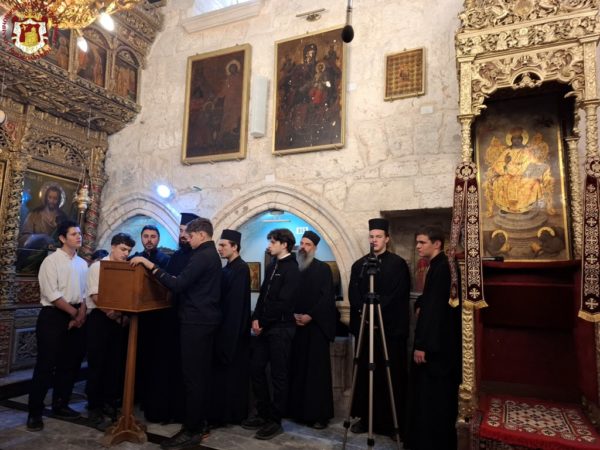
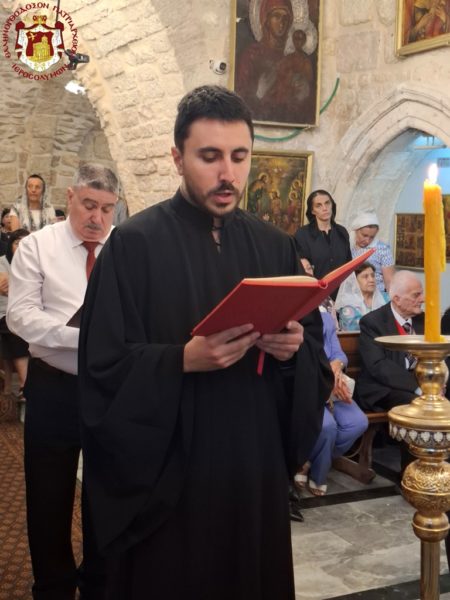
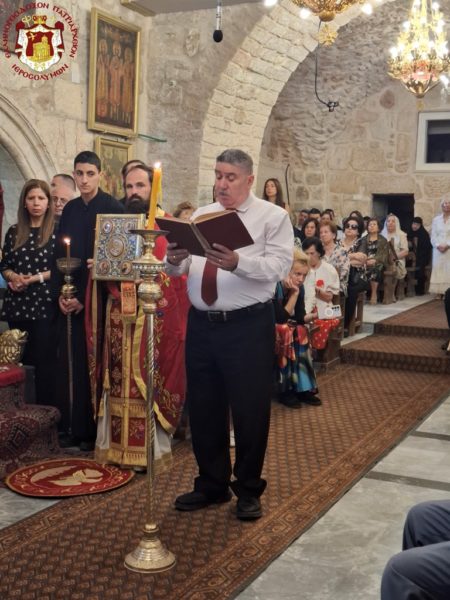
The chanting on the right in Greek was rendered by the chief cantor of the Church of the Holy Sepulchre, Deacon Eustathios, with the students of the Patriarchal School of Zion, and on the left in Arabic by the choir of the Cathedral under Mr Rimon Kamar. Present also was the Consul of the Greek General Consulate, Mrs Anna Mantika, together with members of the parish, nuns, and many others.
To the devout congregation, His Beatitude preached the divine word as follows:
“My brethren, count it all joy when ye fall into diverse temptations; knowing this, that the trying of your faith worketh patience. But let patience have her perfect work, that ye may be perfect and entire, wanting nothing” (James 1:1–4), the Holy James, the Brother of God, sends forth.
Beloved brethren in Christ,
Reverent Christians and pilgrims,
The grace of the Holy Spirit has gathered us all today in this holy Church, dedicated to Saint James the Brother of God, that we may celebrate his all-venerable memory.
This Saint James the Brother of God was manifested as the first Bishop of the Church of Jerusalem, ordained by the Lord Himself, and he was also the first to compose and set forth the Divine Liturgy, having been instructed by our Saviour Jesus Christ.
Saint James, illumined by the fiery splendour of the Holy Spirit, appeared as a zealot of the piety of the Mystery — that is to say, of the Mystery of the Divine Providence in the incarnation and the becoming man of the Word of God from the pure blood of the ever-Virgin and most blessed Theotokos, the Mother of our God.
The divine Paul invokes the spiritual authority of James the Brother of God, who led the first Christian Ecclesiastical Community together with the Apostles Peter and John, calling him a pillar. “And when they (the other apostles) perceived the grace that was given unto me, James and Cephas and John, who seemed to be pillars, gave to me and Barnabas the right hands of fellowship; that we should go unto the heathen, and they unto the circumcision” (Gal. 2:9), the God-inspired Paul says.
In his Catholic Epistle, Saint James exhorts those who have come to the Christian faith to have patience in afflictions and temptations, saying: “My brethren, count it all joy when ye fall into divers temptations; knowing this, that the trying of your faith worketh patience” (James 1:2–3).
In other words, when our faith is tried by afflictions and temptations, then patience becomes secure and steadfast, as Saint Theophylaktos interprets in this context, saying: “For all who are earnest, temptations are the cause of every joy, because by means of them the proof of their virtue becomes manifest.” And the wise Paul, referring to faith in Christ, says: “Therefore being justified by faith, we have peace with God through our Lord Jesus Christ… and not only so, but we glory in tribulations also: knowing that tribulation worketh patience; and patience, experience; and experience, hope: and hope maketh not ashamed; because the love of God is shed abroad in our hearts by the Holy Ghost which is given unto us” (Rom. 5:1–5).
Afflictions and trials are the natural roughness, hardships, and sufferings which the divine Paul considers an unavoidable lot of the Christian. Trial is that which reveals the true follower of Christ, who is likened unto the seed that “fell into good ground, and brought forth fruit” (Matt. 13:8).
In another exhortation, Saint James again highlights the power and the result of patience in our trials, saying: “Blessed is the man that endureth temptation: for when he is tried, he shall receive the crown of life, which the Lord hath promised to them that love Him” (James 1:12).
Saint John Chrysostom, explaining the reason why the one who endures temptation is blessed, says: “Such a man, striving his contest in athletic fashion, shall become approved, being exercised through all things.” In other words, the trial of temptations has trained and proved the one who endures temptation to be steadfast and genuine, and therefore pleasing before God. The ultimate purpose for which God permits us to undergo afflictions and distresses is that we may become proven, so that at the end He may crown us with the crown of life.
The “crown of life” (James 1:12) is the crown of promise, a crown which God pledges to the victor as his reward. “Heaven and earth shall pass away, but My words shall not pass away” (Matt. 24:35), the Lord says. And concerning the nature of “the crown of life”, let us hear Saint John Chrysostom, who says: “Dost thou seek of what material God hath prepared His gifts for them that love Him? They are things which, by reason of the greatness of their divine nature, are subject neither to sight nor to hearing, nor have they ascended even unto the mere conception of man.” Or, more simply: “Dost thou wish to know what things God hath prepared for those who love Him? There are things which, on account of the greatness of their divine and holy nature, man is unable to see, or to hear, or to comprehend.”
Referring to the beneficent results of afflictions and trials, the Apostle Paul says: “Let us run with patience the race that is set before us, looking unto Jesus the author and finisher of our faith; who for the joy that was set before Him endured the Cross, despising the shame, and is set down at the right hand of the throne of God” (Heb. 12:2). Interpreting this Pauline saying, Oecumenius writes: “For the present life is a contest; and a contest against sins and desires and those who invisibly wrestle against us. This contest, therefore, let us run and accomplish.” In other words, the word of the Gospel of Christ is that which directs us as to how we must live in this present life, and also by the example of the martyrs of the Church, who traversed this same contest.
A most noteworthy example in this regard is the righteous Apostle James the Brother of the Lord himself, who became a fellow-sharer in the martyrdom of Christ. We say this because, according to the testimony of Hegesippus, the Brother of the Lord James was put to death by being cast down from the pinnacle of the Temple, stoned, and struck with clubs, when he was asked before the people to give witness concerning Jesus, and he confessed that Jesus is the Son of Man, seated at the right hand of Majesty.
We, beloved brethren, are called to walk in the footsteps of the holy Apostle James the Brother of the Lord, whom we commemorate today, who both in word and deed strove the good fight of faith (cf. 1 Tim. 6:12). And together with the hymnographer let us devoutly cry aloud: “Grant unto us, O God-seeing James, a perfect gift from the Father of lights, and drive away the affliction that cometh upon us and is present because of the multitude of our offences.” And thou, O Theotokos: “Dispel the cloud of passions, and make us worthy of participation in the things above, and of the unwaning Light, by thine intercessions, O All-Immaculate.”
Many happy returns, blessed and peaceful.”
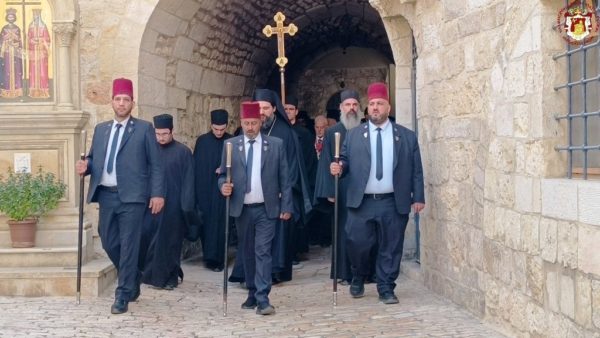
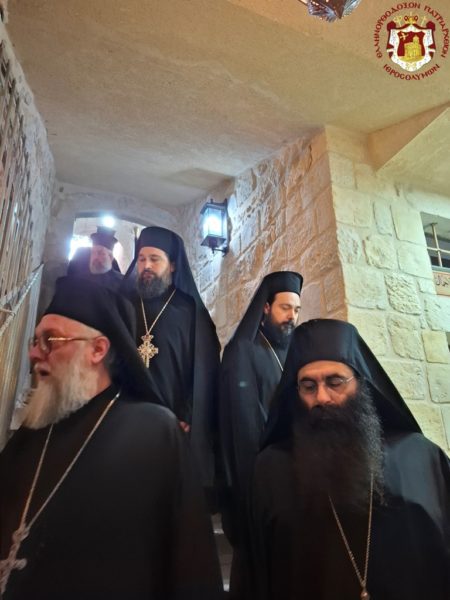
After the Dismissal of the Divine Liturgy, His Beatitude and the concelebrating Hierarchs and Priests, vested, ascended to the quarters of the holy Church of Saints Constantine and Helen, and were joined by the other Holy Sepulchre Fathers; and all, vested and chanting, passed through the Central Gate and received the small loaves of blessing from the nun Serapheima, the abbess responsible for the bakery, and then returned to the Patriarchate.
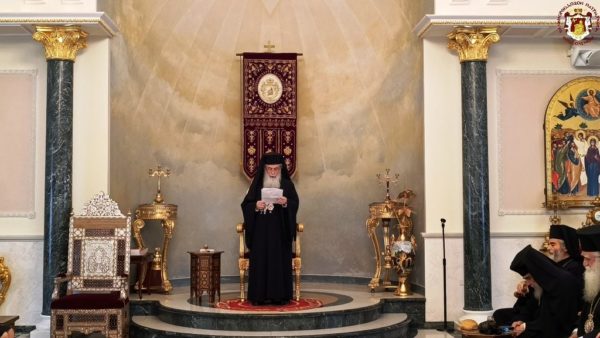
There, His Beatitude offered wishes for many happy returns through the following address:
“Come ye all, with sacred hymns let us magnify James, the first-throned, the luminary of the Church, the Hierarch and divine Herald, rightly called the Just.”
Your Excellency, Consul General of Greece, Mr Demetrios Angelosopoulos,
Revered Holy Fathers and Brethren,
Pious Christians and pilgrims,
The holy Church of Christ rejoices today, and especially the Church of Jerusalem, on the festal and venerable commemoration of the holy and righteous Apostle James the Brother of the Lord, who was appointed by our Lord Jesus Christ as His successor and first Hierarch, the Hierarch of the Church of Jerusalem, as the hymnographer clearly declares: “Having become the brother and successor of Christ the chief Shepherd, and being distinguished among the Apostles, thou didst love the death endured for His sake and wast not ashamed of martyrdom, O glorious James. Beseech Him unceasingly that our souls may be saved.”
For this cause, accompanied by the honourable Holy Sepulchre Fathers and our brethren the Hierarchs, priests, hieromonks, and deacons, we went to the holy Church bearing his name, which stands adjacent to the Church of the Holy Sepulchre. There we celebrated a Patriarchal Divine Liturgy and offered unto the Holy Triune God—Who granted unto us His just disciple and Apostle, as well as Hierarch, good Shepherd, teacher, and faithful steward of the spiritual Mysteries—our thanksgiving prayers.
Rightly does our holy Church of Jerusalem exult on the commemoration of the wondrous James the Brother of the Lord, for this event pertains to the very institution of the Church, founded upon the redeeming Blood of Christ Who was crucified, on the one hand, and constituted by His Holy Spirit on the other. This institution, according to the divine Paul, is “the Church of the living God, the pillar and ground of the truth” (1 Tim. 3:15). As such a pillar of the Church, the Brother of the Lord James was recognised together with the Apostles Cephas—that is, Peter—and John (Gal. 2:9).
The righteous James, who dwelt with the Apostles, constitutes the foundation stone of the Apostolic succession of Jesus Christ, Who is the chief corner stone. And this is so because the holy Apostles received into their hearts the Comforter, the Spirit of Truth, as the Lord had promised them, saying: “If ye love Me, keep My commandments. And I will pray the Father, and He shall give you another Comforter, that He may abide with you for ever; even the Spirit of truth; whom the world cannot receive, because it seeth Him not, neither knoweth Him: but ye know Him; for He dwelleth with you, and shall be in you” (John 14:15–17). Noteworthy in this regard is the saying of Saint John of Damascus: “Upon the holy Apostles the Holy Spirit descended in fiery form.”
Saint James the Brother of the Lord is thus revealed as the undisputed Bishop and Shepherd of the Church of Jerusalem, the mother of all the Churches; wherefore Saint John of Damascus exclaims in hymnody: “Rejoice, O Holy Sion, Mother of the Churches, the abode of God.”
The divine Paul then undertook the mission of evangelising the nations by the unanimous decision of the first Apostolic Council, convened in Jerusalem under the presidency of Saint James the Brother of the Lord, in the forty-ninth year (49 AD). This historic event for the One, Holy, Catholic Church holds supreme significance, for it established the ecclesiastical administrative order throughout the world, guaranteeing the canonical order and unity of the Church, according to the exhortation of the wise Paul: “Endeavouring to keep the unity of the Spirit in the bond of peace” (Eph. 4:3). Moreover, it safeguarded the sound teaching of the Apostles—that is, the faith of the Church.
As for us, who minister in the Church of the very place of the crucifixion, the three-day burial, and the Resurrection of our Saviour Christ, we are called to prove faithful to this calling. Therefore, together with the hymnographer, let us say: “At the coming in the flesh of the Lord, O wise one, thou wast revealed as His brother, disciple, and eye-witness of the divine Mysteries, a fellow-sojourner with Him in Egypt with Joseph and the Mother of Jesus; with them do thou intercede that we may be saved.”
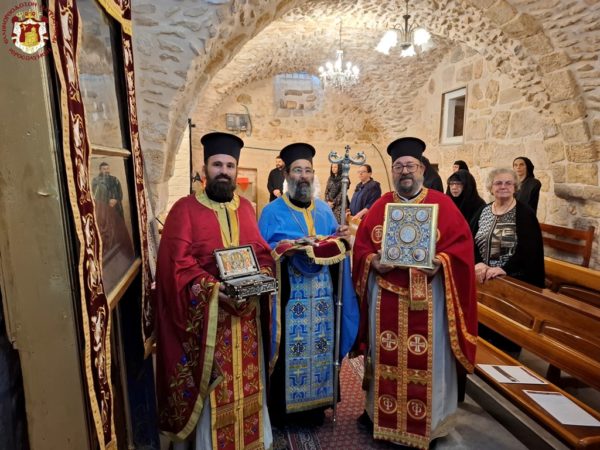
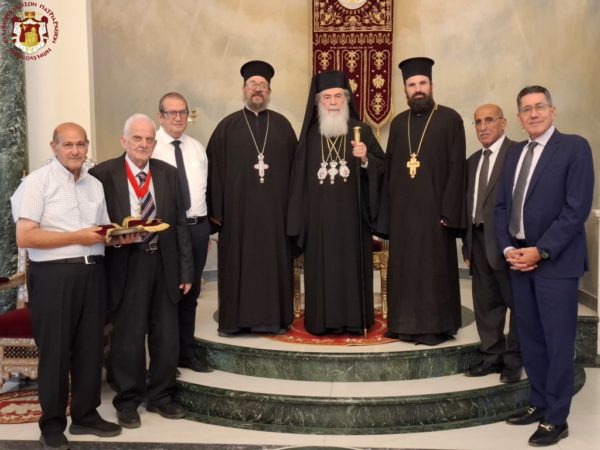
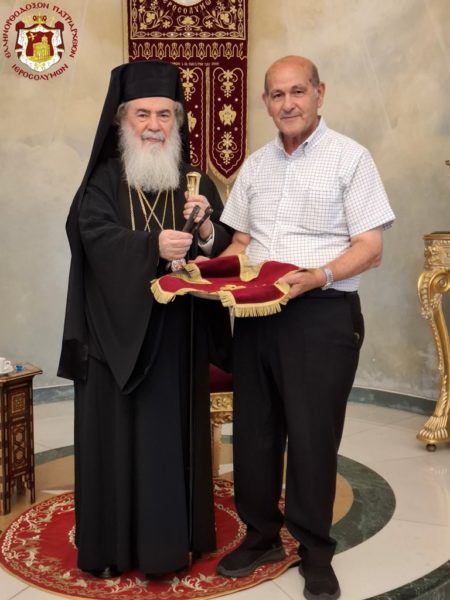
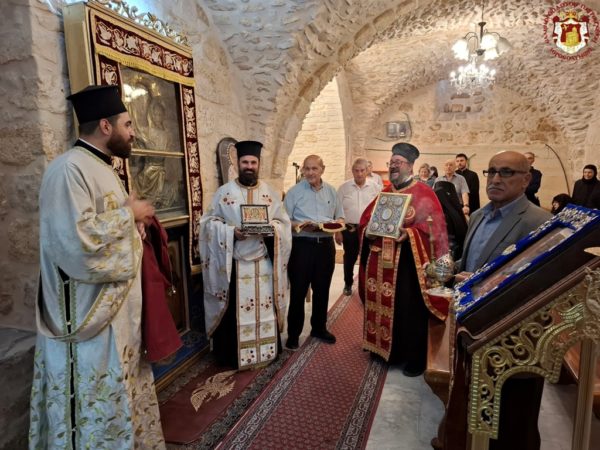
…And he delivered the keys of the Church of Saint James into the hands of His priests and trustees.
From the Chief Secretariat
H αναδημοσίευση του παραπάνω άρθρου ή μέρους του επιτρέπεται μόνο αν αναφέρεται ως πηγή το ORTHODOXIANEWSAGENCY.GR με ενεργό σύνδεσμο στην εν λόγω καταχώρηση.
 Ακολούθησε το ORTHODOXIANEWSAGENCY.gr στο Google News και μάθε πρώτος όλες τις ειδήσεις.